


TL; DR
- The Hyundai Bayon offers distinctive dimensions, generous cabin space, and a practical 505-liter boot.
- Six airbags, standard safety features, and optional Level 2 Pro ADAS strengthen its appeal.
- Ambitious pricing, a bare-bones base variant, and limited powertrain choices hold it back.
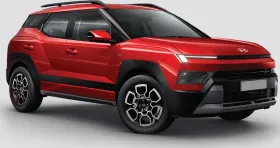
Most cars slot into a segment. The 2026 Hyundai Bayon does not. From my vantage point, that is both its charm and problem. It is longer than the Venue, shorter than the Creta, and priced as if it cannot decide which of the two to chase.
I have spent hours since its launch buried in spec sheets and variant and price ladders, and now I have a clear view of what works and what doesn’t.
Also Read: Land Rover Defender 110 Is Now ₹34 Lakh Cheaper As JLR Begins Local Assembly

2026 Hyundai Bayon: 5 Things I like
1. A Size The Indian Car Market Doesn’t Have
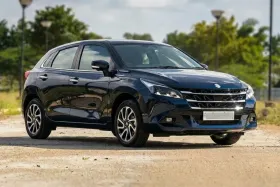
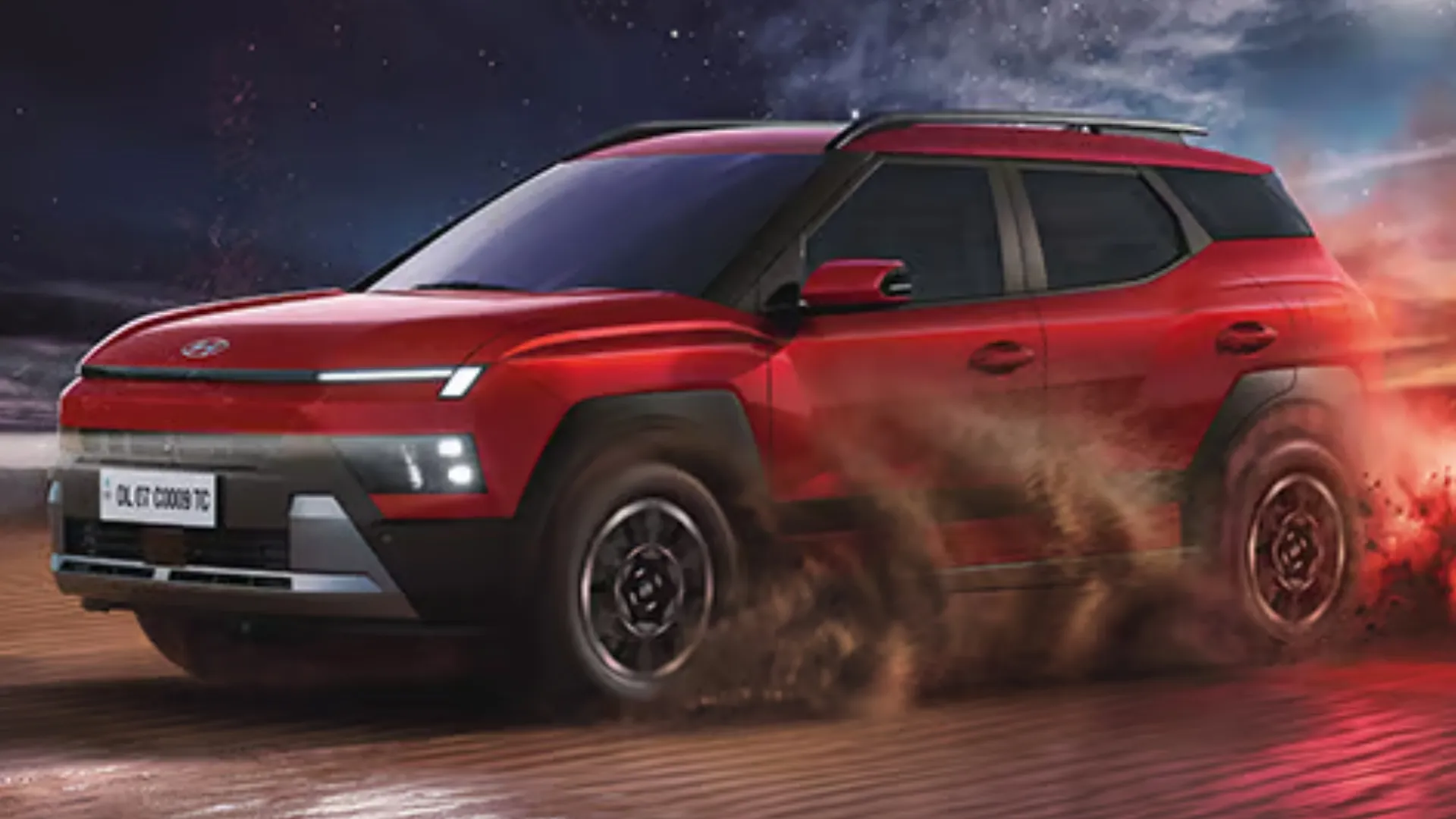
The Bayon measures 4,245mm long, 1,810mm wide and 1,605mm tall (with roof rails). All of that rides on a 2,600mm wheelbase. That makes it 250mm longer than the Venue and 85mm shorter than the Creta (my math). However, it’s wider than both.
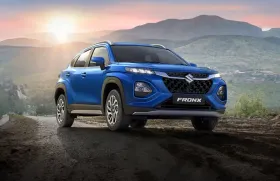
I will not call it rival-free, because the Skoda Kushaq is close at 4,225mm, but that’s purely in terms of length. Within the brand, though, nothing else sits here, and that is the real positioning.

Also Read: Hyundai Bayon vs Tata Curvv: Price, Features, Performance, and More Compared
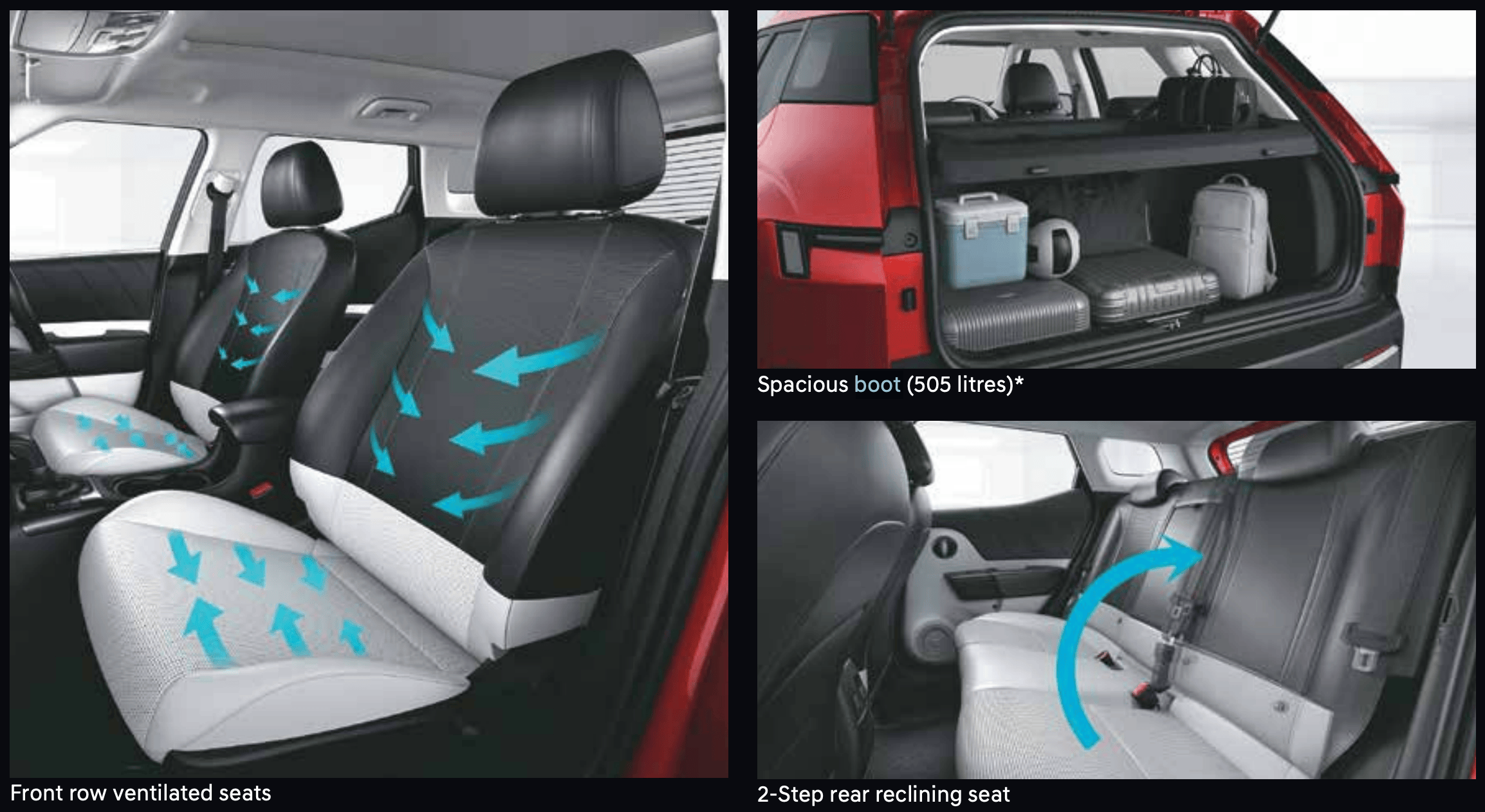
Inside, I found generous legroom and headroom in both rows. The rear bench impressed me most: the cushioning is firm enough to support and soft enough to relax, and the two-step reclining backrest makes a long drive easier. That facility, however, is available only on the HX8 and HX10.
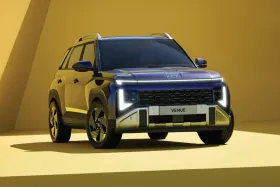
As for the styling, it is subjective, but I appreciate that the Bayon resembles neither the Venue nor the Creta, which lets Hyundai sell it as a separate car.

Also Read: Hyundai Bayon Launched At ₹9.99 Lakh – Price, Performance, Features Explained
| Dimension | Bayon | Venue | Creta |
| Length (mm) | 4,245 | 3,995 | 4,330 |
| Width (mm) | 1,810 | 1,800 | 1,790 |
| Height (mm) | 1,605 (with roof rails) | 1,665 | 1,635 |
| Wheelbase (mm) | 2,600 | 2,520 | 2,610 |
| Ground clearance (mm) | 205 | 190 | 190 |
| Boot space (liters) | 505 (Hyundai’s claim) | 375 | 433 |
Also Read: BYD’s Luxury Brand Denza Coming to India Next Month, Report Suggests: Everything We Know

2. Safety That Starts With The Structure
Hyundai manufactures the Bayon at its Chennai plant in India. However, it reportedly aims to export it to more than 50 markets worldwide. The Bayon rides on the Global K Enhanced platform. The company says 69% of the body structure is advanced high-strength steel, including hot-stamped steel in the front apron, dashboard, rear floor, and side reinforcements.
The standard safety kit backs that up: six airbags, electronic stability control, hill-start assist, tire pressure monitoring, ISOFIX mounts, and rear parking sensors. The car comes with more than 35 standard safety features across the range, and I genuinely applaud that. Hyundai says the car is engineered for five-star Indian standards.

Also Read: Fully Electric Range Rovers To Arrive Later Than Expected, Only As CBUs Initially
However, Bharat NCAP has not yet published a rating (as of October 27, 2026).
At the top, the HX10 adds SmartSense Level 2 Pro ADAS (advanced driver assistance) with 23 functions. These include Highway Driving Assist, stop-and-go adaptive cruise, and forward-collision avoidance that watches for cars, cyclists, and pedestrians, even during junction turns.

One catch, however, is that the two navigation-based cruise functions work only on expressways mapped in the car’s data.
Also Read: Hyundai Bayon FAQs – Price, Engine and Transmission, Features, Everything You Need To Know
3. A Powertrain That Does Not Try Too Hard
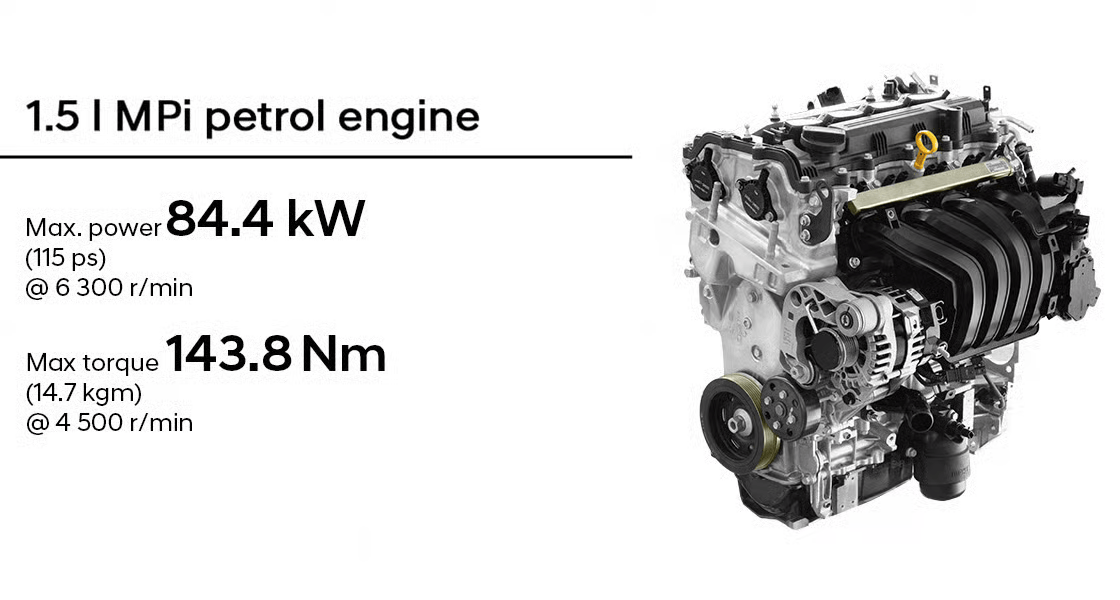
Hyundai kept the powertrain simple, and I personally mean that in a good way. The Bayon has a single 1.5-liter naturally aspirated petrol engine (1,497cc) that makes 115 PS at 6,300 rpm and 143.8 Nm at 4,500 rpm.

For those catching up, the same engine powers the Creta and Verna. You choose only between a six-speed manual and the iVT (CVT-type automatic); unlike the Creta or the Venue, which offer four or five options.
Claimed economy is 17.2kmpl for the manual and 18.6kmpl for the iVT. Paired with the 43-liter tank, that’s roughly 740 km and 800 km on paper (my math). The iVT also offers Eco, Normal, and Sport modes, paddle shifters, and Dash Boost for quicker overtakes.
Also Read: Renault Duster Hybrid vs Rivals: Price, Safety, Features and Performance Compared
It won’t give you the engaging feel of a torque-converter automatic or DCT, but it is otherwise well suited to city drives and relaxed highway commutes. Familiarity counts too, since a known engine makes economical service and repairs easier.
4. A Top Trim That Punches Above Its Class
This is both a pro and a con, at least from where I’m looking at the Bayon. Its top trim packs premium features that make the cabin feel like a more expensive car.

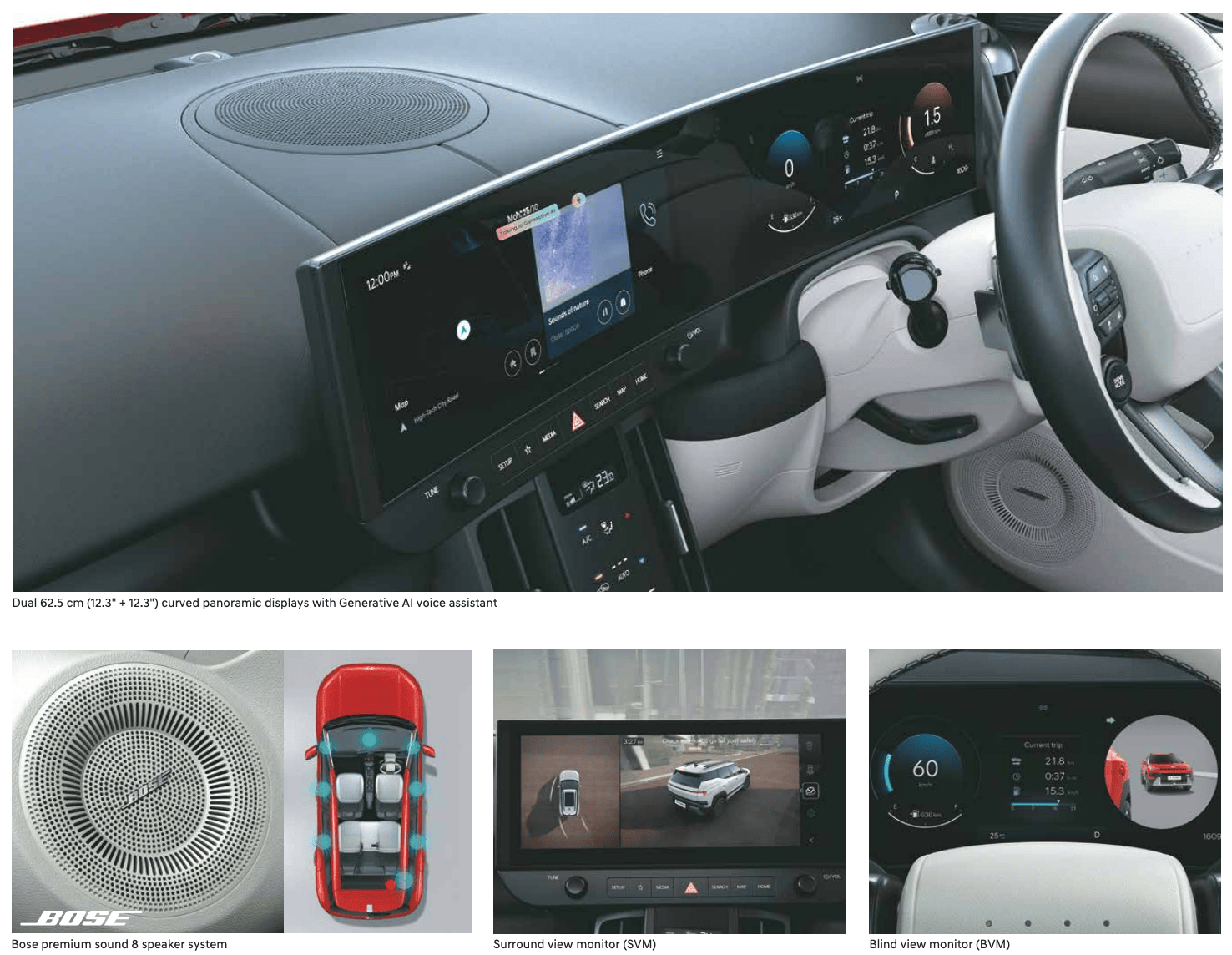
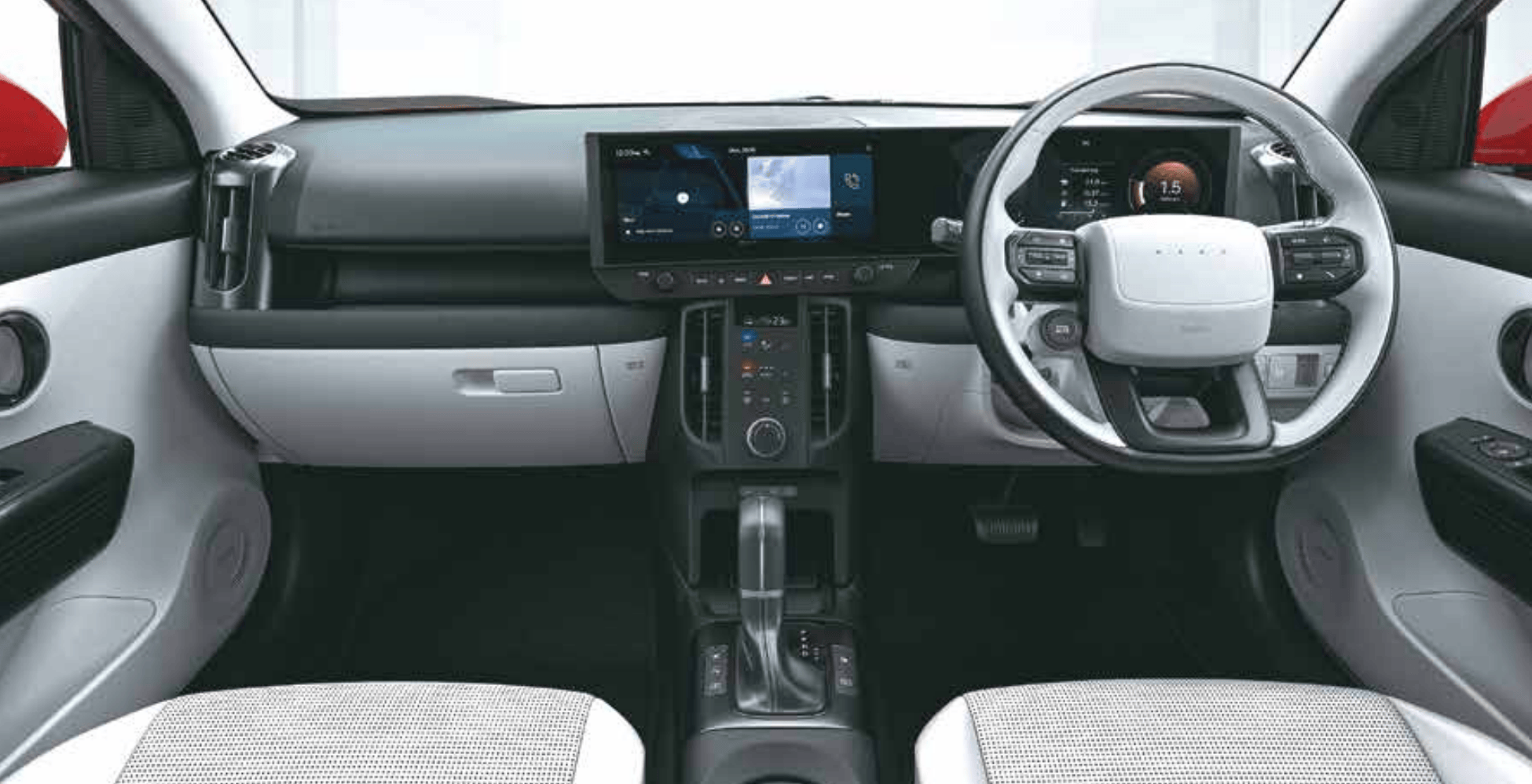
One curved glass housing holds two 12.3-inch screens, a driver’s display and an infotainment panel, running on Hyundai’s NVIDIA-accelerated system. The voice assistant is infused with a generative-AI assistant that uses Perplexity’s intelligence and SoundHound’s voice technology.
Also Read: Skoda Slavia 2026 Review: Subtle But Important Changes Make It Even Better!
It supports more than 500 embedded commands in 10 regional and 2 international languages. Bluelink also adds 70-plus connected features, plus three years of free subscription.

Comfort is just as generous. Climb the ladder, and you collect front ventilated seats, an eight-way power driver’s seat, a panoramic sunroof, a wireless charger, and a 360-degree camera, with the eight-speaker Bose system reserved for the HX10. The top trims also come with a dual-camera factory dashcam.
Moreover, the Bayon is feature-rich, but only if you’re willing to pay the premium (something I’ll discuss in a bit).
Also Read: Tesla Roadster 2026 Explained: The Electric Supercar That Drives Upside Down And Claims It Can Fly
5. Practicality That Makes It Easy To Live With
Practicality is the quiet strength. Hyundai quotes 505 liters of boot space, against 433 in the Creta and 375 in the Venue. I couldn’t verify whether that’s up to the roof or to the parcel tray, but the boot looks quite spacious in person.
The rear seat splits 60:40, which you get in other cars as well. However, ground clearance is 205mm (15mm more than either sibling), which should make driving over rough patches, unfinished hilly roads, or in-progress patches easy. The turning radius is also quite good for a car this size: 5.16 m.
Also Read: Hyundai Bayon vs. Venue vs. Creta: What You Gain, What You Lose, And What You Might Pay
2026 Hyundai Bayon: 5 things Hyundai could have done better
1. A Price That Lands Closer To The Creta Than The Venue
Hyundai positions the Bayon between the Venue and the Creta, so I expected the price to sit in the middle as well. The Venue starts at ₹7.99 lakh (ex-showroom) and the Creta E (ex-showroom) at ₹10,90 lakh (ex-showroom), which puts the midpoint near ₹9.45 lakh (my math).
Hyundai prices the Bayon at ₹9.99 lakh, about ₹55,000 above that midpoint and ₹90,800 below the Creta E. At the top, the HX10 iVT costs ₹ 17.99 lakh, only about ₹1.22 lakh below the Creta King Lounge Edition petrol automatic at ₹19.22 lakh.

This overlap makes things slightly confusing, not just for me, but for the four or five buyers I saw standing confused in the showroom on launch day.
Also Read: MINI Cooper Oxford Edition Debuts In India As A CBU: Check Price & Other Details Here
Timing makes this worse. October benefits of up to ₹1.15 lakh are being reported on the petrol Creta, while the unofficial benefits are even higher when you visit a showroom and negotiate with the dealer. Meanwhile, the Bayon’s price is introductory.

So I see a car that pushes buyers to the HX3 or beyond, past the ₹10 lakh mark, for the features the HX2 should have had. The Bayon could have benefited from two variants below the ₹10 lakh mark, or it could have placed the HX3 variant below it.
Also Read: Relax, The Flying Tesla Roadster Is Never Coming On Roads, History Pattern Shows
2. A Base Model That Skips The Basics
The base model, HX2, starts at ₹9,99,900 (ex-showroom) and has no infotainment system, speakers, or rear parking camera. I feel that’s one of the most disappointing and puzzling omissions.

I understand the car falls in the higher 40% GST tax bracket due to its engine and size, but an in-car screen for navigation and a reverse parking camera are necessities in 2026. In a market where several automakers (including Hyundai’s own Kia) are offering them from the base variant, the Bayon HX2 feels like a big miss.
Also Read: BMW X3 30i Driven: The Bridge Between Older BMWs and The Neue Klasse
To get those essential features, you’d have to spend another ₹90,000 for the HX3 variant, which also adds a smart key and push-button start-stop.

So, if you rely on Android Auto or Apple CarPlay for day-to-day commutes or you don’t want a giant phone rack in the middle of your car’s dashboard, you’d have to spend ₹10.89 lakhs (ex–showroom).
You may argue that retrofitment is an option, but it comes with more hassles than advantages. First, you’d have to find a skilled technician who has either the original or compatible parts. Since the Bayon is a new nameplate, parts may take time to become available, and technicians may need more time to gain enough experience with the chassis. Sub-par work can also void the warranty.

Also Read: Honda Amaze Review: Better Than The Maruti Suzuki Dzire, Despite Its Quirks
To its credit, you still get six airbags, stability control and rear parking sensors. Even so, a car launched with an AI assistant and a Bose system should not hand entry buyers a blank dashboard. At ₹16.65 lakh, I noticed the HX10 skips a rear sunshade, a feature the Sonet or Venue offers.
| Variant | 6-speed manual | iVT | What it adds |
| HX2 | ₹9,99,900 | Not offered | 16-inch steel wheels, manual AC, 4.2-inch digital cluster, six airbags; no touchscreen |
| HX3 | ₹10,89,900 | Not offered | 10.25-inch touchscreen, wireless Android Auto/CarPlay, six speakers, rear camera, push-button start |
| HX3+ | ₹11,79,900 | Not offered | Electric single-pane sunroof, 17-inch steel wheels |
| HX5 | ₹12,44,900 | ₹13,84,800 | Automatic climate control, wireless charger, cruise control, Bluelink; iVT adds drive modes and paddle shifters |
| HX6 | ₹13,56,900 | ₹14,96,800 | Panoramic sunroof, 17-inch alloys, dual LED projectors, ambient lighting |
| HX8 | ₹15,09,900 | ₹16,53,900 | Ventilated front seats, eight-way power driver’s seat, two-step recline, 360-degree camera, dashcam (one listing) |
| HX10 | ₹16,64,900 | ₹17,99,900 | Dual 12.3-inch displays, AI voice assistant, eight-speaker Bose system, Level 2 Pro ADAS, front parking sensors |
Also Read: A Cheaper Jeep Is Coming To India: What Stellantis’ FaSTLAne 2030 Plan Confirms

3. An Automatic That Starts Far Up The Price Ladder
Automatic buyers face a steeper climb. The iVT starts at the HX5, at ₹13,84,800, which is ₹3,84,900 above the HX2 (my math). Within the same trim, the iVT costs ₹1.35 to ₹1.44 lakh more than the manual (my math).
The HX5 adds automatic climate control, a wireless charger, and cruise control, so it isn’t stripped. Still, the cheapest Creta automatic starts near ₹14.5 lakh, leaving about ₹65,000 between a Bayon automatic and the longer Creta. I would have wanted the iVT on the HX3+, which already has a sunroof.
Also Read: XUV 3XO ZNG Takes On Nexon CNG and Brezza CNG From ₹9.99 Lakh While Retaining The Power Figures
4. An Engine Tuned For E20 In A Country Eyeing E30
The Bayon is a petrol car in a country rewriting its fuel. In May 2026, the Bureau of Indian Standards notified specifications for E22, E25, E27 and E30, and in June the government exempted those blends from central excise duty. However, afterward, the government slowed down the pace of implementation.
For now, the government wants to keep E20 as the standard baseline petrol. So the risk isn’t imminent, but it doesn’t exist at all. State road tax on a private car is typically paid once at registration. It covers 15 years, though the amount and term can vary.
In general, someone paying road tax today is buying into a 2041 fuel scene nobody can predict. E20 cars are not meant for E85, and Hyundai is reportedly developing flex-fuel models, yet nothing suggests the Bayon is one. It is still E20 compliant.
Also Read: BMW M2 xDrive Turbo Edition Bookings Open in India, Price Still Under Wraps
I am not claiming E20 hardware will fail on E30, because I haven’t seen published evidence of that. I am saying automakers should start providing cars that can survive higher ethanol blends that might be available in the country in the next 10 to 15 years; this isn’t specific to the Hyundai Bayon, though.
| Date | Development |
| December 2025 | India reaches the 20% ethanol blending target |
| May 2026 | BIS notifies petrol standards for E22, E25, E27 and E30 |
| 11 June 2026 | E22 to E30 exempted from central excise duty; not on sale at regular pumps at the time |
| 4 July 2026 | Government-industry briefing, with Hyundai Motor India present, backs E20; officials say going beyond needs extensive testing |
| 26 October 2026 | Road ministry notifies rules allowing flex-fuel vehicles up to E100 |
| 27 October 2026 | Puri: “no desire, just now” to go beyond 20% |
5. No Turbo Or Diesel Option
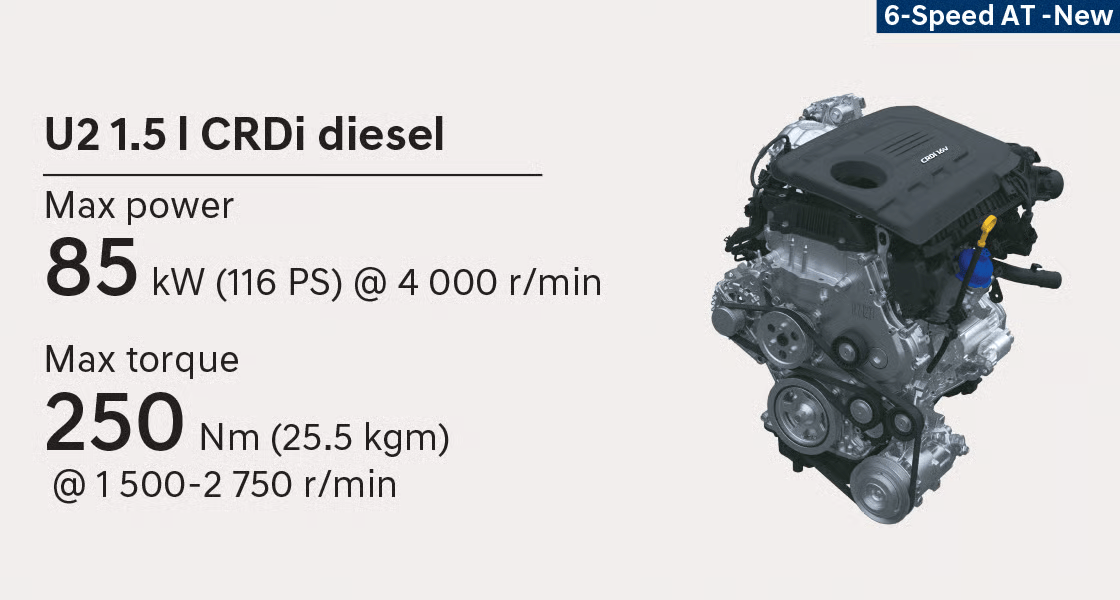
Hyundai already builds the engines that would meet this need. Start with the Venue: a 1.0-liter turbo-petrol (120 PS, 172 Nm) and a 1.5-liter diesel (116hp, 250 Nm). Then comes the Creta, which adds a 1.5-liter turbo-petrol (160 PS, 253 Nm) and the same tried-and-tested diesel (116 PS, 250 Nm).
Against that, the Bayon makes do with 115 PS and 143.8 Nm, so either diesel makes about 106 Nm (74%) more torque, which comes in handy when driving fully loaded, on ghats, or in multi-level parking at malls or offices.

Also Read: Honda Elevate vs Rivals: Price, Features, Performance, and More Compared
I do not feel short-changed personally, but plenty of people around me, in showrooms and on forums, do. Power seekers may skip the Bayon entirely. A factory CNG kit is due in January 2027, but that will only lower the commute cost, not make up for the lack of power.
| Model | Engine | Power | Torque | Gearbox |
| Bayon | 1.5L petrol (naturally aspirated) | 115 PS | 143.8Nm | 6-speed manual, iVT |
| Venue | 1.2L petrol | 83 PS | 115Nm | 5-speed manual |
| Venue | 1.0L turbo-petrol | 120 PS | 172Nm | Manual, 7-speed DCT |
| Venue | 1.5L diesel | 116hp | 250Nm | Manual, torque-converter automatic |
| Creta | 1.5L petrol (naturally aspirated) | 115 PS | 144Nm | Manual, CVT |
| Creta | 1.5L turbo-petrol | 160 PS | 253Nm | 7-speed DCT |
| Creta | 1.5L diesel | 116 PS | 250Nm | Manual, torque-converter automatic |

My Verdict: I’m Impressed And Puzzled At The Same Time
The Bayon gets the big things right: size, structure and a proven engine. Its pricing ladder and bare-bones base trim keep it from being called a perfect or no-brainer car.
If I were spending my own money, I would start with the HX6 manual (₹13,56,900) or the HX5 iVT (₹13,84,800), compare the features and effective pricing with the Creta S (O) Summer Edition or S (O) after dealer discounts, and then decide.
Also Read: Jaguar Type 01 Revealed With 1,016 bhp And 720 km Range, With An India Launch Expected In 2027

You can follow Smartprix on Twitter, Facebook, Instagram, and Google News. Visit smartprix.com for the latest tech and auto news, reviews, and guides.