


Honda has unveiled the new Elevate facelift. While there are upgrades, the new Elevate still has only one petrol engine at a time its rivals offer turbos, diesels and hybrids. In this article, we will take a look at how it stacks up against the Tata Sierra, Kia Seltos, Hyundai Creta, Skoda Kushaq, and Renault Duster. All prices are ex-showroom.
Honda Elevate vs Rivals: Interior and Features
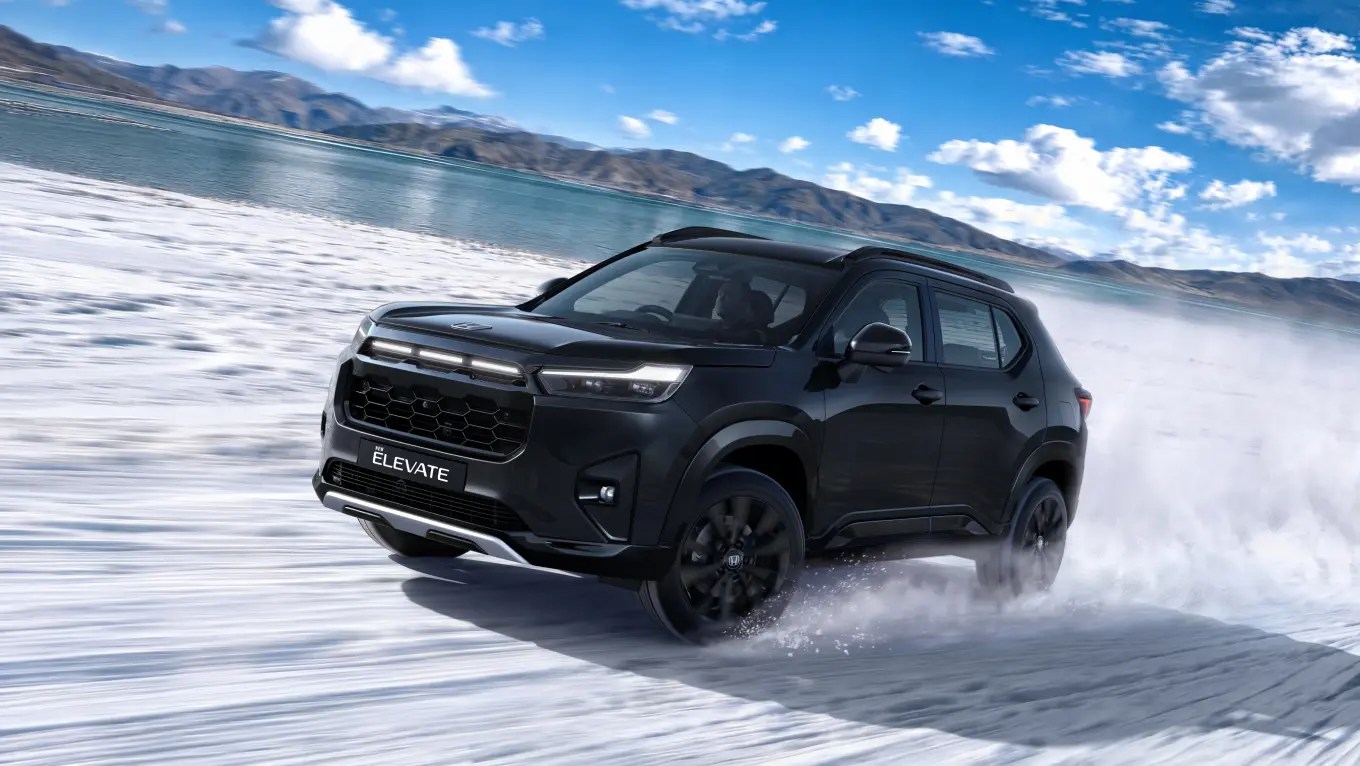
Honda launched the Elevate facelift earlier this week at a starting price of Rs 11.80 lakh (ex-showroom), the same entry price as the outgoing Honda Elevate. This is the Elevate’s first major update since 2023, and most of the changes are about equipment: ventilated front and rear seats, a 360-degree camera, a stronger Honda Sensing ADAS package and a reworked cabin. The engine and gearboxes have not changed at all.
Now this update is important for Honda because in the most popular segment in India, the Elevate’s sales were slowing down. The car had sold 1,326 units in August 2026, down 20.12 percent from a year earlier, in a segment that grew 66.87 per cent to 79,691 units.
So the question is simple: is better equipment enough to win buyers back? Below, we compare the new Elevate with its five rivals on price, engines and gearboxes, features, safety and space, and then say who should buy what.
Honda Elevate vs Rivals: Prices and Variants
| Model | Price (ex-showroom) | Engines | Gearboxes |
| Honda Elevate | Rs 11.80–18.40 lakh | 1.5 petrol, 121hp | 6MT, 7-step CVT |
| Tata Sierra | Rs 11.49–21.59 lakh | 1.5 petrol 106hp; 1.5 turbo-petrol 160hp; 1.5 diesel 118hp | 6MT, 7DCT, 6-speed torque converter |
| Kia Seltos | Rs 11.00–21.82 lakh | 1.5 petrol 115hp; 1.5 turbo-petrol 160hp; 1.5 diesel about 116hp | 6MT, iMT, CVT, 7DCT, 6-speed torque converter |
| Hyundai Creta | Rs 10.91–20.14 lakh | 1.5 petrol 115hp; 1.5 turbo-petrol 160hp; 1.5 diesel 116hp | 6MT, CVT, 7DCT, 6-speed torque converter |
| Skoda Kushaq | Rs 10.69–19.19 lakh | 1.0 turbo-petrol 115hp; 1.5 turbo-petrol 150hp | Manual, 8-speed torque converter, 7-speed DSG |
| Renault Duster | Rs 10.49–18.49 lakh | 1.0 turbo-petrol 100hp; 1.3 turbo-petrol 160hp | 6MT, 6DCT |
The Elevate now runs from Rs 11.80 lakh to Rs 18.40 lakh. The SV is manual-only at Rs 11.80 lakh. The V costs Rs 12.29 lakh with the manual and Rs 13.79 lakh with the CVT. The VX is Rs 13.93 lakh and Rs 15.39 lakh, the ZX is Rs 15.39 lakh and Rs 16.89 lakh, and the new ZX+ is Rs 16.80 lakh and Rs 18.30 lakh. The ZX+ Black Edition adds Rs 10,000 to each. CarDekho says all of these are introductory prices.
Two things stand out. First, Honda now has the highest entry price of the six. The Elevate SV costs Rs 31,000 more than the Sierra’s base car, Rs 80,000 more than the Seltos, Rs 89,000 more than the Creta, Rs 1.11 lakh more than the Kushaq and Rs 1.31 lakh more than the Duster.
Second, the picture flips at the top. The Sierra’s costliest trim is Rs 3.19 lakh above the Elevate’s, the Seltos Rs 3.42 lakh, the Creta Rs 1.74 lakh, the Kushaq Rs 79,000 and the Duster just Rs 9,000. That is not a like-for-like gap, because the rivals’ top prices include turbo-petrol and diesel automatics that Honda does not sell. It does explain why Honda’s price ladder is the shortest in the group: about Rs 6.60 lakh from bottom to top, against Rs 8 lakh for the Duster and more than Rs 10 lakh for the Sierra and Seltos.
Our view: the Elevate is not cheap at the bottom, and it makes no attempt to chase Rs 20 lakh-plus buyers at the top. Its value sits in the middle of the range, and the features section below shows why.
Honda Elevate vs Rivals: Engines and gearboxes
The Honda Elevate has one engine option – a 1.5-litre naturally aspirated petrol making 121bhp and 145Nm torque, paired with a 6-speed manual or a 7-speed CVT. Honda claims 15.31kpl with the manual and 16.61kpl with the CVT. The Honda Elevate still doesn’t get a hybrid version, a popular powertrain on the Honda City.

The rivals offer a lot more choices.
- Tata Sierra comes with three 1.5-litre engines. A 106hp petrol (manual or 7-speed DCT), a 160hp, 255Nm turbo-petrol (torque-converter automatic only) and a 118hp diesel with up to 280Nm (manual or torque converter).
- Kia Seltos gets a 115hp petrol, a 160hp turbo-petrol and a diesel of about 116hp, spread across five gearbox types: manual, iMT, CVT, DCT and torque converter.
- Hyundai Creta: the same three-engine layout as the Seltos, with 115hp, 160hp and 116hp units. The 1.5L turbo petrol engine with the DCT transmission combination is only available in the top King trim, along with the more sporty N Line variant.
- Skoda Kushaq gets no naturally aspirated option. You pick a 115hp 1.0-litre TSI or a 150hp, 250Nm 1.5-litre TSI, with a 6-speed manual, a new 8-speed torque-converter automatic or a 7-speed DSG.
- Renault Duster: a 100hp 1.0-litre turbo (manual only) and a 160hp, 280Nm 1.3-litre turbo (manual or 6-speed DCT), which is the most powerful in this segment. A strong-hybrid Duster is due to launch later this month.
Honda’s has the strongest naturally aspirated petrol engine in the group, with the Elevate CVT reaching 100kph in 11.89 seconds, against 13.07 seconds for the Seltos CVT and 13.73 seconds for the Creta CVT. The Sierra’s 106hp petrol took 17.34 seconds to reach 100kph with the manual. Turbo-petrol rivals are quicker.
Honda Elevate vs Rivals: Features
In terms of features, the Honda Elevate facelift offers a lot more than the outgoing variant. The base SV has six airbags, stability control, rear parking sensors and a part-digital cluster, and the trim guide lists no touchscreen until the V, which adds an 8-inch unit with wireless Android Auto and Apple CarPlay. The VX brings a single-pane sunroof, a wireless charger, six speakers and the LaneWatch camera. The ZX is where it gets interesting: a 10.25-inch touchscreen, eight speakers, ventilated front seats, leatherette seats and the Level 2 Honda Sensing suite with adaptive cruise control. Low-speed follow comes only with the CVT. The ZX+ then adds powered front seats, ventilated rear seats, a 360-degree camera and front parking sensors. The rear ventilation is a first in the segment, which should give the Elevate some advantage over rivals.
However, there are a few features that are still missing. Before the launch, it was reported that the new Elevate may also bring a panoramic sunroof, and dual-zone climate control with the facelift. The instrument cluster is still semi-digital with both analog dials and a 7-inch digital display.
Now, the Honda Elevate goes directly in competition with some of the most popular cars in the market. Players like the Hyundai Creta, Kia Seltos, Tata Sierra, VW Taigun, Skoda Kushaq, and Renault Duster are all good options in their own ways. But with the new updates, does the Honda Elevate compete at par? Let’s take a look.
- Tata Sierra: the biggest screens and the most theatre. Top trims get a 10.25-inch digital cluster, two 12.3-inch screens (one for the front passenger) and a 12-speaker JBL system with Dolby Atmos. It also gets a massive panoramic sunroof and dual-zone climate control with the Pure+ trim, the 360-degree camera with Adventure+, Level 2 ADAS with Accomplished and a 22-function Level 2+ ADAS suite with Accomplished+ variant.
- Kia Seltos: The Kia Seltos comes with two 12.3-inch screens, a separate 5-inch climate display and a Bose sound system. The panoramic sunroof and ventilated front seats arrive in the mid-range, while Level 2 ADAS and the 360-degree camera start at HTX(A). It misses out on a powered tailgate. The top-spec variants also get memory seats in the Kia Seltos.
- Hyundai Creta: The Creta comes with a panoramic sunroof from the EX(O) trim and ventilated front seats from SX Premium. It only gets Level 2 ADAS and 360-degree camera exclusively in the top-end King variant trim.
- Skoda Kushaq: Skoda Kushaq is also quite loaded. It comes with powered, ventilated front seats, a panoramic sunroof on top trims and a rear-seat massage function that no rival offers. It has no ADAS, no 360-degree camera and no branded audio system.
- Renault Duster: Google built-in infotainment, a panoramic sunroof, a powered tailgate, a wireless charger and a 360-degree camera, with ventilated and electric seats and a 17-function ADAS suite on the top Iconic trim.
Here Honda’s pricing looks sharp. Given the pricing of all these cars, the Honda Elevate’s top-end ZX variant’s manual version is the cheapest way into level 2 ADAS, coming in at just ₹17.86 lakh on-road Delhi. The Duster Iconic 1.3 manual costs ₹19.71 lakh, and the Seltos HTX(A) petrol manual ₹19.75 lakh. The Hyundai Creta’s King variant with a manual is priced at ₹20.05 lakh on-road Delhi. The Renault Duster’s price buys a more powerful 160hp turbo engine, so that comparison is not perfectly even. The Sierra’s ADAS sits above its Adventure+ trim, which already starts at Rs 18.73 lakh on-road, and the Kushaq has no ADASl.
Safety, space and refinement
All six SUVs come with 6 airbags and stability control as standard. On crash tests, the Tata Sierra, Kia Seltos and Renault Duster have a 5-star Bharat NCAP rating. The Elevate, Creta and Kushaq have not yet gone through the NCAP test. The Honda Elevate has a 5-star Japan NCAP result, but there is no Bharat NCAP score for it yet. The magazine also lists rear disc brakes among the facelift’s safety additions.
In terms of space, the Elevate measures 4,312mm long, 1,790mm wide and 1,650mm tall, with a 458-litre boot. That is more than the Seltos (447 litres), Creta (433 litres) and Kushaq (385 litres). The Duster claims 518 litres and the Sierra 622 litres to the roof (450 litres to the parcel shelf), so measurement methods differ and these figures are only a rough guide. The new Seltos has grown to 4,460mm, the longest in the class, as compared to the Duster, Kushaq, and the Honda Elevate.
Verdict: who should buy what
Buy the Elevate if you want a simple, easy-to-live-with petrol-CVT SUV from a brand with a strong reliability reputation, and you mostly drive in the city. The ZX at Rs 15.39 lakh (manual) or Rs 16.89 lakh (CVT) is the sweet spot. The ZX+ is worth it only if rear-seat ventilation and a 360-degree camera matter to you.
Buy the Creta if you want the safe default. It has a wide choice of engines, a comfortable ride and a huge sales lead. A new-generation model is likely in 2027, so timing matters.
Buy the Seltos for the most polished cabin and a strong all-round package. I would pick this over the current Creta.
Buy the Sierra for space, road presence and a 5-star Bharat NCAP rating, but skip the 106hp petrol and go for the turbo-petrol. Would not recommend since Tata’s after-sales experience can be inconsistent.
Buy the Kushaq if you love driving and can live with a firm ride, a tighter cabin and a shorter feature list.
Buy the Duster for its outstanding ride comfort, punchy 1.3 turbo and big boot, and wait for the hybrid if running costs matter. Rear shoulder room is tight.
Overall, the facelift makes the Elevate a far more complete SUV, and at ZX level it is the cheapest route to Level 2 ADAS in this group. But until Honda gives it a turbo, a diesel or the City’s hybrid, it will remain the sensible alternative, not the segment’s pace-setter.