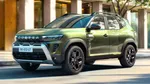



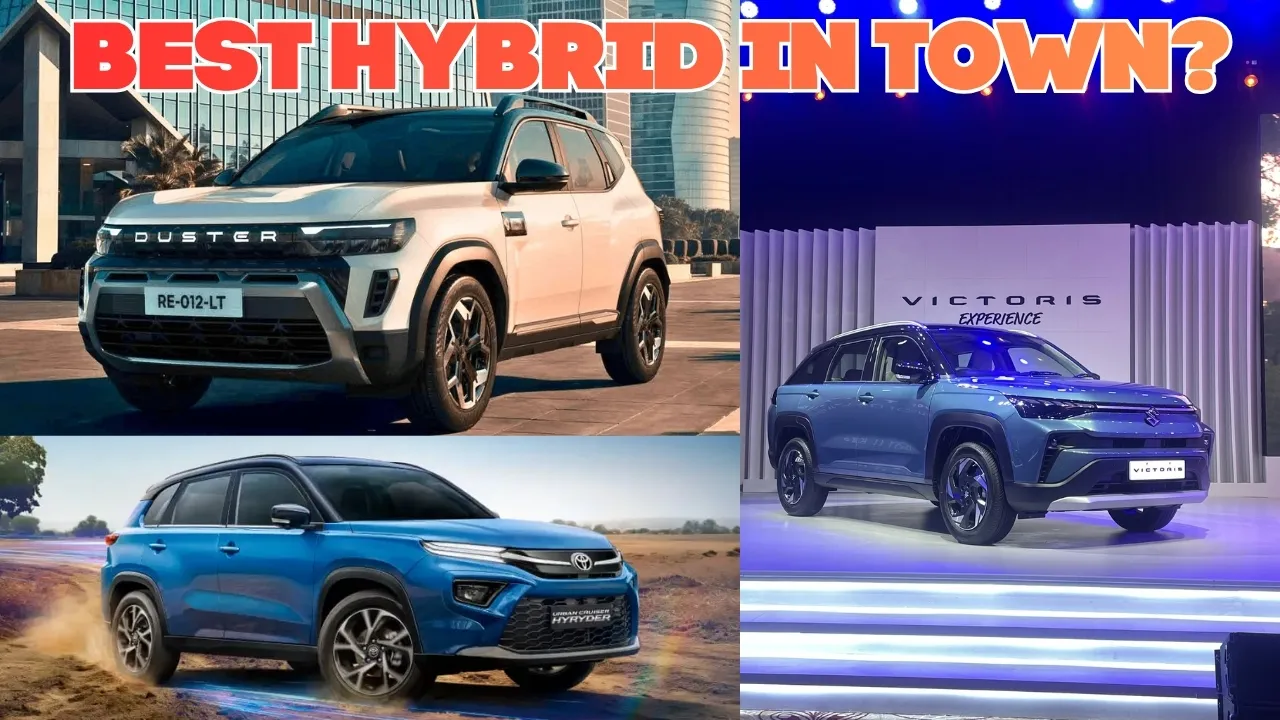
Renault’s first strong hybrid in India is the Renault Duster hybrid. The Duster has been launched as the most powerful and, on paper, the most efficient of the cars that it goes in competition with. It comes with lesser features as compared to the pure petrol Duster, but it still holds up well against the competition. Here is how the new Duster Hybrid compares with the Toyota Urban Cruiser Hyryder and the Maruti Suzuki Victoris, based on official figures. We are not taking the Maruti Suzuki Grand Vitara for this story since it is an identical car to the Toyota Hyryder and the Victoris covers the brand’s other hybrid offering in the same go.

Renault enters the strong-hybrid race
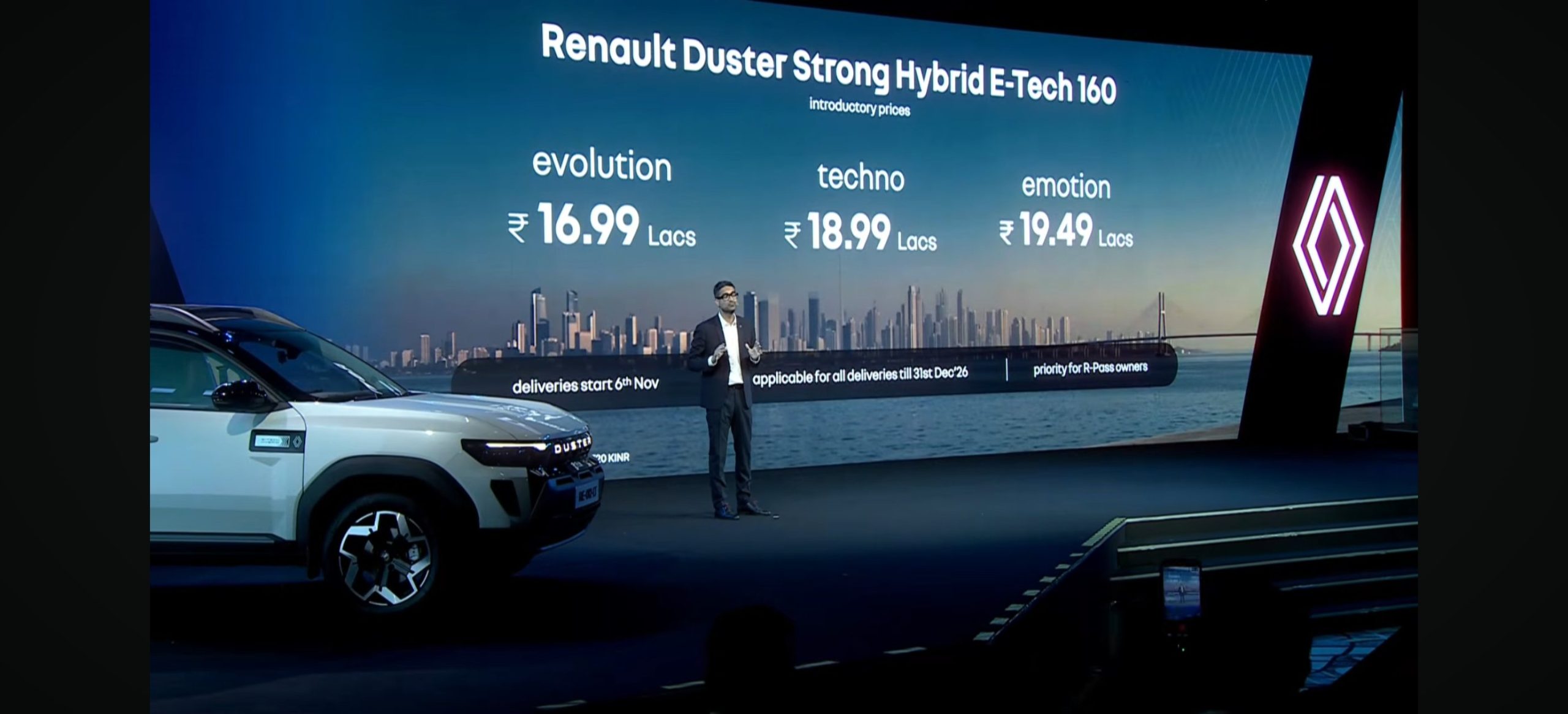
Renault launched the Duster Strong Hybrid E-Tech 160 on 17 October. It is the company’s first strong hybrid in India, and it is priced from ₹16.99 lakh to ₹19.49 lakh across three trims: Evolution, Techno, and Emotion. Renault says these are introductory prices that apply to every delivery made until 31 December. The bookings are open at a token price of ₹21,000 and the deliveries will start in November.
The Duster Hybrid takes on two strong hybrids that are already hugely popular in the midsize SUV segment – the Toyota Urban Cruiser Hyryder, and the Maruti Suzuki Victoris. As mentioned above, the Grand Vitara is also a direct competitor, but since it is an identical car to the Hyryder, we will keep just that to keep the length of the article in check. Both the Victoris and Urban Cruiser Hyryder use the same 1.5-litre strong-hybrid powertrain. The Hyryder is currently Toyota’s best-selling SUV, averaging 7,000 to 9,000 units each month. August 2026 sales data shows that the Maruti Suzuki Victoris sold 12,978 units during the month, the second-best seller in the C-segment SUV space. During the same month, the Toyota Urban Cruiser Hyryder sold 8,234 units. Those totals include petrol and CNG versions as well as hybrids, so they do not show how many buyers picked just the hybrid.
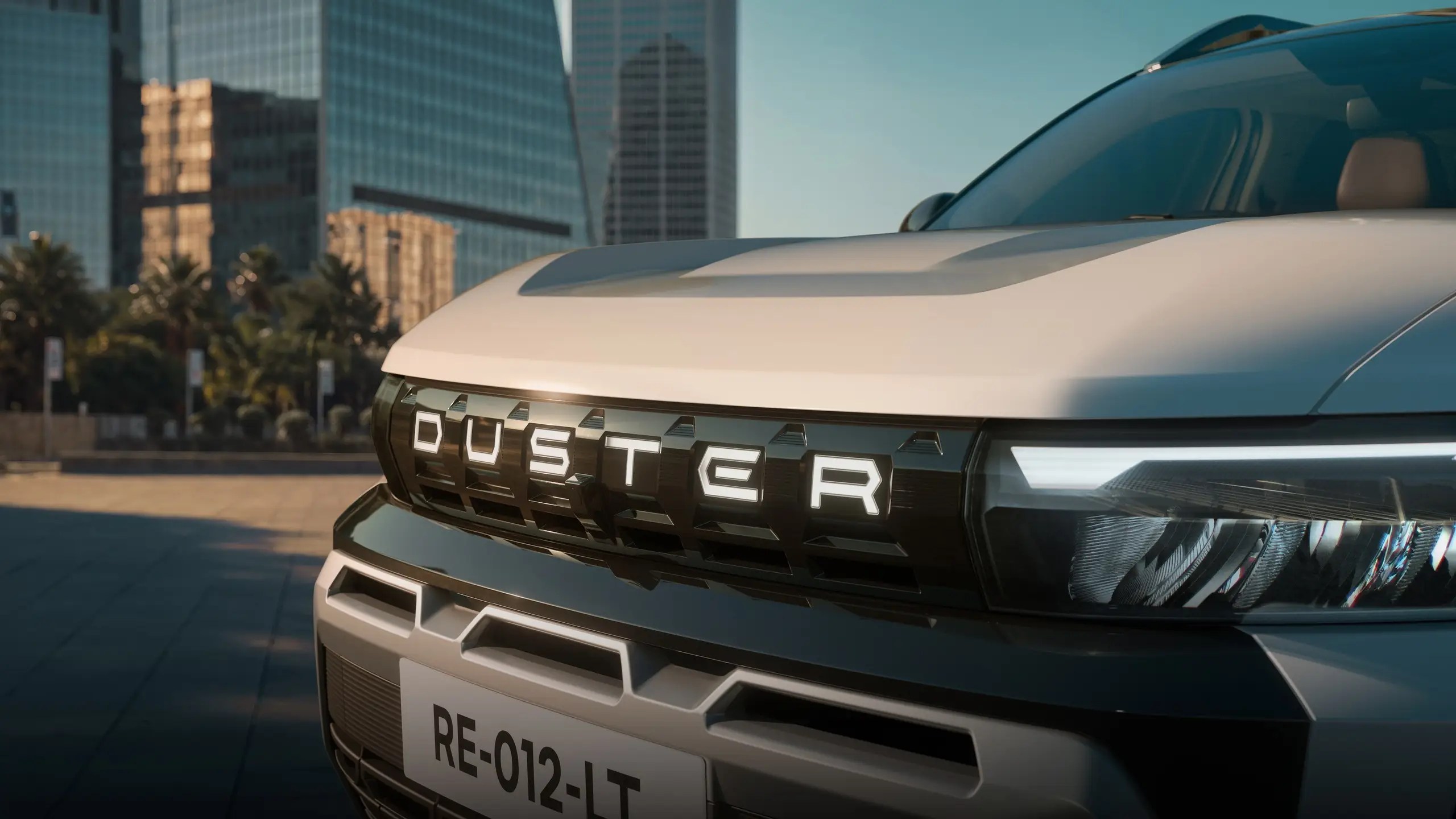
In comes the Renault Duster Hybrid. Renault says that this is the most powerful and efficient hybrid in the segment, with a combined output of 160 PS and 208 Nm of torque, along with an ARAI-certified mileage of 29 kmpl. Renault is also claiming a 0-100 kmph time of 9.61 seconds. Below, we check those claims against the Hyryder and Victoris on prices and variants, safety and comfort, features and technology, and engine and performance.
ALSO READ: Skoda Slavia 2026 Review: Subtle But Important Changes Make It Even Better!
At a glance
All prices are ex-showroom. Duster figures come from Renault’s brochure and launch details, Hyryder figures from Toyota’s website and Victoris figures from Maruti Suzuki’s website.
| Detail | Renault Duster Hybrid | Toyota Hyryder Hybrid | Maruti Victoris Hybrid |
| Price | Rs 16.99-19.49 lakh | Rs 17.18-19.99 lakh | Rs 16.43-19.99 lakh |
| Hybrid trims | Evolution, Techno, Emotion | S, G (O), V | VXi, ZXi, ZXi (O), ZXi+, ZXi+ (O) |
| Petrol engine | 1.8-litre, 4-cylinder, 110 PS, 175 Nm | 1.5-litre, 3-cylinder, 92.45 PS, 122 Nm | 1.5-litre, 3-cylinder, 92.45 PS, 122 Nm |
| Electric motor | 50 PS, 208 Nm | 80.2 PS, 141 Nm | 80 PS, 141 Nm |
| Combined output | 160 PS | 115.56 PS | About 116 PS |
| Gearbox | Multi-mode automatic (2 electric, 4 petrol gears) | e-CVT | e-CVT |
| ARAI mileage | 29 kmpl | 27.97 kmpl | 28.65 kmpl |
| Fuel tank | 50 litres | 45 litres | 45 litres |
| Crash rating | 5 stars, Bharat NCAP (April 2026, before the hybrid) | Not rated | 5 stars, Bharat NCAP |
| ADAS | No | No | No |
| 360-degree camera | No | Top V trim | ZXi+ trims |
Prices and variants
The Duster Hybrid’s three trims cost Rs 16.99 lakh (Evolution), Rs 18.99 lakh (Techno) and Rs 19.49 lakh (Emotion). Renault also sells its Protect 360 ownership package from Rs 89,900. This covers three years of insurance, three years of scheduled servicing and a three-year assured resale value.
Maruti Suzuki’s website lists five strong-hybrid trims for the Victoris. The VXi is Rs 16.43 lakh, the ZXi Rs 18.00 lakh, the ZXi (O) Rs 18.59 lakh, the ZXi+ Rs 19.67 lakh and the ZXi+ (O) Rs 19.99 lakh. Maruti notes that dual-tone colours can change the price.
Toyota’s website says the Hyryder range starts at Rs 11.31 lakh, but the pages we could access do not carry the hybrid prices. According to online listings the Hyryder’s hybrid trims at Rs 17.18 lakh (S), Rs 19.24 lakh (G (O)) and Rs 19.99 lakh (V).
That gives each car a different edge:
- Entry price: The Victoris VXi is the cheapest strong hybrid at Rs 16.43 lakh. The Duster Evolution costs Rs 56,100 more, and the Hyryder S costs Rs 19,000 more than the Duster.
- Top price: The Duster Emotion at Rs 19.49 lakh is Rs 49,900 cheaper than the Victoris ZXi+ (O) and Rs 50,000 cheaper than the Hyryder V. It is Rs 82,000 cheaper than the Hyryder’s most expensive special edition.
In short, Renault has nicely priced the Duster Hybrid in the middle of the pack. It does not undercut the Victoris at the bottom, but it is the cheapest of the three at the top of the range.
ALSO READ: Tesla Roadster 2026 Explained: The Electric Supercar That Drives Upside Down And Claims It Can Fly
Safety and comfort
Safety kit. Renault lists 38 standard safety features on the Duster Hybrid, including six airbags, electronic stability control, traction control, tyre pressure monitoring, hill-start assist, a rear-view camera, rear parking sensors and disc brakes on all four wheels. Interestingly, the hybrid does not get the 360-degree camera or the ADAS suite offered on the top turbo-petrol Duster trims.
The Hyryder also has six airbags, stability control and hill-hold as standard, with a 360-degree camera on the top V trim and no ADAS. Coming to the Maruti Suzuki Victoris, it has six airbags as standard and a 360-degree camera on the ZXi+ trims. Here also, ADAS is limited to the petrol-only variants and does not come with the hybrid.
Crash ratings. The Duster scored five stars at Bharat NCAP in April, months before the hybrid launched. We have not seen a separate rating for the hybrid. The Victoris holds five stars from both Bharat NCAP and Global NCAP. The Toyota Urban Cruiser Hyryder, on the other hand, has not been crash-tested by any NCAP body, so its rating is unknown. On crash safety alone, the Victoris is the best documented of the three.
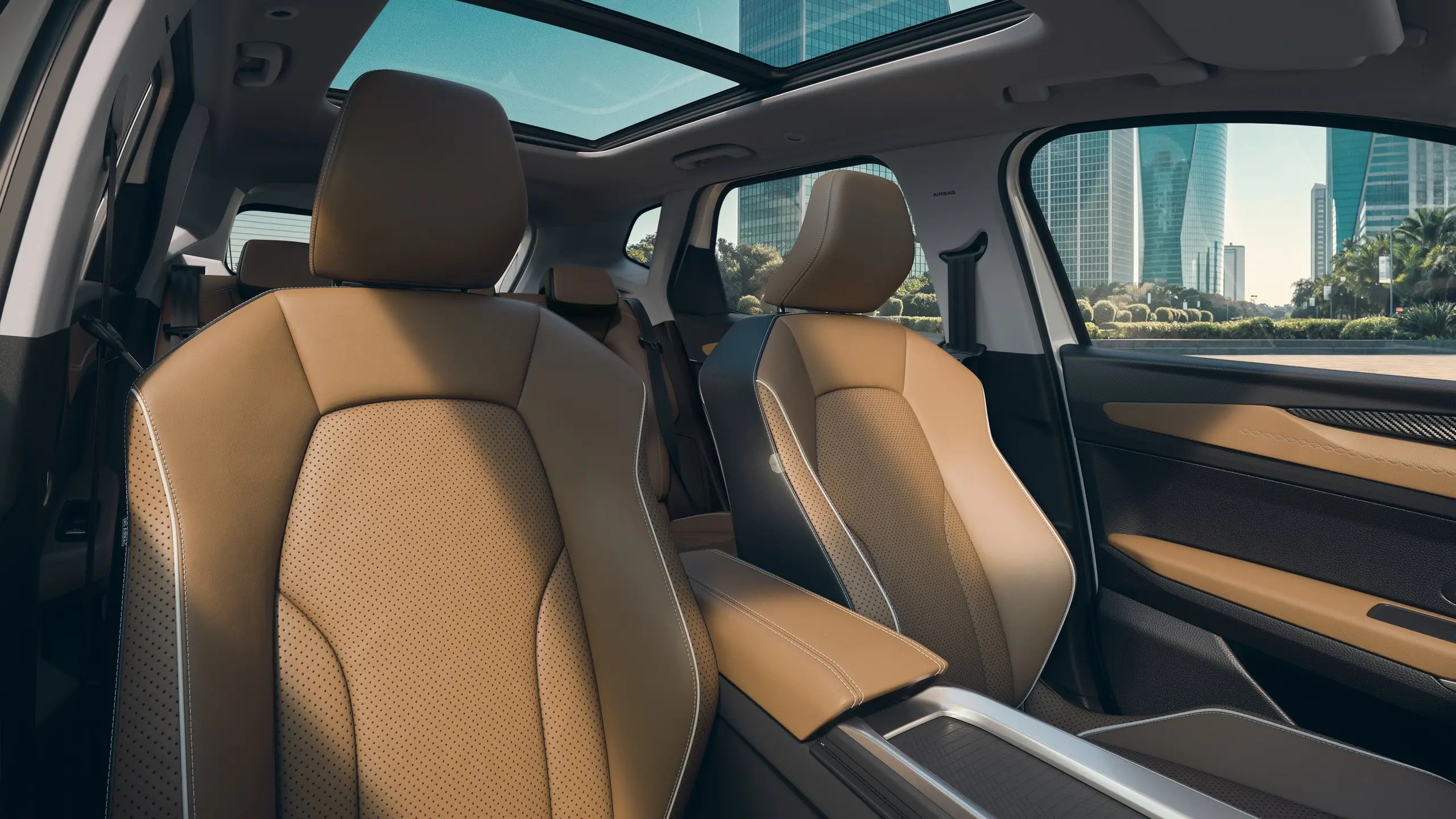
In terms of dimensions, the Renault Duster has the longest wheelbase at 2,657 mm, against 2,600 mm for both the Toyota Urban Cruiser Hyryder and the Maruti Suzuki Victoris. It is 20 mm wider than the Hyryder and Victoris, which are both 1,795 mm wide, but slightly shorter overall at 4,346 mm. The Victoris is 4,360 mm long and the Hyryder 4,365 mm. Renault quotes 212 mm of ground clearance, while Hyryder has a ground clearance of 210 mm.
In terms of boot space, Renault quotes 544 litres to the roof and 372 litres to the parcel shelf for the Duster Hybrid. The Hyryder’s boot shrinks to 255 litres in hybrid form because the battery sits under the floor, and the Victoris hybrid also loses boot space to a raised floor, and there is no spare wheel as standard. Here, only the Urban Cruiser Hyryder is the car that comes with a spare wheel. Makers measure boots in different ways, so treat these numbers as a guide. On paper, though, the Duster is clearly the more practical of the three.
In terms of other features, on the Duster, dual-zone climate control is standard on every trim, and the Emotion adds six-way electric, ventilated front seats. Renault also fits frequency-dependent dampers on both axles. Nobody has published a road test of the Duster Hybrid yet, so its ride and cabin noise remain unverified. In our review of the turbo-petrol Duster, whose cabin the hybrid shares, the space inside the cabin is ample for five full-grown adults.
For the rivals, the Hyryder’s ride quality is excellent and composed on bad roads, but the rear seat is short on thigh support and headroom. Tall passengers aren’t exactly comfortable on long drives. The Victoris is the least exciting to drive of the three. The ride is slightly firm on the hybrid, with tyre and road noise noticeable at higher speeds.
ALSO READ: Relax, The Flying Tesla Roadster Is Never Coming On Roads, History Pattern Shows
Features and technology
Duster Hybrid.
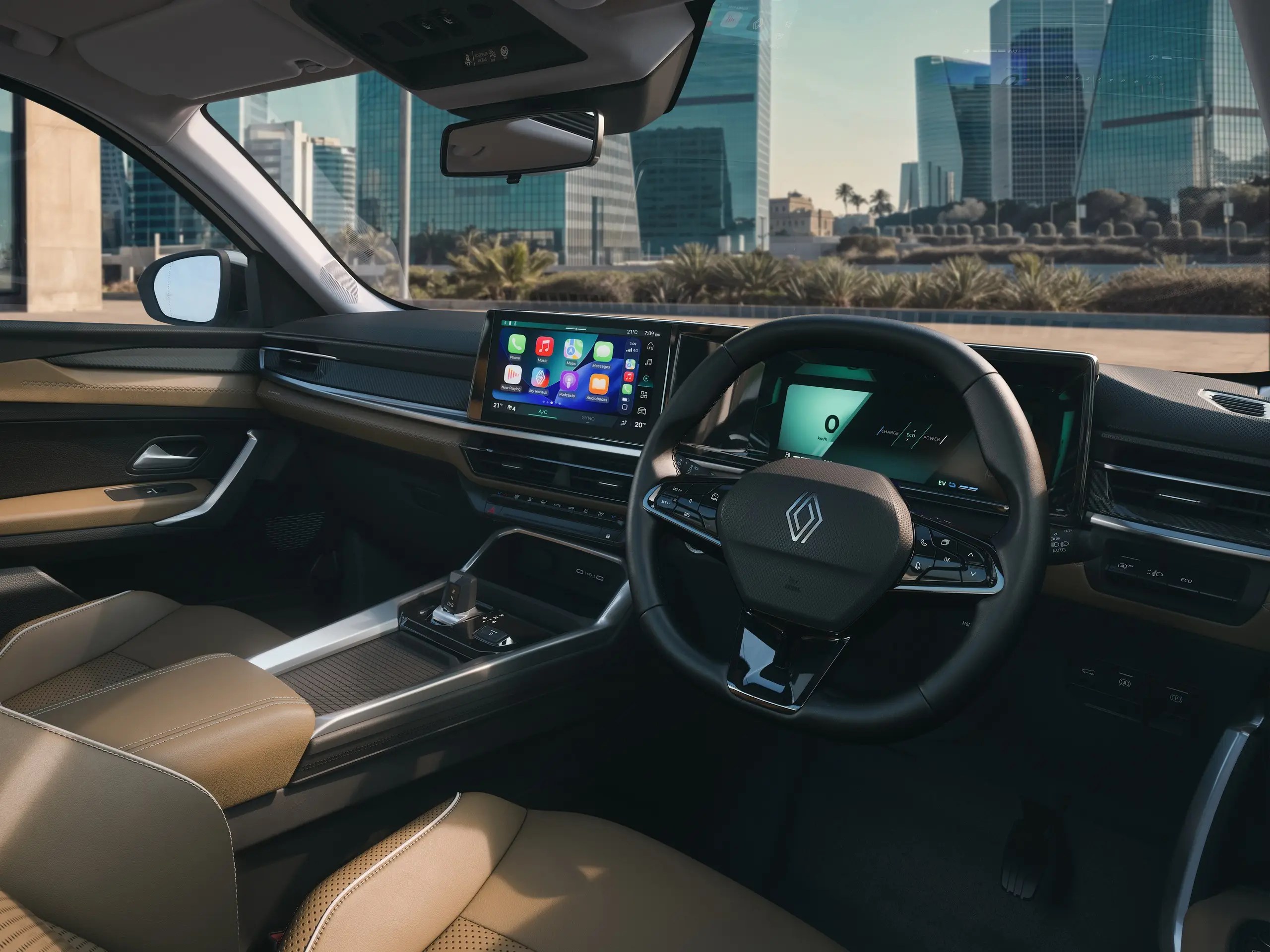
The Evolution gets a 10.1-inch touchscreen with wireless smartphone mirroring, a 7-inch digital driver’s display, dual-zone automatic climate control, a six-speaker audio system and cruise control. The Techno adds an electric panoramic sunroof, keyless entry with push-button start, full-LED headlamps and the MyRenault connected-car app with stolen-vehicle tracking. The Emotion adds a 10.25-inch digital driver’s display, a powered tailgate, six-way electric and ventilated front seats, leatherette upholstery and 18-inch diamond-cut alloys. No trim gets ADAS or a 360-degree camera in the hybrid versions of the Duster.
Victoris Hybrid.
The Maruti Suzuki Victoris’ VXi hybrid comes with a 10.25-inch driver’s display and paddle shifters. The ZXi adds all-LED lighting, alloy wheels, a powered tailgate with gesture control and wireless charging, and the ZXi (O) adds a panoramic sunroof. The ZXi+ brings a 10.1-inch Smartplay Pro X touchscreen, an eight-speaker audio system with Dolby Audio, ventilated front seats, a head-up display, a powered driver’s seat and a 360-degree camera.
Toyota Urban Cruiser Hyryder
The Toyota Hyryder’s S hybrid trim gets a 7-inch touchscreen. The G (O) steps up to a 9-inch screen, wireless charging, ventilated front seats and connected-car technology. The V adds a head-up display, a 360-degree camera and power-adjustable leatherette seats. No Hyryder variant gets adaptive cruise control or ADAS.
This makes the Victoris one of the most loaded cars in this segment, offering the longest features list on paper. The Hyryder V comes with a head-up display and 360-degree camera. And finally, the Duster counters with standard dual-zone climate control and a panoramic sunroof from Rs 18.99 lakh, but it has no 360-degree camera and no head-up display on any trim. None of the three hybrids offers ADAS, even though Maruti and Renault offer it on other versions of the Victoris and Duster.
ALSO READ: BMW X3 30i Driven: The Bridge Between Older BMWs and The Neue Klasse
Engine and performance
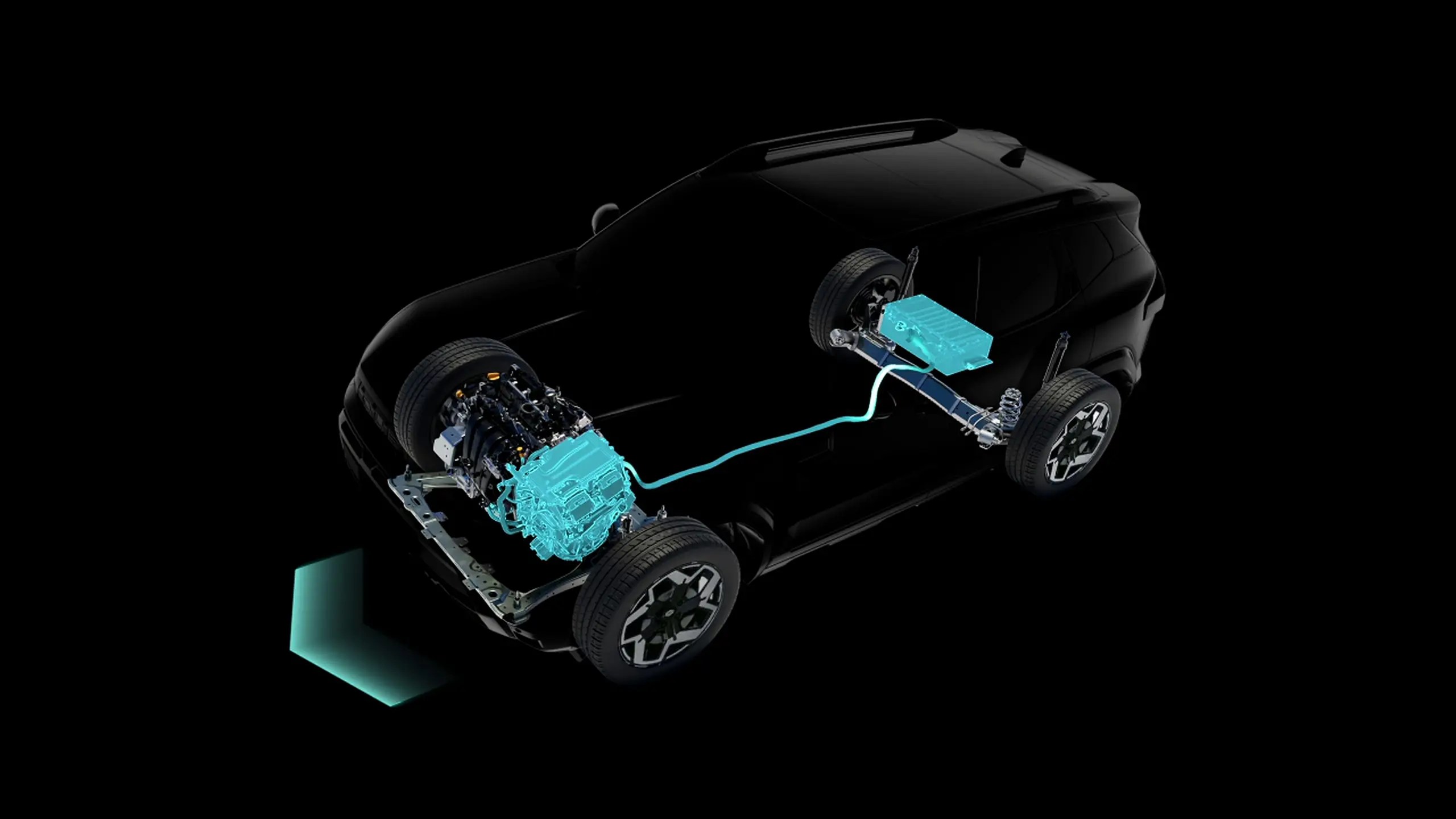
Duster Hybrid. Renault pairs a 1.8-litre four-cylinder Atkinson-cycle petrol engine (110 PS, 175 Nm) with a 50 PS traction motor (208 Nm) and a starter-generator. A 1.4 kWh battery feeds the motors, and the combined output is 160 PS. The gearbox is a multi-mode automatic with two electric and four petrol gears, and the system has six operating modes. Renault claims the car can run on electric power for up to 80 per cent of city driving. It also claims 0-100 kmph in 9.61 seconds, 29 kmpl (ARAI) and a range of more than 1,400 km from the 50-litre tank.
Hyryder and Victoris. Both use a 1.5-litre three-cylinder Atkinson-cycle petrol engine making 92.45 PS and 122 Nm, an electric motor rated at about 80 PS and 141 Nm, and an e-CVT. Toyota lists the Hyryder’s combined output at 115.56 PS (85 kW), and the Victoris is also similar at 116 bhp. Toyota cut the Hyryder’s battery from 0.76 kWh to 0.60 kWh in an April 2025 update, and Maruti Suzuki lists the same 0.60 kWh for the Victoris.
The numbers. On paper, the Duster has a clear lead on output. Its 160 PS is about 38 per cent more than the Hyryder’s 115.56 PS, and its motor torque of 208 Nm is 67 Nm higher than the 141 Nm of its rivals. The battery is more than twice the size. Even the petrol engine alone is stronger, at 110 PS against 92.45 PS. If Renault’s 9.61-second claim holds, the Duster would be the quickest of the three.
Efficiency. The Duster’s 29 kmpl is the highest ARAI figure of the three. It is 0.35 kmpl (1.2 per cent) more than the Victoris at 28.65 kmpl and 1.03 kmpl (3.7 per cent) more than the Hyryder at 27.97 kmpl. With a 50-litre tank against 45 litres, the Duster’s on-paper range works out to about 1,450 km, against roughly 1,289 km for the Victoris and 1,259 km for the Hyryder. These range numbers are our own calculation from tank size and ARAI mileage.
ALSO READ: Honda Amaze Review: Better Than The Maruti Suzuki Dzire, Despite Its Quirks
Our Take
The Renault Duster obviously offers a more powerful, more efficient, and larger car than the other two. It’s also, in my personal opinion, better looking and more rugged compared to the other two pseudo-SUVs that it goes against.
Yes, it may not have as many features as the Victor does, or even as its ICE sibling, but the Duster offers a bigger engine, a bigger electric battery, more drive modes, and more flexibility when it comes to switching from petrol to electric. Yes, even if it misses out on things like a 360° camera, it does more than make up for it in terms of the overall mechanics and engineering.
You can follow Smartprix on Twitter, Facebook, Instagram, and Google News. Visit smartprix.com for the latest tech and auto news, reviews, and guides.