


TL; DR
- Samsung reclaimed the top spot in India’s smartphone market in Q3 2026 with a 17% share, becoming the only brand among the top five to grow year-on-year.
- Overall smartphone shipments fell 20% to their lowest level in a decade, with the sub-₹20,000 segment taking the biggest hit at 47%.
- Rising memory prices pushed handset prices higher, prompting consumers to delay upgrades and forcing brands to rethink their entry-level portfolios.
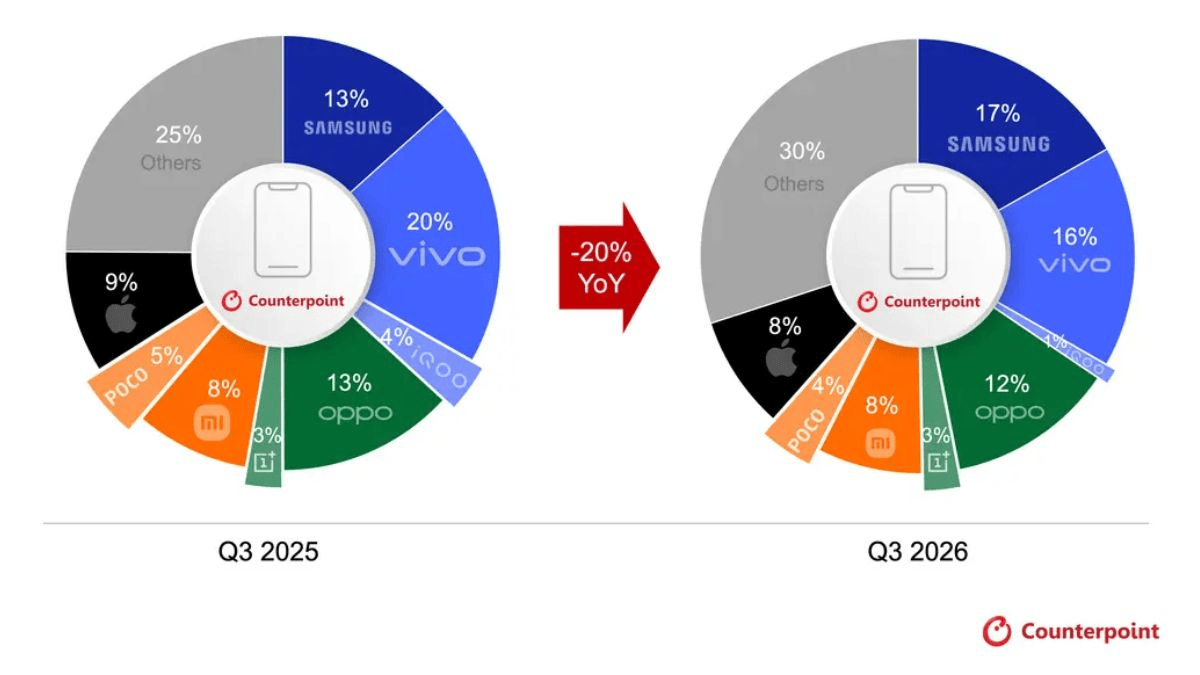
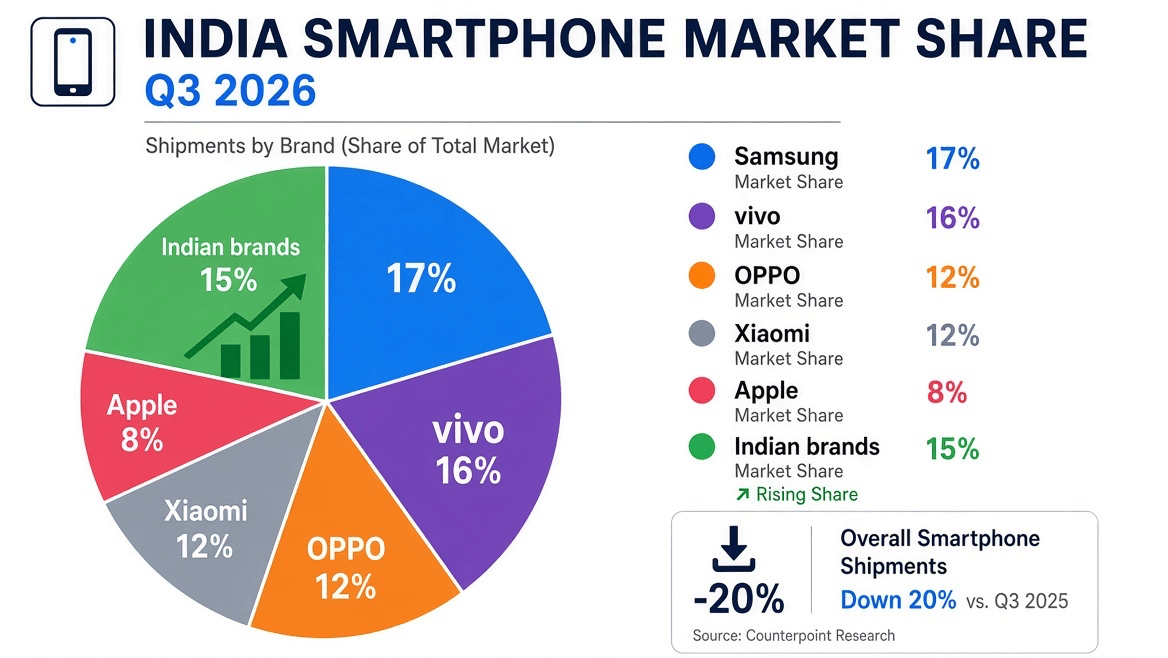
Samsung reclaimed the top spot in India’s smartphone market in Q3 2026 with a 17% share, according to Counterpoint Research. It was the only brand among the top five to record year-on-year growth, even as overall shipments fell 20% to their lowest level in a decade.
The sub-₹20,000 segment suffered the sharpest decline, with shipments falling 47% as record-high memory prices pushed device costs up and moved several models into higher price brackets.
Samsung Leads as Vivo Loses Share
vivo, excluding iQOO, ranked second with a 16% share, down from 20% a year earlier. OPPO held third place with 12%, helped by triple-digit growth in the above-₹20,000 segment. Xiaomi, including POCO, also captured 12% and led the ₹10,001–₹20,000 price band. Apple accounted for 8% of shipments.
Indian brands, led by Ai+ Smartphone, increased their combined share to 15% from 3% a year earlier. Ai+ alone grew 306%.
Counterpoint attributed Samsung’s performance to strong Galaxy A series volumes, a balanced online and offline presence, and relatively measured price increases despite rising memory costs. The company’s eighth-generation foldables also attracted interest.
Rising Memory Costs Hit Budget Phones
According to Counterpoint research analyst Shubham Singh, rising component costs weakened the mass-market segment, particularly phones priced below ₹15,000. Consumers extended replacement cycles and delayed upgrades as handset prices climbed.

Manufacturers also shifted their focus towards protecting margins, keeping inventory lean and adjusting their product portfolios ahead of the festive season instead of chasing shipment volumes.
Research director Tarun Pathak expects India’s smartphone market to shrink by around 13% in 2026. Further price increases and a slowdown after the festive season could add to the pressure. Manufacturers are already introducing more 4G and lower-specification models to maintain familiar price points.
Is the Sub-₹20,000 Phone Losing Its Place?
The 47% decline raises questions about the future of one of India’s most important smartphone price segments. Higher memory costs have pushed several models that previously sold below ₹20,000 into more expensive categories, weakening the segment’s role as a volume driver.

Samsung gained relative share by keeping price increases more limited and managing costs across its Galaxy A series. OPPO maintained third place while shifting its focus towards more expensive phones, while Xiaomi continued to lead the ₹10,001–₹20,000 band.
The segment has not disappeared, but buying a capable phone below ₹20,000 is becoming harder as manufacturers adjust prices to account for higher component costs.
What Happens Next?
The outlook depends on how quickly memory prices ease and whether manufacturers use financing, exchange offers and discounts to keep phones affordable. With Counterpoint expecting the Indian smartphone market to contract by around 13% in 2026, brands face a difficult balance between protecting margins and maintaining sales volumes.

You can follow Smartprix on Twitter, Facebook, Instagram, and Google News. Visit smartprix.com for the latest tech and auto news, reviews, and guides.