

TL;DR
- India’s smartphone shipments fell 7.9% in H1 2026 to 64.2 million units — the lowest first-half volume in five years, per IDC.
- Chinese brands bore the brunt: Vivo (-13.9%), Xiaomi (-10%), Realme (-14.2%), and iQOO (-61%) all declined, while Samsung (+0.4%) and Apple (+0.7%) held steady or grew.
- Brands are charging more for each phone, so the market’s value rose 3.6%. Higher parts costs and a shift to premium models are driving up prices.
- Online shipments collapsed 19.8%, pushing market share toward offline retail, which now accounts for 58.1% of sales.
- IDC expects shipments to fall more than 15% in the second half as shoppers are holding off on upgrades because prices are up and festive discounts are weak.
IDC H1 numbers are out and they paint a gloomy picture. India’s smartphone market is shrinking, and some brands are taking a bigger hit, according to the latest IDC report. Shipments dropped 7.9% in the first half of 2026, hitting a five-year low at 64.2 million units. But the market’s value still went up 3.6% because prices keep rising. Brands that charge more are staying ahead. The rest are falling behind.
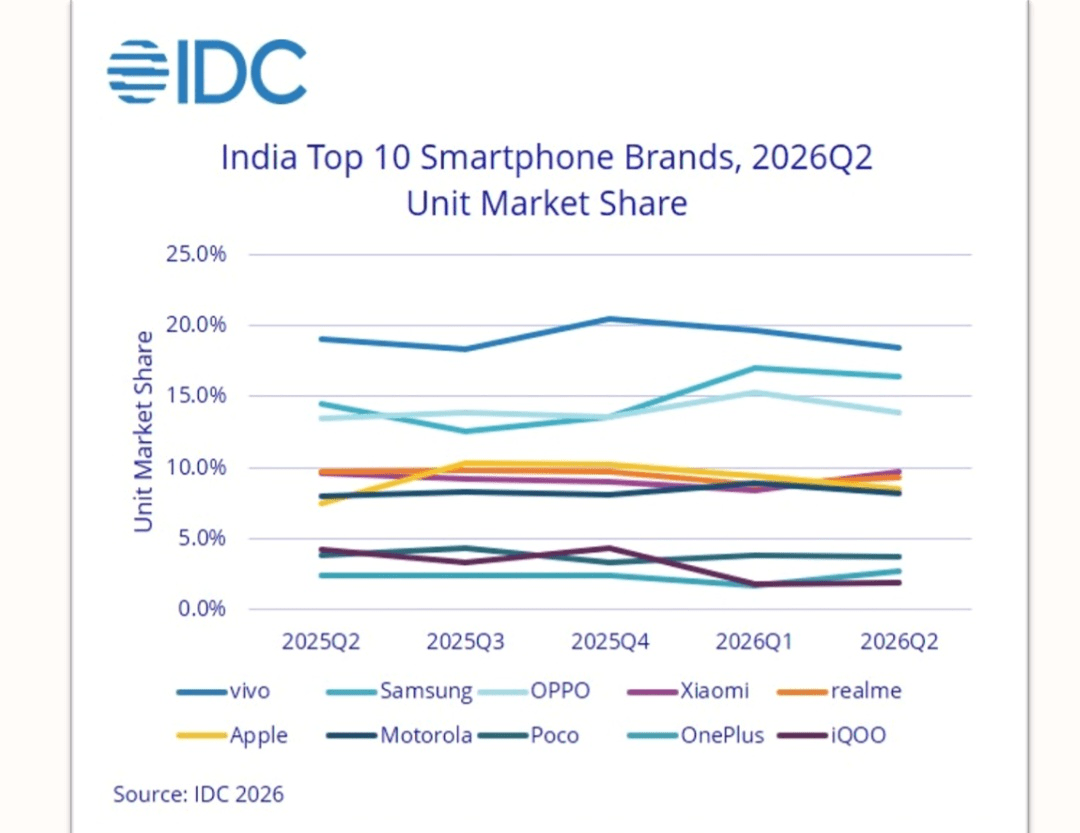
Chinese brands are taking the hardest hit. Vivo, still number one by shipments, dropped 13.9% in Q2 and now holds 18.4% of the market, down from 19% last year. Xiaomi fell 10%, Oppo 8.5%, Realme 14.2%, and Poco 12.3%. iQOO, once a fast grower, saw shipments crash by 61%. These brands used to rely on online discounts and flash sales, but that strategy is not working anymore.
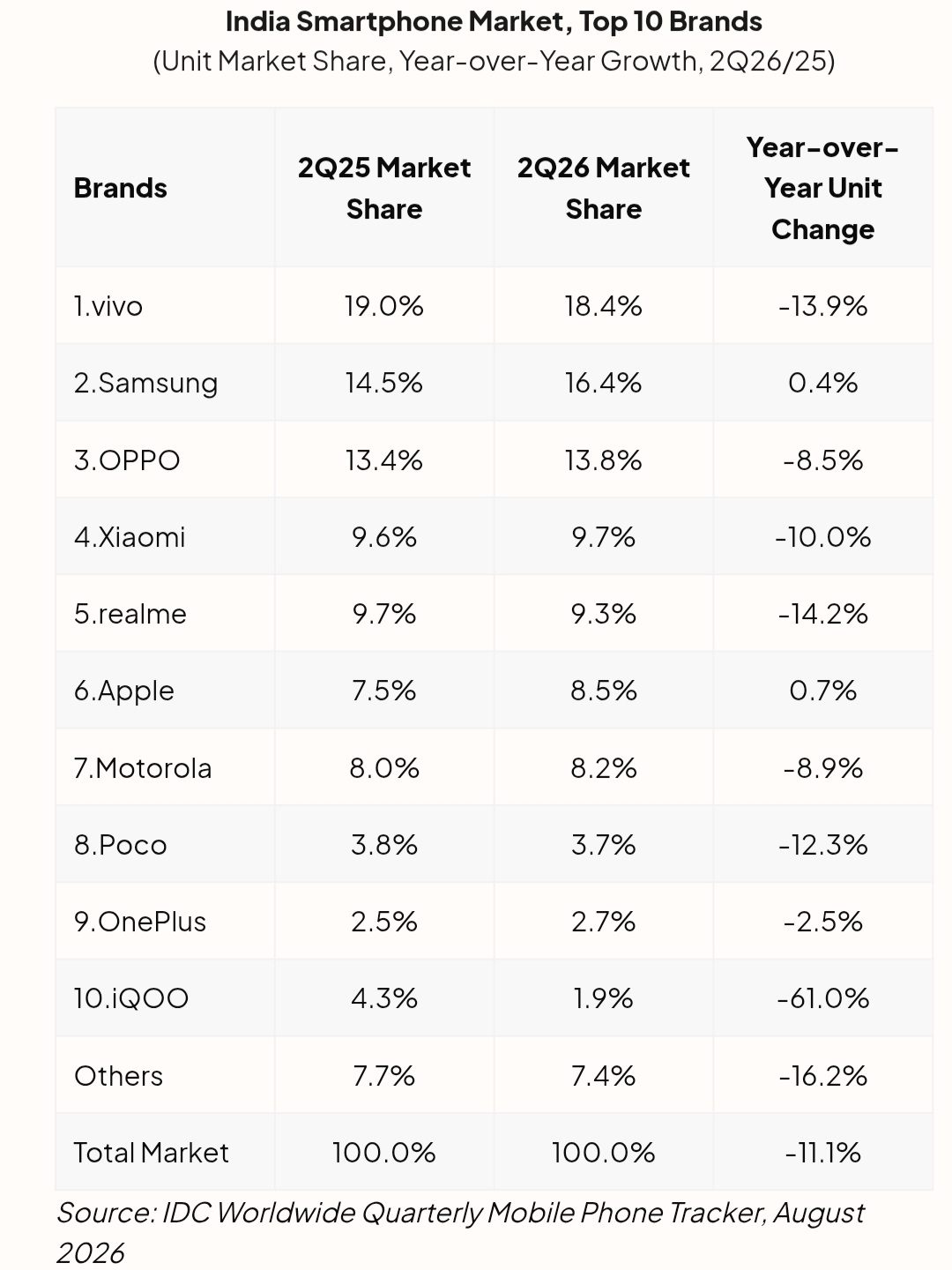
Samsung and Apple are bucking the trend. Samsung grew shipments by 0.4% in Q2, raising its market share to 16.4% from 14.5% last year. Apple nudged shipments up 0.7%, reaching 8.5% share from 7.5%. In a shrinking market, even small gains matter. Both brands focus on premium phones, and the numbers prove that strategy works.
ALSO READ: OPPO Hikes K14 and A6 Series Prices in India Again
Rising prices, shifting channels
The market is worth more because average phone prices keep rising. Memory, storage, and display parts cost more, so brands are passing those costs to buyers. Online discounts are smaller and harder to find. People are buying fewer phones, but each one costs more.
This shift is changing how people buy phones. Online shipments, once the main growth driver for brands like Xiaomi and Realme, dropped 19.8% in the first half. Online’s share fell from 46.4% to 41.9%. Offline sales only dipped 3.6% and now make up 58.1% of all sales, up from 53.6% last year. More buyers are heading to stores as online deals disappear and people want to see phones in person before spending more.
ALSO READ: Exclusive: First Look at the OnePlus 15 Running ColorOS 16
Apple’s quiet dominance by value
Apple’s shipment growth may look modest at 0.7%, but the value story is far more dramatic. IDC data shows Apple led the Indian smartphone market by value with a 27% share, up 22.2% year-on-year. The iPhone 17 was the top-shipped smartphone model in both Q1 and Q2 of 2026, despite what IDC describes as “supply constraints” on the iPhone 15, 16, and 17.
This is what moving upmarket looks like. Chinese brands are chasing unit sales in a shrinking market, but Apple is taking a much bigger share of the money. iPhones cost several times more than a typical Xiaomi or Realme. As more Indian buyers upgrade to pricier phones or wait longer to buy, Apple comes out on top.
Samsung is holding its ground in the middle. Its wide lineup, from budget Galaxy A-series to the top S26 Ultra, helps it ride out the downturn better than brands that stick to one segment. A 0.4% shipment bump may look small, but with big drops from Chinese brands, staying steady counts as a win.
More pain ahead
IDC expects a rough second half for 2026. Shipments could fall more than 15% year-on-year, dropping full-year volumes to 128-130 million units. India has not seen numbers this low in years.
The Indian smartphone market, once defined by frequent upgrades and price-sensitive buyers, now looks more like mature markets. People are holding onto phones longer, showing less brand loyalty, and spending more, but only when the value is clear.
Brands that rely on big sales numbers will feel even more pressure. Those with strong pricing and premium phones can handle the slowdown. The split from the first half, with Chinese brands dropping and Samsung and Apple holding steady, likely will not change soon.

FAQ
Which smartphone brand leads the Indian market by shipments?
Vivo remained the largest brand by shipments in Q2 2026 with an 18.4% share, though its volumes fell 13.9% year-on-year.
Why are Chinese smartphone brands declining in India?
A combination of rising component costs, reduced online discounts, and a broader market contraction has hit volume-focused Chinese brands harder than premium players like Samsung and Apple.
Did Apple grow in India despite the market shrinking?
Yes. Apple grew shipments 0.7% and captured 27% of the market by value, with the iPhone 17 as the top-shipped model in both Q1 and Q2 2026.
Why are online smartphone shipments falling?
Online shipments dropped 19.8% as discounts became less aggressive and consumers shifted toward offline retail, which now accounts for 58.1% of sales.
What is the outlook for India’s smartphone market in the second half of 2026?
IDC expects shipments to decline more than 15% year-on-year in H2, with full-year volumes forecast at 128-130 million units. Consumers are delaying upgrades due to rising prices and weak festive discounts.
You can follow Smartprix on Twitter, Facebook, Instagram, and Google News. Visit smartprix.com for the latest tech and auto news, reviews, and guides.