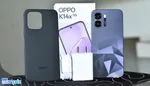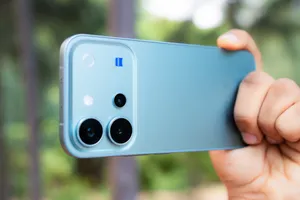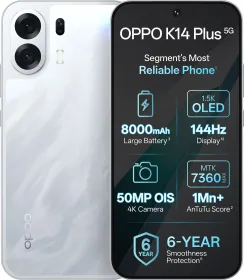



Every few months, a new mid-range phone shows up, promising to fix the one thing everyone actually cares about: battery anxiety. Most of them exaggerate. The Oppo K14 Plus 5G, in my three weeks with it, mostly doesn’t.
The phone is built around a single, deliberate bet: buyers in the ₹30,000 range should have a battery that laughs at a long day. And the phone pays off that bet. However, in pursuit of that, it skimps on a few aspects that could have been better, including crucial ones like the chipset and the cameras.
Some of that works brilliantly. Some of it, as you will see, feels like Oppo trimmed a little too close to the bone. Here is what three weeks of real use, not a spec-sheet skim, taught me about where the K14 Plus earns its asking price, and where it doesn’t.
Oppo K14 Plus 5G: Price & Availability
The Oppo K14 Plus 5G went on sale in India on October 8, 2026, a little over a week after its September 29 unveiling. It comes in three memory and storage configurations, all running the same Dimensity 7360 Max chipset:
- K14 Plus 5G (6GB + 128GB): ₹29,999
- K14 Plus 5G (8GB + 128GB): ₹32,999
- K14 Plus 5G (8GB + 256GB): ₹35,999
Select bank cards shave ₹4,000 off each of those prices at checkout, bringing them down to ₹25,999, ₹28,999 and ₹31,999 respectively.

Oppo K14 Plus 5G: Tech Specifications
| Details | |
| Model | Oppo K14 Plus 5G (CPH3009) |
| Display | 6.78-inch AMOLED, FHD+/1.5K (2772×1272, selectable down to 2354×1080), 450ppi, 93.6% screen-to-body, flat panel, punch-hole camera |
| Refresh Rate | 60/90/120Hz adaptive, up to 144Hz; 240Hz touch sampling, 4,000Hz instantaneous touch response |
| Color and Dimming | 10-bit, 1.07 billion colors, 100% DCI-P3 (Standard/Natural modes), Warm/Default/Cool profiles, 2,160Hz PWM dimming |
| Brightness | 1,800 nits typical (HBM mode), 3,000 nits claimed peak |
| Processor | MediaTek Dimensity 7360 Max, 4nm, 8-core (4x 2.5GHz performance cores + 4x 2.0GHz efficiency cores) |
| GPU | Arm Mali-G615, 1.047GHz |
| RAM | 6GB or 8GB LPDDR4X; virtual RAM expansion up to 16GB |
| Storage | 128GB or 256GB UFS 3.1; no memory card slot |
| Rear Camera | 50MP main, f/1.8, 5-element lens, 2-axis OIS; 2MP monochrome secondary |
| Rear Video | 4K@30fps (EIS/OIS), 1080p@60/30fps, 720p@30fps, slow-mo up to 1080p@120fps, up to 10x digital zoom |
| Front Camera | 16MP, f/2.4; video capped at 1080p@30fps |
| Battery | 8,000mAh typical capacity (7,780mAh rated) |
| Charging | 45W SUPERVOOC wired, approximately 90 minutes 0 to 100%, bypass charging supported; no wireless charging |
| Battery Longevity | Rated for 1,800 charge cycles; 80% capacity retention claimed over that span |
| Software | ColorOS 16.5.0 (build CPH3009_16.5.0.102EX01) on Android 17 |
| Biometrics | In-display optical fingerprint, face unlock |
| Build | Plastic back and frame, AGC DT-Star D+ cover glass, IP66/68/69/69K rating |
| Dimensions and Weight | 162.6 x 77.6 x 8.4mm, 207g |
| Audio | Stereo speakers; no 3.5mm headphone jack (USB-C digital audio supported) |
| Connectivity | 5G, Wi-Fi 6, Bluetooth, GNSS (GPS/GLONASS/Galileo/BeiDou/QZSS); no NFC |
| SIM | Dual nano-SIM; no eSIM |
| In the Box | Handset, 45W SUPERVOOC charger, USB-C cable, SIM tool, pre-applied screen protector, transparent protective case |
| Colors | Star White, Solar Orange |
| Price (India) | ₹29,999 / ₹32,999 / ₹35,999 |
Oppo K14 Plus 5G Review: 5 Things I Absolutely Like
1. That Absurdly Big, Long-Lasting 8,000 mAh Battery
Let’s start with what justifies the phone’s asking price in 2026: the 8,000 mAh battery. Before I get into it, the rated battery capacity is 7,780 mAh, the guaranteed figure, while 8,000 mAh is the typical capacity brands use to market their devices. With that out of the way, let’s address the elephant in the room (or, in this case, the chassis).

I’ve been using the Oppo K14 Plus 5G for around three weeks now, and there hasn’t been a day when the battery failed to impress me. Actually, make that alternate days, because that’s when I plugged it in. Now, there are layers to this, so follow along. Using the phone on Wi-Fi without a SIM gave me around 14 to 15 hours of screen-on time with light usage.
With a Jio 5G SIM and similar usage, screen-on time drops to around 11 to 12 hours, which is still commendable. Push the phone with gaming, streaming, navigation, and hotspot use (for my secondary devices), and that drops to around 10 hours. If this were the beginning of 2026, when 8,000 or 10,000 mAh phones were just starting to flood the market, I’d call that exceptional.

Now that we’ve seen several phones pull off similar numbers, it’s still impressive, and that’s hardly faint praise. With heavy usage, back-to-back benchmarks, a two-hour camera spin, and a couple of BGMI sessions for my younger cousin, I still got around eight and a half hours of screen-on time. That’s hardly a typical day for most users.
So, what should you actually expect? Will the phone last two days on a single charge? If you’re a call-and-text user, or buying this phone for that purpose, it most likely will. Otherwise, you might need to plug it in on the second night. With mixed usage, texting, scrolling, streaming, and capturing, the phone should easily last a full day.

Two things are for sure. If you’ve gotten into the habit of carrying a power bank with your Android phone, this one might make you forget it exists. Second, it should put battery anxiety on the back burner. Oppo backs that up with a claim of 80% battery health after 1,800 charge cycles, which should cover the phone’s useful lifespan for most people, if not necessarily your entire ownership period.
You also get bypass charging, performance profiles, Super Power Saving Mode, and an option to check battery health in the Battery settings menu. If there’s one area where the K14 Plus beats most of its competition, it’s battery life. And it isn’t even close to running on empty.

2. A Punchy AMOLED Display and Speakers That Mean Business
One of the things the massive 8,000 mAh battery powers is the K14 Plus’ screen. Manufacturers often cut costs here, whether in resolution, refresh rate, or brightness. The K14 Plus, on the other hand, refuses to compromise on any of them (mostly).
Out of the box, the phone offers a 6.78-inch AMOLED panel with FHD+ resolution (what we often call 1.5K; it has 2772 x 1272 pixels, for those wondering), support for a 144Hz refresh rate, and a rated HBM brightness of 1,800 nits. Let’s peel back the layers, starting with the AMOLED panel.

It sets this phone apart from the barrage of IPS LCD panels on the market, and the difference is immediately noticeable. You get deep, inky blacks instead of the simulated blacks (or dark gray) of IPS panels. The contrast between shadows and highlights is amazing, and so is the punchiness of the colors.
It is definitely one of the most vibrant, punchy, and pleasing displays in the segment, whether for everyday use or watching different types of content. For those interested in the technical details, the panel has 10-bit color depth, produces over a billion shades, and covers the full DCI-P3 color gamut in Standard and Natural modes. You can also choose between Warm, Default, and Cool color profiles.

What’s good is that the screen resolution is set to High (2772 x 1272) by default. Usually, phones with this feature default to a lower resolution setting (Standard; 2354 x 1080 on this one). The refresh rate is also set to High (144Hz). In practice, though, most apps settle at 120Hz. It is smooth enough, but that makes me wonder which apps actually support the 144Hz ceiling. Touch sampling rate can climb to 240Hz.
The rated peak brightness is 3,000 nits, though I’d treat that number with a bit of caution. The practical limit is 1,800 nits in HBM mode, and that’s where the display seems to top out. Indoors, I keep the brightness slider at around 15 to 20%, and the screen feels bright enough. While watching YouTube or Netflix, I often bump it up to 40 to 50% to make good use of the AMOLED panel’s contrast.

Text and even the minute details in app icons are perfectly visible. Outdoors, it’s a bit trickier. The display remains perfectly visible, but only when you’re out of direct sunlight. With October drawing to a close and the sun losing some of its bite in Northern India, I still feel the screen could have used a couple hundred more nits.
Dimming runs at 2,160Hz, which should help make the screen more comfortable to look at over long periods (though staring at any screen for hours isn’t exactly an eye-care routine).

The stereo speaker setup is one of the better ones in the segment, too. It is loud enough to play songs in the background in your room (for those who do that without a speaker). Vocals are clear, so watching podcasts, movies, or attending voice calls on the speaker shouldn’t be an issue. The loudness stays distortion-free up to 100% volume, I’d say. Beyond that, the K14 Plus boosts the high end to simulate loudness, but the output starts to distort a bit.
Moreover, this is one of the better everyday screen-and-speaker setups you’ll find before stepping into the flagship segment.

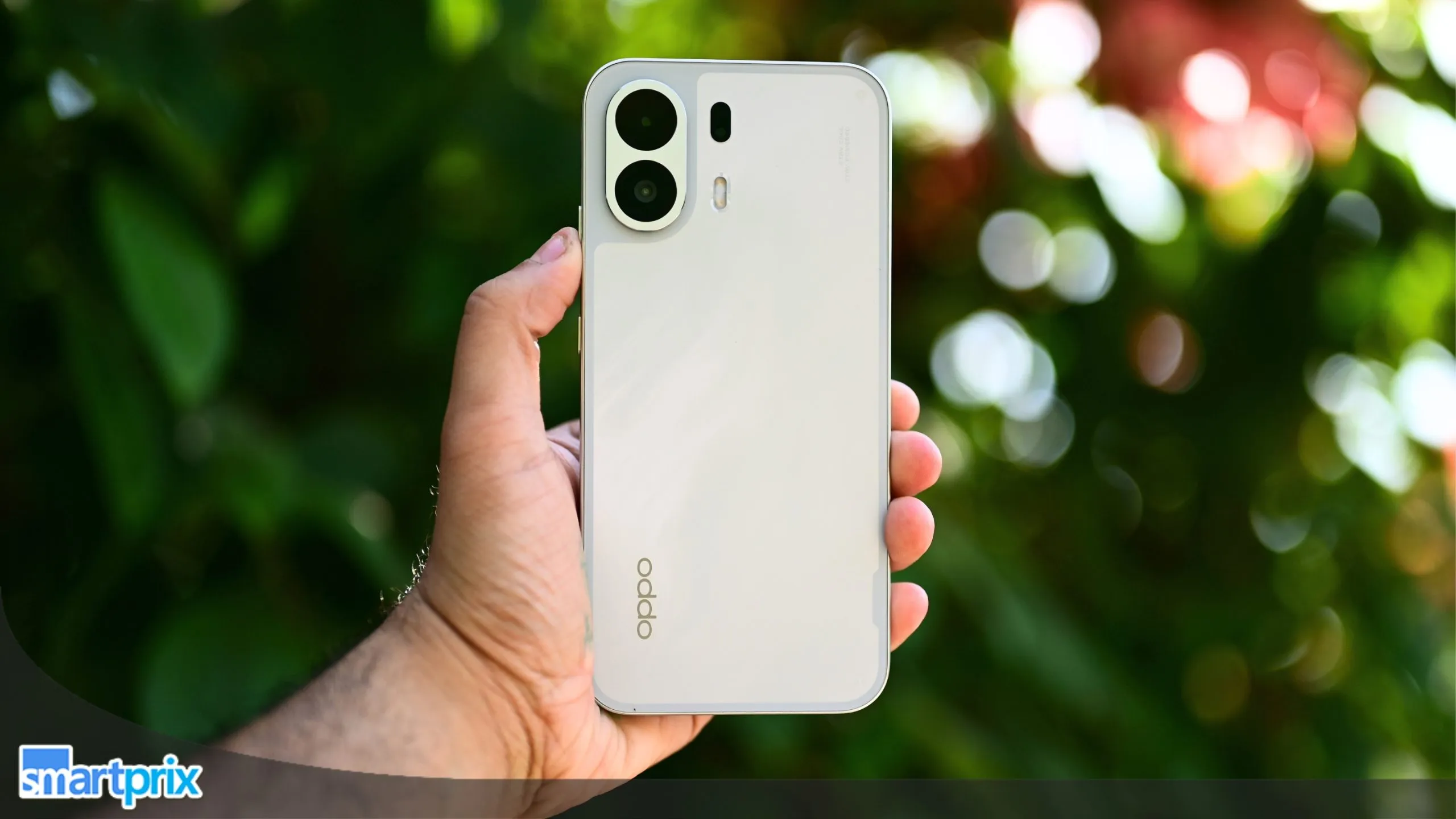
3. Looks Ordinary Until You Catch It At The Right Angle
Generally speaking, plastic doesn’t have a great reputation in smartphones, mostly because brands often reach for it when cutting corners. The Oppo K14 Plus also uses a plastic shell, but it’s a great example of how plastic doesn’t have to scream budget phone when a brand knows how to dress it up.
I received the Star White finish for this review. From the side, the back panel looks like that of an everyday smartphone, with a minimal design. But tilt it at the right angle, and a marble-like finish seems to come to life, bringing a surprised smile to your face (though that only happens the first few times). Like the frame, the back has a matte finish, so it doesn’t attract oily smudges and fingerprints.

Overall, the chassis feels solid, with no awkward creaks or flexing, and sits comfortably in the hand. What’s great is that it carries not one, but four IP ratings, going all the way up to IP69K. In other words, your phone should survive a sudden heavy downpour, a fall into a shallow pool (up to 1.5 meters), or a drop into a bucket or kitchen sink, provided the water isn’t soapy. However, treat these ratings as a safety net, not an invitation to put the phone through such tests daily.
The volume and power buttons on the right rail provide real tactile feedback. At 8.4mm thick and 207 grams, the phone doesn’t look or feel like it’s hiding an 8,000 mAh battery. Finally, Oppo ships the phone with a pre-applied screen protector (not tempered glass) and a transparent protective case, saving you the extra expense of buying basic protection separately.

4. The Dimensity 7360 Max Gets the Basics Right
The 4nm MediaTek Dimensity 7360 Max (a September 2026 release) powers this phone with an 8-core CPU: four performance cores clocked at a modest 2.5 GHz and four efficiency cores clocked at 2.0 GHz, plus the Arm Mali-G615 GPU. The mid-range chipset won’t win any benchmark bragging rights, and Oppo knows it. That doesn’t mean it can’t hold its own in everyday use, though.
Whether you’re browsing in Chrome, scrolling on Instagram, or doing both while chatting on WhatsApp in the background, the Dimensity chipset delivers smooth, confident performance. In my experience, the K14 Plus easily holds around four to five apps in the background before it starts killing them. The UI also feels quite responsive.

Oppo paired the Dimensity 7360 Max with two LPDDR4X memory options and three UFS 3.1 storage tiers: 6GB + 128GB, 8GB + 128GB, or 8GB + 256GB. It also offers virtual RAM expansion up to 16GB, using storage as a substitute for physical RAM to help with multitasking, though with limitations. For the price, and given the new memory pricing norms in 2026, the memory and storage types seem fine.
Whether you’re gaming or multitasking heavily, I’ve barely noticed the phone get warm during active use. Depending on how you look at it, that could be good or bad. On the positive side, the phone features a 5,000-square-mm vapor chamber that keeps the chassis comfortable.

On the flip side, one could argue that the chipset simply isn’t being pushed hard enough to generate much heat. Both explanations could hold some water. Objectively speaking, the phone doesn’t really perform exceptionally well on synthetic benchmarks. Even so, I’ve included all the scores in the table below.
5. ColorOS 16.5 Feels Like It’s Already Looking Ahead
My review unit came with ColorOS 16.5.0 (CPH3009_16.5.0.102EX01) out of the box, if you want to compare yours. It runs on Android 17, Google’s latest mobile operating system, which already gives it a slightly fresher foundation than many of its mid-range peers.

To me, a few corners of the interface already borrow visual cues expected in ColorOS 17. These include rounder quick-settings toggles, a redesigned Phone app, and small but noticeable tweaks to the lock screen and the Settings menu. Overall, it feels like Oppo is quietly laying the groundwork for the next big version rather than simply polishing the current one.
Underneath the redesign sits a useful set of tools. Trinity Engine and Call Guard work quietly in the background to manage resources and screen out spam calls, while AI LinkBoost, AI Eraser, and AI Portrait Glow handle the more visible party tricks, cleaning up photos, removing unwanted objects, and smoothing portraits, all without needing a third-party app. They’re not flashy gimmicks; they actually get used.

Voice transcription and on-device photo clean-up round out the genuinely useful feature set. In my experience, customization runs deep, too. You can change everything on the phone from icon packs to always-on display styles to animation tuning. Once you get past the setup screens (which I will get to in a moment), the software itself is genuinely pleasant to live with day after day.
Oppo K14 Plus 5G Review: 4 Things I Absolutely Like
1. The Camera System Feels Like It’s A Generation Behind
Flip to the back of the K14 Plus, and the camera hardware tells its own story. You get a 50MP main sensor with an f/1.8 aperture, a 5-element lens, and 2-axis optical image stabilization. That’s a pretty capable primary camera in itself. However, it’s paired with a 2MP monochrome sensor that does’t contribute to the final image at all.

It’s just the primary camera against most rivals that offer at least an ultrawide shooter in the segment. Some of them, including the Moto Edge 60 Pro or the Nothing Phone (4a), even offer a telephoto camera. I personally prefer an optical zoom lens over everything else, but the K14 Plus should have at least offered an ultrawide camera.
The main sensor does most of the heavy lifting, capturing daylight shots with plenty of detail, sharp focus, good colors, and controlled highlights. Night shots show noticeable noise, but it’s nothing other phones in the segment eliminate entirely, so I can’t complain. The optical image stabilization really helps, both indoors and outdoors.


Selfies from the 16-megapixel front camera land natural skin tones with a touch of default smoothing. However, backlit scenes tend to wash out the sky entirely, and portrait edge detection is decent until it hits a flyaway strand of hair.


2. Doesn’t Support High FPS BGMI Gaming
The same Dimensity 7360 Max that handles everyday tasks without breaking a sweat starts to show its limits when you try to run video games. Titles like BGMI and COD:M run fine until you set the graphics to medium or higher; you’ll notice frame rates drop almost immediately.


In BGMI, with the HD resource pack, the phone offered me Extreme (60 fps) at Super Smooth, the lowest graphics setting. At Balanced, the frame rate is limited to Ultra (40 fps). The highest possible graphics setting is HDR at Ultra (40 fps). The phone’s marketing material didn’t come with any frame rate claim, and that’s exactly what I can confirm (refine this a bit).
If mobile gaming is a genuine priority rather than an occasional way to kill ten minutes, this is the one area where I would actively steer you toward something else.

You might want to consider the Moto Edge 70 Pro. It supports 120 fps BGMI gaming by default, and as far as I know, the Ultra Extreme (120 fps) mode is available up to Smooth settings, which is still great.
3. Heavy Bloatware And Relatively Shorter Software Update Window
Here is the part of the ColorOS experience I conveniently skipped over earlier. Unbox the K14 Plus, power it on, and you are greeted by more than a dozen pre-installed apps and services. These include Oppo’s own Hot Apps and Hot Games shortcuts that exist purely to push more app downloads at you.

Apps like Instagram, LinkedIn, and Netflix seem fine, because most users install them anyway. However, I am talking about Block Blast!, Bubble Pop!, Collect Ball, Vita Mahjong, and Worm Family; I’ve never heard of these games and I don’t want to play them anyway. Clearing all of it out took me close to 10 minutes of digging through settings and long-pressing icons.
Another letdown is Oppo’s update promise. The K14 Plus comes with just two years of major OS version upgrades and three years of security patches. By current mid-range standards, where plenty of competitors now promise three or more years of major Android updates, that is a short runway for a phone otherwise designed to last longer than its competition.

4. 45W Charging Feels Average Next To The 8,000 mAh Battery
A full charge from empty takes somewhere around 90 minutes with the bundled 45W SUPERVOOC brick. So, yes, the phone lasts for up to two days between charges (depending on your usage), but you’ll have to plan your charging time well.
Phones that support faster charging, say 0 to 100% in about 60 to 70 minutes, also give you about 40 to 50% in 25 to 30 minutes, enough to get you to college, the office, or even a cab. However, a 90-minute charge time implies that you’ll have to give more time for a usable level, even when you’re on a crunch (refine this a bit).

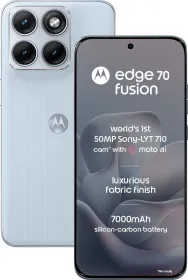
Whether it’s Motorola’s Edge 70 Pro (6,500 mAh with 90W wired charging), the Edge 70 Fusion (7,000 mAh with 68W wired charging), or the OnePlus Nord CE 6 5G (8,000 mAh with 80W wired charging), it’s either a smaller battery with faster wired charging or equivalent battery capacity with faster charging speed, thereby solving the problem and providing a slightly better experience.
The K14 Plus does throw in a few nice touches to soften the blow: bypass charging lets you keep gaming or navigating while plugged in without routing power through the battery itself.
Review Verdict: Should You Buy The Oppo K14 Plus 5G?
Three weeks in, the real question isn’t whether the Oppo K14 Plus 5G is a good phone. It clearly is. The question is who it is actually good for, and the answer is narrower than Oppo’s marketing suggests.
If you are the kind of person who’s genuinely lost a day to a dead phone, works somewhere charging isn’t guaranteed, or simply resents thinking about battery percentage at all, this phone solves that problem better than almost anything else near ₹30,000. The display and speakers are a legitimate bonus, not an afterthought, and the build quality means you are not trading durability to get there.
The case gets weaker everywhere else. The camera plays it safe rather than competitive; gaming tops out well short of what similarly priced rivals now offer, and Oppo’s own update window feels short for hardware built to last this long.
None of these are dealbreakers individually. Together, they make this a phone for a specific kind of buyer rather than a universal recommendation, someone who already knows battery life is non-negotiable and is willing to let everything else be merely good enough.
At ₹29,999 to ₹35,999, with real bank discounts pushing the effective price even lower, that trade-off is reasonable. Just walk in knowing exactly what you are trading away.

Smartprix ⭐ Rating: 8.1/10
- Design and Build: 8.5/10
- Display: 8.5/10
- Speakers: 8/10
- Software: 8.5/10
- Haptics: 7/10
- Biometrics: 8/10
- Performance: 7/10
- Cameras: 7/10
- Battery Life & Charging: 9/10
First reviewed in October 2026.