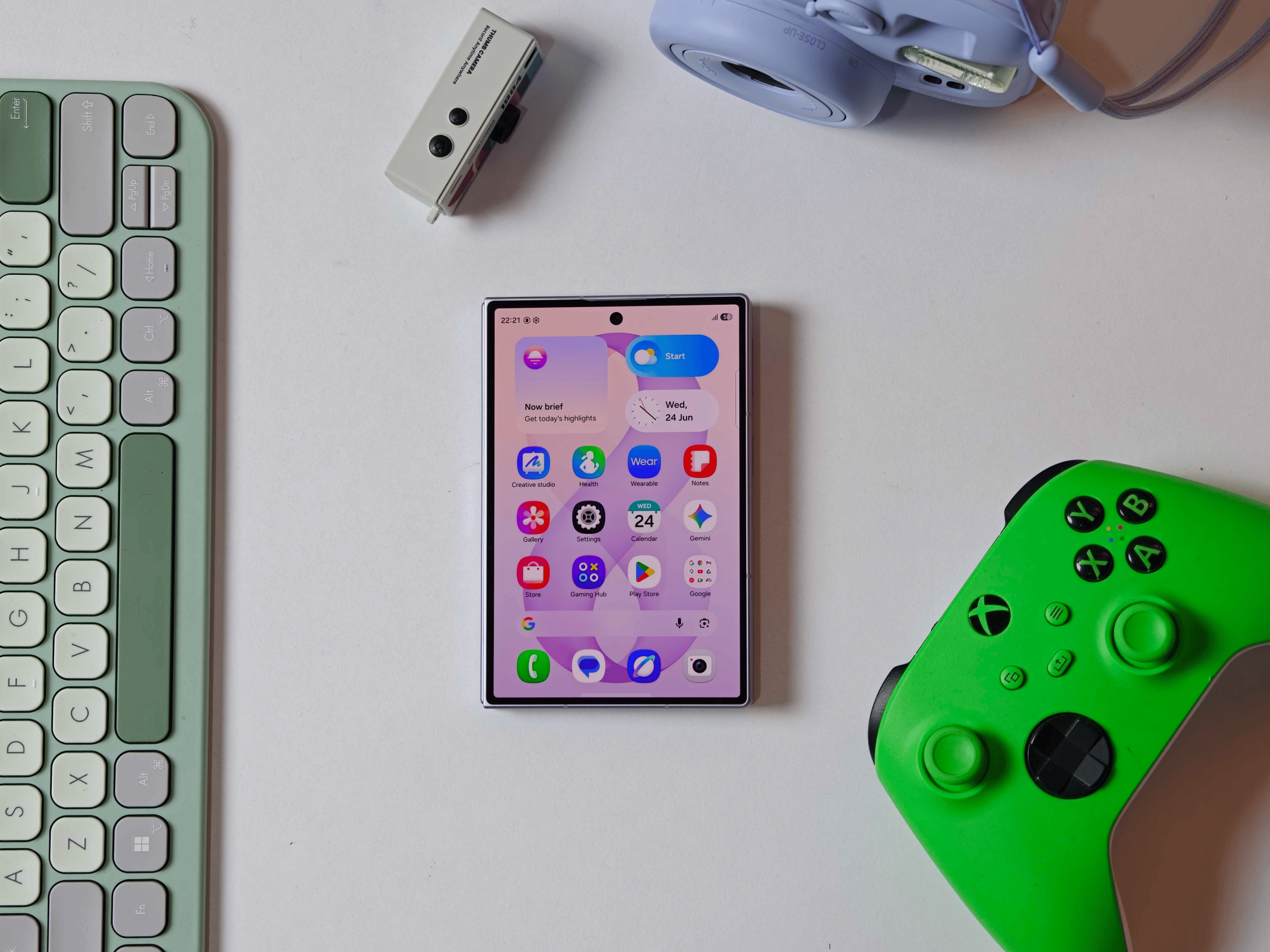
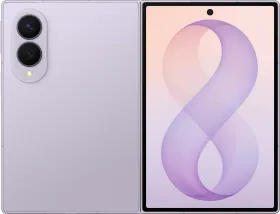
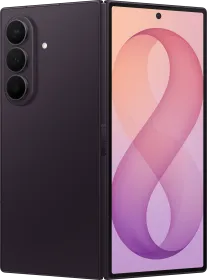
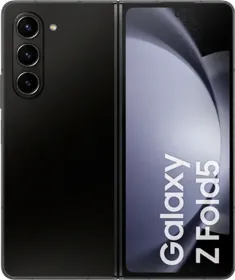
The Galaxy Z Fold 8 starts at ₹1,79,999 and is the best foldable Samsung has made. The new passport shape, wider cover display, and bigger battery finally make this the first Fold I would give to someone who has never used a foldable, without needing to explain its compromises.
The Fold 8 is the best foldable you can buy in India right now, but it still has real gaps. Both are true.
Who Should Buy the Galaxy Z Fold 8?
Buy it if:
you read a lot, work across multiple apps, want a cover display that gets you through your morning without unfolding, and need a battery that finally lasts the whole day. No previous Fold managed all this.
Skip it if:
If you priortize photography then buy Samsung S26 Ultra instead. Skip foldables for now if you play competitive games at max settings for long sessions.
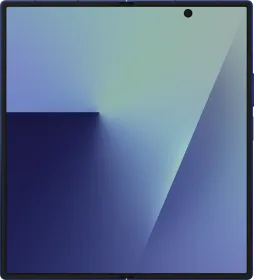
Every year I test the new Galaxy Z Fold and wonder if this is the one that finally makes foldables with a wider, more usable cover screen. With the Fold 8, Samsung switched things up. They reserved the old tall, narrow shape for the Z Fold8 Ultra (review) and went for a shorter, wider design, the passport shape for the vanilla version. The inner display now uses a 4:3 aspect ratio, and the cover screen is a 5.5-inch, 10:16 panel you can actually hold and type on.
This phone does not feel like a compromise. Samsung finally made clear choices. Maybe they wanted to beat Apple to the punch by launching a folding phone with a wider display ahead of iPhone Fold (or whatever Apple decides to name it). What matters is that for the first time in seven generations, I stopped noticing I was holding a foldable after two days. That means Samsung finally got it right, or maybe the novelty has just worn off.
HOW I TESTED
Reviewer: Deepak Singh Rajawat, Technology Editor (11 years experience, 500+ reviews). Test Unit: Samsung India provided the review unit, but editorial opinions are fully independent. No commercials involved. Duration and Environment: I used the Z Fold8 (12GB RAM / 256GB Storage) as my primary smartphone for 7 days on the Jio network in India, logging over 50 hours of screen time across heavy gaming, 5G navigation, and camera testing. Tests: I ran synthetic benchmarks (Geekbench 7, AnTuTu, Throttle Test, 3DMark) and conducted real-world battery-drain tests on 5G, including 45-minute continuous BGMI sessions to test thermal throttling. Competitors Considered: Samsung Galaxy Z Fold7, Samsung Galaxy Z Fold8 Ultra, and Google Pixel 10 Fold.
Samsung Galaxy Z Fold 8 Review - India Price & Availability
The Galaxy Z Fold 8 sale in India starts from August 4, 2026.
Prices: 12GB + 256GB at ₹1,79,999, 12GB + 512GB at ₹1,99,999, 16GB + 1TB at ₹2,39,999. Pre-orders received an instant ₹9,000 bank discount. Available colors are Graphite, Cream, and Lavender, with Pistachio exclusive to Samsung.com. No-cost EMI is available up to nine months.
4,800mAh silicon-carbon battery with strong endurance (14 hours PCMark)
Fast 45W wired charging
One UI 9 is polished and feature-rich
Flex Titanium hinge makes the crease less noticeable
Stronger magnets improve one-handed opening
IP48 water resistance
USB 3.2 support
Wi-Fi 7 and Bluetooth 6.0 connectivity
Cons
No telephoto camera at ₹1.79 lakh
Poor low-light photos and video for the price
Weak sustained GPU performance (45.9% stability)
No Flex Mode
No S Pen support
Inner selfie camera cutout can obstruct portrait content
Wobbles on flat surfaces when unfolded
No Qi2.2 wireless charging
Galaxy Z Fold 8 vs Fold 8 Ultra vs Pixel 10 Pro Fold: How It Stacks Up
Feature
Galaxy Z Fold 8
Galaxy Z Fold 8 Ultra
Pixel 10 Pro Fold
India starting price
₹1,79,999
₹1,99,999
~₹1,74,999
Inner display
7.6-inch, 4:3
8.0-inch
8.0-inch
Cover display
5.5-inch, 10:16
6.5-inch
6.3-inch
Main camera
50MP
200MP
50MP
Telephoto
None
10MP, 3x optical
10.8MP, 5x optical
Battery
4,800mAh
5,000mAh
4,650mAh
Wired charging
45W
45W
45W
S Pen
No
No
No
Flex Mode
No
No
No
Weight
201g
215g
226g
IP rating
IP48
IP48
IP48
Chipset
SD 8 Elite Gen 5
SD 8 Elite Gen 5
Tensor G5
Samsung Galaxy Z Fold8Unboxing
The Samsung Galaxy Z Fold8 arrives in a sustainable, recyclable black retail box. Emphasizing eco-friendliness, Samsung utilized soy-based ink to print manufacturing details such as the July 2026 production date along with box contents and certification information on the rear. The front of the packaging features clean, minimalist Galaxy Z Fold8 branding.
Inside the box, you get the smartphone itself, a USB-C to USB-C charing cable, SIM ejector tool, and documentation.
I walked into the office with the Fold 8 after Unpacked, and people noticed right away. A colleague picked it up and said, “Oh my god, how cute this looks and this is so light.” I heard the same thing from others. That reaction sums up the Fold 8’s design and build. It stands out from every other folding phone. Folded, it measures 81.9 x 123.9 x 9.7mm. Unfolded, it’s 161.4 x 123.9 x 4.5mm. The wider, passport-style shape makes it look and feel more compact than the taller folds.
The Fold 8 weighs 201 grams, which is 14 grams lighter than the Fold 7 and Fold 8 Ultra, 42 grams lighter than the Motorola Razr Fold, and 57 grams lighter than the Pixel 10 Pro Fold. After using the Fold 8, every other foldable feels heavy.
Unfolded, the Fold 8 is just 4.5mm thick. Folded, it stays under 10mm. The new rounded edges fix the sharp corners that made the Fold 6 and Fold 7 uncomfortable. I carried the Fold 8 in my trouser pockets every day, and it never bothered me. With the Fold 7, you always felt it when you sat down.
The hinge upgrade is more important than Samsung’s spec sheet claims. Flex Titanium is a full rework of the display stack. Samsung replaced the old polymer support film with a titanium alloy film and a stronger titanium plate beneath the OLED panel. This strengthens the display, absorbs pressure and impact, and reduces the crease over time. The new setup also makes the hinge action smoother.
Earlier Folds felt risky to open with one hand. The Fold 8 opens naturally. The fingerprint scanner sits exactly where your middle finger lands. I unlocked it every time in 150 hours of testing. No previous Fold managed that.
The Fold 8 wobbles on a flat desk when open because the rear camera module makes the base uneven. Every tap on the inner screen rocks the phone. If you use the inner display while it is lying flat, you will notice the wobble. The big screen encourages this, and it gets annoying fast.
The Fold 8 finally feels worth the price. Samsung should fix the wobble next time. Everything else works as it should.
The Galaxy Z Fold 8 isn’t a great phone because it folds; it’s great because it finally makes the folding experience feel normal.
The biggest change isn’t the weight. It’s that the cover display no longer feels like a compromise. I replied to emails, edited documents and browsed the web without feeling the need to unfold the phone. That’s never been true of a Galaxy Fold before.
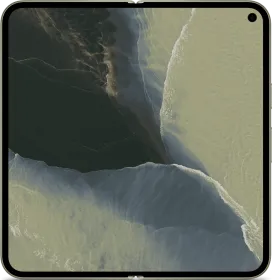
The Fold 8’s cover screen is 5.5 inches at a 10:16 aspect ratio. It is shorter, wider, and dramatically more usable than every previous Fold cover panel. Rotate it to landscape, and 10:16 becomes an effective 16:10, which makes YouTube, short-form video, and casual gaming work naturally without unfolding. In portrait, the wider keyboard finally allows one-handed typing without constant errors.
I wrote full emails, WhatsApp voice note transcriptions, and YouTube scripts on the cover display across this review period. On the Fold 7, I would have unfolded the phone for anything longer than a few sentences. The Fold 8 cover screen is wide enough that you often do not bother.
App behavior remains inconsistent across the device. For instance, X (Twitter) opens in a vertical orientation that forces the navigation bar to the side. Similarly, viewing Instagram Reels in landscape mode results in distracting black bars on both displays. While the content fills the frame more effectively when held in a vertical orientation on the inner display, you still encounter minor black bars on the sides; however, this is far less intrusive than the landscape view, making it the preferred way to browse the app.
On the cover display, X opens with black bars on the sides instead of using the full width. Most daily apps like YouTube, Swiggy, Zomato, and Google apps fill the cover screen with no problem. Myntra is the exception, opening in a boxed 16:9 layout that wastes space. That is a developer issue Samsung cannot fix with hardware, but it is a real daily annoyance.
The 7.6-inch inner display with a 4:3 ratio is the best screen for reading and browsing I have used on any phone. In portrait, it feels like reading a compact book: you see more text, scroll less, and rarely need to zoom. PDFs, long articles, Kindle books, and comics all work better than on a regular phone. Web browsing is easier too, with more content on screen, less pinching and zooming, and better product images when shopping. Turn the phone to landscape for gaming or video, and the inner screen feels like a handheld gaming device. The 4:3 aspect ratio gives apps a wide, almost PC-like look in landscape.
Both panels reach 3,000-nit peak brightness, up from 2,600 nits on the Fold 7, with Vision Booster for outdoor use. Inner display resolution is 1,848 x 2,448 at 403ppi. Cover display resolution is 1,248 x 1,972 at 428ppi. Both run at adaptive 1-120Hz refresh. PWM frequency consistently sits around 480Hz, with modulation depth varying from roughly 50 to 99 percent, making it significantly more comfortable for PWM-sensitive users than lower-frequency panels.
The 3,000-nit peak brightness lasts about five minutes in direct sunlight before the phone dims to prevent overheating. After a week in North Indian summer, I never had to shade the screen, but do not expect full brightness for long outdoor use.
The crease is less visible than before. You can still spot it on a white background in direct light if you look for it. OPPO’s Find N6 Fold hides the crease better. After two days of using the Fold 8 for content, gaming, or reading, I barely noticed it. The real test is whether it gets worse after six months, but right now, this is Samsung’s best effort yet.
The Fold 8 does not have Flex Mode. You cannot prop it open for hands-free video calls or cooking timers.
The inner display is still the main reason to buy a foldable phone. Now the cover display is finally good enough that you can keep the phone closed most of the time. No previous Fold managed both at once.
Samsung Galaxy Z Fold8 Review: Speakers and Haptics
The stereo speakers are loud and clear when both are free, but in landscape on the inner display, my hand always covered the bottom speaker. You get used to it, but you should not have to. This is a design oversight on a device built for content. Haptics are the best on any Fold so far, close to Galaxy S series standards. Keyboard feedback is crisp, making long typing sessions on the wide keyboard feel satisfying.
The speakers sound good, but Samsung still has not fixed the placement problem after three generations of Folds.
Samsung Galaxy Z Fold8 Review: Software
One UI 9 on Android 17 is mature in a way that Android foldable software has not been until now. App continuity between the cover and inner display is seamless. Split-screen resizing works reliably. Three simultaneous apps on the inner display — I ran Slack, YouTube, and X together — perform without stuttering. In practice, I used two apps side by side far more than three, because a 50/50 split on a 7.6-inch 4:3 display is genuinely comfortable rather than cramped.
Now Brief adds custom AI widgets you build yourself based on your routines and preferences. This is not a gimmick. It is the difference between a smart assistant that shows generic weather and news, and one that shows your 11 AM call reminder, your Galaxy Watch battery status, and your Swiggy order confirmation. The personalization here is ahead of what Google’s Now Feed and Apple’s widgets offer.
Now Nudge, which suggests actions from your conversations, is still inconsistent. It works in demos, but in real conversations, it gets the right suggestion about half the time. My FanCam, which auto-tracks and reframes a person in video, works reliably and is the AI feature I actually used. Gemini Notebook turns notes, photos, and voice recordings into summaries and documents. It is more useful than I expected for anyone who reviews products, takes meeting notes, or researches purchases.
Samsung DeX is here, but almost nobody uses it. It is not a reason to buy the Fold 8.
One UI 9 is not just the best foldable software. It is better than any other Android brand’s software on any phone right now.
Samsung Galaxy Z Fold8 Review: Biometrics
The Samsung Galaxy Z Fold 8 features a physical, side-mounted capacitive fingerprint sensor integrted in the power button. It’s extremely fast and reliable in daily use. Unlock speeds are almost instant, and it works well even with slightly wet fingers.
Face unlock is available too, though this is still a standard 2D implementation mainly useful for convenience in good lighting conditions.
Samsung Galaxy Z Fold8Review: Performance
Under the hood, the Samsung Galaxy Z Fold 8 packs a Snapdragon 8 Elite Gen 5 chip, paired with up to 16GB of LPDDR5X RAM and 1TB of UFS 4.1 storage. I’ve been testing the 12GB/256GB model, and it’s a total beast—everything feels snappy, apps pop open instantly, and multitasking is super fluid. Between the fast storage and smart RAM management, One UI 9 really makes the most of all that power, keeping everything running smoothly even when you’re pushing it hard.
Synthetic Benchmarks
Benchmark Category
OPPO Find N6 (Snapdragon 8 Elite Gen 5)
Samsung Galaxy Z Fold8(Snapdragon 8 Elite Gen 5 for Galaxy)
Best Loop: 6050 Lowest Loop: 2833 Stability: 46.8%
Best Loop: 5653 Lowest Loop: 2593 Stability: 45.9%
3DMark Wild Life Stress Test
–
Best Loop: 18,114 Lowest Loop: 8720 Stability: 48.1%
The Snapdragon 8 Elite Gen 5 is the right chip for this phone, and the benchmark numbers prove it. Geekbench 7: 2,458 single-core, 5,307 multi-core. AnTuTu V11.1.1 total: 2,318,684, broken down as CPU 702,025, GPU 739,165, memory 343,690, UX 533,804. The temperature rose from 34.5 to 41.8 degrees Celsius during the AnTuTu run, with a 2 percent battery drop. PCMark Work 3.1 performance score: 21,494. Web browsing score: 22,754. These numbers are competitive with or ahead of every other Android chip currently available, including the Snapdragon 8 Gen 5 in the OPPO Find N6 and the Tensor G5 in the Pixel 10 Pro Fold.
Here is the catch. The 3DMark Wildlife Extreme Stress Test gave a best loop score of 5,653, a lowest loop score of 2,593, and a stability rating of 45.9 percent.
Galaxy Z Fold 8 Gaming Test
Under heavy gaming, the GPU drops to less than half its peak output as the thermal system manages heat within the 4.5mm chassis. During my testing with graphic-intensive titles Genshin Impact, and Viking Rise, I found that running Genshin Impact at max settings resulted in occasional throttling and frame drops. However, dropping the settings down by one level ensured a significantly smoother and more consistent experience.
The Pixel 10 Pro Fold is slightly thicker and handles heat better under load. For casual and mid-intensity gaming like BGMI, racing, or RPGs, the Fold 8 is excellent, and the big display makes games feel immersive. For competitive gaming at max settings for long sessions, you will notice the throttle.
You get top performance in everything except sustained peak GPU load. The stress test numbers make this clear.
Galaxy Z Fold 8 heating
During a closed-door briefing, a Samsung representative explained that the device utilizes an expanded graphite cooling structure to improve thermal conductivity and dissipate heat during heavy workloads. These efforts were reflected in our testing: while the Galaxy Z Fold 8 does get warm under extreme pressure, it remains manageable. For instance, after a rigorous gaming session of Genshin Impact in a 25°C ambient environment, the phone’s surface temperature reached 42°C.
Connectivity is complete: USB 3.2, Wi-Fi 7, Bluetooth 6.0, 5G. The USB 3.2 port means wired file transfers and external display connections are genuinely fast, which matters if you use the Fold 8 for work file management.
Samsung Galaxy Z Fold8 Review: Cameras
The Fold 8 has two rear cameras: a 50MP wide-angle with Dual Pixel AF, OIS, f/1.8, and a 50MP ultrawide with Quad Pixel AF at f/1.9. There is no telephoto. The Fold 7 had one. The Fold 8 Ultra has a 200MP main, a 50MP ultrawide, and a 10MP 3x telephoto. The regular Fold 8 drops the telephoto completely. At ₹1,79,999, this is hard to justify. Without zoom, every photo of a subject more than a few meters away is just a software crop, and it shows.
Daylight photography is good, with the main sensor producing clean, accurate colors free from the heavy-handed sharpening and oversaturation that plagued previous generations. The upgraded 50MP ultrawide sensor is a significant improvement over the Fold 7’s 12MP unit, delivering noticeably better edge detail and corner sharpness. Additionally, the camera’s macro performance has become better.
Low light is a different story, and I will not soften it. Photos in low light are soft, noisy, and lack the detail that phones half this price deliver in 2026. Video in low light is worse than photos: grainy, flat, and not worth sharing. The Galaxy S26 Ultra, which I tested earlier this year, is in a different league in the same conditions. Even the Pixel 9 Pro, at less than half the price, handles low-light photos better.
I need to add a real disclosure here: this unit runs pre-release software, and Samsung often improves camera processing with updates. The Fold 7’s camera improved over its first three months. I will retest and update this section after a major software update. As of today, low-light results are this phone’s biggest disappointment.
My FanCam works well and is the camera feature I see GenZ genration using the most. The inner selfie camera beneath the display is soft and frequently obscured by its cutout in portrait content. Remove it in the Fold 9 nobody needs an inner-display selfie camera that produces output this soft when the cover camera exists.
The daytime cameras are solid, and the ultrawide upgrade is real. But at this price, poor low-light performance and the lack of a telephoto are hard to excuse, even if future updates help.
Samsung Galaxy Z Fold8 Review: Battery Life and Charging
The Galaxy Z Fold 8 uses a 4,800mAh silicon-carbon dual battery. The Fold 7 and Fold 6 had 4,400mAh. The Pixel 10 Pro Fold has 4,650mAh. The Fold 8 has the biggest battery in its lineup and beats its closest competitor. You notice the difference right away.
On an avage day with messaging, social media, two hours of video on the inner display, photography, benchmarks, and continuous 5G, the phone gave me 12 hours and 31 minutes of screen-on time and 4 hours and 57 minutes of screen-off time at 87 percent battery use. PCMark’s Work 3.1 battery test ran for 11 hours and 59 minutes at 67.9 percent battery draw, for a formal result of 14 hours and 11 minutes. For comparison, the Fold 7 would need a charge by early evening on a similar day. The Fold 8 made it through easily.
Wired charging at 45W gets you to 63 percent in 30 minutes, which is enough for the rest of the day after a quick lunch break. Wireless charging is now 20W, up from 15W on the Fold 7, and works well for overnight charging. Wireless PowerShare for reverse charging is supported. Qi2.2 is not supported natively. You need a compatible case, which feels like a deliberate omission at this price.
Every Galaxy Fold before this had battery anxiety. The Fold 8 finally fixes it. If battery life kept you from candybar phone to a fold, now you can switch.
The Galaxy Z Fold 8 is finally the foldable that doesn’t feel like a compromise—it’s just as good as a phone when you’re on the go and a compact tablet when you need more screen.
Review Verdict: Should You Buy the Samsung Galaxy Z Fold8?
Smartprix ⭐ Rating: 8.8/10
I have reviewed every Samsung Galaxy Z Fold since the first generation. The Fold 8 is the first one I would buy with my own money, without spending a week debating the compromises.
The form factor finally works. The cover display is no longer something you just tolerate. It is the screen you actually use most of the day. The battery lasts all day in real use, not just in lab tests. The software leads every competitor. The weight sets a new standard other brands need to match.
The Fold 8 is not a camera phone. If you want the best photos for ₹1.79 lakh, this is not the right choice. The Galaxy S26 Ultra, at a lower price, gives you a telephoto lens, a 200MP main sensor, and low-light performance the Fold 8 cannot match. Buy that instead and add Bluetooth earphones and a power bank if you need portability.
The Fold 8 is for people who use their phone as a tool: reading, researching, multitasking, and communicating. If that is you, this is not just the best foldable in India. It is the most capable daily driver you can buy at this price, whatever the form factor.
First reviewed in July 2026.
Frequently Asked Questions
Is the Samsung Galaxy Z Fold 8 worth buying in India in 2026?
Yes, for daily power users who want the most ergonomic foldable with all-day battery and excellent multitasking software. No, if photography at a distance or in low light is a primary requirement.
What is the price of the Samsung Galaxy Z Fold 8 in India?
It starts at ₹1,79,999 for 12GB + 256GB. The 12GB + 512GB model is ₹1,99,999, and the 16GB + 1TB variant is ₹2,39,999. A pre-order bank discount of ₹9,000 was available until August 4, 2026.
Does the Galaxy Z Fold 8 have a telephoto camera?
No. It has a dual rear camera system — 50MP main and 50MP ultrawide. The telephoto present in the Fold 7 has been removed. There is no optical zoom beyond the 2x in-sensor crop on the main sensor.
How long does the Galaxy Z Fold 8 battery last?
PCMark Work 3.1 returned 14 hours and 11 minutes. Real-world daily use with mixed screen-on activity returned 12 hours and 31 minutes of screen time, accounting for 87 percent of total daily battery consumption over seven days of testing.
Is the screen crease visible on the Galaxy Z Fold 8?
It is visible on a white background when light hits at an angle, and you are looking for it. In daily use during content, reading, and gaming, it is effectively invisible. OPPO’s foldables remain ahead on crease reduction, but the Fold 8 is the best Samsung has achieved.
Does the Galaxy Z Fold 8 have Flex Mode?
No. Flex Mode is exclusive to the Galaxy Z Flip lineup. The Fold 8 does not support tent mode or any angled display positioning.
Does the Galaxy Z Fold 8 support S Pen?
No. Neither the Fold 8 nor the Fold 8 Ultra supports S Pen in any configuration.
How does the Fold 8 compare to the Fold 8 Ultra?
The Fold 8 starts ₹20,000 cheaper, weighs 14 grams less, and has a smaller 7.6-inch inner display. The Fold 8 Ultra gets a 200MP main camera, 3x telephoto, 5,000mAh battery, and a larger 6.5-inch cover display. Neither has S Pen or Flex Mode.
Is the Galaxy Z Fold 8 water resistant?
Yes. IP48 means tested for up to 1.5 meters of freshwater submersion for 30 minutes. Not rated for pool or beach use.
What is the Galaxy Z Fold 8 charging speed?
45W wired, reaching 63 percent in 30 minutes from flat. 20W wireless. No Qi2.2 support natively.
Deepak Rajawat is a tech journalist and editor at Smartprix, where he reviews smartphones, laptops, TVs, and audio gear. In his 12 years in media, he has reviewed over 1,000 devices. Since joining Smartprix in 2015, his reviewing philosophy has been simple: cut through the spec sheets and tell readers how a gadget actually holds up in daily life.
Before moving to digital tech journalism, Deepak covered sports and worked for legacy print publications, including Hindustan Times and The Statesman. He holds a degree in Journalism and Mass Communication from Calcutta University and is based in Noida.
The Galaxy Z Fold8 Ultra changes how I think about foldables. Samsung doesn’t dwell on trade-offs for that big 8-inch screen. Instead, it shows what you can actually do with it. The titanium case is just 4.1mm thick when open. It’s lighter than most top-end phones, so nothing feels sacrificed. This year, Samsung didn’t just …
Samsung has spent the last several Unpacked July events chasing one goal with its book-style foldable: make it feel less like a foldable and more like a regular flagship you happen to fold in half. The Galaxy Z Fold 7 (review) got the Korean giant quite closer to this target, shedding both weight and bulk …
Samsung has finally made the jump to silicon-carbon (Si/C) battery technology, confirming that its newly launched Galaxy Z Fold8, Z Fold8 Ultra (read hands-on review), and Z Flip8 all use Si/C cells. Samsung’s Si/C Battery Adoption Silicon-carbon batteries have become the buzzword of the foldable phone world over the last year, and for good reason. …
Samsung just pulled off something it hasn’t done in seven years of Galaxy foldables: it launched a book-style phone that doesn’t look like a book-style phone anymore. At Unpacked in London, the company introduced three new foldables, the Galaxy Z Fold8 Ultra (read hands-on review), the Galaxy Z Flip8, and the all-new Galaxy Z Fold8, …
For the past few years, Samsung’s Fold lineup has been predictable. Every generation brought a thinner design, a slightly better camera, a newer Snapdragon chip, and a few software improvements. Meanwhile, competitors like OPPO and Honor were experimenting with larger batteries, shallower creases, faster charging, and way better cameras. This year feels… a little different. …