

Quick Verdict
The Galaxy Z Fold8 Ultra isn’t just another iterative Fold. It’s Samsung finally acknowledging that one Fold can no longer satisfy everyone. Instead of replacing the Fold7 outright, Samsung has split its foldable lineup into two directions. The Galaxy Z Fold8 is aimed at users who want a more compact, media-friendly foldable, while the Galaxy Z Fold8 Ultra takes over as the true spiritual successor to the Fold7 with a taller display, flagship camera system, bigger battery, and productivity-focused software (think Flex Mode).
The upgrades are exactly what Fold fans have been asking for. The battery finally jumps to 5,000 mAh, charging increases to 45W, the crease is noticeably smaller, the ultra-wide camera gets a meaningful upgrade, and the new titanium FlexHinge helps make an already thin phone feel even more refined.
But Samsung still leaves room for improvement. Battery life is better than the Fold7 but still trails rivals like the OPPO Find N6. Video quality isn’t quite where flagship standards should be, sustained gaming performance can throttle, the 3X telephoto is a disappointment, and features like Qi2 magnetic charging, S Pen support, and a stronger IP rating are still absent.
Despite those shortcomings, this is the most complete Galaxy Fold Samsung has ever made.
Buy it if:
- You want Samsung’s best foldable with a refined design, brighter displays, and a noticeably smaller crease.
- Productivity is your priority and you regularly use split-screen apps, Flex Mode, and Samsung’s multitasking features.
- You’re upgrading from a Galaxy Z Fold6 or an older Fold.
- You value long software support with seven years of Android OS and security updates.
- You prefer Samsung’s One UI, Galaxy AI features, and the broader Galaxy ecosystem.
Skip it if:
- You want the best battery life, fastest charging, or the least visible crease in the foldable market.
- Gaming is your top priority.
- You want features like Qi2 magnetic charging, S Pen support, or a higher IP rating.
- You consume a lot of content on your phone. In that case, the Z Fold8 makes more sense.
For the past few years, Samsung’s Fold lineup has been predictable. Every generation brought a thinner design, a slightly better camera, a newer Snapdragon chip, and a few software improvements. Meanwhile, competitors like OPPO and Honor were experimenting with larger batteries, shallower creases, faster charging, and way better cameras.
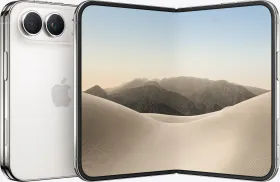
This year feels… a little different. Instead of launching a direct replacement to the Fold7, Samsung has completely reshuffled its foldable lineup. The regular Galaxy Z Fold8 introduces an entirely new passport-style form factor designed for media consumption and everyday usability. Sitting above it is the Galaxy Z Fold8 Ultra, a phone that keeps the familiar tall Fold design but upgrades several key areas.
After using the Galaxy Z Fold8 Ultra as my primary smartphone for a few days, it genuinely feels like the Fold Samsung should’ve made last year. The brighter anti-reflective display is easier to use outdoors, the larger battery finally delivers respectable endurance, the upgraded ultra-wide camera is a welcome improvement, and the titanium FlexHinge makes an already premium device feel even more refined.
That doesn’t mean Samsung has caught up everywhere. Rivals still offer better battery life, less noticeable creases, faster charging, and better cameras. But for the first time in a while, Samsung has addressed many of the major complaints users had with its Fold lineup.
So, is the Galaxy Z Fold8 Ultra finally worth its premium asking price? I’ve been using it as my primary phone to find out.
HOW I TESTED
| Reviewer: Mehtab Ansari, expert in smartphones, cameras, and consumer tech (5 years experience, 150+ reviews) Test Unit: Samsung India provided the review unit, but editorial opinions are fully independent. No commercials involved. Duration and Environment: I used the Z Fold8 Ultra (12GB RAM / 256GB Storage) for 7 days, tested it on Jio network in India, logging several hours of screen time across heavy gaming, 5G navigation, and camera testing. Tests: I ran synthetic benchmarks (Geekbench 7, AnTuTu, Throttle Test, 3DMark) and conducted real-world battery-drain tests on 5G, including Genshin and BGMI sessions to test thermal throttling. Competitors: Samsung Galaxy Z Fold8, OPPO Find N6 (China-exclusive), and Google Pixel 10 Fold. |
Samsung Galaxy Z Fold8 Ultra Price & Availability
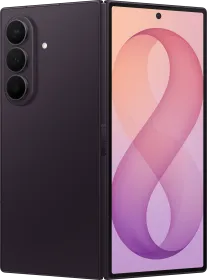
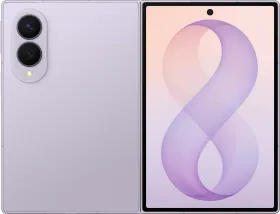
The Samsung Galaxy Z Fold8 Ultra starts at ₹1,99,999 for the base 12GB + 256GB variant and is available in Violet Shadow, Graphite, Cream, and an online-exclusive Green Shadow finish.
- 12GB + 256GB: ₹1,99,999
- 12GB + 512GB: ₹2,19,999
- 16GB + 1TB: ₹2,59,999
Pros
- Premium titanium build that’s incredibly thin and light
- Excellent anti-reflective AMOLED display
- Noticeably improved crease over the Fold7
- Upgraded 50MP ultrawide camera
- Feature-rich One UI 9
- Larger 5,000 mAh battery and faster 45W charging
- Excellent productivity features, including Flex Mode
- Seven years of Android and security updates
Cons
- Camera processing and video need more optimization
- Sustained gaming performance can throttle under heavy load
- No Qi2 magnetic charging or MagSafe compatibility
- 480Hz PWM dimming isn’t ideal for flicker-sensitive users
- Outdoor brightness drops fairly aggressively under prolonged sunlight
Samsung Galaxy Z Fold8 Ultra Specifications
- Dimensions: Unfolded 158.4 x 143.2 x 4.1mm, Folded 158.4 x 72.8 x 8.9mm
- Weight: 215g
- Cover Display: 6.5-inch Dynamic AMOLED 2X, 1080 x 2520, 422 PPI, 120Hz Adaptive Refresh Rate, Gorilla Glass Ceramic 3, up to 3,000 nits, 480 Hz PWM,
- Main Display: 8-inch Dynamic AMOLED 2X LTPO, 2256 x 2504, 422 PPI, 120Hz Adaptive Refresh Rate, Anti-reflective coating, up to 3,000 nits, 480 Hz PWM,
- Processor: Qualcomm Snapdragon 8 Elite Gen 5 for Galaxy (2x 4.74 GHz Oryon V3 Phoenix L + 6x 3.62 GHz Oryon V3 Phoenix M, Adreno 840, 3nm)
- RAM: 12 / 16 GB
- Storage: 256 / 512 GB / 1 TB
- Main Camera: 200 MP, 1/1.3-inch, f/1.7, OIS, 23mm, 8K30 / 4K120
- Ultra-wide Camera: 50 MP, 1/2.5-inch, f/1.9, AF, 120°, 13mm, 4K60
- Telephoto Camera: 10 MP, 1/3.94-inch, f/2.4, OIS, 3X Optical, 69mm, 4K60
- Front Camera: 10 MP, f/2.2, 17mm, 1/3.0-inch (Inner) + 10 MP, f/2.2, 23mm, 1/3.0-inch (Cover), 4K60
- Battery: 5,000 mAh Si/C Li-Ion
- Charging: 45W wired (67% in 30 min), 20W wireless, 4.5W reverse wireless
- Speakers: Stereo speakers, high-bitrate audio support, no 3.5mm jack
- Build: Glass back (Gorilla Glass Victus 2), aluminum frame (Advanced Armor Aluminum), Gorilla Glass Ceramic 3 cover display, plastic inner display
- Connectivity: 5G, Wi-Fi 7, Bluetooth 6.0, NFC, USB Type-C 3.2, eSIM
- Software: Android 17, One UI 9, 7 years of OS and security updates
- IP Rating: IP48 (immersible up to 1.5m for 30 min, dust particles >1mm)
- Biometrics: Side-mounted fingerprint, 2D face unlock
Samsung Galaxy Z Fold8 Ultra Review: Unboxing

Inside the box, you get the Z Fold8 Ultra itself, a USB-C to USB-C cable rated for 45W charging, a SIM ejector tool, and a quick start guide. That’s it, no charger in the box, so you’ll need your own 45W-capable adapter to actually hit the phone’s rated charging speed.
Samsung Galaxy Z Fold8 Ultra Review: Design and Build

At first glance, the Galaxy Z Fold8 Ultra doesn’t look drastically different from the Fold7—and that’s because it isn’t. Samsung has retained the same tall, narrow form factor, making the Ultra the true spiritual successor to last year’s Fold, while the regular Fold8 moves to an entirely new passport-style design. The result is two foldables aimed at two very different audiences.
Despite looking familiar, Samsung has refined almost every aspect of the hardware. The Fold8 Ultra feels denser, more premium, and surprisingly light for a phone with an 8-inch folding display. At 215 grams, it’s lighter than several flagship slab phones, including Apple’s latest Pro Max.

The chassis is built using Advanced Armor Aluminum, while the rear panel is protected by Gorilla Glass Victus 2. Up front, Samsung has switched to Gorilla Glass Ceramic 3, which should offer better durability than last year’s solution.

Holding everything together is Samsung’s new Titanium FlexHinge, which feels exceptionally sturdy without adding unnecessary bulk. The opening and closing mechanism is smooth and reassuringly firm, with no wobble or looseness whatsoever.
Samsung has also done a great job with the finish. The matte glass back resists fingerprints extremely well, and the Armor Aluminum frame doesn’t pick up greasy smudges nearly as easily as glossy metal frames.

The Fold8 Ultra is also incredibly thin. At just 4.1 mm when unfolded, it almost feels unreal the first time you hold it. Folded, it measures just 8.9 mm, which is thinner than many slab phones.

The crease has also improved this year. It’s definitely shallower than the Fold7 and less distracting while using the phone. Once the display is on, it’s easy to forget it’s there. However, run your finger across the middle of the screen and you’ll still notice it. It’s better, but Samsung still hasn’t caught up to competitors like the OPPO Find N6, whose crease remains noticeably less visible both visually and to the touch.

Samsung continues to offer IP48 dust and water resistance. While protection against water is excellent, the dust resistance still isn’t on par with what I’d expect from a flagship foldable at this price. Brands like Google and OPPO have started pushing further here, and Samsung now feels a step behind.


Another thing worth noting is that the Z Fold8 Ultra now only supports one physical nano SIM card. The Fold7 could accommodate two physical SIMs, so if you want to use two SIMs on the new model, you’ll need to convert one of them to an eSIM.
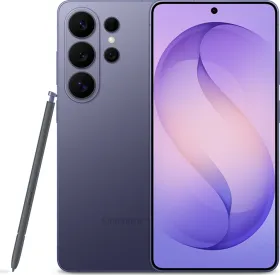
The Fold8 Ultra comes in Violet Shadow, Graphite, Cream, and an online-exclusive Green Shadow, with the Violet Shadow finish being easily my favorite of the bunch.

Overall, Samsung hasn’t reinvented the Fold’s design, but it didn’t really need to. Instead, it focused on refining an already excellent foundation with better materials, a stronger hinge, a lighter chassis, and a smaller crease. It still isn’t perfect, but this is easily Samsung’s best-built foldable yet.
Samsung Galaxy Z Fold8 Ultra Review: Display

Samsung has always been among the best when it comes to smartphone displays, and the Fold8 Ultra continues that tradition.
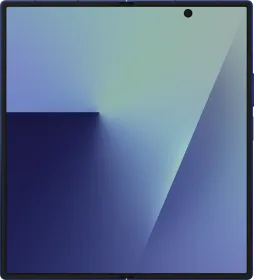
Start with the inner display. It’s still an 8.0-inch foldable Dynamic LTPO AMOLED 2X panel, now at a sharper 2256 x 2504 resolution, and Samsung has finally added an anti-reflective coating here, something the Fold 7 badly needed and didn’t have.

In practice, this cuts glare and reflections noticeably, Samsung claims by around 50% compared to the Fold 7, and it’s the difference between being able to actually use the inner screen outdoors versus fighting your own reflection in it.

Peak brightness has also gone up, to 3,000 nits from the Fold 7’s 2,600, and that extra headroom is very much felt in harsh daylight. When paired with the anti reflective coating, the Fold8 Ultra’s inner display actually looks twice as bright as the Fold7.

The cover display is a 6.5-inch Dynamic LTPO AMOLED 2X panel at a 21:9 aspect ratio, and it also benefits from the higher brightness ceiling, now capable of hitting up to 3,000 nits as well (although no anti reflective coating). It is crisp, colorful, and pleasant for everyday tasks like replying to messages and scrolling, largely unchanged in character from the Fold 7’s cover screen, just brighter.

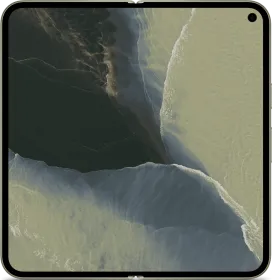
Where the display story diverges sharply from the standard Fold8 is in shape and intent. The Fold8’s inner display is a more traditional 4:3, book-like 7.6-inch panel, better suited to reading and watching widescreen video without heavy letterboxing.

The Fold 8 Ultra’s inner display is more square, which sounds like a step back until you actually use it for split-screen multitasking, where the extra width genuinely helps. Samsung has essentially built one Fold for consuming and one for producing, and the Ultra is clearly the productivity-first one.

One disappointment is Samsung sticking with 480Hz PWM dimming. That’s relatively low by today’s standards. A large number of users probably won’t notice, but if you’re particularly sensitive to display flicker, this is something worth keeping in mind.

The taller aspect ratio gives you more vertical room for multitasking, document editing, spreadsheets, and split-screen apps. On the other hand, the wider Fold8 is simply better for watching videos and consuming media.
Overall, this remains one of the best foldable displays you can buy. Samsung has improved brightness, reduced reflections, and made the crease less noticeable. It isn’t class-leading in every aspect, but it’s an excellent display experience nonetheless.
ALSO READ: Samsung Galaxy Z Fold 8 Ultra vs. Z Fold 7: The Definitive Foldable Flagship Comparison For India
Samsung Galaxy Z Fold8 Ultra Review: Speakers and Haptics
The stereo speakers on the Fold 8 Ultra sound good in isolation, loud, reasonably full, and clear even at higher volumes. My one genuine gripe is positioning. Both speaker grilles end up on the same side once the phone is unfolded, the top and bottom edges nearest the cover display, which means you lose the actual stereo separation you’d expect.

Haptics are consistent with what Samsung’s foldables have offered for the last couple of generations: tight, responsive vibration feedback that makes typing and system interactions feel satisfying. They’re not as good as the slab phones but good nonetheless.
Samsung Galaxy Z Fold8 Ultra Review: Software

Software is where Samsung continues to lead the foldable category, and the Fold8 Ultra ships with One UI 9 on top of Android 17, making it one of the first phones to arrive with Android 17 out of the box. Samsung is also backing it with seven years of OS and security updates, matching the commitment it made on the Fold7.
If you’ve used One UI before, you’ll feel right at home. Samsung hasn’t completely reinvented the experience this year, but it has polished many of the areas people interact with every day.

Quick Settings are now fully customizable, you can resize toggles, remove the ones you never touch, and actually make the panel yours instead of living with Samsung’s defaults. A smaller but genuinely welcome change is that the volume slider and mute switch are now separated, as are the brightness slider and dark mode toggle.

Samsung has also made the brightness and volume sliders themselves visibly thicker and easier to hit precisely, and the lock screen media player has been redone with colorful waveform animations along with a “This Phone” label replacing the old “Media Output” wording when picking an audio device. Personally, I think the lock screen media player looks worse than before but that’s just me.


Good Lock also picks up a new gesture I’ve wanted for a while: a three-finger screenshot shortcut. What’s still missing, frustratingly, is any form of native app lock, which feels like an odd omission on a phone at this price. And no, Secure Folder is not the same thing.
My biggest personal nitpick is that One UI still isn’t consistent with its design. Blur effects are applied inconsistently, and many third-party apps like WhatsApp still use the Roboto font instead of Samsung’s system font.

The Fold 8 Ultra also picks up a couple of Samsung-specific additions this generation: a built-in Google Search bar right on the home screen (can be turned off), and Samsung’s own iPhone-to-Galaxy Smart Switch tool, which makes migrating from an iPhone considerably less painful than it used to be if that’s what you’re coming from.
Galaxy AI

Galaxy AI continues to be a major part of the software experience. Features like Call Assist, Note Assist, Transcript Assist, AI Select, Now Brief, Interpreter, Writing Assist (suite of features within the keyboard to help you write/check grammar/reformat), Browsing Assist, Audio Eraser, and Samsung’s AI image editing tools are all here. Samsung has also made Now Brief much more useful this year by allowing you to create custom cards based on the information you actually care about, instead of simply showing weather updates every morning.


Samsung has also introduced My FanCam, an AI feature that can automatically crop and track a selected subject inside an existing video, making it easier to create vertical clips for social media. It works reasonably well, although it occasionally crops more aggressively than necessary.

There’s also Now Nudge, which proactively suggests actions based on your usage. The catch is that it only works properly if you use Samsung Keyboard. Since I still prefer Gboard, it’s not a feature I found myself using much, and I don’t think most users should switch keyboards just for it.

Multitasking

Multitasking remains the software pillar the Fold8 Ultra is built around. Split-screen, floating windows, and running three apps simultaneously on the inner display all work as smoothly as they did on the Fold7, and the squarer aspect ratio actually gives you a bit more usable real estate for it than the wider Fold8 offers.
Flex Mode also carries over here, letting you fold the phone partway for a mini-laptop layout with controls at the bottom and the app up top. It’s worth calling out that the standard Z Fold8 does not get Flex Mode at all, so if that’s a feature you rely on, the Ultra is the one to get.

Overall, One UI 9 refines the software experience in meaningful ways. Samsung’s multitasking remains unmatched, Galaxy AI features continue to improve, and the customization options are better than ever. I just wish Samsung would stop ignoring some of the basics like app lock.
ALSO READ: A First Look at Samsung’s Smart Glasses: Lighter, Longer-Lasting, and Landing This Fall
Samsung Galaxy Z Fold8 Ultra Review: Biometrics

The fingerprint scanner is built into the side-mounted power button, same as every recent Z Fold, and it’s reliably fast here. One benefit of the Fold 8 Ultra’s narrower, taller shape is that the sensor sits somewhere your thumb naturally reaches, unlike the standard Fold8, where the wider body pushes the button further from a comfortable resting grip.
2D face unlock is also available, using the 10MP front camera on both the inner and cover displays, so you can unlock the phone whether it’s folded or open.
Samsung Galaxy Z Fold8 Ultra Review: Performance
Powering the Galaxy Z Fold8 Ultra is Qualcomm’s Snapdragon 8 Elite Gen 5 for Galaxy, paired with 12GB of RAM on the 256GB and 512GB models, while the 1TB variant gets 16GB of RAM. Day-to-day performance is exactly what you’d expect from Samsung’s flagship foldable. Apps launch instantly, multitasking is effortless, and even with several apps running simultaneously across split-screen windows, the phone doesn’t struggle.
This is also where the Fold8 Ultra’s taller display comes into its own. Unlike the wider Fold8, the Ultra is clearly designed for productivity. Having multiple apps open side-by-side feels more natural, and there’s simply more usable vertical space for documents, spreadsheets, email, and multitasking.
Galaxy Z Fold8 Ultra Benchmarks
| Benchmark | Samsung Galaxy Z Fold8 Ultra (Snapdragon 8 Elite Gen 5 for Galaxy) | OPPO Find N6 (Snapdragon 8 Elite Gen 5 7-Core) |
| AnTuTu Score | 3032071 | 2826467 |
| Storage (Score, Sequential Read Speed, Write Speed) | Score: 160546; Sequential Read: 4234 MB/s; Sequential Write: 3758 MB/s | Score: 191460; Sequential Read: 3856 MB/s; Sequential Write: 3594 MB/s |
| Geekbench 6 CPU (Single-Core, Multi-Core) | Single-Core: 3377; Multi-Core: 10047 | Single-Core: 3486; Multi-Core: 9585 |
| Geekbench 7 CPU (Single-Core, Multi-Core) | Single-Core: 2893; Multi-Core: 7128 | – |
| Geekbench 6 GPU (OpenCL, Vulkan) | OpenCL: 24398; Vulkan: 25171 | OpenCL: 17085; Vulkan: 20037 |
| Geekbench 7 GPU (OpenCL, Vulkan) | OpenCL: 16812; Vulkan: 21417 | – |
| 3DMark Wildlife Extreme (Score, Avg FPS) | Score: 6472; Avg FPS: 38.76 | Score: 3935; Avg FPS: 23.57 |
| 3DMark Wildlife Extreme Stress Test (Best Loop, Lowest Loop, Stability) | Best Loop: 5667; Lowest Loop: 4218; Stability: 74.4% | Best Loop: 6050; Lowest Loop: 2833; Stability: 46.8% |


Gaming, however, tells a slightly different story. I spent quite a bit of time playing Genshin Impact at the highest graphics settings, and while the phone handled it well initially, performance dropped after a few minutes of intense gameplay.
The device became noticeably warm and frame rates dropped to an unacceptable level. Lowering the graphics settings delivered a much smoother experience though, and that’s how I’d recommend playing demanding titles on the Fold8 Ultra.

It’s worth pointing out that this is pre-release software, so there’s a good chance Samsung improves thermal management and GPU optimization through future updates.
For less demanding titles like BGMI, Call of Duty: Mobile, and similar games, I didn’t run into any major issues. The Snapdragon chip still has plenty of horsepower, and the large inner display makes gaming enjoyable.
As for connectivity, you get 5G, Wi-Fi 7, Bluetooth 5.4, NFC, and USB 3.2 for fast wired data transfers. Samsung Wallet continues to be one of my favorite features of the Galaxy ecosystem, with reliable tap-to-pay support and digital cards integrated directly into the software.

Ultimately, the Fold8 Ultra delivers flagship performance for everyday use and multitasking, which is what this phone is really designed for. If your primary focus is heavy gaming, this is not for you.

But if you’re buying a Fold for productivity first and gaming second, the performance here is more than capable, even if Samsung still has some optimization work left to do before I’d call it class-leading.
Samsung Galaxy Z Fold8 Ultra Review: Cameras

Samsung hasn’t made any major hardware changes to the Fold8 Ultra’s camera system. The only hardware upgrade is the new 50MP ultra-wide camera, replacing the 12MP sensor from the Fold7. The rest of the setup remains unchanged, with a 200MP primary camera and a 10MP 3X telephoto lens.
The 200MP main camera is still the best camera on the Fold8 Ultra. In daylight, it captures sharp photos with excellent dynamic range, plenty of detail, and Samsung’s signature colors.


Exposure isn’t perfect all the time, but HDR works well and autofocus is fast. Samsung’s photos are still more flat than I’d like, but most people will probably enjoy this look.


The new 50MP ultra-wide is the only camera hardware upgrade this year, and it’s a good one. It captures noticeably more detail than the old 12MP sensor, colors match the main camera much better, and edge sharpness has improved. It finally feels like a flagship ultra-wide.


The 10MP 3X telephoto is unchanged, but it still delivers decent results in daylight. Digital zoom is fine for occasional use, though detail drops off quickly beyond 3X. There is also a noticeable amount of noise in many zoomed in photos, even in daylight.


Low-light performance is decent, but the ultra-wide and telephoto still pick up noticeable noise. Even the main camera struggles with noise control, which is noticeable even in indoor lighting. Night mode helps a bit, though Samsung still trails phones like the OPPO Find N6. Highlight control and flare is also a major issue on this foldable.


Both selfie cameras are good enough for video calls and social media, but the rear cameras still produce much better selfies when you use the cover display as a viewfinder. Notably, the inner screen selfie camera is much wider than the one on the cover screen.


The Fold8 Ultra supports 8K at 30fps, 4K at up to 120fps, 10-bit HDR, andHDR10+. Samsung also includes Pro Video, Expert RAW, Portrait Video, and the new My Fan Cam feature, which tracks a subject and creates vertical videos. It works well, although it can crop in a bit too much at times.
Video quality is sharp, stabilization is excellent, and autofocus is reliable. However, the exposure shifting is really bad, and overall video processing still isn’t quite on the same level as the OPPO Find N6. My review unit is running pre-release software, so Samsung could improve this with future updates.
Overall, the Fold8 Ultra delivers excellent still photos, and the new 50MP ultra-wide is the one upgrade you’ll actually notice. The rest of the camera system remains familiar, and video still has some room to improve.
Samsung Galaxy Z Fold8 Ultra Review: Battery Life and Charging

Battery life was one of my biggest complaints with the Fold7, so I was glad to see Samsung finally increase the battery to 5,000 mAh. Combined with the Snapdragon 8 Elite Gen 5 and One UI 9, the Fold8 Ultra comfortably lasts longer than its predecessor.
With my usage, which included messaging, photography, navigation, streaming, social media, and plenty of multitasking, the phone gave me around 7-8 hours of screen-on time. It’s a noticeable improvement over the Fold7, and battery life is no longer something I’d worry about.
It still isn’t among the best, though. Phones like the OPPO Find N6 last longer under similar workloads, so Samsung still has some catching up to do.

Charging also gets a welcome upgrade. Samsung has finally moved to 45W wired charging, which gets the battery to around 67% in under 30 minutes. A full charge takes about an hour. You also get 20W wireless charging and 4.5W Wireless PowerShare. Qi2 magnetic charging is still missing.
Review Verdict: Should You Buy the Samsung Galaxy Z Fold8 Ultra?
The Galaxy Z Fold8 Ultra is an easy phone to like. Samsung hasn’t changed the overall formula, but it has improved some of the areas that needed attention. The larger battery lasts noticeably longer than before, the new 50MP ultra-wide is a welcome upgrade, the displays are brighter, and the updated hinge makes the phone feel even more refined.
It’s not perfect. The IP48 rating now looks dated, Qi2 magnetic charging is still missing, 480Hz PWM dimming could have been better, and video processing still has room for improvement. Sustained gaming performance also isn’t the strongest.
If you’re using a Fold6 or older, the Fold8 Ultra is a worthwhile upgrade. For Fold7 users, I would say it’s better to wait for the next generation or try out Samsung’s Fold8 if they want to experiment with something new and unique.
Samsung also continues to stand out with One UI, excellent multitasking features, and one of the best software update policies in the Android ecosystem. At the same time, competitors like OPPO and Honor still have an edge in areas like battery life, charging speeds, crease visibility, and in some cases camera processing.
Overall, the Galaxy Z Fold8 Ultra is Samsung’s best foldable yet. It doesn’t try to reinvent the Fold series, but it improves enough of the everyday experience to make it an easy recommendation if you’re looking for a premium book-style foldable.

Smartprix ⭐ Rating: 8.9/10
- Design and Build: 9.0/10
- Display: 9.0/10
- Speakers: 9.0/10
- Software: 9.0/10
- Haptics: 9.0/10
- Biometrics: 8.5/10
- Performance: 8/10
- Cameras: 8/10
- Battery Life & Charging: 8.5/10
First reviewed in July 2026.
Frequently Asked Questions
Is Galaxy Z Fold8 Ultra worth buying?
If you’re the kind of user who treats your phone as a productivity tool, splitting screens, running multiple apps, reading and editing documents, it’s worth it. You’re paying for the best camera hardware and the biggest battery of any Z Fold this generation, along with an improved display. If your usage is lighter, messaging, social media, casual browsing, a regular flagship or the standard Fold8 will do the same job for less money.
Is Galaxy Z Fold8 Ultra better than Fold7?
Yes, on nearly every count. The inner display is brighter and finally anti-reflective, the crease is smaller thanks to the new Flex Titanium hinge, the ultrawide camera has jumped from 12MP to 50MP, the battery has grown from 4,400 mAh to 5,000 mAh, and charging has doubled from 25W to 45W.
Is the Galaxy Z Fold8 Ultra camera good?
Mostly. The 200MP main sensor and the newly upgraded 50MP ultrawide are strong, especially in daylight. The 3X telephoto is useful to have but still trails what you’d get on a flagship slab phone at the same zoom levels, and video capture has been inconsistent in my testing, though that may improve once retail software lands.
Does the Galaxy Z Fold8 Ultra support the S Pen?
No. Samsung has not brought S Pen support back to the Fold 8 Ultra.
Is the Galaxy Z Fold8 Ultra waterproof?
It’s water resistant, not waterproof, rated IP48. That means it can survive being submerged up to 1.5 meters for about 30 minutes, but its dust resistance only covers particles larger than 1mm.
How long does the Galaxy Z Fold8 Ultra battery last?
The 5,000 mAh battery is a clear step up from the Fold 7’s 4,400 mAh, and it comfortably gets me through a full day of mixed use, giving around 6-8 hours of screen-on time.
Galaxy Z Fold8 Ultra vs. Galaxy S26 Ultra: which one to pick?
If you want the single best camera phone Samsung makes, the S26 Ultra is still the safer pick. If you want a phone that can also function as a small tablet, the Fold8 Ultra is the one to get.

You can follow Smartprix on Twitter, Facebook, Instagram, and Google News. Visit smartprix.com for the latest tech and auto news, reviews, and guides.