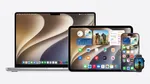



Apple’s Worldwide Developers Conference begins Monday, June 9, at Apple Park in Cupertino, California, and for the first time in a couple of years, I find myself genuinely curious about what the company is going to show. Not because the feature list is the longest Apple has ever produced (it isn’t), but because Apple appears to be making a calculated decision to fix the things it broke before piling on new ones.
That’s a harder thing to do than it sounds, and it’s rarer in the tech industry than it should be.
Much of what follows draws on a recent MGurman report at Bloomberg, who has spent well over a decade cultivating sources inside Apple that, by any reasonable measure, are the most reliable in the business. Gurman has accurately predicted product launches, feature sets, internal codenames, and strategic pivots, often months before Apple publicly says a word. He called the Apple Silicon transition, the Apple Watch’s health pivot, the Dynamic Island, and Apple Intelligence’s rocky rollout before any of them became official. When Gurman writes that Apple is planning something, the tech industry has learned to treat it as close to confirmed. His WWDC preview this year is detailed, specific, and based on his track record, worth taking seriously.
Let’s break it down.
Apple Is Playing Catch-Up, and It Knows It
First, some necessary context. Apple Intelligence, the company’s initial AI platform launched in 2024, was widely criticized (including by this publication) for shipping features that simply didn’t work well. Siri improvements were delayed, delayed again, and then quietly walked back. The features that did ship felt half-baked compared to what Google, Microsoft, and OpenAI were delivering.
That history matters because iOS 27 is being built, at least partially, as a response to it.
Gurman’s reporting indicates Apple is internally framing this year’s software cycle the way observers have been framing Snow Leopard since 2009 and iOS 12 since 2018: as a quality and reliability release. The company is prioritizing battery life, performance, and stability over flashy new interface paradigms. The Liquid Glass design introduced in iOS 26 is being refined, not replaced. macOS 27, in particular, is expected to address real legibility problems caused by shadow and transparency effects that, frankly, made some text difficult to read.
This is Apple admitting (without saying it out loud) that it shipped something that needed more time in the oven. Developers will understand this language immediately. Consumers should, too.
ALSO READ: MacBook Neo at Rs 38,440: The Math Behind Croma’s Apple Deal
Siri: The Biggest Bet and the Most Complicated Story
The centerpiece of WWDC 2026 is what Apple internally calls “Campo,” a ground-up reimagining of Siri that moves the assistant from a voice-command shortcut to something resembling a genuine AI companion. Gurman has been tracking this project for months, and the details he’s now publishing suggest it’s further along than Apple’s 2024 stumbles might lead you to expect.
Here’s what that means in practice.

Siri is being rebuilt around the Dynamic Island, the pill-shaped cutout Apple introduced on iPhone 14 Pro in 2022. Activating Siri, by voice or by holding the side button, will now open an animation inside the Dynamic Island rather than the glowing edge-of-screen halo users have seen for years. It’s a visual shift designed to make Siri feel integrated into the hardware itself, not bolted on.
More importantly, Apple is launching a dedicated Siri app. This is significant. For the first time, Siri will have a proper front door: a place to browse conversation history, jump back into past chats, and interact with the assistant in a way that looks and behaves more like ChatGPT or Claude than the current Siri interface. Conversations sync across devices via iCloud. There’s a texting-thread-style view for back-and-forth exchanges. Users can insert photos or file attachments for analysis. Chats can auto-delete on a schedule users choose—30 days, a year, or indefinitely.
The new “Search or Ask” interface, accessed by swiping down from the top center of the iPhone screen (moving Notification Center to the top left), turns Siri into something more like a universal command layer for iOS. From that panel, users can launch apps, compose texts, check the weather, add calendar entries, trigger shortcuts, or search the web, all through a single text or voice input.
This is Apple’s answer to the AI launcher. Whether it executes well remains to be seen, but the architecture is sound.
ALSO READ: OnePlus 16 Camera Specs Leak Again, But There’s a Catch
The Google Partnership: Important, Awkward, and Worth Scrutinising
Here is where the story gets complicated, and I want to be direct about it.
Gurman reports that Apple is powering the new Siri, at least significantly, with Google’s Gemini model. Not just as an optional chatbot integration, but as the underlying technology running core Siri features, hosted on Google’s servers. Apple is reportedly paying Google handsomely for this arrangement as part of a multi-billion-dollar agreement.

This detail is exactly the kind of thing Gurman tends to get right, and it matters enormously. Apple has built its brand, in no small part, on privacy. The company has consistently argued that on-device processing and controlled data pipelines are core values, not just marketing. That position becomes harder to maintain when Siri runs on Google infrastructure.
Now, Apple will almost certainly have contractual data protections in place. And there is precedent for this kind of arrangement—Google is also Apple’s default search engine, a deal worth billions annually. But this is different in a meaningful way: when you type a query into Safari, it goes to Google’s servers. When you talk to Siri about deeply personal things (your calendar, your emails, your health data), that’s a different category of information.
Apple will need to explain clearly and specifically what data leaves the device, what Google can access, and what protections are in place. If the company fails to do that on Monday, it should be pressed to do so.
ALSO READ: OPPO and vivo Could Be Working on Dedicated Vlogging Cameras
Multi-Provider AI: The Chatbot Marketplace Arrives on iPhone
Beyond the Google Gemini integration, Gurman reports Apple is making a broader structural change to how AI works in iOS. The “Search or Ask” panel will let users toggle between different chatbot providers — ChatGPT, Google Gemini, and Anthropic’s Claude have all been tested, according to his reporting.
This is genuinely interesting as a product decision, and it reflects how Apple has historically operated in spaces where it doesn’t want to fully own a technology. The company doesn’t run its own maps fleet; it uses third-party data. It doesn’t operate its own streaming content entirely; it aggregates. The chatbot marketplace approach positions Apple as the platform rather than a competitor, and that’s where Apple is usually most comfortable.
For users, it means more choice. For AI companies, it means iOS is now a distribution channel worth competing for, in much the same way search engine defaults have been for years. If Gurman’s sourcing holds (and historically it has), this will reshape how hundreds of millions of people interact with AI tools, without ever having to download a separate app.
CoreAI, Apple’s new developer framework for AI integration, extends this logic to third-party apps. AI agent makers will also be able to tap into Siri and Apple’s own AI apps, opening up a new category of Siri-adjacent applications that could eventually become as important as widgets or share sheet extensions.
Visual Intelligence Gets a Promotion
One of the most underappreciated features Apple shipped in recent years is Visual Intelligence: the ability to point your camera at something and get information about it. Gurman reports that in iOS 27, Apple is moving this capability out of the Camera Control button’s shadow and into the Siri layer of the Camera app itself, making it more accessible and more prominent.
The feature is adding support for nutrition label and contact information recognition, practical, everyday use cases that will actually change how people interact with the physical world through their phones. It can already identify plants, extract calendar details, and send images to ChatGPT or Google for analysis. The expanded Siri integration means these visual queries will flow into the same conversation thread and context as everything else.
The photo editing tools are also getting a notable AI upgrade. The new “Extend” feature lets users generate additional image content beyond a photo’s original frame, practical for fixing a tight crop on a landscape shot. “Reframe” adjusts the perspective of spatial photos taken for the Vision Pro. A new “Enhance” option improves overall image quality and color. And the “Clean Up” tool, which launched in 2024 and drew significant criticism for unreliable results, is reportedly getting meaningful improvements.
Apple is also testing natural-language photo editing for iOS, where users can describe an edit in plain text or voice rather than navigating menus. Gurman notes this may not ship in the first iOS 27 release, which is both understandable and a reminder that Apple’s staged rollout approach has become the norm, not the exception, in its AI strategy.
ALSO READ:Xiaomi 18 Pro Max Could Debut With Dual 200MP Cameras
The Features That Actually Change Daily Life
Beyond the headline AI story, several iOS 27 changes Gurman has detailed are worth flagging for their practical, day-to-day impact.
The Camera app is becoming fully customizable. Users will be able to choose which controls appear at the top of the interface — a meaningful change for anyone who has ever wanted to rearrange one of the most-used apps on any smartphone.
The Wallet app is getting a “Create a Pass” feature. This solves a specific but genuinely annoying problem: when a venue provides a QR code for entry but doesn’t support Wallet natively. Users will be able to build their own digital tickets and cards from those codes.
Bill splitting is coming to Wallet and Messages. Take a photo of a receipt, assign line items to specific people, and send them their share. This is the kind of feature that sounds obvious in hindsight and will probably become indispensable within weeks of launch.
Safari is getting a cleaner start page with four tabs at the top for favorites, bookmarks, reading list, and history — finally making it easier to navigate between those sections without diving into menus.
The AirPods settings panel has been completely redesigned for better organization. This is long overdue. The current layout is scattered and harder to navigate than it should be for earbuds that are central to how many people use their iPhones daily.
Apple is also adding support for third-party AirPlay alternatives, including Google Cast. This is a meaningful interoperability move, one that suggests Apple is either responding to regulatory pressure in certain markets or has decided that controlling the whole playback stack matters less than keeping users on Apple hardware and in the Apple ecosystem more broadly.
watchOS 27 and Health: The Longer Game
The watch gets a new Modular face with a large clock and three complication slots below, a simplified version of the Modular Ultra face. Heart rate monitoring and fitness tracking are being improved, which matters as Apple continues to position health as a long-term differentiator against competing platforms.
Gurman also reports that the Health app is expected to receive AI features derived from Apple’s scaled-back “Mulberry” health coach project, including improved blood sugar tracking and camera-based workout monitoring. These features may not arrive at launch and could be announced separately from WWDC altogether. This kind of staged health rollout has become Apple’s pattern, and it’s worth watching whether the company finally commits to shipping on the schedule it sets, rather than the one it discovers later.
What This All Means
Apple is making a calculated bet that the most important thing it can do in 2026 is build trust. Trust that Siri will work when you ask it something. Trust that your phone will last through the day. Trust that the features the company announces on Monday will be on your device in a form that resembles how they were announced.
That’s a lower bar than “revolutionize AI.” But it’s a more honest one, and given the last two years, it may be the right one.
Gurman’s reporting has been right about Apple more often than almost anyone else covering the company. The picture he paints of WWDC 2026 is of an Apple that is methodical, aware of its recent stumbles, and investing seriously in fixing them rather than papering over them with announcements. The Gemini partnership will raise legitimate privacy questions Apple needs to answer clearly. The chatbot marketplace is a smart structural play. And the new Siri, if it ships as described and performs as intended, is a genuinely significant leap, even if it took far longer than it should have to get here.
Whether Apple sticks the landing is something we’ll find out Monday morning. And then again in the fall, when consumers actually get these updates on their devices. That second test is the one that matters most.
The keynote begins at 10:30 p.m. India Standard time. We’ll be watching.
You can follow Smartprix on Twitter, Facebook, Instagram, and Google News. Visit smartprix.com for the latest tech and auto news, reviews, and guides.