

Vivo X500 vs. Find X10: Table Of Contents
Now that Vivo has launched the X500, it’s the right time to compare the sister flagships: Vivo X500 vs. Find X10. Both camera-centric flagships have leveled up across the board, including display, performance, software, and battery life. They also come with improved camera setups across the board.
However, since they command a similar price tag, you’re probably wondering which is better. Lucky for you, I’ve compiled almost all the differences I could find in my research. Here’s an in-depth comparison between the Vivo X500 and the Oppo Find X10.


Also Read: vivo Watch GT 2 Review: Big AMOLED Display, Excellent Battery Life, and Smooth Software
Vivo X500 vs. Oppo Find X10: Pricing & Availability
| vivo X500 | OPPO Find X10 | |
| India launch | November 26, 2026 | October 22, 2026 |
| Sale status | Sales start December 3, 2026. Pre-booking runs from November 26 to December 2. | On sale since October 29, after launching on October 22. |
| Variants and price | A single 12GB + 256GB variant at ₹1,19,999. | 12GB + 256GB at ₹1,39,999, and 12GB + 512GB at ₹1,69,999. |
| Store listing | vivo’s e-store lists ₹1,19,999 against an MRP of ₹1,69,999, which it shows as 29% off. It limits purchases to one piece. | oppo.com/in doesn’t show a price. The storefront screenshot you shared listed ₹1,39,999 against ₹1,79,999, shown as 22% off. |
Also Read: vivo X500 Review: A Camera Flagship That’s Easy to Recommend


Vivo X500 vs. Oppo Find X10: Design
| Spec | vivo X500 | OPPO Find X10 |
| Dimensions | 157.0 x 74.5 x 8.15–8.2 mm | 156.5 x 74.3 x 8.4 mm |
| Weight | 211 g (Ember Red) / 213 g (Titanium Black) | 216 g |
| Build | Glass front and back, aluminum frame | Glass front and back (Crystal Guard front cover), aluminum frame, vapor chamber cooling |
| Water/Dust Resistance | IP68, IP69 | IP66, IP68, IP69 (dust-tight, water-immersion resistant, and resistant to high-pressure water jets) |
| Fingerprint Sensor | 3D ultrasonic single-point in-display | In-display ultrasonic |
| Colors (India) | Ember Red, Titanium Black | Glacier Blue, Mist Grey, Glow Coral |
| Notable Design Element | ZEISS co-engineered optics with Zeiss T* lens coating on the camera module | Optional Hasselblad Teleconverter Kit accessory for extended optical/hybrid zoom |

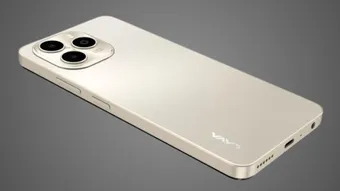
Of the two phones, the Vivo X500 (review) is clearly the slimmer one. Not by a significant margin, though, as in terms of numbers, the difference is 0.25 millimeters.
Even in terms of weight, the X500 is marginally lighter, although I wouldn’t say you’ll notice this difference on a day-to-day basis or that it will have any meaningful impact on your overall experience.
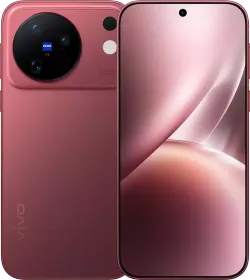
When it comes to the overall design and material selection, both phones follow the same glass-metal-glass sandwich design, which is quite common among flagships. You get glass on the front, an aluminum frame running around the entire chassis, and glass at the back.
Also Read: Vivo Watch GT 2 Debuts In India With A ₹14,999 Price Tag, 100+ Sports Modes, & 25-Day Battery Claim

Both phones carry IP68 and IP69 ratings for water resistance. The highest protection rating here is IP69, which means they are dust-tight, resistant to water immersion, and can withstand high-pressure water jets.
So, if someone is skiing or standing on the beach and gets hit by a wave or a sudden surge, both phones should handle it well. Although IP ratings shouldn’t be treated as a measure of how much you can abuse these phones, they are simply a safety net in case either device is accidentally exposed to water. Just something to keep in mind.
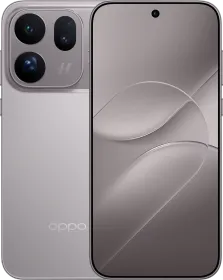
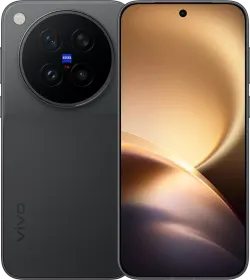
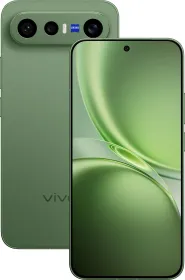
You can get the X500 in two color options, while the Find X10 offers slightly more flexibility with three shades.
Also Read: Nothing Ear (note) Turns The Charging Case Into An AI Voice Recorder

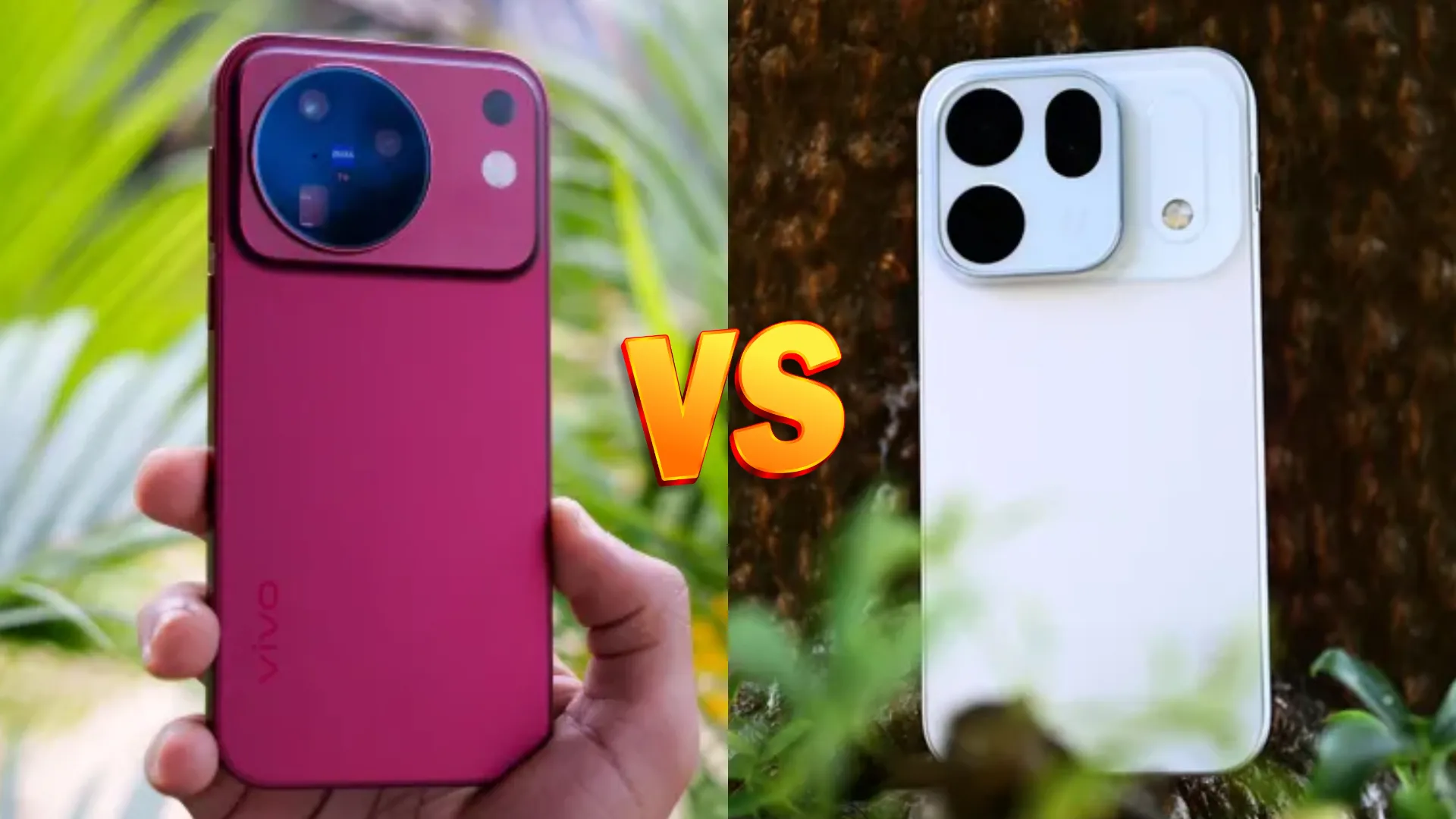
I personally prefer the central circular camera housing on the Vivo X300, which is why the smaller one, centered towards the top-left of the back panel, doesn’t appeal to me as much. Also, the circular camera housing now sits atop a rectangular camera bar that stretches across the width of the smartphone.
So, while the design looks inspired, it still manages to retain its own distinct identity.
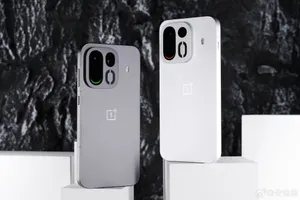
The Find X10 looks slightly sleeker and sharper, thanks to the more compact, square-shaped camera island at the back, which houses all three sensors and the flash module. Both phones actually have a rectangular design element on their back panels, but the Find X10 executes it a little better, giving it a slightly more refined appearance than the X500.

Also Read: iQOO 16 And iQOO 16s Launch In Malaysia On December 8, While India Keeps Waiting
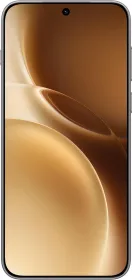
Coming to the front, both phones feature a punch-hole display with almost identical bezel thickness. You also get slightly rounded corners on both smartphones, along with flat frames and an almost flat back panel, discounting the protruding camera housing at the top.
The power button and volume rocker are positioned on the right rail, while the USB-C port and primary speaker grille are located at the bottom.
Also Read: Oppo Find X10 Pro Max Finally Gets Its Optimized Blackmagic Camera App

Vivo X500 vs. Oppo Find X10: Display
| Spec | vivo X500 | OPPO Find X10 |
| Size | 6.59″ | 6.59″ |
| Panel Type | Flexible AMOLED, VM9 light-emitting material | LTPO AMOLED, flexible panel, Crystal Guard cover glass |
| Resolution | 1260 x 2750 px (459 ppi) | 1272 x 2772 px (462 ppi) |
| Refresh Rate | 144Hz refresh rate | Adaptive 1–120Hz; up to 144Hz in supported games/system-wide |
| Touch Sampling Rate | Not officially specified | Up to 288Hz (default 120Hz) |
| Peak Brightness | 2,000 nits (HBM) / 4,000 nits (peak) | 2,000 nits (typical max auto) / 3,600 nits |
| Colour Depth | Not officially specified | 10-bit (1.07 billion colors) |
| HDR Support | HDR10+ | Dolby Vision, HDR10, HDR10+, BT.2020 colour gamut (~95% coverage claimed) |
| Protection | Not officially specified | Crystal Guard (OPPO’s proprietary cover glass) |
Also Read: Best Camera for Photography and Video: A Practical Guide to Picking a Hybrid Camera in 2026

Talking about the display, it’s one of those aspects where you actually have to hunt for the differences because, to be very honest, there isn’t much to distinguish between the two on paper.
Both the Vivo X500 and Oppo Find X10 (review) feature a 6.59-inch AMOLED display with symmetrical bezels. The pixel density, or PPI, is quite similar, and even the refresh rate peaks at 144Hz on both screens.
The differences, though subtle, lie in peak brightness. While the Find X10 peaks at 3,600 nits of local brightness, the Vivo X500 takes that number up to 4,000 nits.

Also Read: Car Prices Are Climbing Again Before Year-End: Maruti, Hyundai, Tata, Audi and Mahindra Explained
Again, we’re talking about local peak brightness, so the difference should only be apparent when watching content on Netflix, Hotstar, or other streaming platforms that can push highlights to those levels. You might also notice it outdoors, especially under direct sunlight. It’s not a night-and-day difference, but I’d still give the edge to the X500.
Another point of distinction is the lack of information about the Vivo X500’s flicker rate. The Oppo Find X10, as far as I can tell, comes with a 3,840Hz PWM dimming rate below 70 nits of brightness, while its minimum brightness goes down to just 1 nit. However, we don’t have the same information for the Vivo X500.

Also Read: Apple Is Reportedly Bringing (PRODUCT)RED Back With A Red HomePod mini 2 And Silver AirPods Max 2
Coming to color reproduction and HDR support, both phones do well in terms of color gamut coverage. While the Find X10 supports 95% of the wider BT.2020 color space, the Vivo X500 supports 100% of the DCI-P3 color gamut.
As for HDR content, both support HDR10+, but the Find X10 goes a step further with Dolby Vision. So, if you’re watching content mastered in Dolby Vision, which is increasingly common across streaming platforms, the Find X10 might offer a slightly better viewing experience.

Also Read: Nvidia just brought desktop-class AI to thin Windows laptops in India, starting at ₹2.99 lakh.
Vivo X500 vs. Oppo Find X10: Performance
| Spec | vivo X500 | OPPO Find X10 |
| Chipset | MediaTek Dimensity 9600M | MediaTek Dimensity 9600M |
| Fabrication Node | TSMC 3nm | TSMC 3nm |
| CPU Configuration | Octa-core: 1×4.21GHz + 3×3.5GHz + 4×2.7GHz (identical core layout to the Find X10, same chipset) | Octa-core: 1×4.21GHz (ARM C1-Ultra) + 3×3.5GHz (ARM C1-Premium) + 4×2.7GHz (ARM C1-Pro) |
| GPU | ARM Immortalis-G1-Ultra | ARM Immortalis-G1-Ultra |
| RAM | 12GB (LPDDR5X Ultra); software-expandable up to an additional 12GB via virtual RAM | 12GB (LPDDR5X) |
| Storage (Base Variant) | 256GB (UFS 4.1) | 256GB (UFS 4.1) |
| OS Software Engine | Not specified | OPPO’s “Tide Engine” for sustained frame rates |
Also Read: Instagram’s Edits Finally Lands On iPad & Brings Custom LUT Import Along

Performance is yet another area where the Vivo X500 and the Find X10 share a lot of common ground, and that’s largely because both phones rely on MediaTek’s Dimensity 9600M chipset, built on a 3nm process.
These aren’t the absolute latest mobile chipsets available in the market, but even so, they deliver a thoroughly flagship-grade experience, whether you’re looking at the CPU, GPU, or NPU.
I have already tested this chipset on the Oppo Find X10, and it returned an AnTuTu v12 score of around 3.2 million, alongside a Geekbench 7 single-core score of approximately 2,050 points and a multi-core score of around 7,600 points.

Of course, these numbers aren’t going to top the benchmark charts. MediaTek’s own Dimensity 9600 Pro chipset is ahead in terms of benchmark performance and overall processing capabilities. But then again, the 9600M is hardly a slouch, and it gets pretty much every kind of job done without breaking a sweat.
So, whether you’re juggling everyday multitasking, handling something as simple as calling and texting, switching between demanding applications, keeping 9 to 10 apps active in the background, or even playing games at 120fps, specifically BGMI, the Dimensity 9600M is more than capable.
And the workload doesn’t end there. You can even edit 4K 60fps videos directly on the device without pushing the chipset beyond its comfort zone.

Also Read: Motorola Edge 70 Neo Launched in India at ₹37,999
Both phones pair the chipset with 12GB of LPDDR5X RAM. On the Vivo X500, however, you get LPDDR5X Ultra, which should provide a slight edge when it comes to memory bandwidth and accommodating active applications.
Otherwise, there isn’t much to separate the two in terms of storage. Both offer 256GB of UFS 4.1 storage on the base variant, which is plenty fast for everyday usage as well as more demanding workflows.
And last but not least, the NPU takes care of the AI side of things, and it’s perfectly equipped to handle on-device AI features.

Also Read: Nothing Enters AI Hardware With Ear (note), Launching December 8
Vivo X500 vs. Oppo Find X10: Software
| Area | vivo X500 | OPPO Find X10 |
| OS and updates | OriginOS 7 on Android 17. Five OS updates, seven years of security updates. | ColorOS 17 on Android 17. Five OS updates, six years of security patches. |
| Look and speed claims | Spring-back animations across 200+ gesture scenarios. Claims cold starts about 10% faster and page switching about 11% faster than OriginOS 6. | Glass-style translucent panels across Quick Settings, Recents, and the lock screen. Claims about 25% faster app start-up. |
| AI assistant | Jovi works across vivo phones and PCs. It reads multiple files, summarises them, and runs scheduled tasks. | AI Mind Pilot taps Gemini, Perplexity and GPT, and its Agent Mode handles multi-step tasks. |
| Everyday AI | Snap Note, AI Recorder, AI call answering and summaries, Snap & Go for ticket details. | Mind Space (searchable saved content), Photo Agent, OSee visual search with Hindi, Ride and Train Reminders (India-only). |
| Multitasking and ecosystem | Origin Workbench multi-window, needing 12GB RAM or more. Apple Watch, AirPods and iCloud web support. | Smart Sidebar. Touch to Share with iPhone and Mac. |
| Security | Security Shield blocks malicious apps, unsafe links, and spam calls. Jovi asks for confirmation on sensitive actions. | AI Call Guard flags synthetic voices and face-swaps, with India listed as supported. Private Computing Cloud for encrypted cloud AI. |
| Battery and gaming software | BlueVolt (with Microsoft), Bypass Charging 3.0, Battery Life Estimate, Ultra Game Mode. | Game tools include bypass charging and joystick adjustment. |
| Real-world notes | Cleaner and more polished than OriginOS 6. | Smooth and polished, but it has removable preinstalled apps and store notifications. |

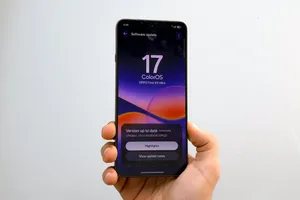
OriginOS 7 stands out with its tactile realism, letting users switch between Realistic, Natural, and Soft visual styles alongside elastic controls and Glow on Touch effects. Built on Android 17, it introduces Origin Workbench for multitasking with up to five active apps simultaneously, plus AI Cross-App Drag and Capture to Note.
Its biggest differentiator is deep Apple ecosystem integration, offering AirDrop-compatible transfers, native iCloud file access, Apple Watch notification syncing, and AirPods controls on Origin Island.
Built on Android 17, ColorOS 17 differentiates itself through agentic intelligence, led by Mind Pilot, which blends ChatGPT and Perplexity to organize files and plan trips, alongside Mind Space and real-time AI Call Guard protection.

Also Read: BMW M340i Review: The 3 Series Brian O’Connor Would Drive Today
Its luminous liquid-glass interface introduces modular home screen geometry, allowing you to stretch app icons and folders into custom pill tiles with seamless Flux Clock animations. Finally, power users benefit from Quick Startup, keeping minimized games suspended in memory for instant, reload-free resuming.
Both the phones provide five years of operating system and seven years of security updates, which isn’t as good as the industry leaders, but still plenty to get new features across their lifetime.

Vivo X500 vs. Oppo Find X10: Camera
| Spec | vivo X500 | OPPO Find X10 |
| Main | 50MP, ƒ/1.68, 85° field of view, Sony LYTIA 828 sensor, CIPA 5.5-rated stabilisation. 1/1.28″ sensor and 23mm equivalent | 200MP, ƒ/1.6, 85° field of view, 7-element lens, 2-axis OIS. 1/1.4″ sensor and 23mm equivalent |
| Ultra-wide | 50MP, ƒ/2.0, 108° field of view, Samsung JN1 sensor, autofocus. 1/2.76″ sensor and 15mm equivalent | 50MP, ƒ/2.0, 120° field of view, autofocus, 1/2.75” sensor, no stabilization listed. |
| Telephoto | 64MP, ƒ/2.55, 33° field of view, Sony LYTIA 610 sensor, OIS. 3x optical, 72mm equivalent, 1/2.0″ sensor | 200MP, ƒ/2.6, 36° field of view, 2-axis OIS, 2.8x optical zoom, 1/1.56” sensor |
| Extended zoom | 200mm-equivalent ZEISS Telephoto Extender Gen 2 (vivo’s store listing); vivo.com/in lists no zoom figures | Optional Hasselblad Teleconverter mode, reported at up to 11x optical and 20x hybrid |
| Front camera | 50MP, ƒ/2.0, 92° field of view, autofocus. 1/2.76″ sensor, 20mm equivalent | 50MP, ƒ/2.0, 100° field of view, 5-element lens, autofocus. 1/2.76″ sensor, 18mm equivalent |
| Rear video | 8K, 4K and 1080p in MP4; frame rates aren’t listed. 4K up to 120fps and 1080p up to 240fps | 8K@30fps, 4K@30/60/120fps, 4K Dolby Vision@30/60/120fps, 1080p slow-motion up to 240fps, pro video and dual-view. |
| Front video | 4K and 1080p at 30/60fps | 4K and 1080p at 30/60fps; no slow-motion or Dolby Vision. |
Also Read: Apple Reportedly Lines Up iPhone 18e, iPhone 18 and MacBook Neo 2 for Early 2027

This is where things actually get pretty hot and interesting. Starting with the primary camera, the X500 has a 50-megapixel sensor compared to the 200-megapixel unit on the Find X10, which offers more pixels and captures finer details, even at the 25-megapixel level.
Interestingly, though, the X500 has a noticeably larger sensor, allowing it to capture more light and potentially retain more detail in low-light scenarios. So, we’re essentially looking at a trade-off between resolution and sensor size.
Moving to the ultra-wide, both phones feature a 50-megapixel sensor, but the Find X10 offers a significantly wider field of view at 120 degrees versus 108 degrees.

The Find X10 pulls slightly ahead again with its 200-megapixel telephoto camera, which kicks in at 2.8x optical zoom.
Having already used and reviewed the phone, one thing I particularly appreciate is its unique telephoto perspective. At 2.8x, the camera doesn’t get too close to the subject, allowing you to accommodate more of the scene, giving you more flexibility with composition.
On the other hand, the Vivo X500 packs a capable 64-megapixel telephoto camera with 3x optical zoom, but falls behind in sheer resolution. Both phones offer up to 100x zoom for still photography, with AI assistance to process the results.

Also Read: I’ve Used Every vivo X Phone Since the X50, and the X500 Pro Max Still Surprised Me
Both phones also support dedicated first-party telephoto extender kits. The X500’s kit offers a reach of around 200mm, while the Find X10’s provides a 230–253mm equivalent focal length. Of course, these are optional accessories that come at an additional cost and aren’t included in the base price.
Coming to video, both smartphones can record 8K at 30fps, 4K at up to 120fps, and 1080p at up to 240fps. Given their camera-centric positioning, it’s only natural that they also support 10-bit Log and Dolby Vision HDR formats.

And of course, both brands have their own imaging partnerships. Vivo collaborates with Zeiss for co-engineered optics, while Oppo partners with Hasselblad. Both partnerships bring dedicated camera modes, distinct color profiles, and refinements to the results.
Also Read: GTA VI: Hidden Mechanics, Secret Tricks & 20 Lesser-Known Tips And Tricks You Should Know
Vivo X500 vs. Oppo Find X10: Battery Life & Charging
| Spec | OPPO Find X10 | vivo X500 |
| Battery Capacity | 8,000 mAh (typical) / 7,770 mAh (rated); Silicon-Carbon cell | 7,500 mAh (typical) / 7,270 mAh (rated, minimum) |
| Wired Charging Speed | Up to 80W (SUPERVOOC and 80W UFCS standards) | Up to 90W (FlashCharge) |
| Wireless Charging | Up to 50W (AIRVOOC) | Up to 40W |

This part of the comparison feels like we’re pitting the best against the second best. The Find X10 packs an 8,000mAh battery, the largest ever fitted to a Find series phone and certainly one of the biggest among competing baseline flagships in 2026.
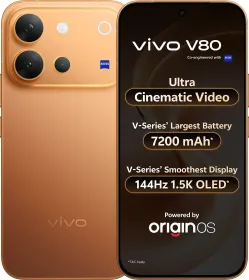
Meanwhile, the Vivo X500 comes with a 7,500mAh battery, which might seem slightly underwhelming in comparison. However, when you use both phones under similar conditions and with comparable workloads, the difference in endurance is likely to be limited to around an hour, or perhaps an hour and a half, depending on your usage.
Also Read: Xiaomi 18 Pro India Price Tipped at ₹1.6 to ₹1.7 Lakh: Dual 200MP Leica Cameras, Back Display & More

In my review of the Find X10, I mentioned that I was consistently getting around 10 to 11 hours of screen-on time with light usage. We’ve also reviewed the X500, and our testing showed that it consistently delivers over 10 hours of screen-on time. So, in practical, day-to-day usage, you’re looking at roughly an hour to an hour and a half of difference in battery endurance.
Charging speeds are fairly similar as well. The Find X10 supports up to 80W wired charging, while the X500 takes things slightly further with 90W. The smaller battery on the X500 should also allow it to charge relatively faster, although the actual time saved is likely to be in the lower double-digit range, somewhere around 10 to 15 minutes at most.
Also Read: Lava Smart 4 Pro Launched In India For ₹10,999: Check Battery, Specs And Where To Buy Here

You can follow Smartprix on Twitter, Facebook, Instagram, and Google News. Visit smartprix.com for the latest tech and auto news, reviews, and guides.