

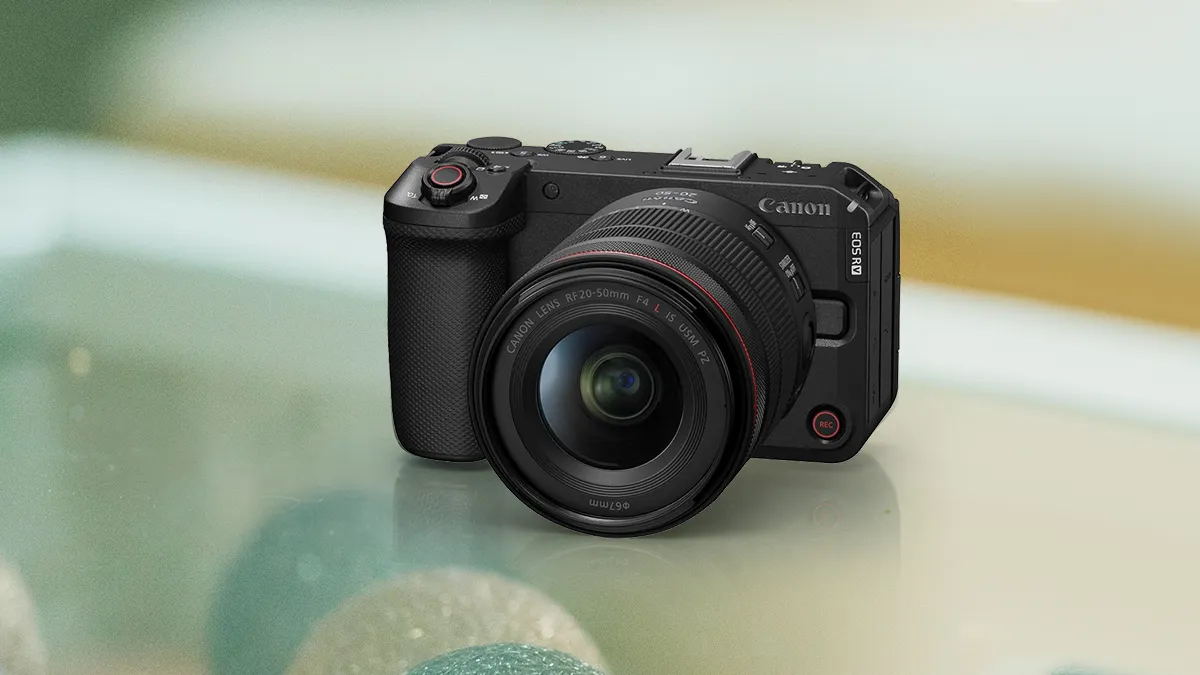
A few years ago, you bought one camera for photos and another for video. Today, a single body is expected to shoot a wedding film on Saturday, a product reel on Monday and a portrait session in between. That is what a hybrid camera promises, and it is why so many people search for the best camera for photography and video.
The trouble is that most hybrids make you pick a side. Some shoot lovely photos but crop or overheat when you press record. Others are superb video tools with only 12MP for stills. The Canon EOS R6 V is built to close that gap: 7K RAW video, 32.5MP photos and a body designed around creators. This guide explains what to look for and shows how the R6 V measures up against its main rivals.
DSLR vs Mirrorless Camera: Settle This First
If you are upgrading from an older kit, the DSLR vs mirrorless camera question still comes up. For hybrid work, the answer is now simple: go mirrorless.
A DSLR uses a mirror and an optical viewfinder, which is great for stills but awkward for video because the mirror has to flip out of the way, and the main autofocus system stops working. In the DSLR vs mirrorless for video debate, mirrorless wins on almost every count: on-sensor autofocus that tracks eyes while recording, in-body stabilisation, lighter bodies and far better video formats.
Canon users have an easy path here. If you own EF lenses from your DSLR days, they work on the EOS R6 V through Canon’s EF-EOS R mount adapter, so your existing glass moves with you.
Autofocus: The Feature You Will Lean On Most
When you shoot alone, you are the director, the camera operator and the focus puller. That is why autofocus matters more than almost any headline number, and it is the first thing to check if you are hunting for the best camera for beginner videographers.
Among the Canon R6 V features, autofocus is a clear strength. Dual Pixel CMOS AF II uses deep-learning detection to follow people, animals and vehicles, locking on to faces, eyes, heads and bodies even when subjects move unpredictably. It works across up to 1,053 AF zones for stills and 897 for video.
Two functions make a real difference on a job. Register People Priority stores up to 100 faces, so the camera stays on the bride and groom rather than a guest who walks through the shot. In crowded Indian wedding frames, that is a practical advantage. AF for close-up demo shifts focus smoothly from your face to a product held up to the lens and back again, which makes reviews and unboxings far easier to film solo.
Rivals such as the Sony Alpha A7 V and Nikon Z6III also track subjects well, but Canon’s face registration and close-up demo mode are built for exactly the kind of work creators do every day.
Stabilisation And Low-Light Performance: Two sides of the same problem
Handheld footage and dim venues are where cameras show their limits, and the two are linked. Better stabilisation lets you use slower shutter speeds; a cleaner sensor lets you raise ISO without the image falling apart.

The EOS R6 V has a 5-axis In-Body Image Stabiliser that works with every lens you mount. Pair it with a stabilised RF lens and Coordinated Control IS delivers up to 7.5 stops of correction at the centre of the frame, matching the rating of the pricier Sony Alpha A7 V. For video, Movie Digital IS adds a third layer, so walk-and-talk shots and handheld b-roll stay smooth without a gimbal.
For low light, sensor design is a trade-off. The Sony FX3 and A7S III chase extreme ISO numbers with 12.1MP sensors, which leaves little room to crop a photo or print it large. The R6 V takes the more balanced route with a 32.5MP full-frame sensor, nearly three times the resolution of that Sony pair. Stills ISO runs from 100 to 64,000, expandable to 102,400, which comfortably covers receptions, concerts and street work after dark. You come home with clean video and photos a client can print big.
Resolution and video formats: Where the R6 V pulls ahead
Spec sheets can be intimidating, so here is how to read the Canon R6 V specifications in plain terms.
The headline feature is 7K 30p RAW open gate. Open gate means the camera records the full 3:2 sensor area, so you can cut a 16:9 YouTube film, a 9:16 Reel and a 1:1 square post from the same clip without reshooting. Shoot once, deliver everywhere. For widescreen work, 7K 60p RAW Light is recorded straight to the card.
That internal RAW recording matters. The Sony FX3, which costs far more, sends RAW only over HDMI to an external recorder, adding cost and bulk to your rig. The Nikon Z6III and ZR record RAW internally, but top out at 6K.

Slow motion is another win. The R6 V shoots 4K 120p with no crop and full autofocus. The Sony FX3 and A7S III apply a 10 per cent crop at 4K 120p, and the Alpha A7 V offers it only in its APS-C mode, so your wide lens stops being wide. For more dramatic footage, the R6 V’s 2K and Full HD 180p modes give up to 7.5x slow motion.
Everyday 4K is oversampled for extra detail at 60p and 30p. Canon Log 2 and Log 3 provide 15+ stops of dynamic range for grading and match Canon’s Cinema EOS cameras. You can load LUTs to preview your look, check exposure with waveform, false colour and zebras, and record 24-bit, four-channel audio. Proxy recording to the SD card keeps laptop edits quick.
On the stills side, the R6 V shoots 32.5MP files at up to 40 frames per second, silently and without blackout. That is faster than the 30fps of the Sony Alpha A7 V and Nikon Z9. Pre-continuous shooting saves up to 20 frames from before you fully press the shutter, so a baraat entry or a bird leaving a branch is never missed.
See the full feature list and today’s price for the Canon EOS R6 V on Amazon.
Ergonomics and handling: Designed around the creator
This is the section most buyers skip and later regret. A camera’s shape decides how pleasant it is to use for eight hours.
The Canon EOS R6 V is built for the way people shoot now. An internal cooling fan with adjustable settings manages heat during long recordings and live streams, which matters in Indian summers and long ceremonies. There is a stills and video switch, a record button on the front for self-shooting, seven customisable buttons, and a zoom lever with 15 speed levels for power zoom lenses. The HDMI port is full-size, with microphone and headphone sockets alongside.
A dedicated vertical tripod socket lets you mount the camera upright for Reels and Shorts without a cage, and the interface rotates automatically. A single USB-C cable handles 4K streaming. Dual card slots, one CFexpress Type B and one UHS-II SD, allow backup or relay recording. The magnesium-alloy body is sealed against dust and drips, fan included, and weighs about 688g with battery and card, so it balances easily on a gimbal.
To keep the body this compact and video-focused, Canon uses a vari-angle touchscreen for framing and a silent electronic shutter, with no viewfinder or flash support. If your photography depends on studio strobes, note that before you buy. For natural-light and continuous-light work, which covers most hybrid shooting, it is a clean, quiet and fast way to work.
Lens options: You are buying a system, not a body
A camera body lasts a few years. Lenses stay with you for a decade. Before picking a brand, look at what you would mount on the camera.
The Canon EOS R6 V uses the Canon RF mount, which covers RF full-frame lenses, RF-S lenses and adapted EF and EF-S lenses. That gives you access to decades of Canon glass, from affordable primes to L-series zooms.
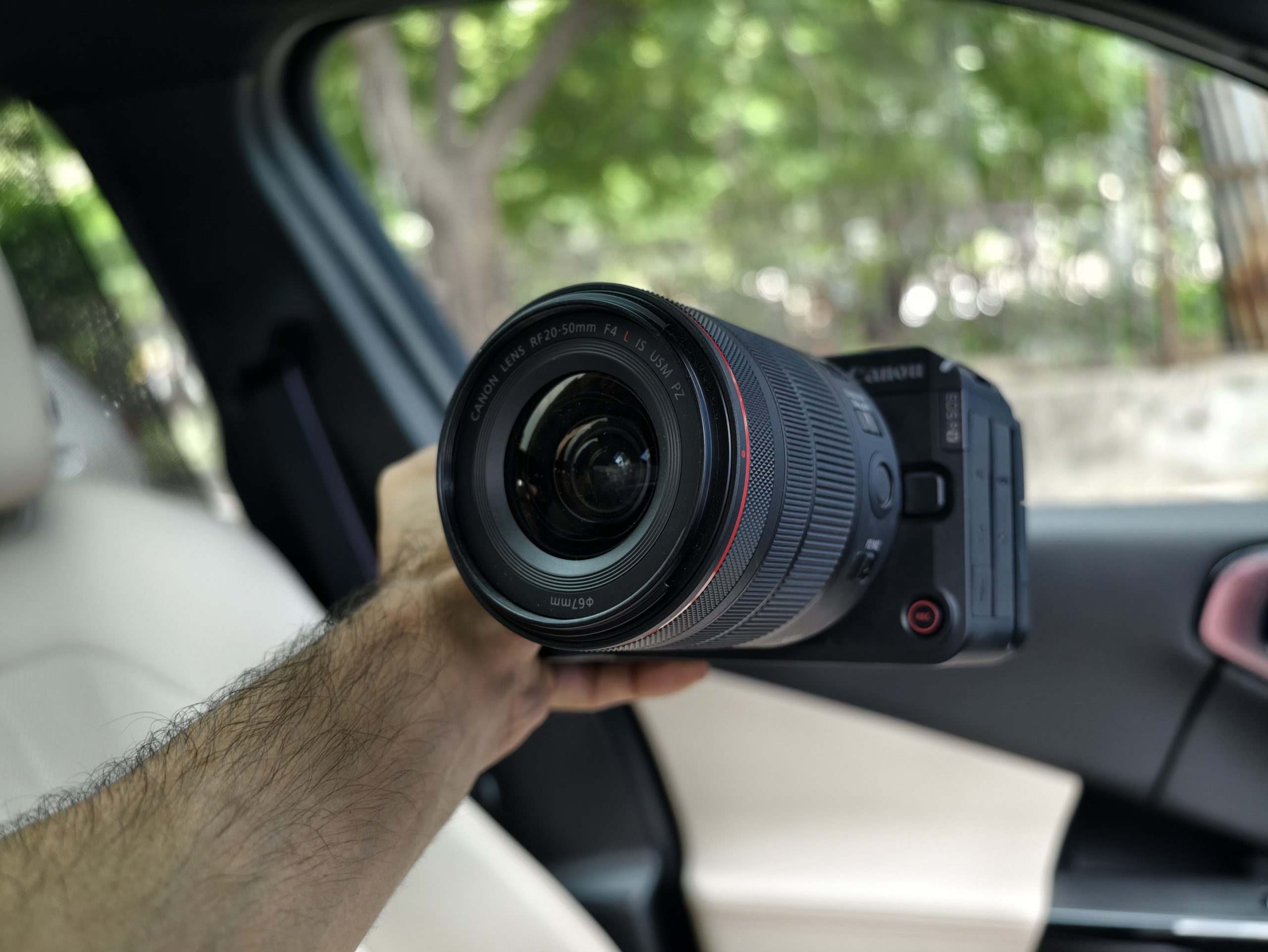
The kit option is worth a close look. The RF 20-50mm F4L IS USM PZ is Canon’s first full-frame L-series lens with built-in power zoom. In practice, that means smooth, motorised zooms triggered from the lever on the camera, a constant f/4 aperture so exposure does not shift as you zoom, and optical stabilisation that works together with the in-body system. The 20mm wide end suits vlogging at arm’s length and tight interiors.
If you already own lenses, add the body alone. If you are building from scratch, the Canon EOS R6 V with RF 20-50mm lens kit gives you a video-ready setup on day one.
Where the Canon EOS R6 V fits among its rivals
Here is how the main options line up on stills resolution, top video mode and price.
| Camera | Stills | Top video mode | Body MRP |
| Canon EOS R6 V | 32.5MP, 40fps | 7K 60p RAW internal, 4K 120p uncropped | Rs 2,35,995 |
| Sony Alpha A7 V | 33MP, 30fps | 4K 60p; 4K 120p in APS-C mode | Rs 2,70,990 |
| Sony A7S III | 12.1MP | 4K 120p with 10 percent crop | Rs 3,48,490 |
| Sony FX3 | 12.1MP | 4K 120p with 10 percent crop; RAW over HDMI only | Rs 4,05,990 |
| Nikon Z6III | 24.5MP | 6K 60p RAW internal | Check current price |
| Nikon ZR | 24.5MP | 6K 60p RAW internal | Check current price |
| Nikon Z9 | 45.7MP, 30fps | 8K 30p in a large flagship body | Check current price |
The value case is hard to miss. The R6 V has the lowest MRP of the four cameras priced here. It costs about Rs 35,000 less than the Sony Alpha A7 V, more than Rs 1.1 lakh less than the A7S III and roughly Rs 1.7 lakh less than the FX3, while offering higher-resolution video than all three. Canon India’s online store currently lists the body at Rs 2,07,000, which widens the gap further. The kit with the RF 20-50mm lens launched at Rs 3,55,995, still below the FX3 body alone. Prices move with offers, so check the current listing.
So who is it for? Wedding filmmakers who also deliver photo albums. YouTubers and documentary shooters who record long takes. Solo creators who shoot horizontal and vertical from one clip. Production teams that want a compact body whose footage matches Canon’s cinema cameras. If you want one camera that takes video seriously without shortchanging your photos, the R6 V is the one to beat.
Frequently asked questions
Is the Canon EOS R6 V good for photography as well as video?
Yes. You have a 32.5MP full-frame sensor, 40fps silent bursts, pre-continuous shooting and RAW, C-RAW, HEIF and JPEG formats. It suits natural-light and continuous-light photography; flash is not supported.
Is it a sensible pick for beginners?
If you are new and serious about video, yes. Scene Intelligent Auto, dependable autofocus and strong stabilisation help you produce clean footage early on, and the camera has room to grow with you into Log and RAW.
Is it the best mirrorless camera for photography too?
For hybrid shooters, it is one of the strongest options, with more resolution and faster bursts than most video-first bodies. If you shoot only stills with flash, a photo-first body is the better fit.
How does it compare with the Sony FX3?
The R6 V offers 32.5MP stills against 12.1MP, internal 7K RAW against RAW over HDMI, uncropped 4K 120p against a 10 percent crop, and an MRP that is roughly Rs 1.7 lakh lower.
Can I use my old Canon DSLR lenses on it?
Yes. EF and EF-S lenses work through the Mount Adapter EF-EOS R.
Should I buy the body or the kit?
Pick the body if you already own RF or EF glass. Pick the kit if you are new to the system or want the power zoom for video.
If video leads your work and you still need photos you are proud to deliver, the EOS R6 V makes a strong case on features and on price. Compare today’s offers, bank discounts and no-cost EMI options on the Canon EOS R6 V body and the EOS R6 V with RF 20-50mm lens kit on Amazon, and pick the version that matches your lens bag.
Disclaimer: This is a brand story, so views and opinions expressed here are of the sponsor and not of the editorial team.