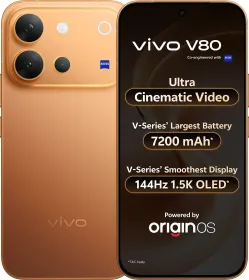


Quick Verdict
The vivo X500 combines a versatile ZEISS-tuned camera system with a massive 7,500 mAh battery, making it an interesting option for photography enthusiasts and frequent travelers. Its 50 MP Sony LYTIA 828 main camera, 64 MP ZEISS APO telephoto, optional 200 mm Telephoto Extender Gen 2, and extensive video controls give you plenty of creative flexibility.
OriginOS 7 adds useful multitasking and cross-device features, while the Dimensity 9600M handles everyday tasks and gaming comfortably. Battery endurance is excellent, although thermal management and aggressive AI processing at certain zoom levels need attention.
Buy it if:
- You want versatile cameras with excellent telephoto capabilities and extensive creative controls.
- You need excellent battery life for a full day of heavy usage.
- You regularly shoot travel, wildlife, street photography and videos.
- You want professional-style video features, including 4K 120 FPS recording across the main and telephoto cameras.
Skip it if:
- You prefer natural-looking photos with minimal AI processing, especially at higher zoom levels.
- You frequently use mobile data over 5G for extended periods.
- Sustained gaming performance and lower operating temperatures are priorities.
A camera phone becomes particularly interesting when it can handle everything from everyday photography to distant wildlife shots, while keeping up with hours of video recording. The vivo X500 attempts exactly that, pairing a new Sony LYTIA 828 main sensor with a 64 MP ZEISS APO telephoto camera and support for a dedicated 200 mm equivalent Telephoto Extender Gen 2.
The camera system also gets an extensive set of creative tools, including 4K 120 FPS recording on the main and telephoto cameras, cinematic video profiles, portrait video, dual-view recording and manual video controls. OriginOS 7 adds several software improvements, while a 7,500 mAh battery with 90W wired and 40W wireless charging promises serious endurance.
I spent two weeks with the X500 across Hyderabad and Nairobi, Kenya, putting its cameras through travel and wildlife photography, alongside everyday usage, gaming and video recording. Here’s how it performed.
HOW I TESTED
| Reviewed by: Mehtab Ansari, Assistant Editor, Features & Reviews at Smartprix Test unit: vivo X500, 12 GB RAM + 256 GB storage, Ember Red. Duration and environment: Two weeks across Hyderabad and Nairobi, Kenya. Testing: Everyday usage, indoor and outdoor photography, travel and wildlife photography, video recording, gaming, synthetic benchmarks, thermal testing, camera comparisons, charging speeds and real-world battery endurance. Competitors: OPPO Find X10, iPhone 17, Samsung Galaxy S26, Google Pixel 11 |
vivo X500 Price & Availability
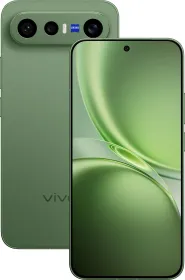
The vivo X500 is priced at ₹1,19,999 for the 12GB + 256GB variant (the only configuration available at launch). It comes in Ember Red and Titanium Black.
Sales begin on December 3 via Amazon, Flipkart, and the vivo India online store. There is a 10% instant cashback offer on purchases made with SBI, HDFC Bank, IDFC First Bank, and Yes Bank cards.
Pros
- Great display
- Likeable haptics
- OriginOS 7 is great for productivity
- Versatile camera system with a 64MP 3X telephoto
- Support for the 200 mm equivalent ZEISS Telephoto Extender Gen 2
- 4K 120 FPS recording on the main and telephoto cameras
- Extensive photography and videography controls
- Excellent battery life with a 7,500 mAh battery
- 90W wired and 40W wireless charging
- IP68 and IP69 ratings
- USB 3.2 connectivity
Cons
- AI processing can be aggressive at certain zoom levels
- The phone can run warm during extended 5G usage
- Gaming temperatures could be better during extended sessions
- Some OriginOS 7 glitches remain
vivo X500 Specifications
| Category | Specifications |
| Display | 6.59-inch Flexible AMOLED, 2750 x 1260 resolution, 144 Hz refresh rate, 459 PPI, 8,000,000:1 contrast ratio, HDR10+, Netflix HDR, TÜV Rheinland Flicker-Free, SGS Low Blue Light certification |
| Processor | MediaTek Dimensity 9600M, CPU 1x C1-Ultra + 3x C1-Premium + 4x C1-Pro, Arm G1-Ultra GPU |
| RAM & Storage | LPDDR5X Ultra + UFS 4.1 (12/256, 12/512) |
| Battery | 7,500 mAh, 90W FlashCharge, 40W wireless FlashCharge |
| Main Camera | 50 MP Sony LYTIA 828, 1/1.28-inch, 23 mm, f/1.68, AF, CIPA 5.5 Professional Stabilization, 4K120/60/30 |
| Ultra Wide | 50 MP Samsung JN1, 1/2.76-inch, 15 mm, f/2.0, AF, 4K60/30 |
| Telephoto | 64 MP Sony LYTIA 610, 1/2.0-inch, 72 mm, f/2.55, OIS, CIPA 5.5 stabilization, 4K120/60/30 |
| Selfie | 50 MP Samsung JN1, 1/2.76-inch, 20 mm, f/2.0, AF, 92° FOV, 4K60/30 |
| Build | Glass front + Glass back, aluminium alloy frame, IP68 + IP69 |
| Software | OriginOS 7, 5 OS updates + 7 years of security updates |
| Weight and Thickness | 211 grams (Ember Red), 213 grams (Titanium Black), 8.15 mm |
| Connectivity | 5G, Wi-Fi 2.4 GHz/5 GHz/6 GHz, Bluetooth 6.0, NFC, USB 3.2 Type-C, dual nano SIM + eSIM support, dual-band GPS (L1 + L5), OTG |
| Biometrics | 3D ultrasonic in-display fingerprint scanner, face unlock |
vivo X500 Review: Unboxing
The vivo X500 comes in familiar squarish retail packaging. Inside, you get the phone, a 90W FlashCharge adapter, USB Type-A to Type-C cable, color-matched protective case, SIM ejector tool, documentation, warranty card and pre-applied screen protector. It’s a complete in-box package with all the essential accessories.

vivo X500 Review: Design and Build
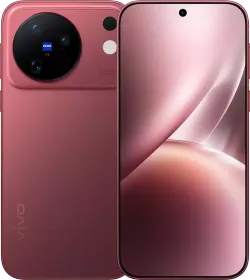
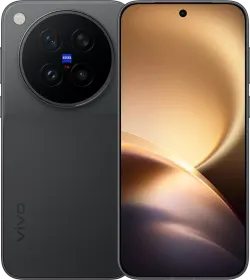
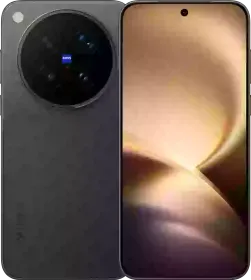
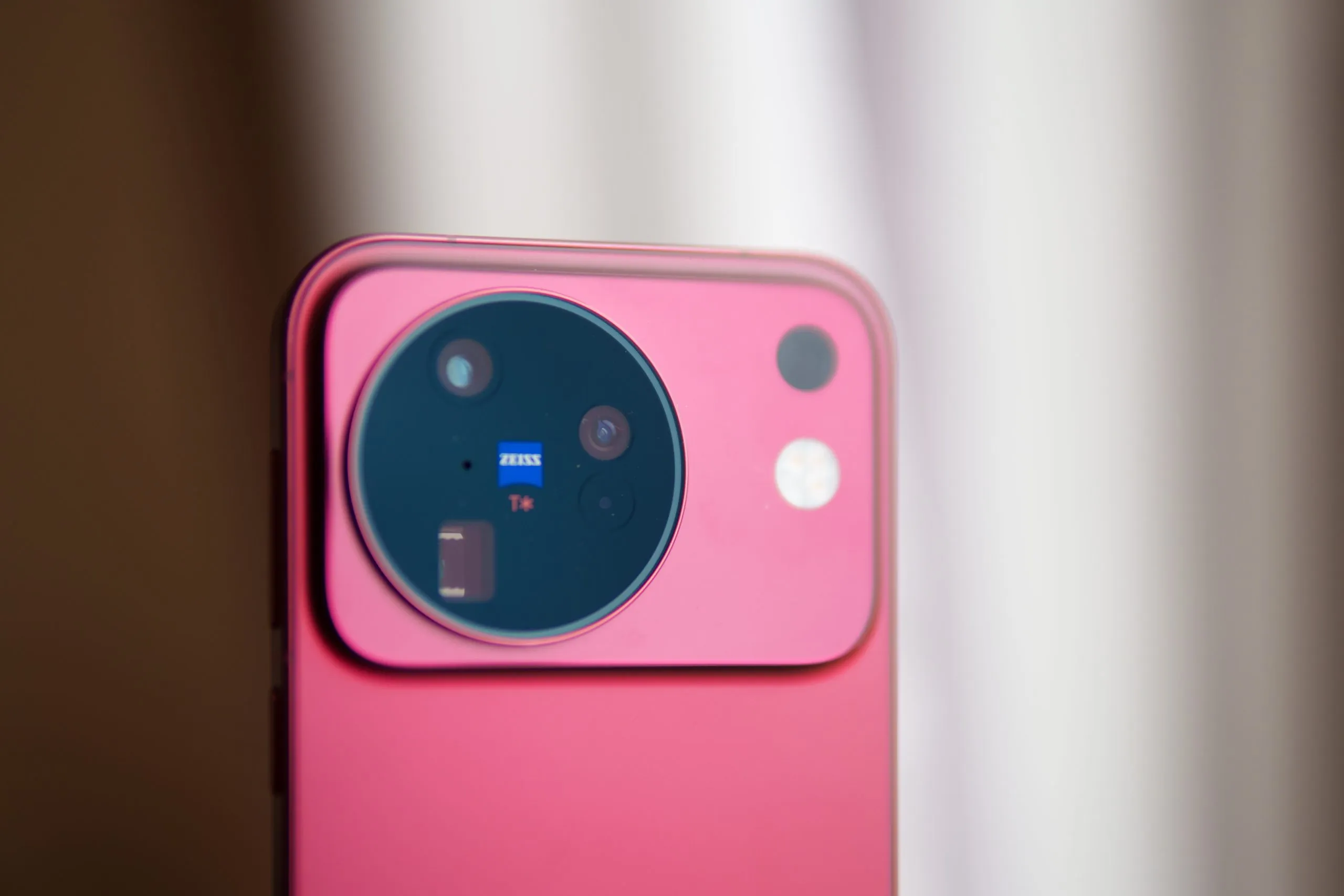
The X500 gets a slightly different design this year, featuring a floating-inspired camera module and frosted glass back. At 8.15 mm thick and 211 grams in Ember Red, it has good weight distribution and remains comfortable to hold. The aluminium frame and glass construction also feel solid.
The rear uses frosted AG glass with a metallic finish that develops a subtle sheen under direct sunlight. Fingerprints are visible occasionally, although they aren’t particularly prominent. Cold-carved glass around the camera module blends into the rear panel.

I’m less convinced by the camera module’s dual-island arrangement, which combines a rectangular section with a circular camera element towards the left. Thankfully, the module doesn’t protrude excessively. The phone also wobbles slightly when pressed towards the right side on a flat surface.

Frame machining is clean, and the power and volume buttons have tactile feedback with familiar placement. The bottom houses the USB Type-C port, speaker grille, microphone and dual nano-SIM tray. There’s another speaker, microphone and IR blaster on top, alongside NFC support.


IP68 and IP69 ratings add dust and water resistance. Overall, the X500 is well built and comfortable despite its weight. The camera module could have been designed more cohesively, while the frosted finish and aluminium frame give it a premium appearance.

vivo X500 Review: Display
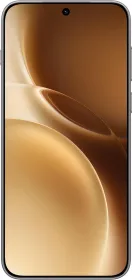
The X500 features a 6.59-inch AMOLED panel with 2750 x 1260 resolution, 459 PPI, up to 120 Hz standard refresh rate and 144 Hz support in compatible games. Brightness reaches 2,000 nits in HBM mode and 4,000 nits at peak.
The display is sharp, with good color reproduction, deep blacks and excellent viewing angles. Outdoor visibility is also very good, making it easy to read content and frame photographs under direct sunlight.

The 144 Hz refresh rate requires some clarification. Regular system interactions operate at up to 120 Hz, while 144 Hz is reserved for supported games. Scrolling and navigation remain smooth.
ZEISS Master Color tuning introduces Natural, Professional and Bright profiles. Natural is the default and my preferred option, while Professional and Bright are also options worth exploring to find your taste.

HDR10+, Dolby Vision and Netflix HDR are supported. Ultra XDR also helps preserve highlight and shadow information, although dynamic range retention could be better in certain scenes.
The bezels measure 1.23 mm at the top and 1.29 mm at the bottom. They aren’t perfectly symmetrical, although the difference is barely noticeable. Other display features include 2160 Hz PWM dimming, DC dimming, Night Eye Protection Mode, Custom Brightness 2.0, anti-flicker brightness and motion prompts for users experiencing motion sickness.

The flat panel also makes screen protector installation easier and reduces accidental edge touches. Overall, it’s a very good display with excellent outdoor visibility, flexible color tuning and slim bezels.
vivo X500 Review: Speakers and Haptics
The stereo speaker setup uses dedicated top and bottom speakers, delivering good loudness, decent stereo separation and clear vocals. Distortion is minimal at higher volumes, although bass lacks the depth expected from a flagship.
Haptics have improved over the previous generation. Typing, navigation and back gestures feel consistent, with Crisp and Soft modes available. I prefer Crisp for its more pronounced feedback.

Some interactions still lack vibration feedback, including the volume and brightness sliders and camera lens switching. Overall, speakers are good for media consumption, while haptics have improved considerably.
vivo X500 Review: Software
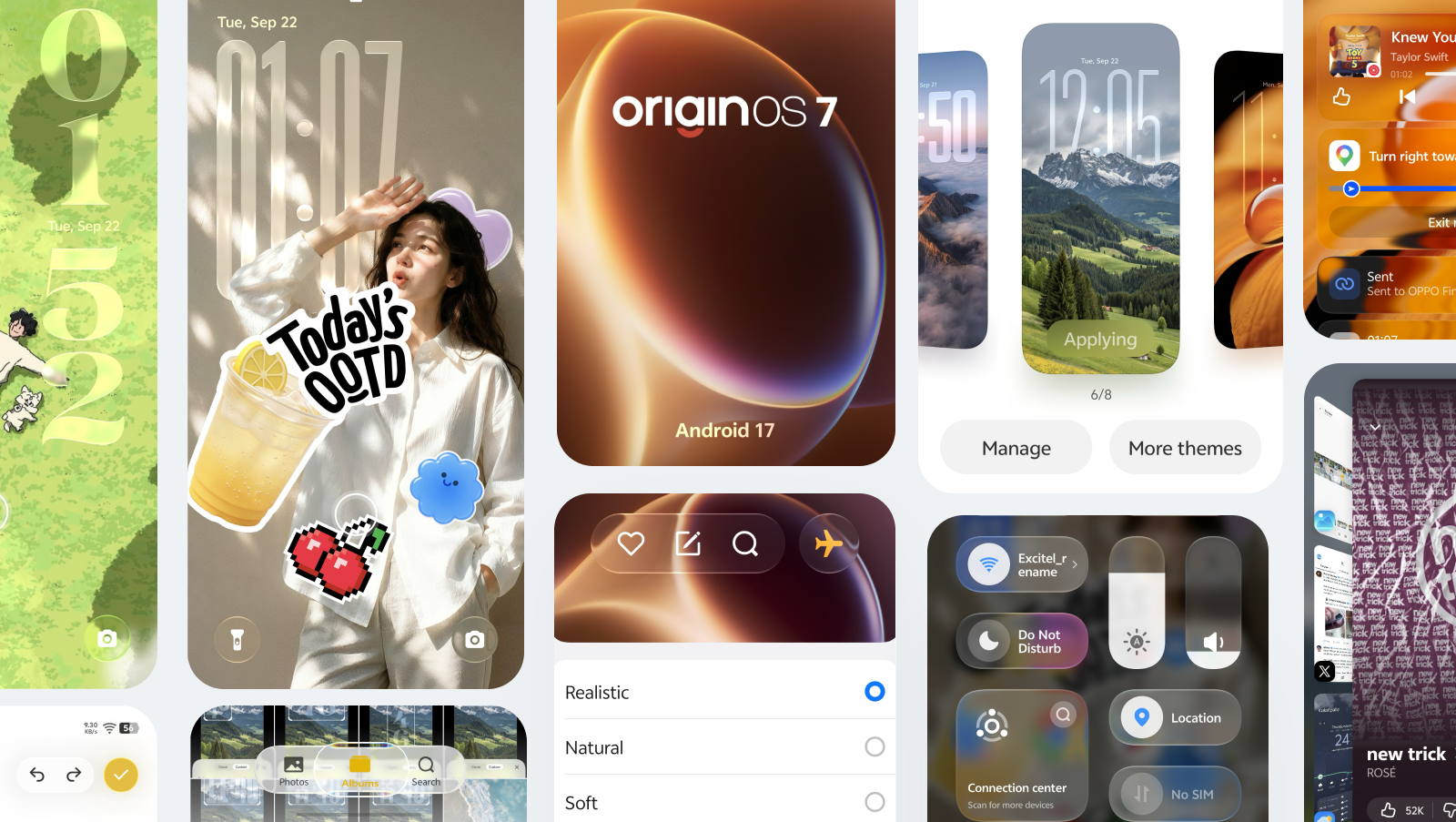
The vivo X500 runs OriginOS 7 based on Android 17. This is a substantial update over OriginOS 6, with smoother animations, faster app switching, redesigned interface elements, translucent backgrounds, updated icons and floating interface bars. You can also choose between Realistic, Natural and Soft visual styles, alongside Glow on Touch effects.

The Control Center now supports extensive customization, including rearranging individual controls and adding larger 2 x 2 tiles. Notification management has an iOS-inspired layout, with notifications appearing from the bottom when accessed on the lock screen. The full-screen media player could use some visual refinement.

Customization includes a full-screen Always-On Display, Flip Cards, lock screen widgets and interactive themes. Wiggle makes wallpapers respond to taps and movement, Glint adds shifting light effects when tilting the phone, and Pet Pals introduces an interactive virtual pet. Widget selection is decent, although a dedicated monthly calendar widget would have been useful.

Multitasking and Desktop Mode
Origin Workbench introduces desktop-style multitasking through task groups, allowing you to combine up to four applications. Other features include multiple floating windows, Picture-in-Picture+, Super Dragging and AI Cross-App Drag, which can extract text, translate content and transfer information between compatible applications.

Connecting the X500 to an external monitor activates desktop mode, with resizable windows and multiple window support. You can use the phone as a touchpad and keyboard or connect external peripherals. The interface is responsive and works well for basic productivity or even content consumption.

Cross-Device Connectivity
Office Kit supports file transfers and collaboration with compatible Macs and iPads. The X500 can also act as a camera for Mac video calls. Quick Share supports AirDrop interoperability, while Shake and Share transfers original photos and videos across supported Android, iOS and vivo devices.


Additional integrations include iCloud access through File Manager, Apple Watch notification synchronization, and AirPods battery information and Spatial Audio support on Origin Island.
I tested these features during my usage, and cross-device functionality worked reliably across the devices I used. This is particularly useful if you regularly work across Windows, macOS, Android and Apple devices.
AI Features
OriginOS comes with a decent set of AI features too. In the Albums app, you get the AI Eraser, AI Image Expander, AI Reflection Eraser, AI UHD, and AI Color Adjustment. I found all these features to be working as expected.

AI Recorder supports transcription, speaker identification, organized transcripts and AI-generated summaries. Capture to Note converts photographs of whiteboards, slides and handwritten notes into editable notes.

Snap & Go extracts information from screenshots, including travel bookings and event details, and can create calendar entries. There’s also AI Next Up, which reads authorized information from Gmail and Google Calendar to organize upcoming flights, hotel reservations, meetings and appointments into a widget on the home screen. You can also access it from the Notifications tab.

Smart Call Assistant adds AI Call Answering, which handles incoming calls and displays live conversation transcriptions. AI-generated call summaries are also available after calls. These features worked well during my testing.
I encountered occasional notification glitches and an unusual font issue where the interface randomly switches to Roboto despite vivo Sans remaining selected in settings. A few other minor glitches also appeared during regular usage.
The phone comes with third-party applications such as Firefox, Meesho, ShareChat, and Moj, all of which can be uninstalled. The first-party V-Appstore and Browser remain more restrictive. You can turn off their notifications, although neither application can be disabled or uninstalled.
Overall, OriginOS 7 brings meaningful improvements through its smoother animations, multitasking, desktop mode, customization and cross-device connectivity. Some glitches and application restrictions remain.
vivo X500 Review: Biometrics
The X500 uses a 3D ultrasonic in-display fingerprint scanner. Its placement is comfortable, and recognition is fast and consistent. Slightly damp fingers generally work, although wet fingers can cause occasional failures. During my testing, unsuccessful recognition was rare, occurring only once or twice. Its placement and responsiveness are almost identical to the X300.

Face unlock is also available and works quickly in well-lit environments. Reliability drops in low light, and it cannot authenticate banking applications or other sensitive tasks. The fingerprint scanner remains the more dependable primary authentication option.
vivo X500 Review: Performance
The vivo X500 is powered by the MediaTek Dimensity 9600M, paired with 12 GB LPDDR5X Ultra RAM and UFS 4.1 storage. Built on TSMC’s N3P process, the chipset uses an octa-core all-big-core architecture comprising Arm C1-Ultra, C1-Premium and C1-Pro cores, alongside the 12-core Arm G1-Ultra GPU.

This is barely even an incremental improvement over the previous generation. Still, everyday performance is quick, applications open rapidly, multitasking remains smooth and UFS 4.1 helps with app loading and file transfers.
Both Indian configurations include 12 GB RAM, with 256 GB and 512 GB storage options.
Thermal management needs attention. vivo has increased the vapour chamber size by 32% over the previous generation, although its exact dimensions haven’t been disclosed. The phone can run slightly warm during regular usage, particularly with extended 5G mobile data usage.
Benchmarks
I ran several synthetic benchmarks to evaluate CPU, GPU and storage performance.
| Benchmark | vivo X500 (Dimensity 9600M) |
| AnTuTu Score | 3294887 |
| Storage (Score, Sequential Read Speed, Write Speed) | Score: 136024; Sequential Read: 4325 MB/s; Sequential Write: 3895 MB/s |
| Geekbench 6 CPU (Single-Core, Multi-Core) | Single-Core: 2246; Multi-Core: 6531 |
| Geekbench 6 GPU (OpenCL, Vulkan) | OpenCL: 17228; Vulkan: 20557 |
| 3DMark Wildlife Extreme (Score, Avg FPS) | Score: 6368; Avg FPS: 38.13 |
| 3DMark Wildlife Extreme Stress Test (Best Loop, Lowest Loop, Stability) | Best Loop: 5919; Lowest Loop: 2594; Stability: 43.8% |


The X500 supports high frame rates in popular games. BGMI runs at 115–120 FPS with its 120 FPS setting, although frame rates can fluctuate slightly as temperatures increase during longer sessions.
Genshin Impact averages around 52–58 FPS on higher graphics settings, depending on the location and on-screen activity. Temperatures can reach 45–46°C after extended sessions.

Bypass charging is available during supported gaming sessions, supplying power directly to the system and reducing heat generated through continuous battery charging. The larger vapour chamber helps dissipate heat, although temperatures during demanding games could be better.
Overall, the Dimensity 9600M handles everyday workloads and demanding applications comfortably, with thermal performance remaining the primary concern during extended gaming and 5G usage.
vivo X500 Review: Cameras
Cameras are the biggest reason to consider the vivo X500. Its triple rear camera setup includes a 50 MP Sony LYTIA 828 main sensor, 50 MP ultra-wide camera and 64 MP Sony LYTIA 610 telephoto camera. There’s also support for the optional 200 mm equivalent ZEISS Telephoto Extender Gen 2.

Main Camera
The 50 MP Sony LYTIA 828 features a 1/1.28-inch sensor and f/1.68 aperture. It supports Hybrid Frame-HDR with over 100 dB dynamic range and Loss Less Exposure (LLE) technology, designed to preserve highlights and shadows across photographs, the viewfinder and video recording. This is the same main camera as last year’s vivo X300 Pro.


Photos generally contain good detail and skin tones, particularly with beauty enhancements disabled. You can shoot in regular Photo mode, 50 MP high-resolution mode or the more advanced Moment Camera.


Exposure controls are straightforward, although consistency under difficult lighting could improve. Saturation also varies occasionally depending on the scene and selected style.
Ultra-Wide Camera
The ultra-wide uses a 50 MP Samsung JN1 sensor with a 15 mm equivalent focal length, f/2.0 aperture and autofocus. It’s useful for architecture, landscapes and group photographs, with autofocus adding flexibility for closer subjects. The image quality is as expected from an ultra-wide camera, and nothing extraordinary.


Telephoto Camera
The 64 MP Sony LYTIA 610 telephoto is one of the biggest highlights. Its 72 mm equivalent focal length provides approximately 3.1X optical zoom, making it great for portraits, distant architecture, travel and subjects that are difficult to approach.
You can also shoot directly at 64 MP resolution, retaining additional detail for cropping. The camera supports CIPA 5.5 stabilization with up to 5.5 stops of stabilization compensation. Images captured using this lens come with a ton of detail, great depth, and you can get very good images up to 10X zoom.


Beyond that, zoom processing can become aggressive, with finer details looking overprocessed. I’d recommend checking the final images when shooting at higher zoom levels. It also can take quite a bit of time to process images at these magnifications.
The telephoto lens also supports 4K 120 FPS and 4K 60 FPS HDR recording, giving you high-frame-rate recording on the telephoto lens.
ZEISS Telephoto Extender Gen 2
The optional ZEISS Telephoto Extender Gen 2 provides a 200 mm equivalent focal length and approximately 8.3X optical zoom. It measures 96 mm and weighs 153 grams.
Its Keplerian optical structure uses two groups of 15 high-transmittance glass lenses, designed for wildlife, distant landscapes, sports and portraits with stronger background compression. I unfortunately couldn’t test the extender on the vivo X500.
Portrait Photography
Portraits are available at 23 mm, 35 mm, 50 mm, 85 mm and 100 mm focal lengths, giving you several framing options and different levels of background compression.
Skin tones are generally good with beauty settings disabled. Bokeh styles include Biotar, B-Speed, Sonar, Planar and Cinematic, with adjustable background blur after capturing the photograph. Edge detection is also pretty good.


Film-inspired options include Film 200, Film 160 and Film 400, alongside Humanistic Life, Humanistic Street and Humanistic Portrait. Film Style 5207 uses a daylight-balanced look, while Film Style 5219 is designed for tungsten and mixed lighting.
CCD is one of my favorite styles. Other options include Vintage and Wedding. Flash portraits are supported, and you can adjust bokeh intensity and style after capturing an image.
Portrait Video supports up to 4K 60 FPS recording at 1X and 3.1X focal lengths.
AI Creative Camera
The AI Creative Camera scans surroundings and recommends effects based on the scene, with manual selection also available. Effects include AI Spring, AI Winter, AI Underwater, AI Glow, AI Top Lighting, Sunlight Celebration, Urban Retro, Dream, Fireworks, Spotlight, Phoenix, Frozen, Moonlight, Animation and Cyber.
Scene effects include Snowy, Rainy, Misty, Rainbow and Aurora. Portrait effects include Realistic and Radiant, with an option to preserve the original image. The images have to be processed on the cloud before showing up on your phone’s gallery.
Video Recording
Video capabilities are another major part of the X500’s camera system. The main and telephoto cameras support 4K 120 FPS recording, 4K 60 FPS HDR on the telephoto, and 8K 30 FPS recording. The ultra-wide and front cameras support up to 4K 60 FPS.

Both the main and telephoto cameras also support 4K 120 FPS slow-motion recording. Playback speed can be adjusted directly in Albums, too.
Pro Video mode has a redesigned interface displaying remaining storage, microphone gain, histogram, battery percentage, shutter speed, frame rate, resolution, ISO and white balance. Log recording and manual adjustments are also available.
Audio Controls for Video
Audio controls include omnidirectional, bidirectional, front and rear microphone pickup patterns. You also get audio zoom, wind noise reduction and low-frequency noise reduction, with adjustable noise reduction strength and manual microphone gain.


Environmental noise cancellation has an adjustable slider, and preferred audio configurations can be saved as presets. You can also now select the audio input directly while recording.
Movie Workshop and Creative Studio
Movie Workshop and Creative Studio include several automated recording modes.
Auto Framing tracks a selected person and keeps them centered, with full-body, half-body and close-up framing options. It can switch between the main and telephoto cameras to maintain composition, making it useful for solo creators.


Vortex Shot creates rotating camera movements with 360-degree video stabilization. You can select 90-degree, 180-degree or loop movements and choose the rotation direction.
Dual-View Video simultaneously records through the front and rear cameras. You can choose horizontal split-screen or picture-in-picture layouts and save recordings together or separately. It now supports 4K recording and different camera combinations, like ultra-wide with main, front with telephoto, or something else.
Selfie Camera
The vivo X500 features a 50 MP Samsung JN1 selfie camera with a 20 mm equivalent focal length, f/2.0 aperture, autofocus and a 92° field of view.
The wide field of view is useful for group selfies and capturing more of the surroundings, particularly during travel. Autofocus also helps maintain sharpness when shooting at different distances. I found the quality of the selfies really good, both in daylight and low light (altough the smoothing in low light could’ve been less).


The front camera supports video recording up to 4K 60 FPS, making it suitable for vlogging and recording yourself while travelling. Combined with the phone’s video tools, it gives creators a capable option for front-facing footage.
vivo X500 Review: Battery Life and Charging
Battery life is one of the X500’s biggest strengths. It packs a 7,500 mAh battery with 90W wired FlashCharge and 40W wireless FlashCharge, which is substantial for a phone with a 6.59-inch display.

During my testing, I consistently recorded over 10 hours of screen-on time, sometimes even with heavy usage involving gaming, social media, messaging, browsing and photography. That’s a significant improvement over my experience with the X300.
Your mileage may vary with network conditions, brightness, camera activity and usage patterns.

The 90W wired FlashCharge adapter takes approximately 55 minutes to fully charge the battery in my testing. You also get 40W wireless FlashCharge. Bypass charging is also available.
Review Verdict: Should You Buy the vivo X500?
The vivo X500 is a strong compact flagship with cameras and battery life as its biggest strengths. The 50 MP Sony LYTIA 828 main camera captures detailed photographs, while the 64 MP telephoto adds useful reach.
The optional ZEISS Telephoto Extender Gen 2 takes the system further for wildlife and travel photography. Extensive video controls, including 4K 120 FPS recording, also make it an interesting option for creators.
Battery endurance is equally impressive. Over 10 hours of screen-on time with medium to heavy usage is excellent, and the 7,500 mAh battery, 90W wired charging and 40W wireless charging make it a dependable travel companion.
At ₹1,09,999, the X500 makes a strong case for buyers looking for a 6.59-inch flagship with serious camera capabilities and excellent battery endurance. Its telephoto system and optional extender are particularly useful for travel and wildlife photography, while the video tools offer plenty of flexibility.
If photography, video recording and battery life are your priorities, the vivo X500 deserves serious consideration. Frequent mobile gamers should factor in its thermal performance before making a purchase.

Smartprix ⭐ Rating: 8.9/10
- Design and Build: 8.8/10
- Display: 9/10
- Speakers: 8.5/10
- Software: 8.7/10
- Haptics: 8.2/10
- Biometrics: 9/10
- Performance: 8/10
- Cameras: 8.9/10
- Battery Life & Charging: 8.9/10
First reviewed in November 2026.