


iPhone 18 Pro Max vs. Galaxy S26 Ultra vs. Pixel 11 Pro XL: Table of Contents
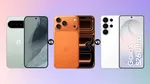
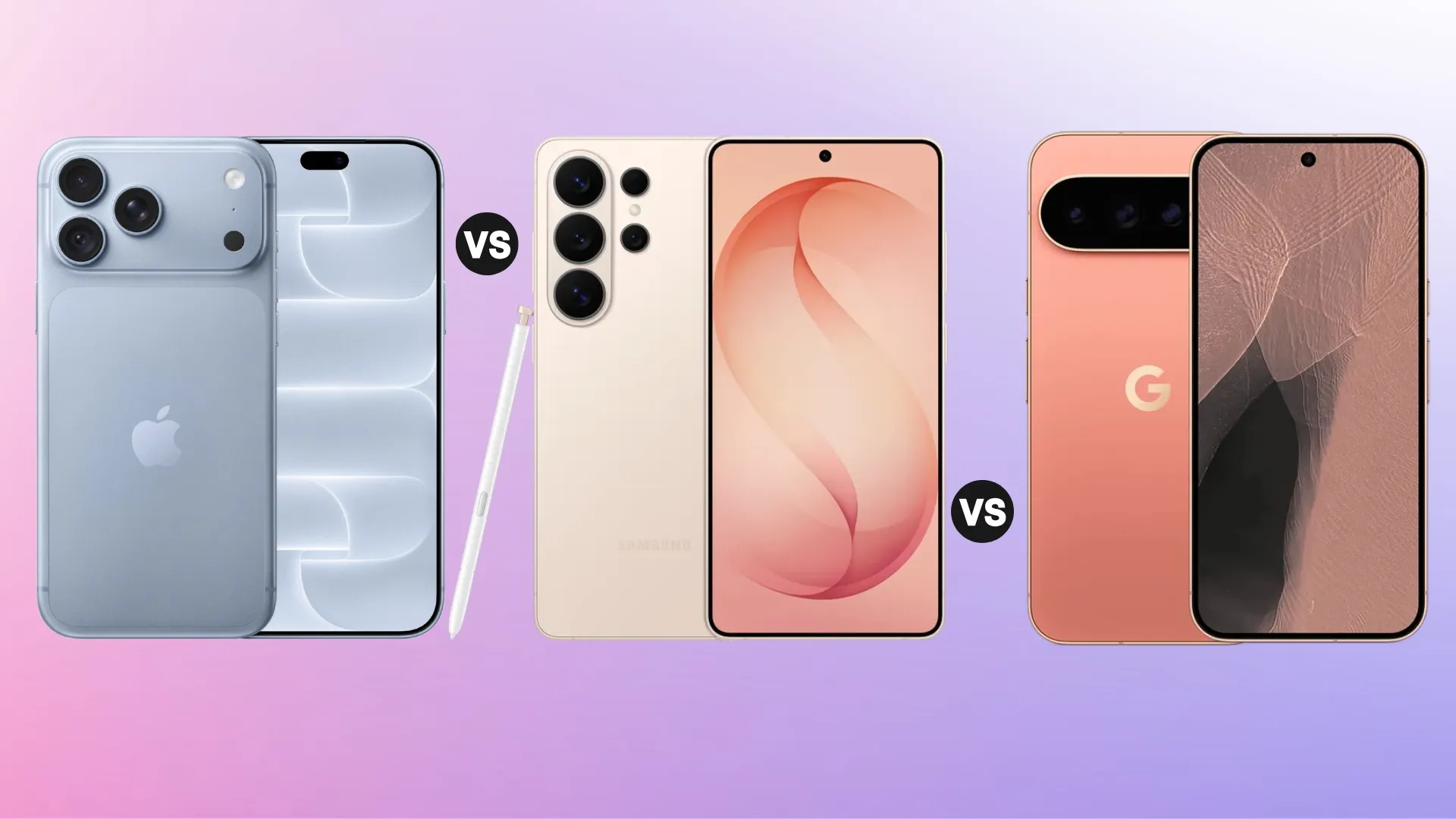
Apple iPhone 18 Pro Max arrives nearly one month after the Pixel 11 Pro XL and seven to eight months after the Galaxy S26 Ultra. Given that reviewers, testers, and customers have spent enough time with the other two phones, it’s only natural that they’ll compare the new entrant in the flagship segment to them.
This year’s iPhone 18 Pro Max goes big on cameras, battery, and Siri AI experience. Meanwhile, the S26 Ultra still has the most versatile camera setup on a mainstream flagship, followed by the unmatched S-Pen. Google’s Pixel 11 Pro XL relies on stock Android’s refinement and the most natural Gemini integration ever on a smartphone.
I’ve spent nearly seven hours looking at the phone’s spec sheets, and here’s the most detailed comparison between the iPhone 18 Pro Max, Galaxy S26 Ultra, and the Pixel 11 Pro XL you’ll find on the internet.
Also Read: Apple M5 vs Apple M6: What’s New?
iPhone 18 Pro Max vs. Galaxy S26 Ultra vs. Pixel 11 Pro XL: Design
| Spec | iPhone 18 Pro Max | Galaxy S26 Ultra | Pixel 11 Pro XL |
| Dimensions | 163.4 x 78.0 x 8.8 mm | 163.6 x 78.1 x 7.9 mm | 162.7 x 76.5 x 8.5 mm |
| Weight | 249 g | 214 g | 226 g |
| Build | Aluminum unibody frame, Ceramic Shield 2 front, Ceramic Shield back | Armor Aluminum frame, Corning Gorilla Armor 2 front | Aluminum frame, Gorilla Glass Victus 2 at the front and back |
| Water/Dust Resistance | IP68 (up to 6 m for 30 min) | IP68 (up to 1.5 m for 30 min) | IP68 (up to 1.5 m for 30 min) |
| Distinct Design Element | Redesigned, smaller Dynamic Island (under-display Face ID) | World’s first built-in Privacy Display; S Pen silo | HiLight: RGB LED ring around the camera flash for contextual glow notifications |
| Colors (India) | Black, Silver, Glacier, Burgundy | Cobalt Violet, Sky Blue, Black, White (+ Silver Shadow, Pink Gold — online exclusive) | Canyon, Fog, Olive, Obsidian |
| Stylus | None | S Pen included | None |
Apple has never been a part of the race to create the thinnest full-fledged flagship. The iPhone 18 Pro Max makes that even clearer. It is the thickest phone in this comparison, almost as thick as the Galaxy S21 Ultra from years ago. The 18 Pro Max is also the heaviest here, and by no small margin. It’s 35 grams heavier than the S26 Ultra and 23 grams heavier than the Pixel. Like always, it features flat edges and rounded corners.
So don’t expect to walk into a store and not feel that difference (and the heft) in hand. While the Pixel wanders in the middle, the Galaxy S26 Ultra is the thinnest flagship in this comparison. It’s 1.1 mm thinner than the iPhone and 0.6 mm thinner than the Pixel; that is not a rounding error. If you prefer holding a slim, tall, boxy flagship, the S26 Ultra is the phone for you.

One common thread across all the handsets is the basic material selection. All feature a glass-metal-glass slab design, with the frame carved from aluminum and either proprietary glass or Corning’s Gorilla Glass of choice. Beyond that, however, the differences lie in the distinct design elements.
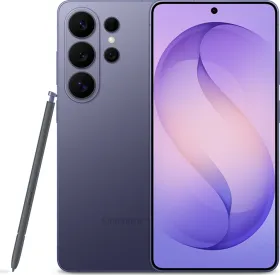
For the iPhone 18 Pro Max, it’s the gigantic camera plateau and color-matched glass on the back, the triangular camera setup, and the smaller yet more useful Dynamic Island at the front. The S26 Ultra, meanwhile, features a more subtle, slimmer vertical camera pill on its back, a couple of flush sensors, the boxiest corners of any phone in this comparison, and a punch-hole display.

The Pixel 11 Pro XL is easy to spot by its iconic camera visor on the back. Even though Google claims it’s slimmer, it’s still the most identifiable aspect of the Pixel, aside from the thickest front bezels. Like the iPhone, this one also has rounded corners. This year, the Pixel features a HiLight RGB LED module on the back panel. It isn’t quite useful at launch, but Google might add more functionality over time.
Unlike the other two phones here, the iPhone 18 Pro Max carries an IP68 rating that can survive immersion of up to 6 m for up to 30 minutes, instead of 1.5 m for 30 minutes on the other phones. All the phones are available in different colors, something that I’ve already mentioned in the spec table attached above.

Also Read: Pixel 11 Pro XL vs. iPhone 17 Pro Max vs. Galaxy S26 Ultra: The Ultimate 2026 Flagship Comparison
iPhone 18 Pro Max vs. Galaxy S26 Ultra vs. Pixel 11 Pro XL: Display
| Spec | iPhone 18 Pro Max | Galaxy S26 Ultra | Pixel 11 Pro XL |
| Size | 6.9-inch | 6.9-inch | 6.8-inch |
| Panel Type | Super Retina XDR OLED | Dynamic AMOLED 2X | Super Actua LTPO AMOLED |
| Resolution | 2868 x 1320 px (460 ppi) | 3120 x 1440 px, QHD+ (500 ppi) | 1344 x 2992 px, QHD+ (~482 ppi) |
| Refresh Rate | ProMotion, adaptive up to 120Hz | LTPO: Adaptive 1–120Hz | LTPO: Adaptive 1–120Hz |
| Peak Brightness | 1,000 nits (typical) / 1,600 nits (HDR) / 3,000 nits (outdoor) | 2,600 nits (peak) | Up to 3,600 nits (peak) |
| Protection | Ceramic Shield 2 | Corning Gorilla Armor 2 | Corning Gorilla Glass Victus 2 + new anti-scratch coating |
| Standout Feature | Always-On display, Dynamic Island | Privacy Display (pixel-level side-viewing block) | Highest peak brightness of the three |
All the flagships in this comparison sport a big screen, one that you can’t comfortably use with one hand. However, that’s more like an advantage for users who appreciate it. They all use top-quality flat OLED or AMOLED panels with inky blacks, vibrant colors, and support a variable refresh rate from 1 to 120 Hz (thanks to LTPO technology). Finally, they also support always-on functionality.
Now, moving on to the unique aspects. The iPhone 18 Pro Max has the lowest pixels per inch, which could translate into perceivable display sharpness, but only up close. Samsung’s Galaxy S26 Ultra, despite having the largest display, is the sharpest here, which is a commendable feat. In fact, the Pixel has a sharper display than the iPhone, too.
Moving on to peak brightness, it’s the Pixel 11 Pro XL that comes first (with up to 3,600 nits), followed by the iPhone 18 Pro Max. However, these are peak-brightness numbers, which smartphones achieve only in exceptional scenarios (like under direct sunlight) or while displaying HDR content. Even so, both of them reportedly source their panels from Samsung.

The S26 Ultra is also perfectly visible in direct sunlight. However, it does one thing the other two cannot: hide your display from someone snooping over your shoulder. The feature is called Privacy Display, and it uses directional pixels to make the display look off to anyone viewing it from the side. It’s a pretty cool feature, something that no other mainstream manufacturer has been able to replicate to date.

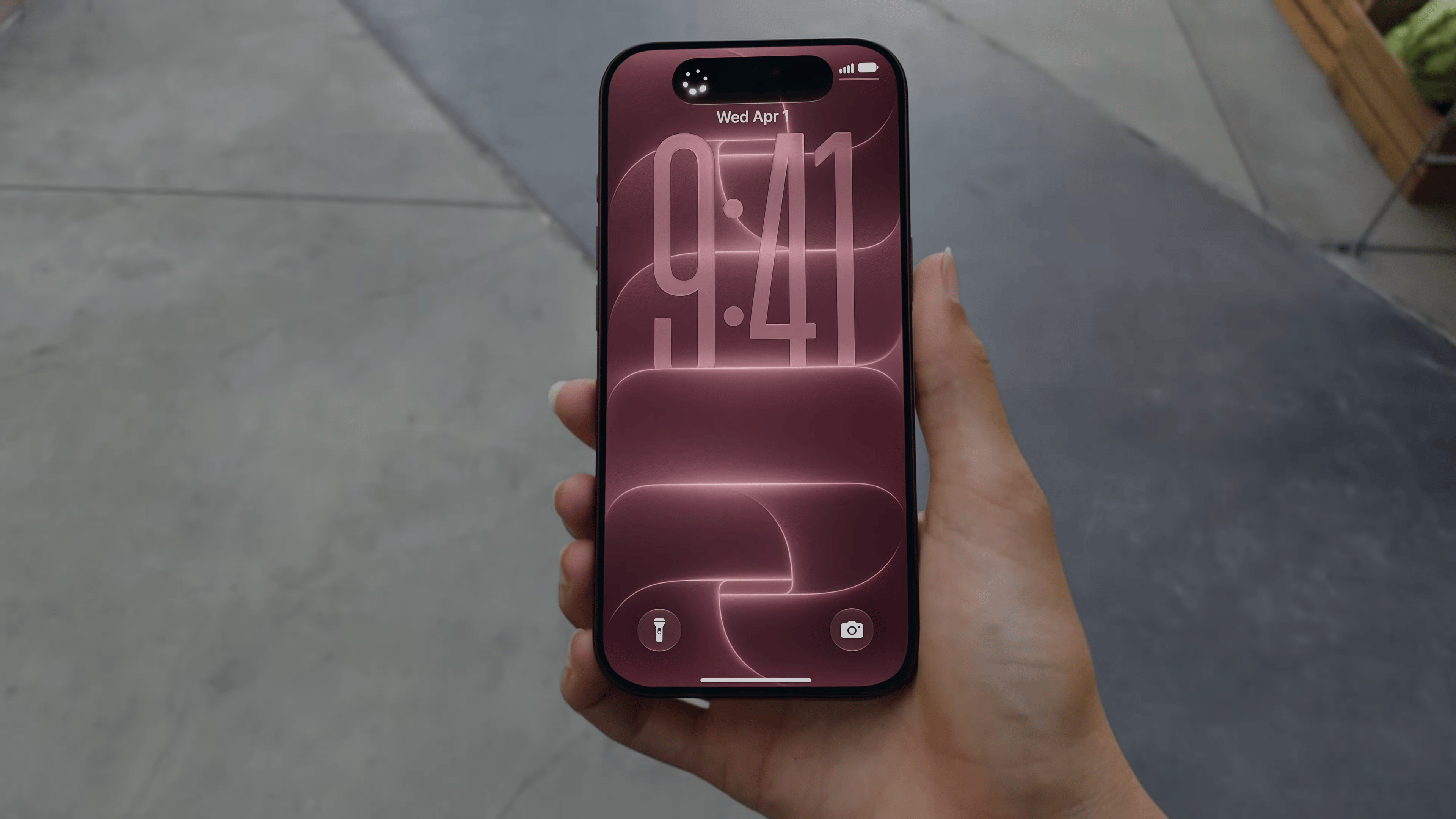
Instead of the punch-hole at the top center of the phone, the iPhone 18 Pro Max features a relatively smaller Dynamic Island that can now handle three Live Activities instead of two on the iPhone 17 Pro models. I know the Dynamic Island is polarizing, but those who like it might appreciate Apple’s new, more seamless implementation.
Also Read: Samsung Galaxy Z Fold 8 Ultra vs. Z Fold 7: The Definitive Foldable Flagship Comparison For India
iPhone 18 Pro Max vs. Galaxy S26 Ultra vs. Pixel 11 Pro XL: Performance
| Spec | iPhone 18 Pro Max | Galaxy S26 Ultra | Pixel 11 Pro XL |
| Chipset | Apple A20 Pro | Snapdragon 8 Elite Gen 5 for Galaxy | Google Tensor G6 |
| Fabrication Node | TSMC 2nm | TSMC 3nm-class | TSMC 3nm-class (N3P) |
| CPU Configuration | 6-core (2 “super” cores + 4 efficiency cores) | 2 prime cores @ 4.74GHz + 6 performance cores @ 3.63GHz | 7-core (one 4.1 GHz ARM C1-Ultra prime core + four performance cores + two efficient cores) |
| GPU | 7-core GPU with Neural Accelerators, hardware-accelerated ray tracing | Adreno GPU, ~24% faster than previous gen | Tensor G6 GPU |
| Neural Engine / NPU / TPU | Dual 16-core Neural Engine | NPU with ~39% gen-on-gen improvement | 50% more TPU compute; on-device Gemini Nano tasks up to 3.5x faster |
| RAM | 12GB (widely reported: Apple does not officially disclose RAM) | 12GB (256/512GB variants) / 16GB (1TB variant) | 12GB (256GB variant) / 16GB (512GB variant) |
| Storage Options | 256GB / 512GB / 1TB / 2TB | 256GB / 512GB / 1TB | 256GB / 512GB |
When it comes to performance, all three flagships put their best foot forward, mostly backed by TSMC’s assembly lines. However, their approaches differ, and that deserves discussion.
Apple A20 Pro (2nm)
Apple’s decision to go with a 2nm process puts the A20 Pro far ahead of the chips in Android phones here. The fabrication process alone reduces the total power draw by around 20%. While Samsung launched the S26 Ultra earlier this year and is already rumored to transition to 2nm next year, Google clearly missed its chance to upgrade the Tensor G6 on a 2nm manufacturing process in August 2026.
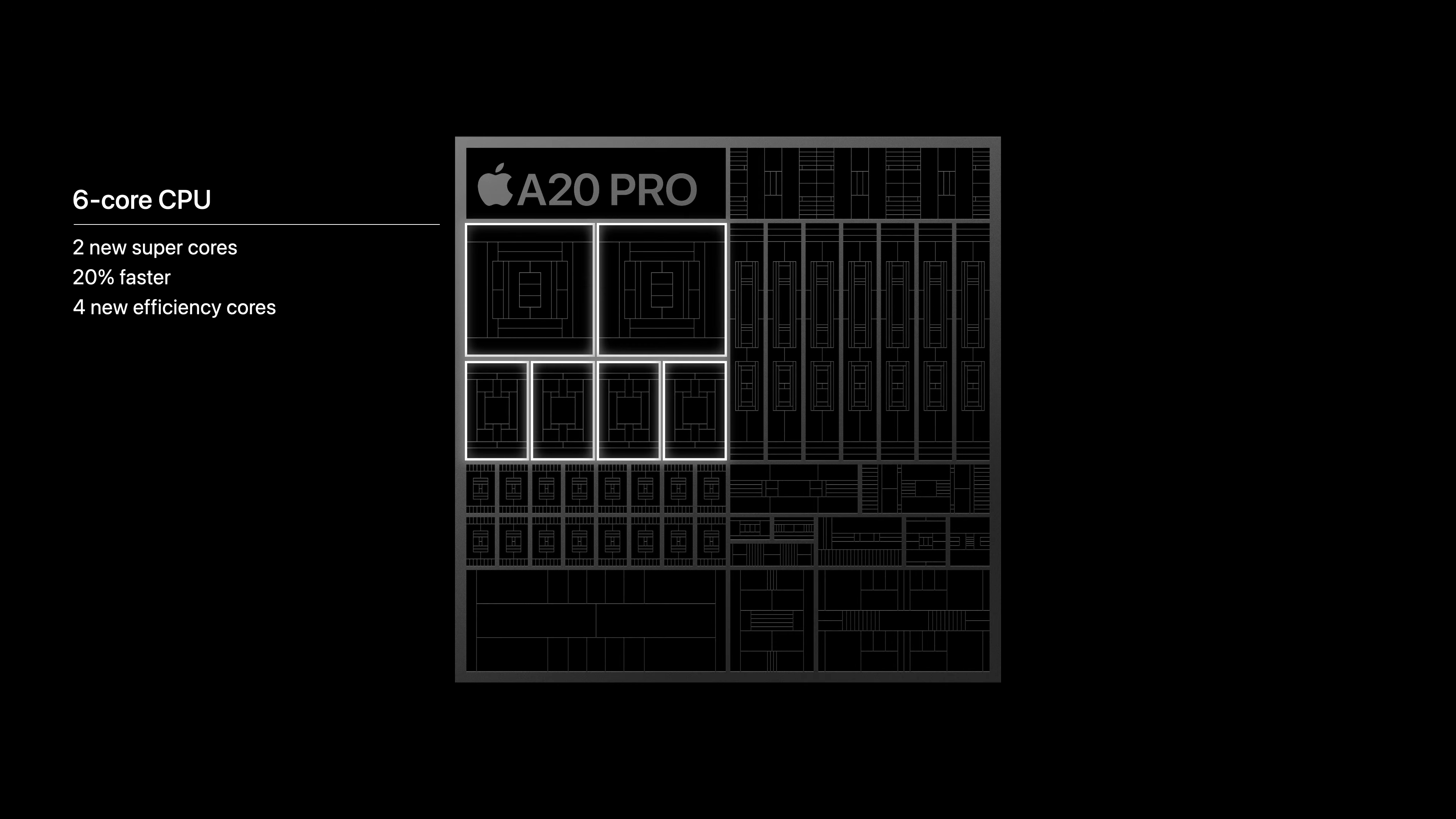
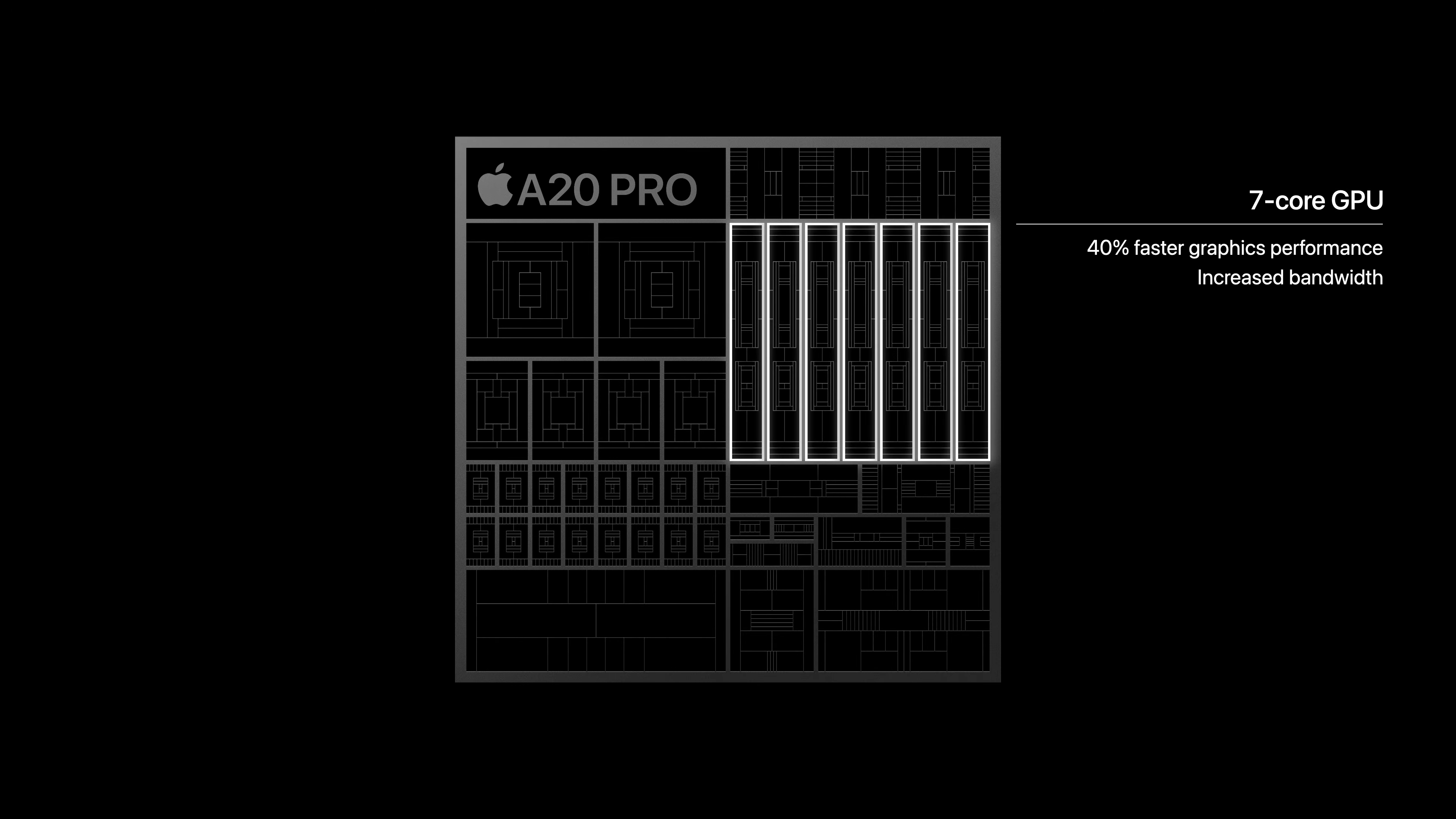
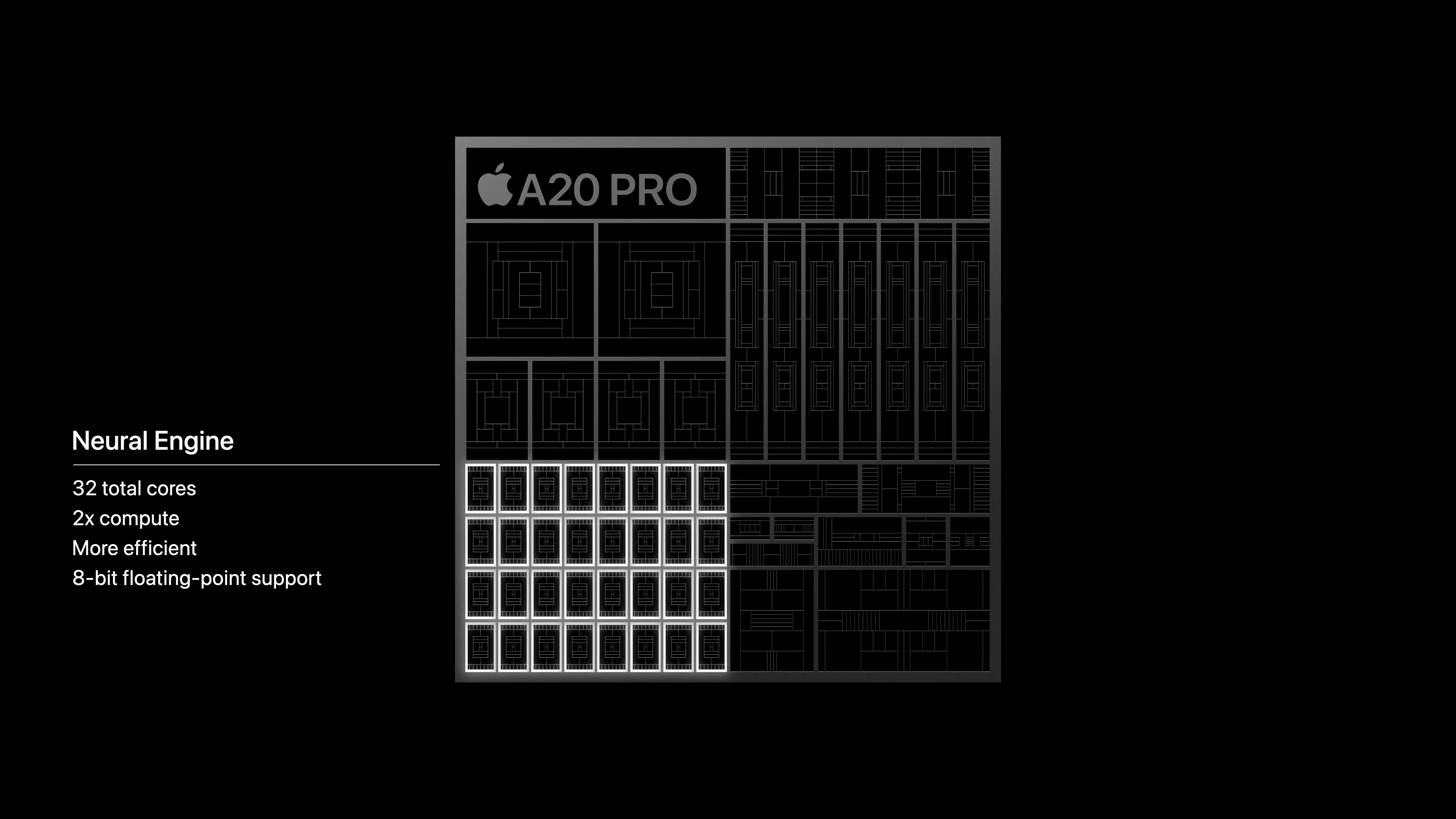
Breaking down the A20 Pro chip for you, it comprises a 6-core CPU (with two “super” cores), a 7-core GPU with Neural Accelerators, and a dual 16-core Neural Engine that honestly is an overkill for almost anything you’ll actually do with it. The smartphone also features a redesigned vapor chamber which is three times larger than before and helps improve sustained performance by 40%.
What’s frustrating is Apple’s usual silence on RAM. It’s widely reported as 12GB, but never officially confirmed, something that is beyond my understanding, since benchmarks will anyway reveal the total RAM on the device. Still, for gaming, ray-traced graphics, and anything leaning on the Neural Engine, this is probably the most forward-looking chip of the three.
Also Read: Moto Edge 70 Max vs. vivo X200T: Which Is The Better ₹60,000 Premium Mid-Range Android Phone?
Snapdragon 8 Elite Gen 5 for Galaxy
Samsung’s version of the Snapdragon 8 Elite Gen 5 is a bit more overclocked than the regular one, with two prime cores hitting 4.74GHz and six performance cores at 3.63GHz. These numbers translate into some of the strongest benchmark scores you’ll find on an Android phone right now (even though the phone is over six months old).

The GPU is roughly 24% faster than last year’s chip, and the NPU sees an even bigger jump at around 39%, which is one of the more important additions, given how many Galaxy AI features now run entirely offline, on-device. Qualcomm pairs its capable chipset with 12GB of RAM on the lower variant and 16GB on the top variant (both LPDDR5X).
Despite its 3nm process, the Snapdragon chip can handle anything you throw at it, including synthetic benchmarks, demanding video games (even at the highest graphics settings), video editing, photo editing, and heavy multitasking. The extra performance headroom also delivers long-term smoothness.
Also Read: 5 Nothing Phone (4b) Alternatives That Make More Sense Right Now

Google Tensor G6
Google spent weeks letting the internet believe the Tensor G6 was jumping to a 2nm process, only for its own VP of Hardware to confirm, on the record, that it’s actually built on TSMC’s 3nm-class N3P node.
That’s where the Tensor G6’s efficiency gains come from. While the chipset itself offers only modest performance gains (almost none for the GPU), the TPU is around 50% faster. Anyway, the new hardware helps improve on-device Gemini Nano execution by up to 3.5x. So, the Tensor G6 isn’t closing the gap with the A19 Pro and Snapdragon 8 Elite Gen 5 chips, let alone with the more powerful A20 Pro and 8 Elite Gen 5 for Galaxy chipsets.

For a premium phone that costs well above ₹1 lakh in India, processing feels underwhelming across the Pixel 11 series. You don’t get higher graphics settings in games like BGMI, which might disappoint buyers trained to think a higher price means better performance. Anyways, the chip is paired with 12GB or 16GB of LPDDR5X memory, depending on the storage variant you choose.
Also Read: vivo X200T vs. OnePlus 15R: Which Is The Best Android Phone Under Rs. 55,000?
iPhone 18 Pro Max vs. Galaxy S26 Ultra vs. Pixel 11 Pro XL: Software
| Spec | iPhone 18 Pro Max | Galaxy S26 Ultra | Pixel 11 Pro XL |
| OS at Launch | iOS 27 | One UI 8.5 (Android 16) | Android 17 |
| AI Assistant | Apple Intelligence with Siri AI | Galaxy AI (Gemini + Bixby integration) | Gemini, deeply integrated with Tensor G6’s TPU |
| Software Update Commitment | Apple’s standard multi-year OS + security support (typically 6+ years, not fixed publicly per device) | 7 years of OS upgrades and security updates | 7 years of OS upgrades, security updates, and Pixel Drops |
| Notable Software Exclusive | Visual Intelligence, Live Translation, redesigned Siri AI | Now Brief, Now Nudge, Photo Assist | HiLight contextual notifications, Magic Cue, Gemini Live camera sharing |
iOS 27
iOS 27 doesn’t look dramatically different at a glance, but Apple’s actually spent most of its effort on the redesigned Siri AI. Finally, Apple has a genuinely more conversational, capable, and agentic AI assistant that can access information from multiple apps.
Visual Intelligence and Live Translation lean hard on the A20 Pro’s dual 16-core Neural Engine. Beyond that, iOS 27 brings plenty of system-related improvements, such as faster photos loading time, faster AirDrop duration, and a smoother, more refined day-to-day experience for Apple users.

The company doesn’t commit to a specific number of years, but iPhones have usually received around five to six years of operating system updates.
Also Read: Motorola Razr Fold vs. Samsung Galaxy Z Fold7: The Definitive Premium Book-Style Foldable Comparison
One UI 8.5
One UI 8.5, based on Android 16, is Samsung doing what it does best: stacking personalization and genuinely useful features on top of stock Android. Galaxy AI is the umbrella this year, and it includes two assistants: Gemini handles for the heavier, cross-app tasks, while Bixby still lingers for device-specific commands.
Now Brief and Now Nudge are the standout features, proactively surfacing your calendar, flights, or reminders before you ask. Photo Assist lets you edit images with typed prompts instead of manual tools. Other than that, the UI has been simplified for easier access of quick settings.

The Galaxy S26 Ultra also has access to One UI 9 beta, though a stable update is yet to arrive. Like the other Galaxy phones (even th mid-range ones), the handset gets seven years of operating system and security updates, which is the best in the segment.
Android 17
Android 17 on the Pixel 11 Pro XL is the cleanest Android yet. Google uses that simplicity to make Gemini feel less like an app and more like the omnipresent layer in the operating system itself. Gemini Intelligence can perform agentic tasks as well by accessing information and performing tasks across multiple apps.

HiLight is the one genuinely new trick, though it’s more novelty than necessity right now. Magic Cue and Gemini Live’s camera-sharing work flawlessly as well. They can surface context from whatever you’re pointing the camera at in real time.
Seven years of Android operating system and security updates, along with quarterly Pixel Drops makes the Pixel 11 Pro XL a great long-term option (only if you’re okay with the lack of peak performance). Seven years of Pixel Drops keeps it feeling current the longest.
Also Read: vivo X300 FE vs iPhone 17 & Samsung S26: The Compact Flagship Battle Set to Get a New Leader
iPhone 18 Pro Max vs. Galaxy S26 Ultra vs. Pixel 11 Pro XL: Cameras
| Spec | iPhone 18 Pro Max | Galaxy S26 Ultra | Pixel 11 Pro XL |
| Main Camera | 48MP Fusion Main, variable aperture f/1.48–f/4.0, second-gen sensor-shift OIS | 200MP, f/1.4, 1/1.3″ sensor, 0.6µm pixels, multi-directional PDAF, OIS | 50MP, f/1.7, 1/1.3″ sensor, 1.2µm pixels, multi-directional PDAF, OIS |
| Ultra-wide | 48MP Fusion Ultra Wide, f/2.2, 120° FOV, Hybrid Focus Pixels | 50MP, f/1.9, 120° FOV, 1/2.5″ sensor, dual pixel PDAF, Super Steady video | 48MP, f/1.7, 123° FOV, 1/2.51″ sensor, dual pixel PDAF |
| Telephoto(s) | 48MP Fusion Telephoto, f/2.8, (4x optical), tetraprism design, 3D sensor-shift OIS, 8x mode (200mm equivalent) | 10MP, f/2.4, 67mm equivalent (3x optical), 1/3.94″ sensor, PDAF, OIS 50MP, f/2.9, 111mm equivalent (5x optical periscope), 1/2.52″ sensor, PDAF, OIS | 48MP, f/2.8, 106mm equivalent (5x optical periscope), 1/1.95″ sensor, dual pixel PDAF, OIS |
| Optical / Optical-Quality Zoom Range | 2x optical out, 8x optical-quality in, 16x total optical-quality range | True optical at 3x and 5x (dual telephoto); AI-assisted “Space Zoom” up to 100x | True optical at 5x; AI-assisted Pro Res Zoom up to 120x |
| Front Camera | 18MP Center Stage, f/1.9, autofocus with Focus Pixels | 12MP, f/2.2, 23mm equivalent, 1/3.2″ sensor, 1.12µm pixels, | 42MP, f/2.2, 103° FOV, PDAF |
| Rear Video — Max Specs | 4K Dolby Vision up to 120fps (Fusion Main), 1080p up to 240fps, ProRes/ProRes RAW up to 4K at 120fps (external recording), Apple Log 2, Genlock support | 8K@24/30fps, 4K@30/60/120fps, 1080p@30/60/120/240fps, 10-bit HDR, HDR10+, stereo sound recording, gyro-EIS | 8K@24/30fps, 4K@24/30/60fps, 1080p@24/30/60/120/240fps, 10-bit HDR, gyro-EIS + OIS |
| Front Video | 4K Dolby Vision up to 60fps, ProRes up to 4K at 60fps (external), Apple Log 2 | 4K@30/60fps, 1080p@30fps | 4K@30/60fps, 1080p@30/60fps |
iPhone 18 Pro Max
The 18 Pro Max’s biggest camera news is the variable aperture on the 48MP Fusion Main. Though Samsung did it years ago, it’s a first for the iPhone, adjusting from f/1.48 down to f/4.0 depending on the shot. The tetraprism telephoto is a true 4x optical lens, but also outputs a 12MP “optical-quality” 8x picture.
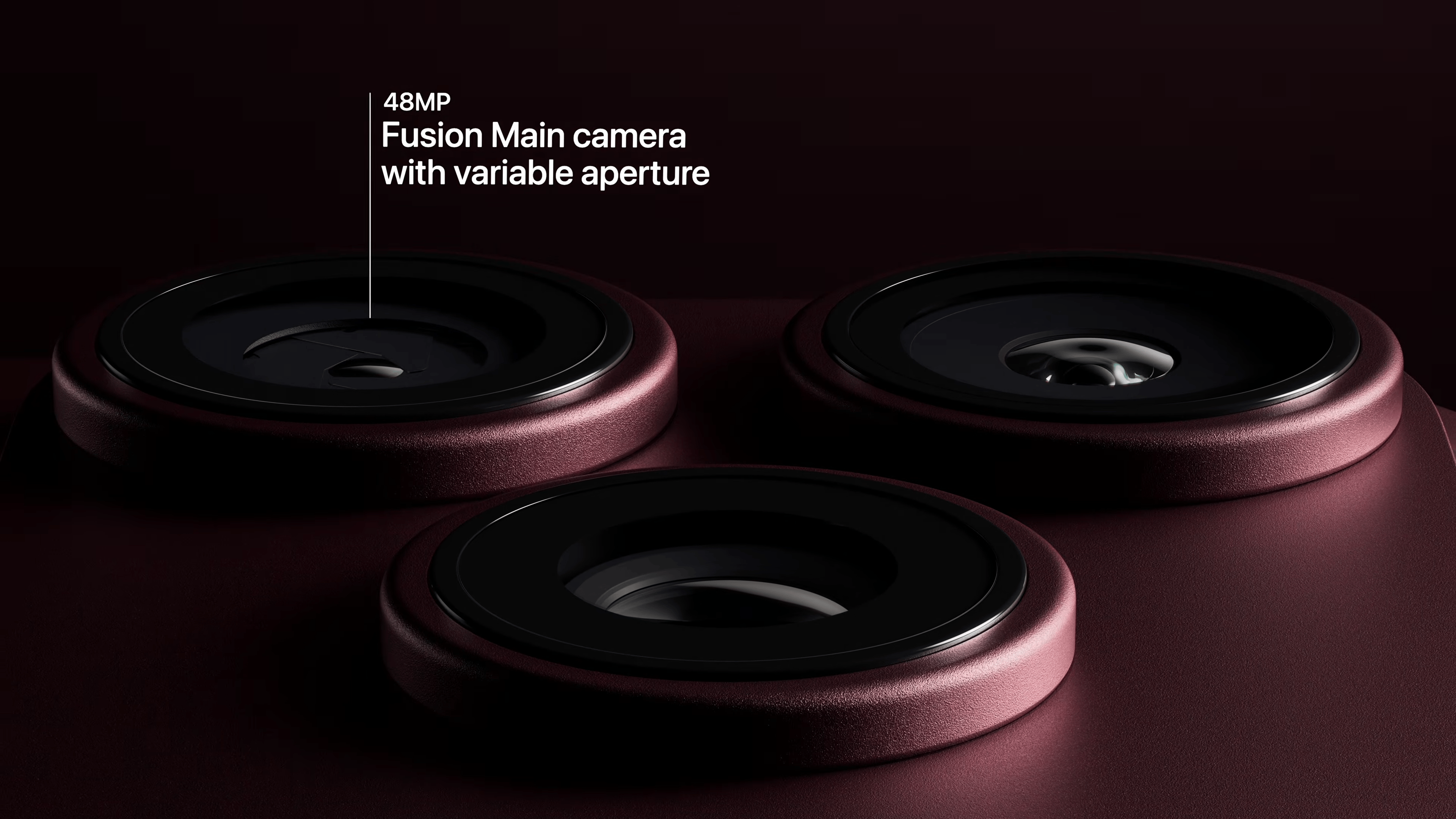
Where the iPhone actually separates itself and appeals to a niche segment of users is video. ProRes RAW, Genlock support, and Apple Log 2 aren’t features you easily find on a smartphone, but they’re all here. Photonic Engine and Deep Fusion still do the heavy lifting on stills.
The 18MP Center Stage front camera with autofocus is still something that none of the competition has been able to match. Although Apple could have bumped up the resolution to 25MP. If you shoot video seriously, this is the only phone in the group actually built for it.
Also Read: Xiaomi 17 vs. Vivo X300: Leica vs. Zeiss, HyperOS vs. OriginOS, and Everything in Between
Galaxy S26 Ultra
Samsung leads the front with a 200MP primary sensor with a f/1.4 aperture that lets in noticeably more light, which comes in handy and in low-light photography. What actually sets the S26 Ultra apart, though, is having two real optical telephoto lenses instead of one, which gives it the type of versatility that none of the competitors have.

The two telephoto sensors offer true 3x and true 5x, which is better than having one sensor crop digitally at higher zoom levels. Nightography leans on the customized chipset’s mDNIe engine, which processes image quality four times more precisely, and it shows in shadow detail that used to look muddy on older Ultras.
Horizon Lock is a small but genuinely clever video feature. It keeps footage level even if you’re tilting or rotating the phone mid-shot. Space Zoom still tops out at a very soft 100x, but the 1x to 10x range covers almost everything you’d actually want to shoot.
Also Read: iPhone 17e vs iPhone 16: The New iPhone Might Be Better For Most Users (But Not All)
Pixel 11 Pro XL
Like the iPhone 18 Pro Max, the Pixel 11 Pro XL doesn’t chase megapixels as well. Its main camera has a 1.2µm pixel size, larger than what’s on the iPhone or the Galaxy. Each pixel gathers more light before any software gets involved.

The periscope telephoto covers a true 5x optical zoom, and Pro Res Zoom pushes that digitally to 120x. However, on higher zoom levels, the camera relies more on generative AI than optical muscle. Where the Pixel runs ahead with it is the front camera: 42MP versus the iPhone’s 18MP and Samsung’s comparatively modest 12MP.
It has an ultrawide field-of-view as well, so it’s easier to fit in more people in a selfie than on the other phones. In my personal experience, the Pixel has a wider camera than the iPhone’s Center Stage camera. Magic Editor, Best Take, and Zoom Enhance round out an editing suite that’s still the most usable AI toolkit of the three.
Also Read: Galaxy S26 Ultra vs. Find X9 Pro: Which Rs. 1 Lakh Flagship Is Right For You?
iPhone 18 Pro Max vs. Galaxy S26 Ultra vs. Pixel 11 Pro XL: Battery Life and Charging
| Spec | iPhone 18 Pro Max | Galaxy S26 Ultra | Pixel 11 Pro XL |
| Battery Capacity | Not officially disclosed by Apple. Chinese 3C regulatory certification filings list it at 5,567 mAh (eSIM-only, US-spec model) | 5,000 mAh (Li-Ion) | 5,115 mAh (Li-Ion) |
| Manufacturer-Claimed Typical Use | Up to 43 hours video playback (offline) or 38 hours (wireless) | Up to 31 hours of video playback | – |
| Wired Charging Speed | Up to 50% in ~15 minutes (requires a 60W-capable USB-C PD 3.1 adapter; up to 50% in 30 minutes via a 35W+ MagSafe Charger | 60W wired (USB PD 3.0); rated for 75% charge in 30 minutes | 45W wired (USB PD 3.0 with PPS); rated for 75% charge in 30 minutes |
| Wireless Charging | MagSafe up to 25W; Qi2 up to 25W | 25W via Qi2.2: no built-in alignment magnets | 25W via Qi2.2 with built-in Pixelsnap alignment magnets |
This is where the iPhone 18 Pro Max might pull ahead of the other two, but we still have to wait and check before reaching the final conclusion. On paper, the iPhone has the largest battery on an Apple iPhone ever, and that is a big feat (the reason why it is thicker than other phones in this comparison).

Combined with the A20 Pro’s efficiency gains and the bigger battery, the iPhone 18 Pro Max might provide around eight to nine hours of screen-on time on mixed usage, and possibly higher with lighter usage. Further, it supports 60W wired charging, which can fuel 50% of the battery in around 15 minutes.
The Galaxy S26 Ultra, with its 5,000 mAh battery, has put in some real efforts in optimizing the overall systems. This is how the smartphone already offers seven to eight hours of screen-on time with lighter usage. Keep in mind that the phone has a 3nm chipset. The Ultra also supports 60W wired charging, which takes the battery to 75% in 30 minutes.
Also Read: Galaxy S26 vs. Find X9 vs. vivo X300: The 2026 Baseline Android Flagship Battle Intensifies

The Pixel 11 Pro XL also provides around six to eight hours of screen-on time, supports 45W wired charging, which is slower than the competition, and 25W magnetic wireless charging. It’s right up in the flagship territory like the other phones. However, with heavy usage, the usage time dips quite a lot.
iPhone 18 Pro Max vs. Galaxy S26 Ultra vs. Pixel 11 Pro XL: Price
| iPhone 18 Pro Max | Galaxy S26 Ultra | Pixel 11 Pro XL | |
| India Launch Date | September 9, 2026 | February 25, 2026 | August 12, 2026 |
| India Sale Date | September 18, 2026 | March 11, 2026 | August 20, 2026 |
| Starting Price (India) | ₹1,79,900 (256GB) | ₹1,39,999 (256GB) | ₹1,34,999 (256GB) |
| Top Variant Price | ₹3,29,900 (2TB) | ₹1,89,999 (1TB) | ₹1,49,999 (512GB) |
This year, the iPhone 18 Pro Max hasn’t been priced appropriately for the Indian market. You can clearly see the difference between the other two flagships and Apple’s flagship. If someone is genuinely considering a top-tier flagship, they might skip iPhone because of its higher Indian launch price. In the US, the phone costs ₹1,299, which is significantly lower than the Indian pricing.
The Samsung Galaxy S26 Ultra is often available at a discount, making it the most value-for-money deal in this comparison. Considering the price-to-performance ratio, the Pixel 11 Pro XL appears to be a bit overpriced.
Also Read: Samsung Galaxy S26 Ultra vs. Galaxy S25 Ultra: Here’s Everything That’s New
iPhone 18 Pro Max vs. Galaxy S26 Ultra vs. Pixel 11 Pro XL: Verdict
iPhone 18 Pro Max

| Reasons to Buy | Reasons to Avoid |
| You shoot serious video: ProRes RAW, Genlock, and Apple Log 2 aren’t available anywhere else here | You want a phone you can comfortably use one-handed: at 249g and 8.8mm, it’s the heaviest and thickest by a real margin |
| You want the longest performance runway: the A20 Pro’s 2nm process and larger vapor chamber are built for years of sustained smoothness | You want true multi-focal-length zoom without sensor crops: the 2x and 8x modes are both derived from other lenses, not dedicated optics |
| You swim, dive, or work around water often: 6m/30min resistance is a genuine step above the other two | You want a built-in stylus: Samsung’s the only one offering that here |
| You’re already deep in Apple’s ecosystem and want Siri AI’s more agentic, cross-app assistant | |
| You want the largest battery Apple’s ever fitted into an iPhone, at least on paper |
Galaxy S26 Ultra

| Reasons to Buy | Reasons to Avoid |
| You want real zoom flexibility: the only phone here with two genuine optical telephoto lenses (3x and 5x), not one lens doing double duty | If pro-grade codecs like ProRes RAW or Apple Log 2 are non-negotiable for your workflow, the iPhone remains the more specialized tool |
| You’re conscious about privacy in public: Privacy Display is a genuine world-first, and nothing else on the market matches it yet | Space Zoom’s claimed 100x is best treated as a bonus rather than something you’ll lean on daily — the 1x–10x range is where the real quality lives |
| You game or edit heavily on your phone: the Snapdragon 8 Elite Gen 5 for Galaxy is still topping Android benchmarks months after launch | |
| You want the longest software runway: seven years of updates, plus early access to One UI 9 in beta before most rivals have shipped their next version | |
| You want a built-in stylus for notes, sketches, or markup: the S Pen remains unmatched here |
Pixel 11 Pro XL

| Reasons to Buy | Reasons to Avoid |
| You take a lot of selfies or group shots: the 42MP ultrawide front camera beats both rivals by a wide margin | You play graphics-intensive games at max settings: Tensor G6 can’t unlock the higher presets that BGMI and similar titles offer on the other two |
| You want photos that look right straight out of the camera: the 1.2µm main sensor pixel size means less editing afterward | Charging speed matters to you: 45W is the slowest wired charging of the three |
| You want the longest active software window: seven years of updates plus quarterly Pixel Drops keeps it genuinely current, not just patched | You zoom in past 5x often: Pro Res Zoom leans more on generative AI than optics the further you push it |
| You’re often outdoors: 3,600 nits peak brightness is the highest of the three | |
| You want wireless charging that snaps into place: Pixelsnap’s built-in magnets are the only ones here |

You can follow Smartprix on Twitter, Facebook, Instagram, and Google News. Visit smartprix.com for the latest tech and auto news, reviews, and guides.