



vivo X200T vs. OnePlus 15R: Table of contents
Call it the upper mid-range segment or the entry-level flagship segment, there are plenty of smartphone options around Rs. 50,000 to Rs. 55,000. But the more options, the more confusion. However, two phones that keep coming up in this budget, whether it is during sales or even otherwise, are the vivo X200T and the OnePlus 15R, and for good reason.
One is built around a triple ZEISS-tuned camera system that most phones at the price can’t match. The other packs a flagship-grade Snapdragon chip, a 165Hz display, and a battery so large it redefines what two-day endurance means on a smartphone. Neither is perfect, as both make a few compromises. Here’s everything you need to know to pick the right one.
Also Read: Motorola Razr Fold vs. Samsung Galaxy Z Fold7: The Definitive Premium Book-Style Foldable Comparison
vivo X200T vs. OnePlus 15R: Price


The vivo X200T is currently available on Flipkart for around Rs. 53,000, for the base variant with 12GB of RAM and 256GB of storage, of course, after all the discounts and offers.
The OnePlus 15R (12GB + 256GB) is available for Rs. 54,999, without any offers, but with the card discount or cashback, you can easily get it under Rs. 52,000, bringing it in our decided budget.
| Feature | vivo X200T | OnePlus 15R |
| Base Price (12GB+256GB) | Rs. 59,999 | Rs. 54,999 |
| Effective Price | Rs. 53,199 (lowest price shown) | Rs. 52,000 (with card/cashback) |
| Retailer | Flipkart | Amazon |
So, both the phones are right within the stipulated budget, are relatively new, and are among the premium mid-rangers from their respective companies. So, what’s the difference, and, more importantly, which one should you get? Let’s find out in this detailed comparison between the vivo X200T and the OnePlus 15R.
Also Read: Snapdragon 6 Gen 5 vs. Dimensity 7450: Which Mid-Range Chipset Is Better And Why?
vivo X200T vs. OnePlus 15R: Design
| vivo X200T | OnePlus 15R | |
|---|---|---|
| Dimensions | 160 x 74.3 x 7.99mm | 163.4 x 77 x 8.1mm or 8.3mm |
| Weight | 203g (Seaside Lilac) / 205g (Stellar Black) | 218g (Charcoal Black) 219g (Mint Breeze) 213g (Electric Violet) |
| Front Glass | Schott Xensation Core | Corning Gorilla Glass 7i |
| Back Material | Glass (nano-coated, sandblasted on Seaside Lilac) | Glass (Charcoal Black, Mint Breeze) / Fiber-reinforced plastic (Electric Violet — India exclusive) |
| Frame Material | Aluminium alloy | Aluminium alloy |
| IP Rating | IP68 + IP69 (immersible up to 1.5m for 30 min) | IP66 + IP68 + IP69 + IP69K (immersible up to 1.5m for 30 min) |
| Colors | Seaside Lilac, Stellar Black | Charcoal Black, Mint Breeze, Electric Violet (India exclusive) |
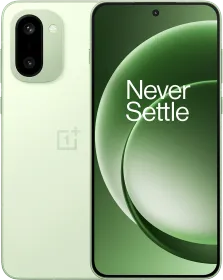
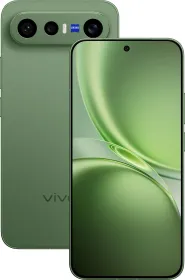
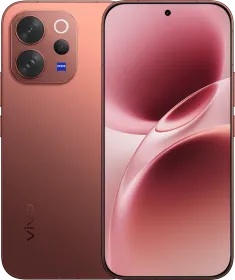
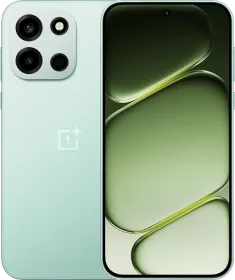
Between the two phones, the vivo X200T is the one with the lighter and slimmer profile; however, not by a drastic margin. They feature an aluminum frame with glass at the front and the back, except for the OnePlus 15R’s Electric Violet finish, which uses fiber-reinforced plastic.


You get multiple IP ratings on both of them, but despite them, they’re rated to be immersible up to 1.5m for 30 minutes. Both phones have an elegant violet or lilac finish and a more stealthy dark gray option. The OnePlus 15R, however, is also available in a third color.
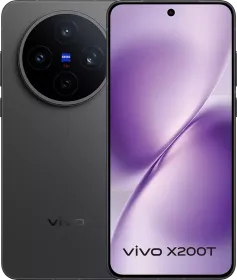
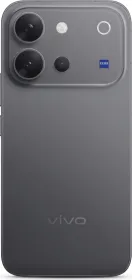
Talking about the overall look and design, the vivo X200T features a circular camera module on its back, which is borrowed from the flagship X series handsets. The OnePlus 15R, on the other hand, has a distinct squircle camera module on the back. Both phones have thin bezels and a punch-hole cutout at the front.
Winner: Tie
vivo X200T vs. OnePlus 15R: Display
| vivo X200T | OnePlus 15R | |
|---|---|---|
| Panel Type | LTPS AMOLED | LTPS AMOLED |
| Size | 6.67 inches | 6.83 inches |
| Resolution | 1260 x 2800 pixels | 1272 x 2800 pixels |
| Pixel Density | ~460 ppi | ~450 ppi |
| Color Depth | 1 billion colors | 1 billion colors |
| Refresh Rate | Up to 120Hz | Up to 165Hz |
| PWM Dimming | 2160Hz | Not officially specified |
| Brightness (HBM) / Peak | 1,600 nits / 5,000 nits | 1,800 nits / 3,600 nits |
| HDR Support | HDR10+, Ultra HDR | HDR10+, HDR Vivid |
| Screen Protection | Schott Xensation Core | Corning Gorilla Glass 7i |
The OnePlus 15R has a slightly larger screen, while the vivo X200T tries to create a balance between screen estate and pocketability. To keep the costs under control, both phones ship with an LTPS AMOLED panel, instead of the more efficient LTPO AMOLED panel, which enables a truly variable, unlocked refresh rate.


However, that shouldn’t take away from the fact that both screens support high refresh rates. While the X200T maxes out at 120Hz, which is sufficient for most users, the 15R takes it even further to 165Hz (for select apps).
There’s a slight difference in the overall resolution of the screens, wherein the X200T comes out on top as the sharper display. When it comes to brightness, though, the 15R races ahead with its 1,800 nits of HBM brightness. However, local peak brightness (which only applies to certain scenarios), is higher on the X200T.
Winner: OnePlus 15T
Also Read: vivo X300 FE vs iPhone 17 & Samsung S26: The Compact Flagship Battle Set to Get a New Leader
vivo X200T vs. OnePlus 15R: Performance
| vivo X200T | OnePlus 15R | |
|---|---|---|
| Chipset | MediaTek Dimensity 9400+ (3nm) | Qualcomm Snapdragon 8 Gen 5 — SM8845 (3nm) |
| CPU | Octa-core: 1×3.73GHz Cortex-X925 + 3×3.3GHz Cortex-X4 + 4×2.4GHz Cortex-A720 | Octa-core: 2×3.8GHz Oryon V3 Phoenix L + 6×3.32GHz Oryon V3 Phoenix M |
| GPU | Immortalis-G925 | Adreno 829 |
| RAM | 12GB LPDDR5X | 12GB LPDDR5X (4800MHz) |
| Storage | 256GB / 512GB UFS 4.1 | 256GB / 512GB UFS 4.1 |
| Storage Variants in India | 12GB + 256GB / 12GB + 512GB | 12GB + 256GB / 12GB + 512GB |
When it comes to raw performance, the OnePlus 15R edges ahead of the vivo X200T. Here’s why.
The Dimensity 9400+ inside the X200T has a muscular CPU cluster: a single Cortex-X925 prime core at 3.63GHz, three Cortex-X4 cores at 3.3GHz, and four Cortex-A720 efficiency cores. In fact, the Cortex-X925 prime core at 3.63GHz is architecturally superior to the Oryon V3 Phoenix L cores on the Snapdragon chipset, which is why the chipset shows strong performance in single-threaded workflows.

The Immortalis-G925 GPU is also a flagship-grade graphics processor. The X200T backs this up with a 4.5K nanofluid vapour chamber cooling system, which keeps thermals in check during sustained workloads, which is an important real-world consideration for gaming and video recording sessions.
The Snapdragon 8 Gen 5 (3nm) chip on the 15R has two prime cores clocked at 3.8GHz, higher than the single prime core on the Dimensity 9400+ at 3.73GHz, and six performance cores at 3.32GHz each. As a result, the chipset does better in both single-threaded and multi-threaded tasks, something that also reflects in our benchmark testing of both devices.
| Geekbench 6 Single-Core | 2,619 | 2,818 |
| Geekbench 6 Multi-Core | 7,984 | 9,178 |
| BGMI Max Frame Rate | 120 fps | 165 fps |

Even so, I’d say that the difference would be negligible for most users, unless they’re pushing the chipsets to their limits by rendering 4K videos or playing video games on higher graphics settings. While the X200T should manage sustained workflows slightly better, the OnePlus 15R should pull ahead in terms of peak performance.
Speaking of gaming, the vivo X200T can run BGMI in up to 120 fps, while the OnePlus 15R takes it more seriously than any other phone in the segment: 165fps in BGMI. Finally, both the smartphones ship with 12GB of LPDDR5X RAM and up to 512GB of UFS 4.1 storage, something that puts them on equal grounds.
Winner: OnePlus 15R
Also Read: OnePlus Nord 6 vs. Nothing Phone (4a): Will You Choose Performance Or Personality?
vivo X200T vs. OnePlus 15R: Software
| vivo X200T | OnePlus 15R | |
|---|---|---|
| OS at Launch | Android 16 with OriginOS 6 | Android 16 with OxygenOS 16 |
| Major OS Updates | 5 years | 4 years |
| Security Patches | 7 years | 6 years |
| Design Language | Space System — 3D layered UI with translucent colour system, Dynamic Glow, Fluid Animations (Elastic Motion, Frame Morphing) | Gaussian Blur-based UI with softer rounded corners, OnePlus Flow Motion animations, Luminous Rendering Engine |
| Signature Feature | Origin Island — a pill-shaped interactive hub that displays live updates (maps, timers, music, delivery tracking) and accepts drag-and-drop actions (Copy & Go, Drag & Go) | Alert Slider — physical three-position hardware switch for instant Ring / Vibrate / Silent toggle without unlocking the phone |
| Cross-Device Connectivity | vivo Connection Center | OxygenOS Cross-device sharing |
| Privacy | Private Space (dual-app instances, left-swipe dock access); on-device data minimisation; vivo Security suite | Private Safe (secure file storage with slider browsing); Work-Life Balance mode; built-in system-level VPN |
OriginOS 6
Out of the box, the X200T runs on OriginOS 6, with 5 + 7 years of support, putting the smartphone right in the flagship alley software support. The custom user interface, built on top of Android 16, features the Space System design language, inspired by Apple’s Liquid Glass design, and a 3D layered UI with Dynamic Glow and fluid animations.

The UI’s signature feature is Origin Island, which takes inspiration from Apple’s Dynamic Island but improves the implementation via the drag-and-drop actions integration. Multitasking is a breeze on the device, thanks to the capable chipset, and the three-app split screen use. Additional features include vivo Connection Center for screen mirroring, bypass charging for gaming, and Private Space.
The smartphone also offers plenty of AI-based features, including AI Retouch, AI Creation, DocMaster, Smart Call Assistant, AI UHD, AI Image Expander, and Google Gemini integration as the AI assistant and Circle to Search.
OnePlus 15R
The OnePlus 15R features OxygenOS 16, which is also based on Android 16. The software commitment, however, is 4 + 6 years, an aspect where longevity-seeking buyers might pivot toward the X200T. However, that doesn’t take away from the fact that OxygenOS 16 is among the smoothest Android skins on the market.

The skin comes with features like Parallel Processing 2.0, which ensures that app transitions feel responsive, Flux Theme 2.0, which offers multiple theme options, and Open Canvas for easy multitasking with up to three apps in split screen and two floating windows. You also get plenty of OnePlus AI features.
These include Plus Mind, which is like a personal digital memory space with Google Gemini integration, Mind Space for organizing everything, and other useful features like AI writer for Notes, AI Recorder, AI Notes, AI Translate, AI VoiceScribe, AI Search, and a couple more. Google’s Circle to Search is also available here.
Both phones ship with a couple of pre-installed apps, but the OnePlus 15R has a couple more than the vivo X200T. Ultimately, it depends on which phone or UI you’ve been using or are familiar with.
Winner: Tie (though vivo X200T wins with longer software updates)
Also Read: Xiaomi 17 vs. Vivo X300: Leica vs. Zeiss, HyperOS vs. OriginOS, and Everything in Between
vivo X200T vs. OnePlus 15R: Camera
| vivo X200T | OnePlus 15R | |
|---|---|---|
| Camera System | Triple rear + front | Dual rear + front |
| Primary Camera | 50MP Sony IMX921, 1/1.57″, f/1.57, 23mm, OIS | 50MP Sony IMX906, 1/1.56″, f/1.8, 24mm, OIS |
| Ultrawide Camera | 50MP Samsung ISOCELL JN1, 1/2.76″, f/2.0, 120° FOV, fixed focus | 8MP OmniVision OV08D, 1/4.0″, f/2.2, 112° FOV, fixed focus |
| Telephoto Camera | 50MP Sony IMX882, f/2.57, 70mm, 3x optical zoom, periscope, OIS, 100x HyperZoom | None |
| Front Camera | 32MP Samsung ISOCELL KD1, 1/3.44″, f/2.0, AF | 32MP GalaxyCore GC32E2, 1/3.14″, f/2.0, 21mm, PDAF |
| Max Video Rear | 4K@60fps (primary and telephoto); 1080p@960fps slow-motion | 4K@120fps (primary only); ultrawide capped at 1080p@30fps |
| Max Video Front | 4K@60fps | 4K@30fps; 1080p@30fps only (no 60fps) |
vivo X200T
Cameras are where the vivo X200T truly redeems itself. The triple rear camera setup on the smartphone is headlined by a 50MP (f/1.57) Sony IMX921 sensor, which has a faster aperture than the OnePlus 15R’s primary camera. Then there’s a 50MP (f/2.0) ultrawide camera, with fixed focus, though, but at least resolution isn’t an issue here.

The elephant in the room (or on the smartphone’s back panel) is the 50MP (f/2.57) Sony IMX882 telephoto sensor that provides 3x optical zoom and up to 100x digital zoom. What’s even better is that the sensor is paired with optical image stabilization. It is this sensor that provides the X200T a huge lead in this comparison.
Some unique camera features include ZEISS T coating on the primary and telephoto lenses, ZEISS Natural Portrait, the vivo V2 imaging chip for polished results, 4K 60 fps video recording from both the rear and the front cameras, 20x telemacro zoom, and AI Landscape Master. Basically, the X200T not only has the most versatile camera system in this comparison but also in any other smartphone in the segment.
Also Read: iPhone 17e vs iPhone 16: The New iPhone Might Be Better For Most Users (But Not All)
OnePlus 15R
Against the three-camera setup on the X200T, the OnePlus 15R features a 50MP (f/1.8) Sony IMX906 primary sensor, which, I’d say, is quite capable. In our review of the smartphone, we’ve mentioned how the camera captures good, natural colors, natural skin tones, and better white balance, even at 2x or 3x digital crop level.

The phone can shoot 4K videos at 120 fps, something that the X200T can’t. The 8MP ultrawide camera isn’t as sharp as the 50MP sensor on the X200T, though none of them support autofocusing capability. There’s no telephoto camera on the OnePlus 15R, but the selfie camera is on par with the X200T in terms of resolution.
OnePlus equips the phone with the DetalMax Engine, as the Hasselblad branding is not in place anymore. It does the job of improving the overall image quality.
Winner: vivo X200T
Also Read: Galaxy S26 Ultra vs. Find X9 Pro: Which Rs. 1 Lakh Flagship Is Right For You?
vivo X200T vs. OnePlus 15R: Battery Life & Charging Speed
| Reverse wireless charging is supported | OnePlus 15R | |
|---|---|---|
| Battery Capacity | 6,200mAh (Silicon-Carbon, 3rd Gen) | 7,400mAh (Silicon-Carbon) |
| Wired Charging | 90W FlashCharge | 80W SuperVOOC |
| Wireless Charging | 40W FlashCharge wireless | Not supported |
| Reverse Charging | Yes: powers the device directly from the charger above 20% battery | Not supported |
| Charger in Box | Yes: 90W FlashCharge adapter + cable | Yes: 55W SuperVOOC adapter + cable (80W adapter sold separately) |
The vivo X200T is equipped with a 6,200 mAh battery, which offers over eight hours of usage time with mixed usage, and even more with light usage. Additional features on the phone include bypass charging, 90W wired charging (0-100% in less than an hour), and 40W wireless charging, though you’d have to get a FlashCharge-compatible device to utilize the maximum charging speed. You also get a charger in the box.


On the other hand, the OnePlus 15R, with its 7,400 mAh battery, features a 7,400 mAh battery that easily provides around 12 to 13 hours of screen-on time with mixed usage. The phone comes close to providing a two-day battery life in a very real way. It supports 80W SUPERVOOC charging, which takes around 75 minutes to charge the phone from 0-100%.
Winner: OnePlus 15R
Also Read: Galaxy S26 vs. Find X9 vs. vivo X300: The 2026 Baseline Android Flagship Battle Intensifies
vivo X200T vs. OnePlus 15R: Price & Verdict
vivo X200T

The vivo X200T goes all in on cameras. The triple 50MP ZEISS-tuned system, with a dedicated 3x periscope telephoto, the fastest aperture on either phone at f/1.57, and a dedicated V2 imaging chip, gives the X200T a meaningful and visible lead over the 15R in photography versatility. Furthermore, the phone comes with OriginOS 6 with five years of OS updates and seven years of security patches.
Rounding out the package is a class-leading 5,000-nit display, the Dimensity 9400+ chipset (though it’s not as fast as the Snapdragon 8 Gen 5 chip), and a massive battery with 90W wired and 40W wireless. At its effective price of around Rs. 53,000 on Flipkart, it’s a near-flagship experience at a mid-range price.
| Who Should Buy It | Who Should Skip It | |
|---|---|---|
| vivo X200T | — Buyers who want the most complete camera system under with a dedicated telephoto. — Those who value wireless charging, reverse charging, and bypass Charging. — Users making the switch from Funtouch OS who want a significantly more polished and feature-rich Android skin in OriginOS 6. | — Buyers with a strict Rs. 50,000 budget — Those who prioritise battery endurance above all else — the 6,200mAh cell trails the 15R’s 7,400mAh in every real-world test — Buyers who game heavily and need the best sustained GPU performance at this price |
OnePlus 15R

The OnePlus 15R goes all in on performance and endurance. The Snapdragon 8 Gen 5 chip, a 165Hz display, and a 7,400mAh silicon-carbon battery that comfortably stretches to two days of real-world use make it the most capable phone in this comparison for gaming and all-day productivity.
OxygenOS 16 is among the cleanest Android skins available, and the Alert Slider remains one of the most genuinely useful hardware features on any Android phone. At Rs. 52,000 effective, it sits comfortably within the Rs. 50,000 bracket with card discounts, making it the more accessible of the two.
| Who Should Buy It | Who Should Skip It | |
|---|---|---|
| OnePlus 15R | — Buyers with a Rs. 50,000 budget who want flagship-tier performance — Those who prioritize two-day battery life in a single package. — Heavy gamers who want 165fps in BGMI — Users who prefer a feature-rich Android skin with OxygenOS 16 | — Anyone who takes photography seriously — Buyers who need wireless charging — Users who prioritise long-term software support: four years of OS updates and six years of security patches trail the X200T on both counts. |

You can follow Smartprix on Twitter, Facebook, Instagram, and Google News. Visit smartprix.com for the latest tech and auto news, reviews, and guides.