

vivo X300 Ultra vs. Xiaomi 17 Ultra vs. iPhone 17 Pro Max: Table of contents
Gone are the days when the ultra-premium smartphone segment in India was a two-horse race. Today, brands are arriving with their best hardware, their most ambitious engineering, and technologies that have either existed only on professional cameras or are outright firsts for the smartphone industry.
The vivo X300 Ultra believes a smartphone can replace your camera bag. The Xiaomi 17 Ultra thinks the future of zoom is mechanical, not computational. And the iPhone 17 Pro Max quietly insists that none of it matters if the experience isn’t seamless.
All three are extraordinary. All three are expensive. And all three are pioneering technologies that will trickle down to mid-range phones for years to come. Let’s find out which one deserves your money.
Also Read: vivo X300 FE vs iPhone 17 & Samsung S26: The Compact Flagship Battle Set to Get a New Leader
vivo X300 Ultra vs. Xiaomi 17 Ultra vs. iPhone 17 Pro Max: Design
| vivo X300 Ultra | Xiaomi 17 Ultra | iPhone 17 Pro Max | |
| Dimensions | Eclipse Black: 162.98 x 76.81 x 8.19mm; Victory Green: 162.98 x 76.81 x 8.49mm | 162.9 x 77.6 x 8.29mm | 163.4 x 78 x 8.8mm |
| Weight | Eclipse Black: 232g; Victory Green: 237g | 218.4g | 233g |
| Front Glass | Armor Glass | Xiaomi Shield Glass 3.0 | Ceramic Shield 2 |
| Back Material | Eclipse Black: Glass fibre; Victory Green: Glass (two-tone) | Fiber-reinforced plastic (standard); Eco-leather (optional) | Aluminum + Ceramic Shield glass |
| Frame Material | Aluminium alloy | Aluminium alloy | Aluminium unibody |
| IP Rating | IP68 + IP69 | IP66 + IP68 + IP69 | IP68 |
| Colors | Eclipse Black, Victory Green | Black, White | Silver, Cosmic Orange, Deep Blue |
Alright, let’s break down the numbers one by one. Clearly, it’s the Xiaomi 17 Ultra that’s the lightest of all three flagships, while the vivo X300 Ultra remains the slimmest, depending on the variant. However, the Xiaomi 17 Ultra takes an unusual route for a top-tier flagship: a fiber-reinforced plastic back with a matte finish.
All three phones have an ingress protection rating, but the Xiaomi 17 Ultra goes furthest here with a triple IP66 + IP68 + IP69 certification, the most comprehensive water and dust resistance of the three. In fact, it matches its submersion rating — up to six meters for 30 minutes — with the iPhone 17 Pro Max.


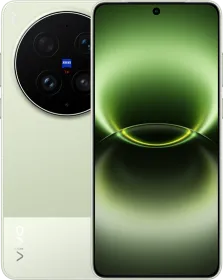
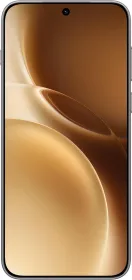
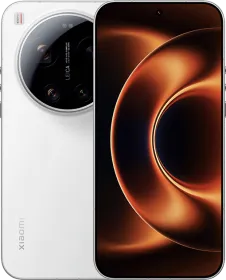
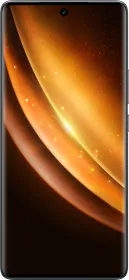
That said, all the phones have their distinct iconic design elements. Both the vivo X300 Ultra and the Xiaomi 17 Ultra share a circular camera module. For the iPhone 17 Pro Max, the pill-shaped Dynamic Island on the front and the raised camera plateau with the triangular lens arrangement act as the key differentiators.
Colors, as always, are subjective, but the iPhone 17 Pro Max gives you the most options to choose from. Ultimately, all three are top-end flagships that don’t easily fit in your pocket (and your wallet).
Also Read: OnePlus Nord 6 vs. Nothing Phone (4a): Will You Choose Performance Or Personality?
vivo X300 Ultra vs. Xiaomi 17 Ultra vs. iPhone 17 Pro Max: Display
| vivo X300 Ultra | Xiaomi 17 Ultra | iPhone 17 Pro Max | |
| Panel Type | LTPO AMOLED | Xiaomi HyperRGB LTPO AMOLED (M10 custom panel) | LTPO Super Retina XDR OLED |
| Size | 6.82 inches | 6.9 inches | 6.9 inches |
| Resolution | 3168 x 1440 (2K) | 2608 x 1200 (1.5K) | 2868 x 1320 |
| Pixel Density | ~510 ppi | ~416 ppi | ~460 ppi |
| Refresh Rate | 1–144Hz adaptive | 1–120Hz adaptive | 1–120Hz adaptive (ProMotion) |
| Peak Brightness | 4,500 nits (local); 1,800 nits (global) | 3,500 nits (peak) | 3,000 nits (peak); 1,600 nits (HBM) |
| HDR Support | HDR10+ | HDR10+, Dolby Vision | HDR10, Dolby Vision |
| Special Features | ZEISS Master Color Display with Ultra XDR; 2160Hz PWM dimming; DC-like dimming | 2160Hz PWM dimming; DC dimming; TÜV Rheinland Flicker Free and Circadian Friendly certified | Always-On Display; True Tone; Wide Color (P3) |
While the Xiaomi 17 Ultra and the iPhone 17 Pro Max max out at 120Hz, the X300 Ultra takes the refresh rate all the way up to 144Hz. The higher refresh rate should make the screen feel noticeably smoother in supported apps, workflows, and video games.
In addition, the X300 Ultra also carries the sharpest and brightest display of all, at least on paper. The iPhone 17 Pro Max comes second, while the Xiaomi 17 Ultra comes in third; it features the lowest resolution of the three phones, which, for the price, feels a bit underwhelming.
The X300 Ultra comes with a screen that is color-calibrated by ZEISS (with Ultra XDR) and supports 2160Hz PWM dimming. Interestingly, the Xiaomi 17 Ultra also supports 2160Hz PWM dimming, matching the X300 Ultra, while the iPhone 17 Pro Max sticks to a more conventional ~480Hz PWM dimming implementation.


Only the iPhone 17 Pro Max comes with a built-in anti-reflective coating on top of the display, which could result in a better viewing experience in certain light conditions.
Speaking of unique features, the Xiaomi 17 Ultra is the only smartphone in this comparison with a 12-bit panel, which should result in smoother color gradients, reduced banding, and better HDR headroom.
vivo X300 Ultra vs. Xiaomi 17 Ultra vs. iPhone 17 Pro Max: Performance
| vivo X300 Ultra | Xiaomi 17 Ultra | iPhone 17 Pro Max | |
| Chipset | Qualcomm Snapdragon 8 Elite Gen 5 (3nm) | Qualcomm Snapdragon 8 Elite Gen 5 (3nm) | Apple A19 Pro (3nm) |
| CPU | Octa-core: 2×4.6GHz Oryon V3 Phoenix L + 6×3.62GHz Oryon V3 Phoenix M | Octa-core: 2×4.6GHz Oryon V3 Phoenix L + 6×3.62GHz Oryon V3 Phoenix M | Hexa-core: 2×4.26GHz (performance) + 4×2.60GHz (efficiency) |
| GPU | Adreno 840 | Adreno 840 | Apple GPU (6-core) |
| NPU / AI Engine | Qualcomm Hexagon NPU + dedicated VS1+ imaging chip | Qualcomm Hexagon NPU | Apple Neural Engine (16-core) |
| Cooling | 5,800mm² liquid cooling vapor chamber | 5,500mm² vapor chamber (3D dual-channel IceLoop system) | Vapor Chamber cooling |
The performance story is quite familiar, especially for people who’ve been following the Snapdragon 8 Elite Gen 5 smartphone launches since last year. Both the X300 Ultra and the Xiaomi 17 Ultra ship with the identical standard Snapdragon 8 Elite Gen 5, while the iPhone 17 Pro Max sports Apple’s latest A19 Pro chip.
These are the best chips available on any smartphone now, and hence, expect similar, flagship-level performance from each of them.
Day-To-Day Usage

| RAM in India | 16GB / 512GB (single variant in India) | 16GB / 512GB (single variant in India) | 12GB across all storage variants |
| Storage Options | 256GB / 512GB / 1TB UFS 4.1 | 512GB UFS 4.1 (India); 1TB available globally | 256GB / 512GB / 1TB / 2TB NVMe |
Day-to-day scrolling, messaging, multitasking, or even high-end gaming or 4K video editing, all phones can handle everything without any hiccups. In fact, they also have dedicated NPUs to handle on-device AI tasks (though these are fewer in number than the cloud-based AI features).
It’s worth noting here that the vivo X300 Ultra packs a dedicated VS1+ imaging chip alongside the Hexagon NPU, which acts as an additional AI processor for real-time camera processing.
Also Read: Xiaomi 17 vs. Vivo X300: Leica vs. Zeiss, HyperOS vs. OriginOS, and Everything in Between
Synthetic Benchmarks

| vivo X300 Ultra | Xiaomi 17 Ultra | iPhone 17 Pro Max | |
| Geekbench 6 Single-Core | 3,730 | 3,628 | 3,890 |
| Geekbench 6 Multi-Core | 11,494 | 10,940 | 10,120 |
So, where’s the difference, then? Well, it’s only when you start benchmarking these phones that the real difference shows up.
In the single-core GeekBench 6 CPU test, the Xiaomi 17 Ultra and the X300 Ultra trail the iPhone 17 Pro Max (highest) by a minor yet quantifiable margin. However, due to their eight-core CPU architectures, the X300 Ultra (highest) and the Xiaomi 17 Ultra outperform the Pro Max in multi-core tests. Vivo’s flagship pulls ahead of Xiaomi’s in both tests, likely due to the presence of LPDDR5X Ultra Pro memory.
Gaming Performance

| vivo X300 Ultra | Xiaomi 17 Ultra | Apple iPhone 17 Pro Max | |
| BGMI Max FPS | 120fps | 120fps | 120fps (post BGMI 4.2 update) |
Even though none of the phones are marketed as gaming phones, they provide quite excellent gaming performance.
All of them can run BGMI at 120 fps, though the X300 Ultra shouldn’t include an option to provide 144 fps gameplay, despite its display supporting the refresh rate. The OnePlus 15, with a 165Hz display, supports native 120 fps BGMI gaming, but through frame interpolation, it also supports 165 fps BGMI gameplay.
Anyway, all the phones have a dedicated vapor chamber to enhance performance during sustained workloads. The Xiaomi 17 Ultra, in particular, pairs its cooling system with Xiaomi’s aggressive performance tuning profiles for gaming.
Also Read: iPhone 17e vs iPhone 16: The New iPhone Might Be Better For Most Users (But Not All)
vivo X300 Ultra vs. Xiaomi 17 Ultra vs. iPhone 17 Pro Max: Software
| vivo X300 Ultra | Xiaomi 17 Ultra | iPhone 17 Pro Max | |
| OS at Launch | Android 16 with OriginOS 6 | Android 16 with HyperOS 3 | iOS 26 |
| Major OS Updates | 5 years | 5 years | Historically 6–8 years in practice |
| Security Patches | 7 years | 6 years | Historically extends beyond major OS support |
| Key AI Features | AI Creation, AI Transcript Assist, Vivo DocMaster, AI Captions, dedicated VS1+ Pro Imaging Chip for real-time AI image processing | Hyper AI suite: AI Writing, AI Interpreter, AI Search, AI Translation, Gemini AI integration | Apple Intelligence: Writing Tools, Visual Intelligence, Clean Up, Image Playground, Genmoji, Priority Messages, ChatGPT integration in Siri |
| Unique Software Highlights | Origin Island notification system; 10 professional color styles via vivo Color Palette; 3D LUT import in camera | Xiaomi Super Island live notification system; HyperConnect cross-device sharing (Android and Apple); Dual-view video mode; Leica Instant mode | Liquid Glass UI (iOS 26); Dynamic Island Live Activities; Game Mode; Adaptive Power Mode; Apple Log 2 and ProRes RAW video (Pro-exclusive) |
Software is perhaps the biggest differentiator between these flagships, partly because of the raw features, but mostly because of how each company approaches the overall user experience.
OriginOS 6

The vivo X300 Ultra focuses on customization, imaging tools, and visual experience improvements with OriginOS 6 (based on Android 16). In our review of the user interface, we’ve mentioned how modern and fluid it feels, with useful additions like Origin Island and multiple AI-powered features like AI Creation and AI Transcript.
Then there’s the dedicated VS1+ Pro imaging chip that enables several real-time imaging features (such as using generative enhancement for pictures captured at a higher zoom range). The only part where the X300 Ultra lags is in the five years of major operating system updates.
Also Read: OriginOS 6 Review: The Upgrade That Changes Everything for vivo
HyperOS 3

The Xiaomi 17 Ultra offers HyperOS 3, Xiaomi’s latest smartphone skin built on top of Android 16. The software experience is relatively clean and feature-rich. Like the X300 Ultra, this one also features the Xiaomi Super Island, which is a derivative of the Dynamic Island on the iPhones. Further, you get the Hyper AI suite powered by Gemini AI, which covers a variety of use cases.
Another unique feature is HyperConnect, which allows cross-device file and screen sharing, even with non-Xiaomi Android phones and Apple devices like iPhones and iPads.
Also Read: Xiaomi Launches HyperOS 3 in China: An Iterative Upgrade Over HyperOS 2
iOS 26

The iPhone 17 Pro Max continues to rely on Apple’s seamless ecosystem integration and consistency across its devices, which is one of its biggest strengths. The company isn’t leading the AI race, but limited implementations like Visual Intelligence and Writing Tools feel a bit more polished.
iOS 26 leans on the new Liquid Glass design language, which has been the source of inspiration for several Android manufacturers. The company doesn’t commit to a fixed number of OS or security updates, but historically, it has provided over five years of major iOS and security patches to iPhone users (stretching to seven or even eight years for some models).
Also Read: iOS 26 Public Beta Hands-On: The Good, The Bad, and The Buggy
vivo X300 Ultra vs. Xiaomi 17 Ultra vs. iPhone 17 Pro Max: Cameras
| vivo X300 Ultra | Xiaomi 17 Ultra | iPhone 17 Pro Max | |
| Primary Camera | 200MP Sony LYTIA 901, 1/1.12″, f/1.85, 35mm focal length, PDAF | 50MP OmniVision OV50X50 Light Fusion 1050L, 1″, f/1.67, 23mm, 1.6µm | 48MP, 1/1.28″, f/1.8, 24mm, 1.22µm, dual pixel PDAF, sensor-shift OIS |
| Ultrawide Camera | 50MP Sony LYTIA 818, 1/1.28″, f/2.0, 4K@120fps | 50MP Samsung JN5, 1/2.75″, f/2.2, 14mm, 115° | 48MP, 1/2.55″, f/2.2, 13mm (120°), 0.7µm, PDAF |
| Telephoto Camera | 200MP Samsung ISOCELL HPB, 1/1.4″, f/2.67, 85mm, 3.7x optical zoom, Gimbal-Like OIS (CIPA 7.0, 3° gimbal) | 200MP Samsung HPE, 1/1.4″, f/2.39–2.96, 75–100mm, 3.2–4.3x continuous optical zoom, OIS, 30cm macro | 48MP, 1/2.55″, f/2.8, 100mm (periscope), 0.7µm, PDAF, 3D sensor-shift OIS, 4x optical zoom |
| Front Camera | 50MP, 1/2.76″, f/2.45, 24mm, AF | 50MP OmniVision OV50M, 1/2.87″, f/2.2, 21mm, 1.22µm, AF | 18MP, f/1.9, 20mm, multi-aspect, PDAF + SL 3D sensor |
| Max Digital Zoom | 105x | 120x | 40x |
| Max Video Resolution | 8K@30fps; Multi-Focal 4K@120fps 10-bit Log; Dolby Vision | 8K@30fps; 4K@30/60/120fps; Dolby Vision; ACES Log | 4K@24/25/30/60/100/120fps; ProRes; ProRes RAW; Apple Log 2; Dolby Vision; 3D (spatial) video |
| Notable Camera Features | ZEISS T* coating; ZEISS APO standard on telephoto; Zeiss Telephoto Extender Gen 2 (200mm) and Ultra (400mm) optional accessories; Quad-Mic audio; Horizon Level Stabilization | World’s first mechanical continuous optical zoom in a periscope telephoto (75–100mm); Leica APO certification on telephoto; Leica Authentic and Vibrant color styles | Camera Control button; Visual Intelligence; Action mode; Cinematic mode; 4K@120fps with ProRes RAW; Dual Capture; Next-generation portraits |
X300 Ultra

The X300 Ultra is the most ambitious camera smartphone in this comparison. It uses a ZEISS Triple Prime Lens system, which covers three prime focal lengths: 14mm, 35mm, and 85mm, each paired with large sensors and OIS, even on the ultrawide camera, which is quite rare.
The dual 200MP setup, primary and telephoto, remains unmatched in resolution, while the 1/1.28-inch ultrawide camera is the largest on any smartphone available in the country right now. The telephoto’s gimbal-like OIS, rated at CIPA 7.0, with a three-degree physical correction range, is simply unparalleled.
The ZEISS optics help the camera setup throughout, but the optional Telephoto Extender accessories push the reach to 200mm and 400mm, turning the Ultra into something closer to a modular camera system.
Also Read: Galaxy S26 Ultra vs. Find X9 Pro: Which Rs. 1 Lakh Flagship Is Right For You?
Xiaomi 17 Ultra

The Xiaomi 17 Ultra beats the X300 Ultra’s primary camera in one key aspect: sensor size. It features a one-inch Light Fusion 1050L sensor, which is currently the largest main sensor on any smartphone sold in the country. Paired with LOFIC HDR technology, the sensor should generate meaningfully better pictures.
Another first in the world is the mechanical continuous optical zoom in the periscope telephoto camera. The 200MP lens physically moves its elements to cover any focal length between 75mm and 100mm, which is quite suitable for natural portraits. The ultrawide camera, however, is the smallest in this comparison.
The phone also benefits from the partnership with Leica, offering signature image profiles and color science.
Also Read: Galaxy S26 vs. Find X9 vs. vivo X300: The 2026 Baseline Android Flagship Battle Intensifies
iPhone 17 Pro Max

Apple doesn’t win on the megapixel or the sensor size game. All three rear-facing cameras come with a 48MP sensor, which varies in size and is paired with a different lens for achieving the required results. The main highlight of the array is the 8MP periscope telephoto, at 100mm with 3D sensor-shift OIS, as it delivers 4x optical zoom and what Apple calls 8x optical-quality zoom.
However, the Centage Stage selfie camera is something that truly gets less credit than it actually deserves. By letting you capture selfies in multiple aspect ratios and the exceptionally wide field of view, the camera truly unlocks a new selfie experience that’s currently unparalleled by Android manufacturers.
For video, it is the clear leader of the three: ProRes RAW, Apple Log 2, Dolby Vision, 4K at up to 120fps, and spatial 3D video recording make it the most capable video smartphone in this comparison.
vivo X300 Ultra vs. Xiaomi 17 Ultra vs. iPhone 17 Pro Max: Battery Life & Charging Speed
| vivo X300 Ultra | Xiaomi 17 Ultra | iPhone 17 Pro Max | |
| Battery Capacity | 6,600 mAh Semi-Solid-State Battery 2.0 | 6,000 mAh Silicon-Carbon | 4,823 mAh Li-Ion |
| Wired Charging | 100W FlashCharge (full charge in ~38 min) | 90W HyperCharge (0–72% in 30 min; full charge in ~43 min) | 40W (0–50% in 20 min with 40W adapter) |
| Wireless Charging | 40W FlashCharge | 50W HyperCharge | 25W MagSafe / Qi2 |
| Reverse Charging | Reverse wireless charging (wattage unconfirmed for India) | 22.5W reverse wired + reverse wireless charging | 4.5W reverse wired |
| Charger in Box | Yes (100W FlashCharge adapter) | No (sold separately) | No (sold separately) |
On paper, the vivo X300 Ultra has the largest cell at 6,600 mAh, while the Xiaomi 17 Ultra secures the second position with the 6,000 mAh battery. The iPhone 17 Pro Max packs the smallest cell of the three: 4,823 mAh.
However, in real-world usage, the iPhone’s strong hardware-software optimization and the efficient chip result in a slightly better score on several battery tests. Vivo and Xiaomi follow closely after, and the difference should be negligible for most users. All the phones should comfortably last a moderate to heavy usage day.

On charging, the vivo X300 Ultra leads with 100W wired charging (~40 minutes) and is the only phone here that ships with a 100W charger in the box. The Xiaomi 17 Ultra follows at 90W (~45 minutes), while the iPhone’s 40W is the slowest of the three. Regarding wireless charging, the Xiaomi 17 Ultra takes the lead at 50W, ahead of vivo’s 40W and the iPhone’s 25W MagSafe.
Also Read: Samsung Galaxy S26 Ultra vs. Galaxy S25 Ultra: Here’s Everything That’s New
vivo X300 Ultra vs. Xiaomi 17 Ultra vs. iPhone 17 Pro Max: Pricing & Verdict
vivo X300 Ultra: Pricing

The vivo X300 Ultra is among the most ambitious camera smartphones available in the country. The ZEISS Triple Prime Lens system, dual 200MP sensors, world’s largest ultrawide sensor on a smartphone in India, CIPA 7.0 Gimbal-Like OIS, and optional 400mm Telephoto Extender make it the most versatile and capable camera system at this price.
Add the dedicated VS1+ Pro imaging chip, 4K 120fps multi-focal video with 10-bit Log and Dolby Vision, the 100W wired charging with the charger in the box, the Snapdragon 8 Elite Gen 5 chip, and the X300 Ultra is an exceptionally complete package.
| Who Should Buy It | Who Should Skip It | |
| vivo X300 Ultra | – Photographers and videographers who want one of the most optically capable smartphones available in India, without compromise. – If the camera is everything, this is the phone. OriginOS users will find the experience familiar. | – You want better battery endurance – Longer software support guarantees, or a more balanced all-around flagship at a lower price. |
Xiaomi 17 Ultra
Xiaomi 17 Ultra (16GB + 512GB): Rs. 1,39,998

Xiaomi goes all in with the 1-inch primary camera sensor, the world’s first mechanical continuous optical zoom in smartphone cameras, wireless charging at 50W, and the Xiaomi HyperConnect cross-platform ecosystem features. Rounding out the package is the top-tier Snapdragon processor, Xiaomi’s HyperOS 3 skin, and an excellent screen.
| Who Should Buy It | Who Should Skip It | |
| Xiaomi 17 Ultra | – Those who want the most cutting-edge camera technology available in India at a price that undercuts both rivals, without sacrificing performance or battery life. – HyperOS users will find the UI familiar. | – Those for whom display sharpness matters, the 1.5K panel at ~416 ppi is the weakest screen in this comparison. – Software support, while improved, still trails the iPhone historically. No charger in the box. |
iPhone 17 Pro Max
- iPhone 17 Pro Max (256GB): Rs. 1,34,900
- iPhone 17 Pro Max (512GB): Rs. 1,54,900
- iPhone 17 Pro Max (1TB): Rs. 1,74,900
- iPhone 17 Pro Max (2TB): Rs. 2,14,900

Even without exceptional specifications or numbers, the iPhone 17 Pro Max stands its own ground as a phone that works consistently and reliably across most use cases. The A19 Pro chip delivers the best single-core performance and the most thermally stable sustained performance of the three. The real-world battery endurance is excellent as well.
For video, it is the clear leader: ProRes RAW, Apple Log 2, 4K at 120fps, Dual Capture, and spatial 3D video make it the most capable video smartphone in this comparison by a meaningful margin. It is the only phone in the comparison that provides storage tier flexibility.
| Who Should Buy It | Who Should Skip It | |
| Apple iPhone 17 Pro Max | – Those who want the most well-rounded flagship in this comparison: great battery endurance, best video capabilities, and the deepest ecosystem integration. – If you’re already in the Apple ecosystem. | – Those who prioritise still photography hardware, higher display resolution, and faster wired charging. – Android users switching ecosystems will also face a significant adjustment period. |

You can follow Smartprix on Twitter, Facebook, Instagram, and Google News. Visit smartprix.com for the latest tech and auto news, reviews, and guides.