



Quick Verdict
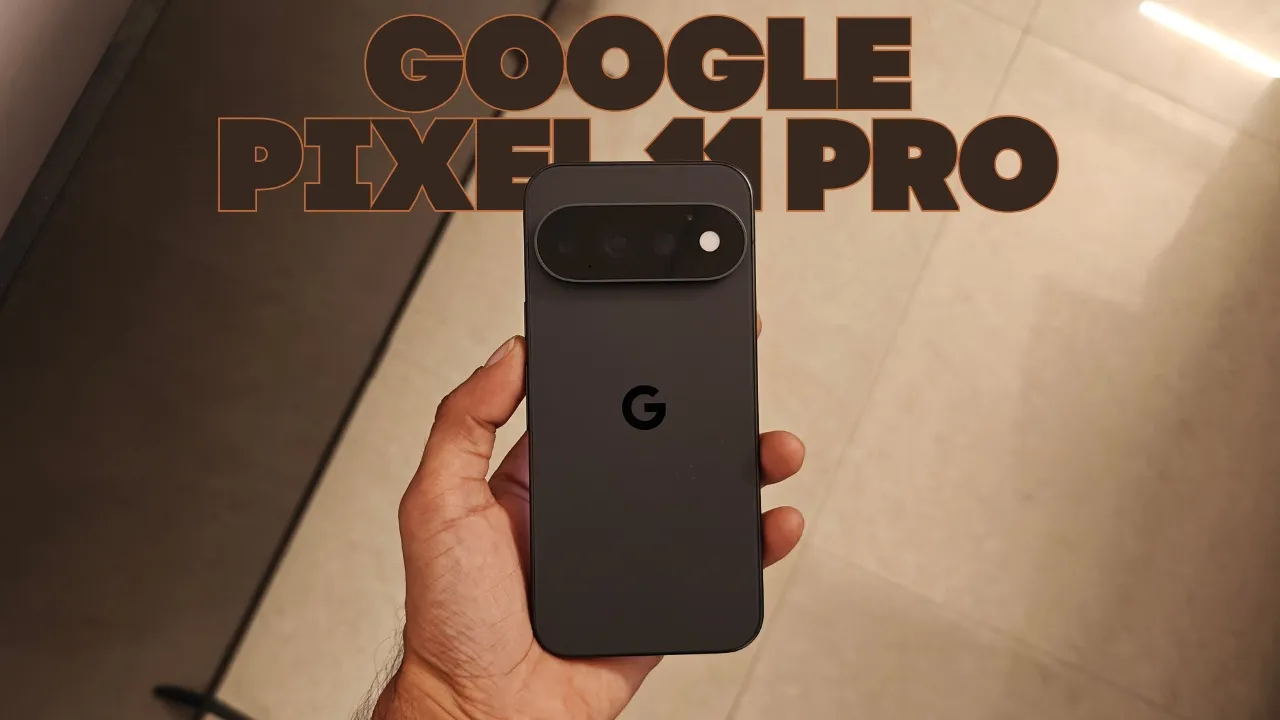
My review of the Google Pixel 11 Pro is simple: this is as incremental as an update can get. Of course, since many use the Pixel for content creation, Google has given us new camera sensors. They have replaced the temperature sensor with the notification light, which Google is calling the Hilight, and that’s pretty much it.
Buy it if:
- You want a fuss-free Android experience.
- You want good cameras, even for content creation purpose.
- You want excellent display quality.
- You are okay with slower charging.
Skip it if:
- You want to play games on your smartphone.
- You want a workhorse that has great battery along with AI features.
- You want to shoot content in the dark.
The Google Pixel 11 series was launched last month, and this is one device from Google that has not been able to make much of an impact in terms of the number of units in people’s hands across the world. However, it almost always creates the same amount of hype that any other Apple iPhone, Samsung Galaxy Fold, or any of your Vivo – Zeiss, Xiaomi – Leica partnerships create.
This year, Google launched a Pixel 11 series with the Google Pixel 11, the Pixel 11 Pro, the Pixel 11 Pro XL, and the Pixel 11 Pro Fold. I got my hands on the Google Pixel 11 Pro. After using the Google Pixel 10 Pro throughout its whole life cycle, I upgraded to the 11 Pro, expecting not a lot but a slight more refinement, slightly better cameras, improved battery, and an overall better flagship experience. Did I get it? Wait till the end of this review to find out.
HOW I TESTED
| Reviewed By: Darab Mansoor Ali, Consulting Editor, Tech and Auto. Test Unit: The review unit was provided by Google India, though the company had no input in this review. Duration and Environment: I used the phone for close to three weeks as my primary smartphone in India, running daily tasks alongside creating content to properly test the cameras and battery. Tests: Daily usage including content (video shoots), calls, social media, streaming, navigation, Emails, texting, and everything one normally does on their smartphone on the regular. AnTuTu v11, Geekbench 6, CPU Throttling, and PCMark were used for synthetic benchmarking. Competitors: iPhone 17 Pro, Samsung Galaxy S26, iPhone Air |
Pixel 11 Pro Price & Availability
The Google Pixel 11 Pro is priced at ₹1,19,999 for the base 12GB RAM + 256GB variant. It comes in 12GB and 16GB RAM options, along with 256GB and 512GB storage options. Google does not have a 1TB storage variant of the Pixel 11 Pro in India. The Google Pixel 11 Pro ships in four colours, namely, Obsidian (we got this for review), Fog, Olive, Canyon.
- 12GB + 256GB: ₹1,19,999
- 16GB + 512GB: ₹1,34,999
Additional offers include up to ₹8,000 instant bank discount, and no-cost EMI for up to 6 months. The phone is available via Google official online store, Flipkart, and offline partners.
Pros
- Good build quality, super premium in-hand feel
- Outstanding camera performance
- Super Actua AMOLED display is one of the best out there
- Significant improvement in battery life
- Tons of useful AI features
- Qi2 wireless charging with MagSafe
- Best haptics across all segments
Cons
- Performance is not great.
- Heating issues persist
- Slow charging
- IP68 rating could have given IP69
- Starts with 12GB RAM, thanks to memory shortage
Google Pixel 11 Pro Specifications
- Display: 6.3-inch SuperActua LTPO AMOLED, 497 PPI, 120 Hz refresh rate, 2400 nits HBM, 3600 nits peak, HDR playback
- Processor: Google Tensor G6 (3nm)
- RAM: 12 GB/ 16 GB LPDDR5X
- Storage: 256GB/ 512GB UFS 4.0
- Main Camera: 50 MP primary 1/1.3-inch, f/1.7, PDAF, OIS, 4K60
- Telephoto Camera: 48 MP telephoto, 1/1.95-inch dual pixel PDAF, OIS, 5x optical zoom
- Ultra-wide Camera: 48 MP, 1/2.25-inch, f/1.7
- Front Camera: 42 MP, f/2.2, 103˚ (ultrawide), PDAF
- Battery and Charging: 4,850 mAh, 30W wired
- Speaker: Dual stereo speaker
- Biometrics: Fingerprint (under display, ultrasonic)
- Connectivity: Bluetooth 6.0, USB 3.2, NFC, Wi-Fi 802.11 a/b/g/n/ac/6e/7, tri-band
- Protection: IP68
- Build: Glass
- Dimensions and Weight: 8.4mm thickness, 204 grams
- Software: Stock Android 16, 7 Years of OS updates, 7 Years Security Updates
- Colours: Obsidian, Fog, Olive, and Canyon.
Google Pixel 11 Pro Unboxing
Inside the box, you get the Google Pixel 11 Pro itself, a type-C to type-C charging cable, a SIM ejector tool, and the standard paperwork.
Google Pixel 11 Pro Review: Design and Build
I will start with how it looks, and in the design, there is literally no change between the Pixel 11 Pro and the Pixel 10 Pro. In fact, I was able to attach my case for the Pixel 10 Pro to the Pixel 11 Pro, so the design difference is actually none.

The only thing that I can see is that the chrome frames from last year have been blacked out now, which is good. I like it like this: less scratches. The camera island, as Google calls it, has a slimmer bezel now. There is no metal ring going on across it, and we have the LED notification light instead of the temperature sensor that we saw on the previous generation of the Pixels.
Apart from that, the whole dimensions, the design, the layout, and even the in-hand feel of the Pixel remain largely the same. I think this has a better grip, largely due to the change of materials rather than the change of shape and styling.
Google Pixel 11 Pro Review: Display
Coming to the display, this is a 6.3-inch LTPO OLED panel with a 2K resolution, and it is the brightest display that we have so far seen on any pixel with 3,600 nits of peak brightness.

Now, my experience with this display was flawless, to say the least. It’s bright, so there are no issues with visibility despite how bright the sun is. It’s super slick. We have the adaptive LTPO display with a 120 Hz refresh rate, so it’s as slick as you would expect a display to be. Of course, the resolution is also pretty good. There are no rough edges, and the details are crisp and clear.

Of course, this is not a big screen, so watching content is not very ideal on this size, but if you choose to do so, the Google Pixel 11 Pro is as good as it gets. The blacks are deep, the reds are vibrant, and it supports HDR playback so that just enhances the content viewing experience.
Google Pixel 11 Pro Review: Performance and Software

Coming to performance and software, the performance has never been the Google Pixel’s USP. Instead, it has always been the software. So before I start talking about the software, let me get the performance part out of the way. This is also where the memory shortage has finally started to trickle down to the Pixel smartphones. For example, last year the Google Pixel 10 Pro started with 16GB of RAM even for the 256GB storage variant.
This year, the 256GB variant comes with 12GB RAM as standard, and the 512GB or 1TB variants come with 16GB of RAM. While we got the 16GB + 512GB variant for our review, I thought it is important to mention this.
ALSO READ: OriginOS 6 Review: The Upgrade That Changes Everything for vivo
Now, let’s talk numbers. The Google Pixel 11 Pro comes powered by Google’s Tensor G6 chipset, which is built on a 3nm process. This, paired with 16GB of RAM, put out an AnTuTu score of 1,417,272 points, which is a rather marginal jump over the last year’s Pixel 10 Pro’s AnTuTu score of 1.16 million points.
In Geekbench also the Pixel 11 Pro showcased a lower score than its predecessor in the single-core test, getting 2,298 points, while in the multi-core test, the Google Pixel 11 Pro showcased a healthy growth, scoring 6,745 points.

ALSO READ: I Put the iQOO Z11’s AI Features to Work on Everyday Problems
Coming to CPU throttling, this is where the Google Pixel 11 Pro performed the worst. The smartphone throttled to 55 percent of its performance, which is not great and is an indicator of heating affecting the smartphone’s performance. In PCMark, which is another CPU benchmark, the Google Pixel 11 Pro put out a score of 16,504 points, which is also slightly low by today’s standard.

But despite what the numbers show, as my primary device, the Google Pixel 11 Pro never gave me any issues with performance or usability. The smartphone is pretty smooth with everything. The start up time, app switching, app opening and closing times, everything is as good as on any other flagship. But it heats up. An issue that has been prominent in Pixel smartphones since many years has not been fixed this year as well. While the Pixel 11 Pro is slightly better as compared to predecessors, it is not there yet.

In terms of the software, this is where the Google Pixel 11 Pro feels superior to anything out there. This year, Google has gone one step ahead with the Gemini integration and replaced Google Assistant with Gemini completely. That has done wonders for the Pixel, since there are many tools for people to explore their creativity, be more efficient with their work, click better pictures and videos with their Pixel, and use this as a productivity device. My favourite AI features on the Pixel are the ones in the camera, like Add Me, Action Pan, and more.
Google Pixel 11 Pro Review: Battery and Charging

The battery on the Google Pixel 11 Pro is a 4,850 mAh unit. Now, in terms of how much it has improved, the difference is noticeable. As mentioned, I used the Google Pixel 10 Pro throughout its lifecycle of the whole year, and from the get-go, the Google Pixel 11 Pro felt much better. It gave me an on-screen time of more than 6 hours on a single charge. That is impressive for a Pixel and good enough for any kind of user who doesn’t game too much or create content using their Pixel.

Overall, I feel the battery has improved, but the charging, however, remains slow. The Pixel 11 Pro supports 30W fast charging, which Google claims charges your phone to 75% in just 30 minutes, but my experience has been slower. Of course, this depends on the charger we’re using, and my 60W charger charges this device from 0 to 100 in less than 2 hours, which is slow by any standard today.
Google Pixel 11 Pro Review: Cameras
Now coming to the thing I have probably used the most during my time with the Pixel 11 Pro. The cameras. This year, Google has made a hardware upgrade. The primary camera on this is a new 50-megapixel shooter, and we’re getting a new 48-megapixel telephoto shooter. The primary shooter is a big one, 1/1.3-inch, so pretty substantial and it lets a lot more light in. The ultra-wide shooter remains the same 48-megapixel unit that we also saw on the Pixel 10 Pro.

Portrait mode is a bit of a mixed bag. Faces come out noticeably soft with some brightening applied, and while most people I showed the results to still liked them, edge detection and the skin smoothing effect could both use some refinement.
The performance of this new camera setup is reliable and punchy. The photos consistently deliver that signature Google Pixel look—sharp, clear, and rich in detail across every shot. The dynamic range is truly great, handling high-contrast, tricky lighting scenarios with absolute confidence and ease.


What stands out most, though, is consistency. Photos hold up impressively well across the main sensor, ultra-wide, and telephoto lenses, with results that barely waver between the three. Video performance matches up just as well, and this holds true for both the front and rear cameras, whether you’re vlogging or shooting b-roll.
Having shot content on the Pixel 11 Pro for a month now, I can safely say it’s as good as any iPhone I’ve used in the past, which is high praise coming from someone who has shot on both platforms extensively. The one area where the Pixel does struggle a bit is low-light video, though even here, the Night Sight and Video Enhancer features step in to make footage usable most of the time.
Overall, this is as good a camera as you’ll find on an Android flagship today, with the one exception being the Vivo-Zeiss camera trickery we’ve seen on the Vivo X-series over the past couple of years.
If cameras are your top priority in this price bracket, the Google Pixel 11 Pro is one of the best, most fuss-free camera setups you will find on any Android smartphone today.
Review Verdict: Should You Buy the Google Pixel 11 Pro?
My review of the Google Pixel 11 Pro is simple: this is as incremental as an update can get. Of course, to differentiate, Google has given us new camera sensors. They have replaced the temperature sensor with the notification light, which Google is calling the Hilight, and all it does is just notify you when your favourite contact calls or texts you. You can customise it based on colour-coding your contacts to understand better who is calling if your phone is face down. Not as much of a party trick as the thermometer was.
Performance remains a bit of a skeleton in the closet for the Pixel. It is good enough for regular use, but if you compare it with other flagships in the market, this feels underpowered. The CPU throttles a lot. The heating issues have not been fixed, mostly, but the software remains clean. We have enough AI enhancements. What I like this year around is that Google has not gone too crazy with the AI push, but AI is still a huge element in making this software as good as it is.
The battery has improved. Pixel gave me an on-screen time of more than 6 hours, which is good for any smartphone, but the charging now remains slow. Again, that is a bit of nitpicking because it works for me, and it’s not the fastest in the segment, but we get other stuff like Qi2 wireless charging, and the like.

Smartprix ⭐ Rating: 8.7/10
- Design and Build: 8/10
- Display: 10/10
- Speakers: 8.5/10
- Software: 9/10
- Haptics: 10/10
- Biometrics: 9/10
- Performance: 7.5/10
- Cameras: 8.5/10
- Battery Life & Charging: 7.5/10
First reviewed in August 2026.















Is contained me translate ka option dale taki Hindi me bhi alg se padh sake