

TL; DR
- The Sierra EV leads this group on boot space at 622 liters and AWD availability.
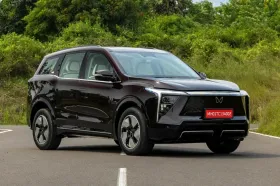
- The Mahindra BE 6 edges ahead on wheelbase, range, charging speed, and interior width.
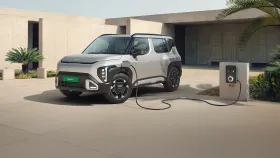
- The ZS EV and e-Vitara trail on ground clearance, boot space, and charging capability.
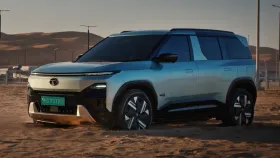
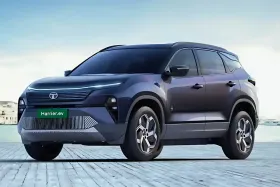
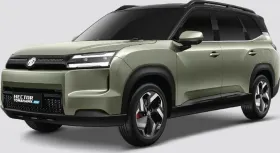
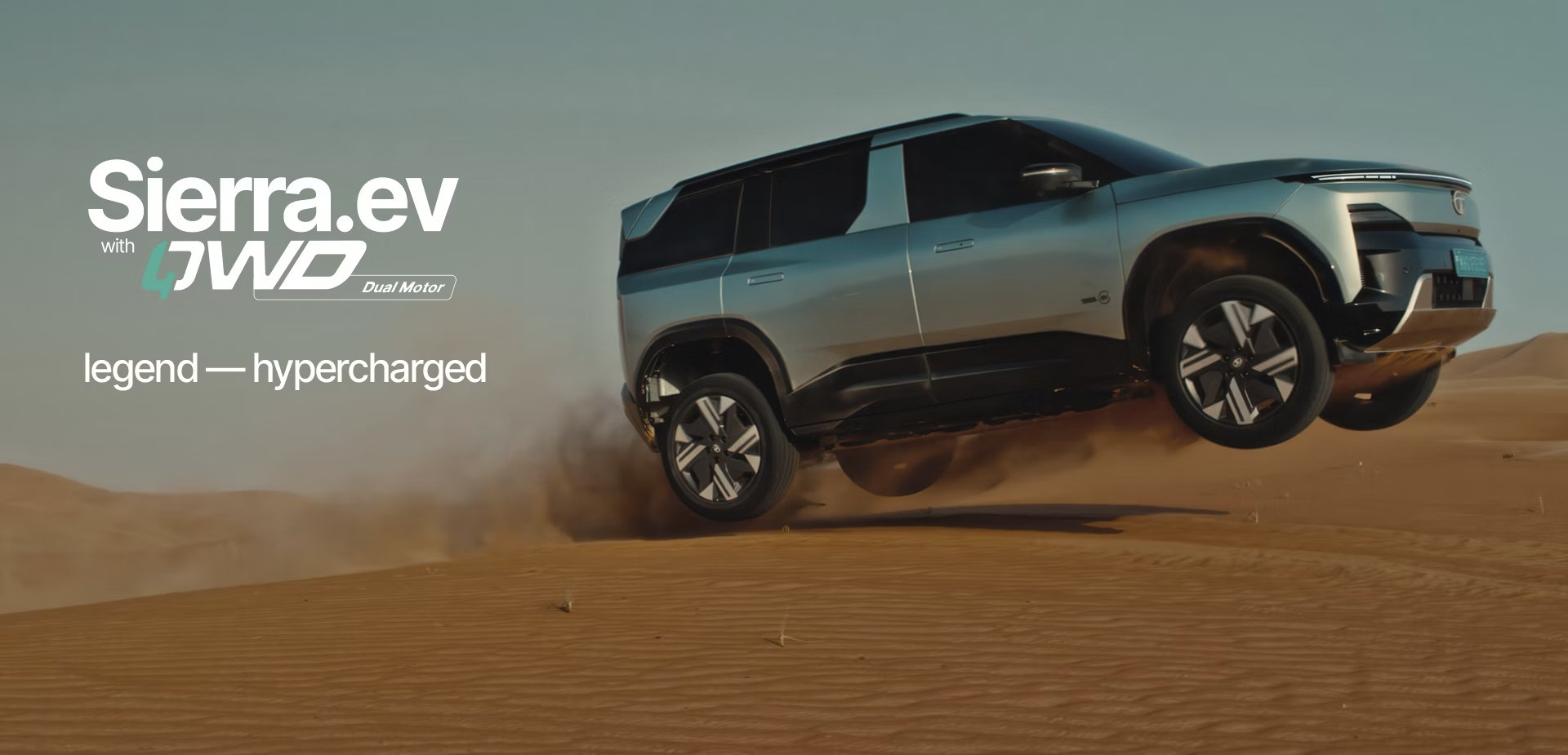
Tata’s latest eSUV, the Sierra EV, holds a unique position in the market. It has that big-car stance that Indian buyers appreciate, features a capable electric powertrain that doesn’t require any fuel blending, and offers a real-world range of around 500 km, enough for long-distance intercity travel.
In this article, we’ll figure out how the eSUV compares to its immediate rivals, especially in terms of the key specifications that determine your experience.
Also Read: The New BMW X5 Runs On Petrol, Diesel, Electricity, Or Hydrogen: And It Debuts This Year
Sierra EV vs. Competition: Key Specifications
| Spec | Tata Sierra EV | Tata Curvv EV | Mahindra BE 6 | Maruti e-Vitara | Hyundai Creta Electric | MG ZS EV |
| Price (ex-showroom) | ₹18.79–25.99L | ₹16.99–22.24L | ₹18.90–28.49L | ₹15.99–20.01L | ₹18.02–24.70L | ₹17.99–20.75L |
| Length x Width x Height (mm) | 4340 x 1841 x 1750 | 4308 x 1810 x 1637 | 4371 x 1907 x 1627 | 4275 x 1800 x 1640 | 4340 x 1790 x 1655 | 4323 x 1809 x 1649 |
| Wheelbase (mm) | 2,730 | 2,560 | 2,775 | 2,700 | 2,610 | 2,585 |
| Ground clearance (mm) | 205 | 186–190 | 207 | 185 | 200 | 177 |
| Boot space | 622L (1,257L folded) | 422L | 455L | 310L | 433L | 448L |
| Battery pack | 63kWh / 75kWh | 55kWh only | 59kWh / 79kWh | 49kWh / 61kWh | 42kWh / 51.4kWh | 50.3kWh |
| Battery type | LFP | LFP | NMC | LFP (BYD) | NMC | NMC |
| Motor (max) | RWD: 235bhp/315Nm; QWD: 344bhp/504Nm | 165bhp/215Nm | 231–286bhp/380Nm | 143–173bhp/192.5Nm | 135–171bhp/255Nm | 174bhp/280Nm |
| Drivetrain | RWD / QWD (AWD) | FWD | RWD | FWD | FWD | FWD |
| Claimed range (max) | 665km (MIDC, 75kWh) | 502km (MIDC, 55kWh) | 683km (MIDC, 79kWh) | 543km (ARAI, 61kWh) | 510km (ARAI, 51.4kWh) | 461km (ARAI) |
| DC fast charging (max) | 120kW (263km in 15 min) | 70kW (150km in 15 min) | 140kW (20-80% in 20 min) | 50kW | 100kW (20-80% in 25 min) | 50kW |
| AC charging | 7.2kW | 7.2kW | 7.2kW | 7.4kW | 11kW | 7.4kW |
| Battery warranty | Lifetime (first owner, 15 years) | Lifetime (first owner) | Lifetime (first owner) | 8 years / 1.6L km | 8 years / 1.6L km | 8 years / 1.5L km |
| V2L / V2V | Yes (V2L 3.3kW, V2V 5kW) | V2L + V2V (3kW) | No | No | Yes (select variants, up to 3.6kW) | No |
| ADAS | Level 2 (22 features) | Level 2 | Level 2+ | Level 2 | Level 2 | Level 2 |
| Bharat NCAP | Not yet tested | 5 stars | 5 stars | 5 stars | Not yet rated | Not yet rated |
Also Read: Kia Seltos GTX (O) And X-Line (O) Launched In India At ₹21.56 Lakh: Features And Details Explained


Sierra EV vs. Competition: Key Takeaways
When it comes to dimensions, the Mahindra BE 6 is the longest at 4,371 mm, which generally translates to better rear legroom and a larger boot. The Sierra EV and the Creta EV rank second, sharing a length of 4,340 mm. The BE 6 is also the widest (1,907 mm), which usually results in better shoulder room, especially for three people sitting at the back.
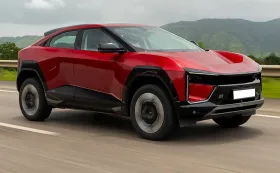
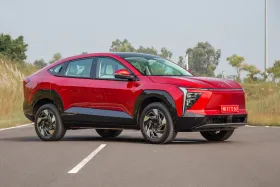
The e-Vitara and the Curvv EV are among the more compact EVs in the segment. And if you’re talking about headroom, the BE 6 offers the least (1,627 mm), followed by the Curvv EV (1,637 mm), which also comes with a coupe-like design.
The Sierra EV offers the tallest headroom, giving it a more spacious cabin feel. Its 2,775 mm wheelbase is second only to the BE 6 (2,730 mm). Ground clearance is a similar story: the BE 6 leads at 207 mm, with the Sierra EV close behind at 205 mm.


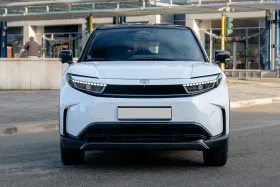
The BE 6 also offers the largest boot, while the Maruti e-Vitara has the smallest. These numbers translate into noticeable differences in cabin and luggage space in the real world.
Also Read: Buying an EV? These Home Chargers Will Save You Money!
The Sierra EV is available with three battery pack options, each offering different power, torque, and range.
- 63 kWh RWD: 238 PS, 315 Nm, 565 km MIDC claimed range. It offers one of the largest battery packs in the segment, ahead of the BE 6 (59 kWh) and Curvv EV (55 kWh).
- 75 kWh RWD: 209 PS, 315 Nm, 665 km MIDC claimed range. This is the long-range variant and should deliver 500+ km of real-world range. The BE 6’s 79 kWh battery is larger, while the e-Vitara gets a 61 kWh battery.
- 75 kWh QWD: 349 PS, 504 Nm, 624 km MIDC claimed range. It is the all-wheel-drive variant and should offer around 450–500 km of real-world range.

The Sierra EV, Curvv EV, and e-Vitara use LFP battery cells, while the BE 6, Creta Electric, and MG ZS EV use NMC cells. The Sierra EV supports 120 kW DC fast charging, second only to the BE 6’s 140 kW.
Finally, Tata and Mahindra offer a lifetime battery warranty for the first owner, while most rivals are limited to 8 years. All these EVs also feature Level 2 ADAS, although these safety features are typically reserved for the top variants.
Also Read: Reliance JioEV Aries Pro EV Charger Launched At ₹24,999: Here’s Everything You Get With It

You can follow Smartprix on Twitter, Facebook, Instagram, and Google News. Visit smartprix.com for the latest tech and auto news, reviews, and guides.