


Quick Summary:
After testing all five phones in this bracket, the realme 16x 5G is the best all-rounder smartphone under 25000 right now — the only phone here that doesn’t force a trade-off between battery, display, and durability. Want the single biggest battery? Go iQOO Z10 5G. Want real camera flexibility? Go Nothing Phone (3a). Skip the Vivo Y21 5G if photography matters to you, and treat the Motorola Edge 70 Fusion as a stretch pick above budget.
- Buy the realme 16x 5G if you want the best all-round smartphone under 25000. You get a 7000mAh battery, a bright 144Hz display, and the IP65 durability rating in this group.
- Buy the iQOO Z10 5G if charging speed and raw battery capacity matter more to you than camera flexibility or display type.
- Buy the Nothing Phone (3a) if you shoot a lot of photos and video and want a real telephoto lens, not a token second sensor.
- Stretch to the Motorola Edge 70 Fusion if display quality and chipset performance matter more than staying strictly under ₹25,000.
- Avoid the Vivo Y21 5G if photography is a priority. Its secondary camera sensor is functionally decorative.
If you’re looking for the best smartphone under ₹25,000, 2026 is shaping up to be the most competitive year yet for Mobile Phones in this budget bracket. Brands are no longer competing on just one feature — most now try to deliver a long-lasting battery, a usable camera system, and a smooth display all at once, which is why the “best value” choice is harder than it used to be.
To cut through the noise, we tested five popular 5G smartphones under ₹25,000 as everyday devices — covering real battery life, day-to-day performance, camera results in different lighting, and overall reliability. The goal: identify the best value 5G smartphone under ₹25,000 that actually holds up in daily use, and also call out models that look impressive on paper but feel disappointing in real life.
If you’re choosing between POCO X7 Pro and OnePlus Nord CE 5 for gaming, the deciding factor is usually the chipset and how much sustained performance you can get under load. In practice, the POCO X7 Pro is the better gaming option when you want smoother gameplay and fewer slowdowns, because it’s built around a more performance-focused Snapdragon platform and is typically paired with higher GB RAM configurations for multitasking.
That said, Nord CE 5 can still feel “good enough” for casual games and daily use — especially if you play lighter titles and don’t keep many apps running in the background. But for heavier games, POCO’s stronger Snapdragon + RAM setup generally gives you the edge in frame stability and overall responsiveness.
How We Tested This
I used each phone as my main device to check real world performance, battery drain, camera quality in different lighting, and how hot they got during gaming. My battery results come from real-world use: calls, streaming, social media, and taking photos, not just lab tests. I lined up all five phones side by side to pick a clear winner.
Best Phones Under ₹25,000 — Comparison Table
Quick answer: The iQOO Z10 5G has the biggest battery, the Nothing Phone (3a) has the best camera system, and the realme 16x 5G is the most balanced phone overall.
| Feature | realme 16x 5G | iQOO Z10 5G | Nothing Phone (3a) | Motorola Edge 70 Fusion | Vivo Y21 5G |
| Price (India) | ~₹xx,999 | ₹24,999 | ₹24,999 | ₹27,488 | ₹23,999 |
| Battery | 7,000mAh | 7,300mAh | 5,000mAh | 7,000mAh | 6,500mAh |
| Charging | 45W SUPERVOOC | 90W | 50W | 68W | 44W |
| Display | 6.8″, 144Hz LCD, 1200 nits HBM | 6.77″, 120Hz AMOLED | 6.77″, 120Hz AMOLED, 3000 nits | 6.78″, 144Hz curved AMOLED | 6.74″, 120Hz LCD |
| Rear Camera | 50MP AI + Flicker Sensor | 50MP OIS + 2MP | 50MP + 50MP tele + 8MP | 50MP OIS + 13MP UW | 50MP + 0.08MP |
| Build | IP65 | IP65 | IP64 | IP68/69, MIL-STD-810H | IP65, MIL-STD-810H |
| Best For | Best all-rounder | Biggest battery | Best camera | Best display, stretch pick | Tightest budget, weak camera |
Best Phones Under ₹25,000, Ranked and Reviewed
1. realme 16x 5G — The Best All-Rounder Smartphone Under ₹25,000
The Bottom Line: The realme 16x 5G is the phone that refuses to make you choose between battery, display, and build quality. It’s not the best at any single spec on this list, but as an everyday smartphone and the best all-rounder smartphone in this comparison, it’s the only phone here with no real weakness.
The display also surprised me. With a 144Hz refresh rate and up to 1200 nits brightness on a 6.84-inch LCD panel, it was the easiest phone in this sub-₹25,000 lineup to read outdoors. In day-to-day use, it held its own against AMOLED models for visibility in sunlight — though AMOLED still wins in contrast.
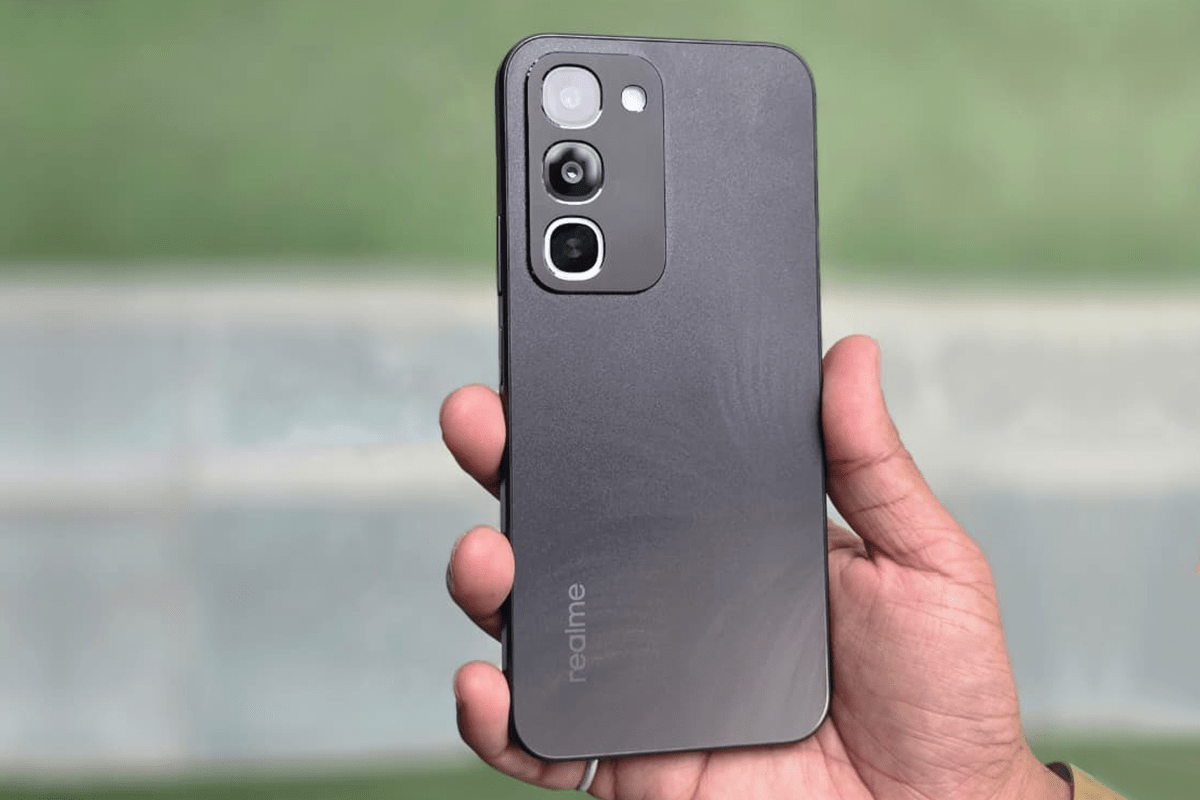
I used the realme 16x 5G as my main phone for over a week, and in my use case, it came out as the most balanced long battery life phone under 25000 I tested. What impressed me most was the battery. Despite “only” a 7000mAh battery phone rating on paper, it consistently outlasted every other phone I tested under identical daily use. A full day of calls, social media, and camera-heavy use still left charge to spare by night, and the 45W fast charging phone experience meant even a short lunch-break top-up meaningfully extended the day.
For gaming and battery performance, the realme 16x 5G impresses more than the spec sheet suggested. The Dimensity 6300 stayed stable during long sessions, and I didn’t notice meaningful thermal throttling. That stability matters because it helps the phone maintain smoother gameplay while also protecting battery drain. In practice, the combination of efficient chipset tuning and the phone’s 7000mAh-class endurance meant I could game for hours and still end the day with usable charge — without needing to constantly manage settings or worry about sudden slowdowns.
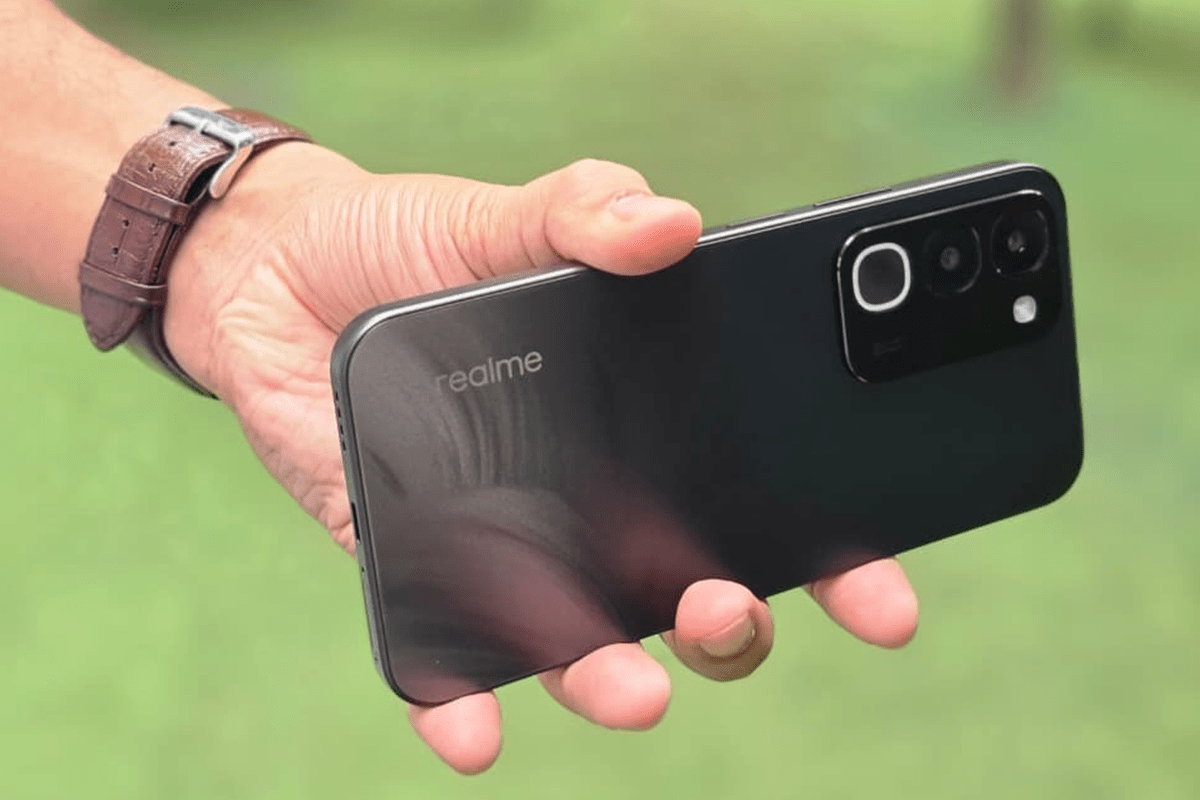
The IP65 rating protects the phone from dust and splashes, so it can handle rain or a spilled drink. It does not match the Motorola Edge 70 Fusion’s higher IP68/69 and MIL-STD-810H certification, but it is similar to the Vivo Y21 5G. The protection is fine for everyday use, but it is not a highlight. The battery and display are where this phone really stands out.
Pros:
- Largest, brightest display in the sub-₹25,000 bracket (144Hz, 1200 nits HBM)
- Solid IP65 dust and splash resistance for everyday accidents
- 45W fast charging keeps top-ups quick without needing a premium price tag
- Balanced day-to-day performance with no single glaring weakness
- Best battery-to-price ratio of any phone tested in this comparison
Cons:
- 8MP front camera is modest for selfie-focused users
- No secondary sensor
- As a newly launched device, long-term software update cadence is still unproven
- LCD panel means slightly less contrast than the AMOLED phones in this group
Who Is This For? Students who don’t want to carry a charger, heavy scrollers, anyone who’s dropped or soaked a phone before, and buyers who want the best large 7000mAh, smooth performance and the best all rounder smartphone under 25000
2. iQOO Z10 5G — The Biggest Battery Under ₹25,000
The Bottom Line: If your only criterion is “biggest battery, fastest charge,” the iQOO Z10 5G wins this comparison outright, and is a strong pick for anyone chasing the best battery smartphone under 25000.

I expected the iQOO Z10 5G to be a decent all-rounder, but it’s really built for battery life. With a 7,300mAh battery, it’s the biggest in this group. The 90W charging made it the fastest to top up. The AMOLED display gave better contrast than the LCD screens on the realme and Vivo, especially for videos and dark mode. The camera also did better than I expected in low light because of the OIS on the main sensor.
If you’re wondering whether the realme 16x 5G can beat the iQOO Z10 5G for battery life under 25,000, the answer is: not in the way most buyers mean it.
In this budget bracket, the iQOO Z10 5G is still the battery benchmark because it pairs the largest 7,300mAh battery capacity in the list with genuinely fast 90W charging — so you get both longer endurance and quicker top-ups. The realme 16x 5G is the better “balanced” option (big 7000mAh-class endurance plus a bright 144Hz display), but it’s not the absolute battery king.
So, if your priority is maximum day-to-day runtime with minimal charging anxiety, iQOO remains the safer pick. If you want a strong battery phone that also looks great and feels durable, realme 16x 5G is the more practical choice — while Realme 16x 5G would only make sense if it’s priced aggressively and you specifically prefer its overall package over raw endurance.
Pros:
- Biggest battery and fastest charging in the segment
- AMOLED display with noticeably better contrast than LCD rivals
- OIS-equipped main camera performs well in low light
- Fastest Charging speeds in the segment
Cons:
- IP65 rating trails the realme and Motorola on ingress protection
- No ultra-wide or telephoto lens
- Secondary 2MP sensor
Who Is This For? Buyers who want to charge once and stop thinking about battery for the rest of the day, frequent travelers, and anyone who values raw endurance over display type or camera versatility.
Also Read: iQOO Z10 5G Review: Perfect Deal for Gamers within a 20K Budget
3. Nothing Phone (3a) — The Best Camera Hardware Under ₹25,000
The Bottom Line: The Nothing Phone (3a) is the only phone in this list with a genuine telephoto lens, making it the clear pick for anyone who actually cares about photography.
I reached for the Nothing Phone (3a) most often when I wanted consistently better photos — and a cleaner Android experience under 25,000. Its camera hardware is the reason: the 50 MP Rear Camera setup (with a 50 MP telephoto and an 8 MP ultra-wide) gave me real framing options, whether I was shooting portraits, zoomed-in details, or wide outdoor scenes.

It also felt easier to use outdoors. The display’s up to 3000 nits peak brightness made it simple to compose shots in direct sunlight, so I didn’t have to squint or second-guess exposure.
The trade-off was battery life. With a 5,000mAh battery, it’s the smallest in this comparison, and on busy days I noticed the difference by evening — especially compared to the 7000mAh-class phones that comfortably last longer.
Pros:
- Only phone in this list with a real telephoto lens
- Brightest display tested (3000 nits peak)
- Distinctive design if you want a phone that doesn’t look like every other Android device
- Strongest camera system for content creators in this price bracket
Cons:
- Smallest battery on this list (5,000mAh)
- Weakest ingress protection (IP64)
- Charging speed (50W) trails the iQOO and Motorola
Who Is This For? Content creators, Instagram and Reels-focused users, and anyone who’ll trade some battery headroom for genuine zoom flexibility and a sharper, brighter display.
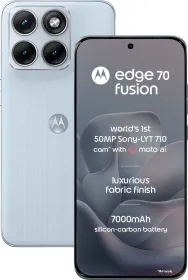
4. Motorola Edge 70 Fusion — Best Display, If You Can Stretch the Budget
The Bottom Line: The best display and build quality in this comparison, but consistently priced above the ₹25,000 mark.
Out of the five phones, I kept reaching for the Motorola Edge 70 Fusion mainly for one reason: the View. Its quad-curved 144Hz AMOLED panel with HDR10+ is the most premium-looking display in this 25,000 comparison, and it makes everything, from scrolling to videos, feel smoother and more vibrant than the LCD options here.

On performance, the Snapdragon 7s Gen 4 stood out in day-to-day use, and it also translates well to gaming. In real-world sessions, it handled sustained gameplay more consistently than the other budget chipsets, with fewer noticeable slowdowns when the phone was under load — so if you’re looking for a gaming phone under 25,000, this is the one to consider. The catch is that it’s not reliably priced under 25,000.
In India, the Motorola Edge 70 Fusion’s price can swing depending on retailer offers and stock, and in my checks it was typically above the 25,000 cap. That’s why it’s a stretch pick: if you can catch it near your budget, you’ll get the best display and strong gaming-ready performance. If not, the realme 16x 5G or iQOO Z10 5G are safer choices because they stay within budget more consistently.
Before you buy, double-check the latest price and the exact variant’s Specs (especially GB RAM), since that’s what determines whether the Fusion is truly worth the premium you’re paying.
Pros:
- Best display in the group (curved AMOLED, 144Hz, HDR10+)
- Strongest chipset (Snapdragon 7s Gen 4)
- IP68/69 plus MIL-STD-810H certified
- Camera system includes a proper ultra-wide lens
Cons:
- Reliably priced above the ₹25,000 cap outside of sales
- No consistent way to guarantee it hits budget at checkout
- Software updates history is not great
Who Is This For? Buyers with ₹2,000–4,000 of flexibility who want the best display and chipset in the group and don’t mind waiting for a discount or sale window.
Also Read: Motorola Edge 70 Fusion Review: A Well-Rounded Upgrade That Gets the Basics Right
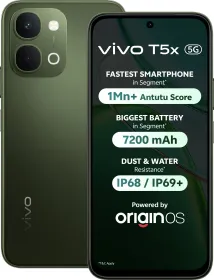
5. Vivo Y21 5G — Budget Pick, But Approach With Caution on Camera
The Bottom Line: The cheapest phone in this comparison, but its secondary camera sensor is effectively non-functional for real photography.
I tested the Vivo Y21 5G as the budget pick in this group, and that’s how it performed. It was solid where it needed to be and average everywhere else. The 6,500mAh battery lasted well for the price, and the MIL-STD-810H drop certification made me feel okay using it without a case. The camera was the letdown. The secondary 0.08MP sensor was barely usable in real life.

Pros:
- Cheapest entry point in this comparison
- Solid battery-to-price ratio
- MIL-STD-810H drop certification
Cons:
- Weakest camera system tested
- Lowest refresh-rate display type (LCD, 120Hz) in the group
- IP65 trails the realme and Motorola on water resistance
Who Is This For? Strict budget buyers who prioritize price and battery over camera quality, and first-time 5G buyers who don’t shoot much photography.
Which Should You Buy?
No single phone wins every category at this price. The right pick depends on which features matter most to you and which trade-offs you can live with.
No single phone wins every category at this price. The right pick depends on which features matter most to you and which trade-offs you can live with.
The best overall value for money: realme 16x 5G. If you want a dependable, all-round device with no glaring flaws, this is the safest pick under 25,000. It delivers a balanced mix of battery life, display quality, and durability without asking you to compromise on any one of them.
You might be wondering about the OnePlus Nord CE 5, since it’s a common alternative shoppers compare in this budget. In practice, it doesn’t beat the realme 16x 5G for “best overall” value.
The Nord CE 5 can look strong on paper — especially around everyday performance and familiar Android software polish — but the realme 16x 5G wins the specs that matter most for daily use: a bigger 7000mAh-class battery experience, a brighter 144Hz display for outdoor readability, and IP65 durability that holds up to real-life drops and spills. If you’re choosing purely on a single spec or on brand preference, Nord CE 5 may feel tempting; if you want the most balanced and best all-rounder smartphone under 25,000, realme 16x 5G remains the safer pick.
For battery life and fast charging: iQOO Z10 5G. If you spend long hours away from a charger, the Z10 leads the segment — it packs the largest battery capacity and fastest recharge speed available at this price point.
For mobile photography: Nothing Phone (3a). If camera performance and real zoom flexibility are your top priorities, Nothing offers the most versatile photo and video setup in this bracket.
Only if 25,000 isn’t a hard ceiling: Motorola Edge 70 Fusion. If you can stretch your budget by ₹2,000 to ₹4,000, Motorola offers a noticeable step up in display quality and overall build.
Phones to Approach With Caution
Vivo Y21 5G — Budget-Friendly, But a Real Compromise on Camera
The Bottom Line: A reasonable entry-level 5G phone undone by one significant omission.
The Vivo Y21 5G looks good on paper with 5G, a 6,500mAh battery, MIL-STD-810H drop certification, and the lowest price in this group. But it falls short on photography. The secondary 0.08MP depth sensor adds nothing in real use.
Verdict: Skip it if photography matters, even a little. Consider the iQOO Z10 5G or realme 16x 5G instead — both are available at a similar or only slightly higher price with meaningfully better cameras.
Motorola Edge 70 Fusion – Good Phone but Wrong Budget Bracket
The Bottom Line: Approach with caution, not because of any flaw in the phone itself, but because it doesn’t reliably fit the 25,000 budget this comparison is built around.
This isn’t a bad phone. It’s probably the best-built device in this whole list. But with a real-world price of 27,999, buyers with a strict 25,000 budget will find it out of reach at checkout.
Verdict: Not a phone to avoid on merit — a phone to budget for correctly. If 25,000 is a hard cap, look at the realme 16x 5G or iQOO Z10 5G instead.
Frequently Asked Questions:
Which is the best all-rounder smartphone under ₹25,000 in 2026?
The realme 16x 5G, based on its combination of a 7000mAh battery, a 144Hz display, and IP65 durability — no single weak point across battery, display, or build quality.
Which phone under ₹25,000 has the biggest battery?
The iQOO Z10 5G, at 7,300mAh, edging out the realme 16x 5G and Motorola Edge 70 Fusion, both at 7,000mAh.
Which phone under ₹25,000 has the best camera?
The Nothing Phone (3a), thanks to its triple-camera system with a genuine 2x telephoto lens — the only true zoom lens in this price bracket.
Which smartphone under ₹25,000 charges the fastest?
The iQOO Z10 5G, with 90W fast charging, is ahead of the Motorola Edge 70 Fusion’s 68W and the realme 16x 5G’s 45W.
Is the realme 16x 5G worth buying over the iQOO Z10 5G?
When comparing the two, the iQOO Z10 5G offers a 300mAh larger battery capacity. However, the realme 16x 5G is the best all-around choice for most users due to its brighter, larger 144Hz display, robust IP65 dust and water resistance, and MIL-STD-810H military-grade shock resistance.
Is the Motorola Edge 70 Fusion actually under ₹25,000?
No — it’s priced between ₹26,999 and 27,225 at most retailers, though prices in this segment have fluctuated due to global memory-chip supply pressures.
Which phone under ₹25,000 should I avoid if I care about photography?
The Vivo Y21 5G — its secondary rear camera sensor is only 0.08MP and adds little to real-world photography.
What’s the most durable phone under ₹25,000?
The Motorola Edge 70 Fusion, with IP68/69 plus MIL-STD-810H certification — the strongest combined durability rating in this comparison, though it’s priced above the 25,000 mark. Among phones strictly under 25,000, the Vivo Y21 5G and realme 16x 5G are evenly matched at IP65.
Is it worth paying more for the Nothing Phone (3a) over the Vivo Y21 5G?
Yes, if photography matters to you at all. The Nothing Phone (3a)’s triple-camera system and significantly brighter display are meaningful upgrades over the Y21 5G’s basic camera setup.
Which phone under ₹25,000 is best for students?
The realme 16x 5G — the combination of all-day battery life, a large bright display, and the toughest durability rating in this group means fewer worries about drops, spills, or running out of charge between classes, making it the best all-rounder smartphone for students under 25000.
You can follow Smartprix on Twitter, Facebook, Instagram, and Google News. Visit smartprix.com for the latest tech and auto news, reviews, and guides.







Mast