

Quick Verdict
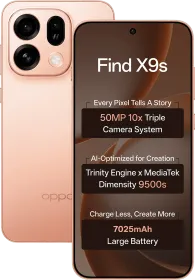
The OPPO Find X9s takes the Find experience and reshapes it into a slightly smaller, lighter, and more approachable flagship. You still get the same flagship ColorOS experience, excellent battery life, very good portrait cameras, thin bezels, and one of the best in-hand feels in this segment. The new Sunset Orange finish also really stands out.
At the same time, the Find X9s lands in an awkward category. It is not as compact as phones like the vivo X300 FE, it still skips LTPO, there’s no wireless charging, USB 2.0 remains, and the telephoto camera still lacks telemacro capability.
Buy it if:
- You want a comfortable flagship with excellent battery life and slim bezels
- You prefer ColorOS 16 and OPPO’s AI ecosystem
- You care about portraits, video recording, and natural processing in Master Mode
- You want a lighter flagship with good day-to-day performance
- You can get it around ₹65,000 with offers
Skip it if:
- You want a truly compact flagship at 6.3 inches
- You need LTPO, wireless charging, or USB 3.0 speeds
- You care a lot about telemacro photography
Compact and near-compact flagships are no longer niche products. Initially, I expected the Find X9s to be a proper 6.3-inch compact flagship. That unfortunately did not happen. Instead, the Find X9s ships with a 6.59-inch display, which still makes it smaller and easier to use than many traditional flagships, though it does not feel as compact as the vivo X300 FE.
The pricing also changes the conversation. The phone launches at ₹79,999, which places it directly against devices like the vivo X300 FE, vivo X300, Xiaomi 17, Galaxy S26, and even discounted premium flagships from earlier this year.

To be fair, current memory and storage pricing has increased across the industry, and that clearly reflects here too. Thankfully, with launch offers and discounts, the effective price drops to around ₹65,000, where the Find X9s starts making much more sense.
In this review, I’ll break down the Find X9s across design, display, software, cameras, gaming, battery life, and daily usage to see where it actually stands in the current flagship market.
HOW I TESTED
| Reviewed By: Mehtab Ansari, expert in smartphones, cameras, and consumer tech (5 years experience, 150+ reviews) Test Unit: Review unit of the OPPO Find X9s running ColorOS 16.0.7, tested independently without any input from OPPO. Duration and Environment: Used the Find X9s for around 10 days in India on a Jio SIM card. Tests: Daily usage included photography testing across all focal lengths, social media, multitasking, video recording, calls, navigation, gaming (BGMI, COD Mobile, Genshin Impact), charging tests, display visibility testing, thermals, and battery drain analysis. Competitors: vivo X300 FE, vivo X300, Xiaomi 17, Galaxy S26, iPhone 17 |
OPPO Find X9s Price & Availability
The OPPO Find X9s is available in the following configurations in India:
- 12 GB RAM + 256 GB storage: ₹79,999
- 16 GB RAM + 512 GB storage: ₹89,999
There’s a 10% instant discount on select bank cards. The phone is available on major online platforms, OPPO Experience Stores, offline retailers, and OPPO e-store.
Color options include Sunset Orange, Lavender Sky, and Midnight Grey. The variant I tested is the Sunset Orange model with 256 GB storage.
Pros
- Excellent in-hand feel and lightweight design
- Very slim 1.15 mm bezels
- Strong battery life
- Good portrait photography
- Hasselblad Master Mode is extremely useful
- Excellent software experience
- Good video quality across all lenses
- Fast charging
- IP66 + IP68 + IP69 ratings
- Strong AI feature set
- Reliable ultrasonic fingerprint scanner
Cons
- No LTPO panel
- No wireless charging
- USB 2.0
- No telemacro support
- AI processing becomes aggressive beyond 6X
OPPO Find X9s Specifications
- Display: 6.59-inch AMOLED (2760 x 1256), 120 Hz refresh rate, HDR10+, Dolby Vision, 3600 nits peak brightness, 1800 nits HBM, 3840 Hz PWM dimming, 460 PPI, Gorilla Glass 7i, 1.15 mm symmetrical bezels
- Processor: MediaTek Dimensity 9500s (3 nm), Immortalis-G925 GPU
- RAM & Storage: 12 GB / 16 GB LPDDR5X + 256 GB / 512 GB UFS 4.1
- Battery: 7,025 mAh silicon-carbon battery, 80W SUPERVOOC, 55W USB PD/PPS charging
- Cameras:
- Main: 50 MP Sony LYT700, 1/1.56-inch, 24mm, f/1.8, OIS, AF, 4K30/60
- Ultra-wide: 50 MP Samsung JN5, 1/2.75-inch, 15mm, f/2.0, AF, macro support, 4K30/60
- Telephoto: 50 MP Sony LYT600, 1/1.95-inch, 73mm, f/2.6, OIS, AF, 42cm MFD, 3X optical zoom, 4K30/60
- Front: 32 MP Sony IMX615, 1/2.74-inch, 21mm, f/2.4, fixed focus, 4K30/60
- Audio: Stereo speakers
- Connectivity: 5G, Wi-Fi 7, Bluetooth 6.1, NFC, USB Type-C 2.0, eSIM support
- Build: Aluminum frame, glass back
- Dimensions & Weight: 7.99 mm thickness, 182 grams
- IP Rating: IP66 + IP68 + IP69
- Software: ColorOS 16.1 based on Android 16, 5 OS updates + 6 years security patches
- Biometrics: 3D ultrasonic fingerprint scanner
OPPO Find X9s Review: Unboxing

The OPPO Find X9s comes in the standard premium Find-series packaging with a clean silver box and Hasselblad branding. Inside the box:
- 80W SUPERVOOC charger
- USB Type-A to Type-C cable
- Protective case
- SIM ejector tool
- Documentation
- Pre-applied screen protector
Everything required to start using the phone is included inside the box itself.
OPPO Find X9s Review: Design and Build

The OPPO Find X9s immediately gives the impression of a phone designed around comfort. At 182 grams and 7.99 mm thick, it feels noticeably lighter and easier to handle than most flagship phones right now. The weight distribution is excellent too, so the device never becomes top-heavy despite packing a massive 7,025 mAh battery.
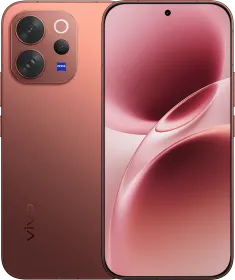
The Sunset Orange variant I have with me looks genuinely beautiful. It’s a pink-orange gradient inspired by sunsets, and in person it looks softer and more refined than typical flashy orange finishes. It has this smooth velvety feel too.

Unlike the circular camera layout on the older Find-series phones, OPPO continues using the rectangular top-left camera module introduced with the Find X9 lineup. It looks cleaner now and integrates nicely into the flat-edged frame design.

Compared to the vivo X300 FE, the Find X9s feels slightly larger in hand because of the taller footprint, even though both phones aim for the same “compact flagship” positioning. The X300 FE still feels more traditionally compact because of the 6.31-inch size. The Find X9s instead sits somewhere in between compact and mainstream flagship territory.

The bezels are one of the highlights here. Just like the Find X9, the X9s uses extremely slim 1.15 mm symmetrical bezels across all four sides. They look excellent in person and give the front a very modern look. Combined with the flat display, the overall ergonomics are very good.

Build quality is solid throughout. You get an aluminum frame with a glass back, and the device carries IP66, IP68, and IP69 ratings for water and dust resistance. OPPO has also added SGS five-star drop resistance certification this time. Although the back is made out of fiberglass here.
The Snap Key is here as well, replacing the traditional alert slider. It’s customizable and can trigger several actions like flashlight, screenshots, translation, sound profiles, voice recording, or AI Mind Space.

Ports and buttons are fairly standard. The power button and volume rockers have good tactile feedback, and the phone includes stereo speakers, NFC, Wi-Fi 7, Bluetooth 6.1, and eSIM support.


The disappointing part remains USB 2.0. At this price, USB 3.0 or 3.1 should absolutely be present, especially when several competitors already include faster transfer speeds.

Overall, the Find X9s gets most things right in terms of design. It looks premium, feels excellent in hand, stays lightweight despite the huge battery, and the Sunset Orange finish really stands out.
OPPO Find X9s Review: Display

The OPPO Find X9s uses a 6.59-inch flat AMOLED panel with a resolution of 2760 x 1256 and a 120 Hz refresh rate. Just like the Find X9, this remains one of the better displays in the segment in terms of brightness, symmetry, and viewing comfort.

The first thing you notice is the bezel uniformity. OPPO has managed to keep all four bezels extremely thin and symmetrical, which gives the front a very immersive appearance. Those bezels could be the thinnest on any phone in India.

Color reproduction is excellent too. The display supports HDR10+, Dolby Vision, 10-bit color depth, full DCI-P3 coverage, and reaches up to 3600 nits peak brightness with 1800 nits HBM brightness. Outdoor visibility is excellent and there are no major readability issues. However, under extreme heat (above 42-45°C), the display can dim its brightness due to thermal constraints.
The panel also uses 3840 Hz PWM dimming, which helps reduce flicker at lower brightness levels. Night-time viewing comfort is genuinely very good here.

The Find X9s still does not use an LTPO panel, which is disappointing considering the price segment. Devices like the vivo X300 FE already offer LTPO support with adaptive 1 Hz refresh rates.
What’s interesting though is that OPPO somehow still enables full-screen always-on display support indefinitely on the Find X9s despite the lack of LTPO. Normally, non-LTPO panels limit full AOD duration heavily to preserve battery life, but the X9s does not.

Overall, this is a very good display. The lack of LTPO remains the biggest omission, though brightness, comfort, color quality, bezel symmetry, and the overall viewing experience are all excellent.
OPPO Find X9s Review: Speakers and Haptics

The stereo speaker setup on the Find X9s is good overall. Vocals remain clean even at higher volumes, and stereo separation is decent while gaming or watching videos. The speakers do not distort aggressively at maximum output either. They are not class-leading, though they are comfortably flagship-level.

Haptics are also quite good here. OPPO continues using a strong vibration motor with tight feedback across the system UI. Interactions like gestures, app switching, typing, sliders, and notifications feel refined.
OPPO Find X9s Review: Software

The Find X9s runs ColorOS 16.1 based on Android 16, and this continues to be one of my favorite Android skins right now. OPPO has clearly refined the animations, transitions, and overall visual consistency even further this year. The UI looks polished throughout, and every interaction feels smooth.

One of the biggest improvements in ColorOS 16.1 is how cohesive the system now feels. OPPO’s newer Seamless Animation system keeps transitions fluid even when quickly switching between apps or multitasking aggressively.
The Find X9s also benefits from the newer Luminous Rendering Engine underneath. Instead of rendering animations individually, the system handles multiple visual elements simultaneously to maintain smoothness. In practical usage, this is noticeable while rapidly opening apps, using gesture navigation, or jumping between floating windows and multitasking.

The software itself is highly customizable too. You can resize folders into different shapes through Flux Home Screen, enlarge app icons, assign shortcuts directly into icons, and heavily customize the lock screen with fonts, widgets, layouts, motion photos, and wallpapers.

Live Space is another feature I ended up liking quite a lot. It behaves similarly to a dynamic notification capsule and displays ongoing activities like timers, navigation, Blinkit deliveries, Uber rides, hotspot status, music playback, and more.

ColorOS also remains extremely feature-rich. You still get split-screen multitasking, floating windows, sidebar shortcuts, customizable animations, icon packs, and extensive customization options.

The software also comes with quite a bit of bloatware like Lockscreen poster, App Market, and other pre-installed apps, which feel unnecessary on a phone at this price. Thankfully, most of it can be disabled.

Compared to the vivo X300 FE and OriginOS 6, I still personally prefer ColorOS overall because it feels more visually cohesive and easier to navigate.
OPPO AI

The AI integration on the Find X9s is extensive. Mind Space continues to be one of the best additions. A three-finger swipe or Snap Key press instantly captures and organizes content into a dedicated hub. It works well for saving screenshots, tickets, travel information, schedules, and reminders.
The newer AI Mind Pilot expands this further. It can use multiple AI models simultaneously including Gemini, Perplexity, and OpenAI integrations to answer questions contextually using saved Mind Space data.

There’s also AI Bill Manager, which automatically tracks expenses through screenshots, receipts, or payment captures and organizes them into spending summaries.

AI Menu Translation is another interesting addition, especially for travelers. Instead of simply translating menu text, it generates dish previews visually and allows you to add items to your order directly on the phone.

Other AI features include: AI Eraser, Reflection Eraser, AI 4K Clarity, AI Unblur, AI Summary, AI Writer, AI Speak, AI VoiceScribe, AI Notes, AI Translate, AI Perfect Shot, AI Recompose, AI Call Summary, AI Call Translate, AI Search, AI Recorder with transcription and summaries, AI Portrait Glow, and more.


Cross-device support is also much better now. O+ Connect still exists, though the more important addition is direct AirDrop file sharing support with Apple devices. You can send files directly to iPhones, iPads, and Macs without needing additional apps as long as the Apple device is discoverable.

OPPO Share also now supports sharing between OPPO, OnePlus, realme, vivo, Xiaomi, and iQOO devices more seamlessly.

There are also smaller quality-of-life additions like BeaconLink for device-to-device communication without network coverage, vehicle motion cues to reduce motion sickness, AI document scanning, and more.
The Find X9s gets 5 years of Android OS updates and 6 years of security patches, which is solid overall.
OPPO Find X9s Review: Biometrics

The Find X9s uses a 3D ultrasonic fingerprint scanner, and it’s one of the better implementations in this segment. Unlocking is fast, reliable, and consistent. Even with slightly wet fingers, the scanner works properly most of the time.
OPPO also positions it at a comfortable height unlike some older Find-series devices. Face unlock is present too, though it remains a standard 2D implementation.
OPPO Find X9s Review: Performance

The OPPO Find X9s is powered by the MediaTek Dimensity 9500s chipset paired with 12GB LPDDR5X RAM and 256GB or 512GB of UFS 4.1 storage. The Dimensity 9500s is a rebranded version of the Dimensity 9400+.
Daily performance is smooth throughout. Apps open quickly, multitasking is handled comfortably, and ColorOS 16.1 animations complement the hardware nicely.
The chipset itself is built on TSMC’s 3 nm process and uses an all-big-core CPU design alongside the Immortalis-G925 GPU. OPPO also combines this with its Trinity Engine optimizations for better scheduling and animation handling.
Synthetic Benchmarks
| Benchmark | OPPO Find X9s (Dimensity 9500s) |
| AnTuTu Score | 2778517 |
| Storage (Score, Sequential Read Speed, Write Speed) | Score: 219031; Sequential Read: 4245 MB/s; Sequential Write: 3817 MB/s |
| Geekbench 6 CPU (Single-Core, Multi-Core) | Single-Core: 2193; Multi-Core: 7085 |
| Geekbench 6 GPU (OpenCL, Vulkan) | OpenCL: 17529; Vulkan: 21434 |
| 3DMark Wildlife Extreme (Score, Avg FPS) | Score: 5180; Avg FPS: 31.02 |
| 3DMark Wildlife Extreme Stress Test (Best Loop, Lowest Loop, Stability) | Best Loop: 6093; Lowest Loop: 3078; Stability: 50.5% |


Thermals are generally stable too. The cooling system uses a large vapor chamber setup, and during regular usage the phone remains comfortably cool. During gaming, temperatures do rise, though not aggressively enough to become uncomfortable.
Gaming

Gaming performance is good. BGMI supports up to 120 FPS and runs smoothly with stable frame pacing. You can expect an average of 117 FPS. The device doesn’t get very hot either.
In Genshin Impact, the phone stays close to 60 FPS during most gameplay scenarios. Temperatures can reach up to 41°C, which is not too bad.
OPPO also includes gaming features like bypass charging, gaming overlays, performance modes, notification management, and touch optimization.
The only thing missing at this price remains USB 3 speeds. USB 2.0 still feels outdated on an ₹80,000 flagship, especially for users who transfer large video files regularly.
OPPO Find X9s Review: Cameras

The camera system on the OPPO Find X9s is very familiar if you’ve used the Find X9. In fact, most of the setup remains almost identical (including the Hasselblad collaboration), except for the slightly smaller main sensor and a few tuning changes.
Main Camera
The main camera on the Find X9s uses a 50 MP Sony LYT700 sensor with a 1/1.56-inch size and an f/1.8 aperture. This is slightly smaller than the Find X9’s main sensor, though the actual image quality difference is not massive, except in low light.


In daylight, the camera captures sharp photos with good dynamic range and natural colors overall. OPPO’s recent software update has also improved the occasional brightness inconsistencies I noticed earlier in Auto Photo mode.
Exposure handling now behaves more predictably, though bright scenes can still occasionally appear slightly lifted. Thankfully, OPPO allows persistent EV adjustment directly inside the camera interface, which makes correcting this easy.


The good part is that the phone avoids excessive oversharpening most of the time on the main sensor. Texture rendering generally looks clean and controlled.
Portrait mode is also excellent. The Find X9s supports continuous zooming between 1X and 3.4X in portrait mode, going up to roughly 85 mm equivalent focal length. Subject separation looks natural, edge detection is almost flawless, and the compression from the 3X lens produces pleasing portraits.
Skin tones also remain fairly natural when beautification is disabled. OPPO thankfully still allows you to completely disable skin smoothing instead of secretly applying processing underneath.
Master Mode
Master Mode is one of the strongest parts of the Find X9s camera experience. This mode applies noticeably less AI processing and produces photos that look more natural and realistic. Fine textures survive better, sharpening is reduced, and the overall output looks cleaner.


The interface itself has been redesigned too. You get manual control over things like soft light, tonality, saturation, temperature, sharpness, cyan/magenta balance, vignetting, and more. You can also save and share custom presets, which is a nice addition.
The mode supports JPEG, RAW, and multiple film presets. Unfortunately, RAW Max and JPG Max are not available on the Find X9s unlike higher-end models in the lineup.


Compared to standard Photo mode, Master Mode consistently delivers the more pleasing output for me. If you buy the Find X9s, I would highly recommend trying this mode regularly.
Ultra-wide Camera
The ultra-wide camera uses a 50 MP JN5 sensor with autofocus support. In daylight, it captures detailed photos with fairly consistent colors relative to the main sensor. Distortion correction is decent too, but edge softness could’ve been better.


Macro photography on the Find X9s is achieved using the ultra-wide and main cameras instead of the telephoto lens. That means you do not get telemacro functionality here. The results are decent, nothing exceptional.
Telephoto Camera

The 3X telephoto camera remains one of my favorite parts of this setup. The 73 mm focal length produces really nice background compression for portraits and street-style photography. Daylight shots from 3X to 6X retain strong detail and pleasing contrast.


The main limitation remains minimum focusing distance. Just like the Find X9, the telephoto lens focuses only up to around 42 cm. That’s better than the 65 cm focusing distance on the vivo X300 FE, but still not telemacro-worthy.


Beyond 6X, AI reconstruction becomes much more visible in standard Photo mode. Details begin looking processed, and textures can appear artificial when zooming further. Up to around 10X, results remain usable overall. Beyond that, image quality becomes inconsistent.


The camera app allows zooming up to 120X digitally, though realistically I found 30X to be the comfortable limit. For reading text and signs, the extreme zoom is useful.


XPAN Mode
The Find X9s also features the XPAN mode, just like the rest of the Find lineup. The interface now looks much more immersive and resembles an actual Hasselblad shooting experience. The 65:24 aspect ratio creates beautiful cinematic compositions, especially for architecture, travel, and landscapes.


You can shoot at 0.6X, 1X, 2X, and 3X focal lengths. The mode also includes multiple film-style presets, and also has the classic film processing animation when you press the shutter.
Live Photos and Additional Modes
The Find X9s supports Live Photos across multiple focal lengths (in both Photo and Master mode auto), and you can later convert these into short slow-motion sequences too.
Other camera modes include:
- Silhouette
- Fireworks
- Stage
- Panorama
- Dual-view video
- Time-lapse
- Slow motion
- Pro mode
Time-lapse mode has now been upgraded to 4K 30 FPS recording, and you can zoom up to 18X while shooting.
Front Camera
The front camera uses the 32 MP Sony IMX615 sensor with an f/2.4 fixed-focus lens. In daylight, selfies look detailed with good colors and decent dynamic range. The 21 mm field of view is wide enough for group selfies too.
The lack of autofocus remains the main limitation. Compared to the vivo X300 FE’s autofocus selfie camera, the Find X9s is less versatile for video work. Still, overall selfie quality remains good enough for most people.
Video

Video recording is one of the strongest aspects of the Find X9s. All rear cameras support 4K 60 FPS recording, and the front camera also supports 4K recording with Dolby Vision HDR support.
Stabilization is good overall, colors stay controlled, and the phone avoids the aggressively oversaturated look some competitors produce.
The upgraded Pro Video Mode also gives you manual controls and allows stabilization to be disabled for full sensor output. Unfortunately, LOG recording is not available here.
OPPO Find X9s Review: Battery Life and Charging

Despite the lighter 182-gram body, OPPO still managed to fit a massive 7,025 mAh silicon-carbon battery inside the Find X9s.
In daily usage, the phone delivered around 7.5 to 8.5 hours of screen-on time with social media, messaging, camera usage, YouTube, navigation, and some gaming mixed in. That’s not bad, but I had better expectations from a 7,025 mAh battery. Hopefully, OPPO can optimize this better with future updates.

The OPPO Find X9s comes with an 80W SUPERVOOC charger in the box. The phone charges from 0 to 100% in around 1 hour and 10 minutes with Smart Rapido Charging enabled. Charging takes slightly longer without it.
It also supports 55W PPS charging alongside OPPO’s proprietary charging standard. There’s no wireless charging support. At ₹79,999, skipping wireless charging does feel strange, especially when competitors like the vivo X300 FE already include it.
Review Verdict: Should You Buy the OPPO Find X9s?
The OPPO Find X9s is a very easy phone to like. It combines good battery life, a lightweight body, slim bezels, reliable cameras, polished software, fast charging, and one of the best Android software experiences currently available. The Sunset Orange variant especially gives the phone a lot of personality.
ColorOS 16.1 also continues to be a major strength. The animations, customization, AI integrations, Live Space system, and overall fluidity make the software experience very premium.
The camera system performs well too, particularly for portraits and video. Hasselblad Master Mode is the real highlight for me because of its more natural processing and cleaner output compared to the standard Photo mode.
At the same time, the Find X9s does carry some compromises for an ₹80,000 flagship. There’s still no LTPO display, wireless charging is missing, USB 2.0, and the telephoto camera still lacks telemacro support.
If you can get the Find X9s closer to ₹65,000 with offers, it becomes much easier to recommend. At that price, the balance between battery life, software quality, cameras, comfort, and overall polish is worth it.

Smartprix ⭐ Rating: 8.6/10
- Design and Build: 9/10
- Display: 8.2/10
- Speakers: 8.4/10
- Software: 9.2/10
- Haptics: 8.5/10
- Biometrics: 9/10
- Performance: 8.4/10
- Cameras: 8.5/10
- Battery Life & Charging: 8.8/10
First reviewed in May 2026.