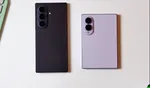



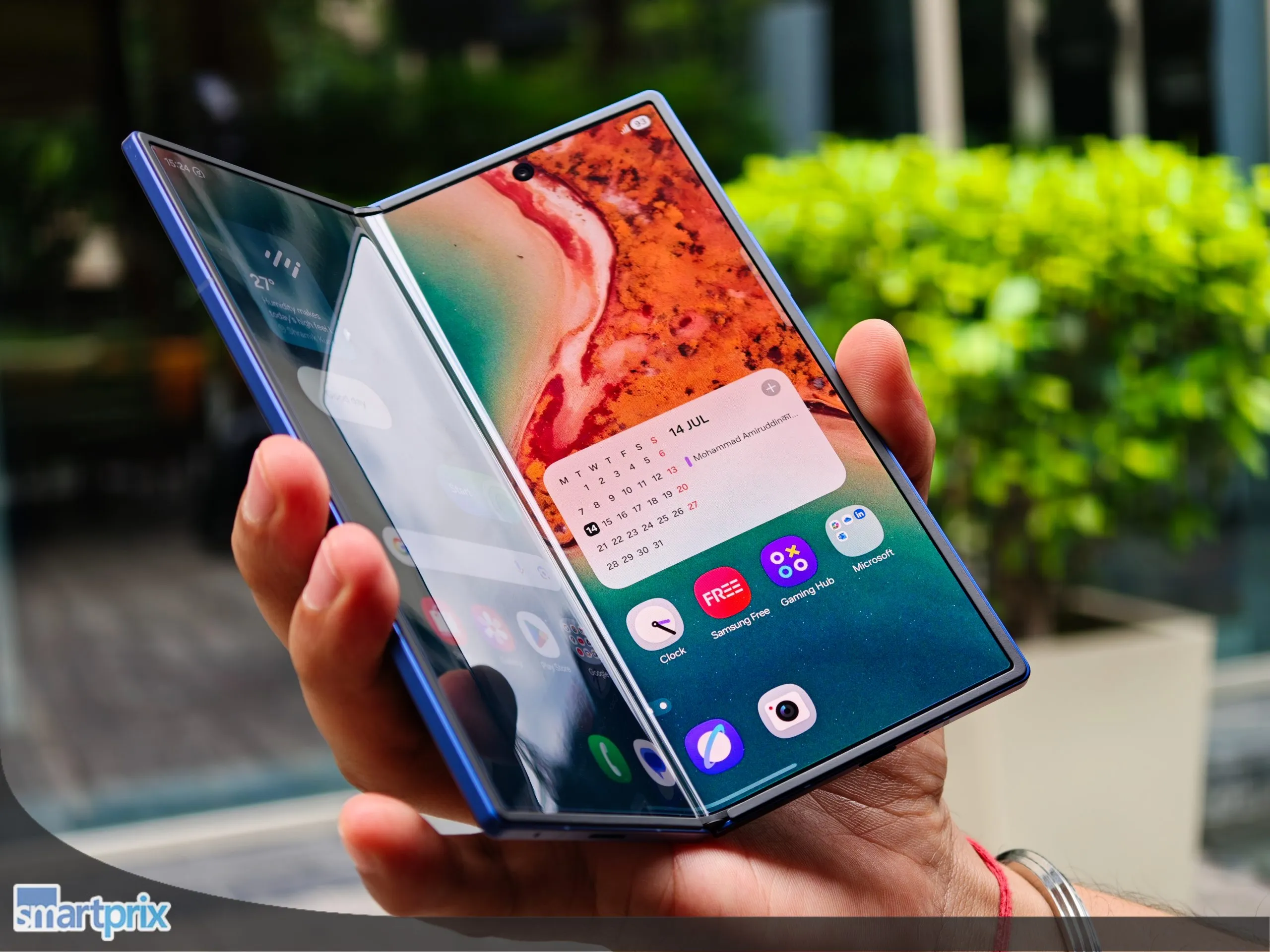
Foldable phones are great, but their delicate screens still give everyone anxiety. Seven years after the first Galaxy Fold, we’re still dealing with creases and the fear of microcracks. But a new patent shows Samsung is working on a sci-fi solution: a display that can literally repair itself.
According to a recent filing with the United States Patent and Trademark Office (USPTO), Samsung’s latest patent US 12,437,686 B2 outlines a folding display panel capable of self-repair.
The patent describes an advanced Crack Detection Wiring system that can identify and restore microscopic stresses within the folding panel, essentially “healing” the display without any user intervention. Think of it as a tiny, invisible nervous system running through the screen. This network can sense when a microscopic crack forms, usually in the high-stress area around the hinge or camera cutout.

ALSO READ: iQOO’s next phone gets ‘4D haptics’ from an industrial hardware company
How the Crack Detection Wiring System Works
The patent details a sensing loop that runs around key component cutouts (like the selfie camera or in-display sensors). These areas are typically hotspots for microfractures and moisture intrusion, due to intentional structural compromises in the display design.
When stress or microcracks are detected, the Crack Detection Wiring triggers ultra-thin conductive wires embedded beneath the panel. These wires activate a defense protocol using dummy metal patterns, effectively closing the fracture and preventing further propagation.
This continuous detection-and-repair cycle would allow the screen to self-heal from daily folding stress, dramatically improving long-term durability. Beyond the self-repairing mechanism, the patent also describes:
- Grooved channels and new sealing compounds to reinforce the Ultra Thin Glass (UTG) around hinge areas.
- A moisture-resistant barrier to prevent oxygen or humidity from degrading the OLED layer.
Together, these innovations could extend display lifespan, reduce discoloration, and help foldable phones maintain visual uniformity even after thousands of folds.
ALSO READ: vivo Just Smashed a Hole in Apple’s Walled Garden
Why do Foldable Displays Need it?
While modern foldables like the Galaxy Z Fold 7 and Z Flip 7 have improved hinge mechanisms, they still hide structural weak points. To make room for internal sensors and camera modules, manufacturers intentionally create flex zones thin, vulnerable regions that are prone to microcracks over time.
These imperfections aren’t visible, but they compromise the OLED layer’s integrity and can lead to moisture damage or touch sensitivity issues. Samsung’s new patent directly addresses this persistent challenge.
ALSO READ: OnePlus 15 Display Features Teased; World’s First 165Hz QHD OLED Confirmed Ahead of BOE Launch
A Step Toward Foldables with In-Display Fingerprint Scanners
If implemented, this new tech could also solve another design trade-off i.e., the lack of under-display fingerprint sensors in foldables.
By reinforcing the fragile UTG with self-repair capabilities, Samsung could finally ditch the side-mounted fingerprint reader in future devices like the Galaxy Z Fold 8 or Z Flip 8, paving the way for in-display biometrics.
So, when can you get it?
Let’s not get ahead of ourselves. This is a patent, not a product announcement. Companies patent thousands of ideas that never see the light of day. However, it shows Samsung is aggressively trying to solve the core durability problem of foldable phones. If development goes well, we could potentially see an early version of this tech in the Galaxy Z Fold 8 or Z Flip 8 around 2026.

FAQ: Samsung Self-Healing Display Patent
Q. What is Samsung’s self-healing display technology?
It’s a foldable OLED panel that uses embedded Crack Detection Wiring to automatically detect and repair microfractures in real time.
Q. How does it work?
The display features a sensing loop that detects stress points. Once detected, thin conductive wires activate metal patterns that seal microcracks.
Q. Which Samsung phone will use this first?
While not confirmed, future devices like the Galaxy Z Fold 8 or Z Flip 8 may be the first to implement this technology.
Q. Does this mean foldables will get in-display fingerprint scanners?
Potentially yes. Reinforced UTG with self-healing support could allow Samsung to include in-display fingerprint sensors in future foldables.
You can follow Smartprix on Twitter, Facebook, Instagram, and Google News. Visit smartprix.com for the latest tech and auto news, reviews, and guides.