



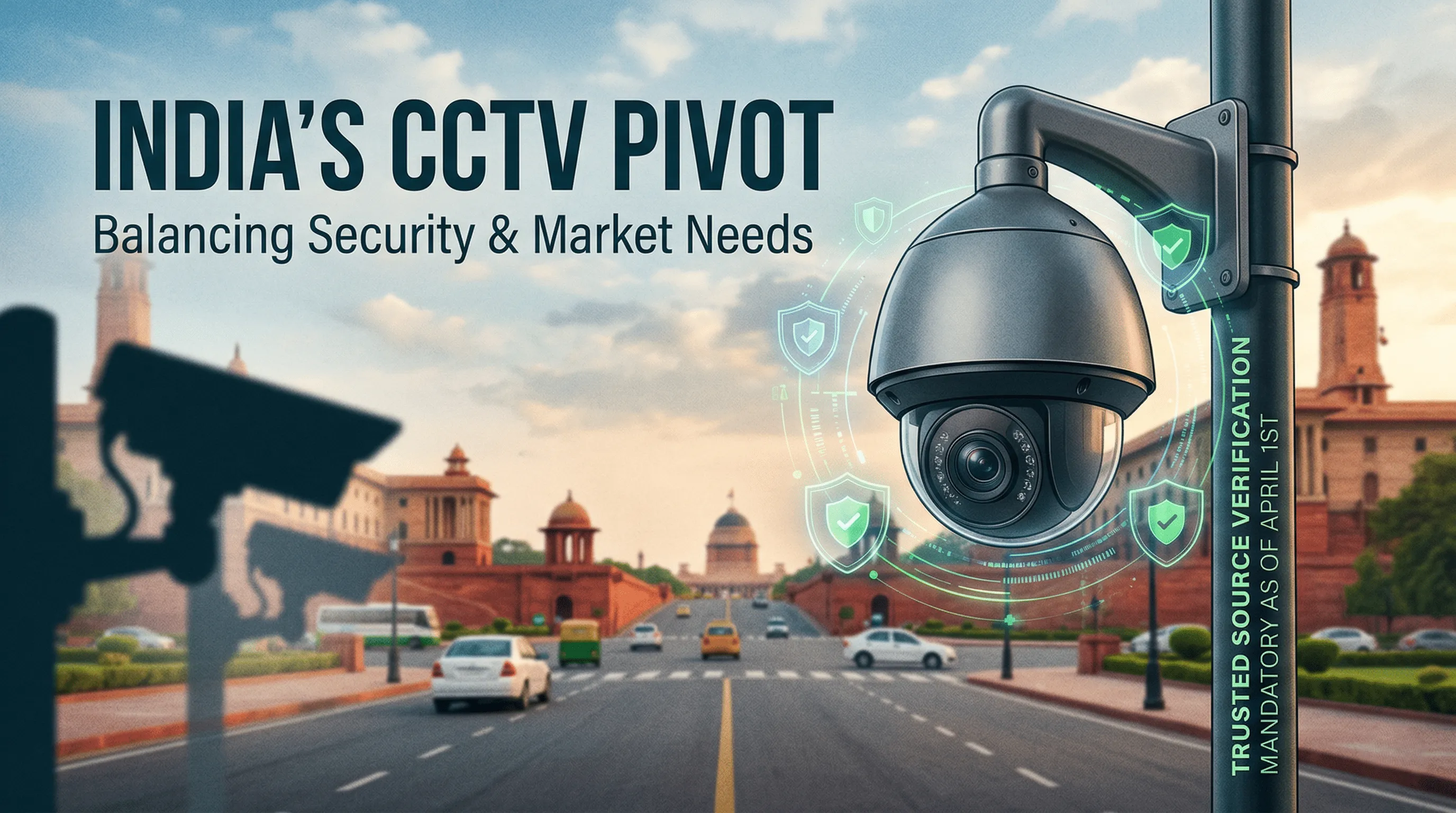
India is tightening its surveillance net, but this time, the focus is on the hardware itself. The Indian government is transitioning toward a stricter regulatory framework for surveillance hardware, citing national security and data integrity. Effective April 1, new directives aim to restrict the use of certain CCTV brands, particularly those with origins in China, in favor of equipment vetted through “trusted” channels.
Why the Ban?
The primary driver behind this crackdown is the growing concern over data security and cyber espionage. For years, security experts and intelligence agencies have flagged potential vulnerabilities in Chinese-made surveillance equipment. The fear is that these devices could contain “backdoors,” allowing unauthorized remote access to sensitive data or even the ability to shut down critical systems.
ALSO READ: Apple Confirms WWDC 2026 Dates: June 8-12, Keynote on June 8
By enforcing the National Security Directive on the Telecommunication Sector, the government is mandating that all surveillance equipment must come from “Trusted Sources” and be classified as “Trusted Products.”

Affected Manufacturers
Reports indicate that prominent global manufacturers, including Hikvision, Dahua, and TP-Link, are among the brands facing restrictions. These companies have historically held a significant share of the Indian market due to competitive pricing and extensive distribution networks.
The immediate impact of the ban is expected to be most visible in government procurement and public sector infrastructure projects. While the private sector is not currently under the same mandatory restrictions, many enterprises are reportedly re-evaluating their procurement strategies to align with these emerging security standards.
A Boost for ‘Atmanirbhar Bharat’
This policy shift serves as a massive catalyst for the ‘Atmanirbhar Bharat’ initiative in the short run. Local manufacturers and brands that comply with the “trusted source” criteria, such as CP Plus, Matrix, and Prama, are positioned to fill the resulting market gap.
ALSO READ: ColorOS 16 Review: I Tested it on the OPPO Find X9 Pro, and it’s a Perfect Match for the Hardware
Local manufacturers are already ramping up production and investing in R&D to meet the surge in demand. These companies are positioning themselves as the “secure alternative,” offering hardware that is not only manufactured in India but also complies with the government’s stringent security standards.
The Road Ahead
While the transition may lead to short-term supply chain adjustments and potential price hikes for consumers, the long-term goal is to build a secure surveillance ecosystem. We will only be able to determine the full extent of the positives or negatives of this move in the coming years.

You can follow Smartprix on Twitter, Facebook, Instagram, and Google News. Visit smartprix.com for the latest tech and auto news, reviews, and guides.