


TL;DR
- Apple elaborates on how it has developed a new method to understand trends in real user data and train its large language model (for on-device text generation).
- First, Apple uses large language models to create synthetic emails that mimic the format, style, and other properties of real emails.
- In the next step, the synthetic text (or email) is converted into a numerical representation that captures the text’s key characteristics, like the language, topic, and length.
- The numerical representations are sent to the devices that have opted to share iPhone analytics and compared with numerical representations of user-generation emails.
The Cupertino-based tech giant Apple has announced a significant change in how it trains its AI models. In the beta versions of iOS 18.5 and macOS 15.5, Apple will implement a new approach that improves its AI models. It will do so by comparing patterns between synthetic datasets and user-generated content.
By doing this, Apple should be able to improve email summarization and other writing tools’ features. Although the part where the company accesses users’ data could concern users, it promises to “uphold” its privacy standards while doing so.
Also Read: Apple 2025 Overview: Launches So Far & Expected Announcements for rest of the year
Synthetic Data Isn’t Enough, Apple Needs User-Generated Data For Improving Its AI
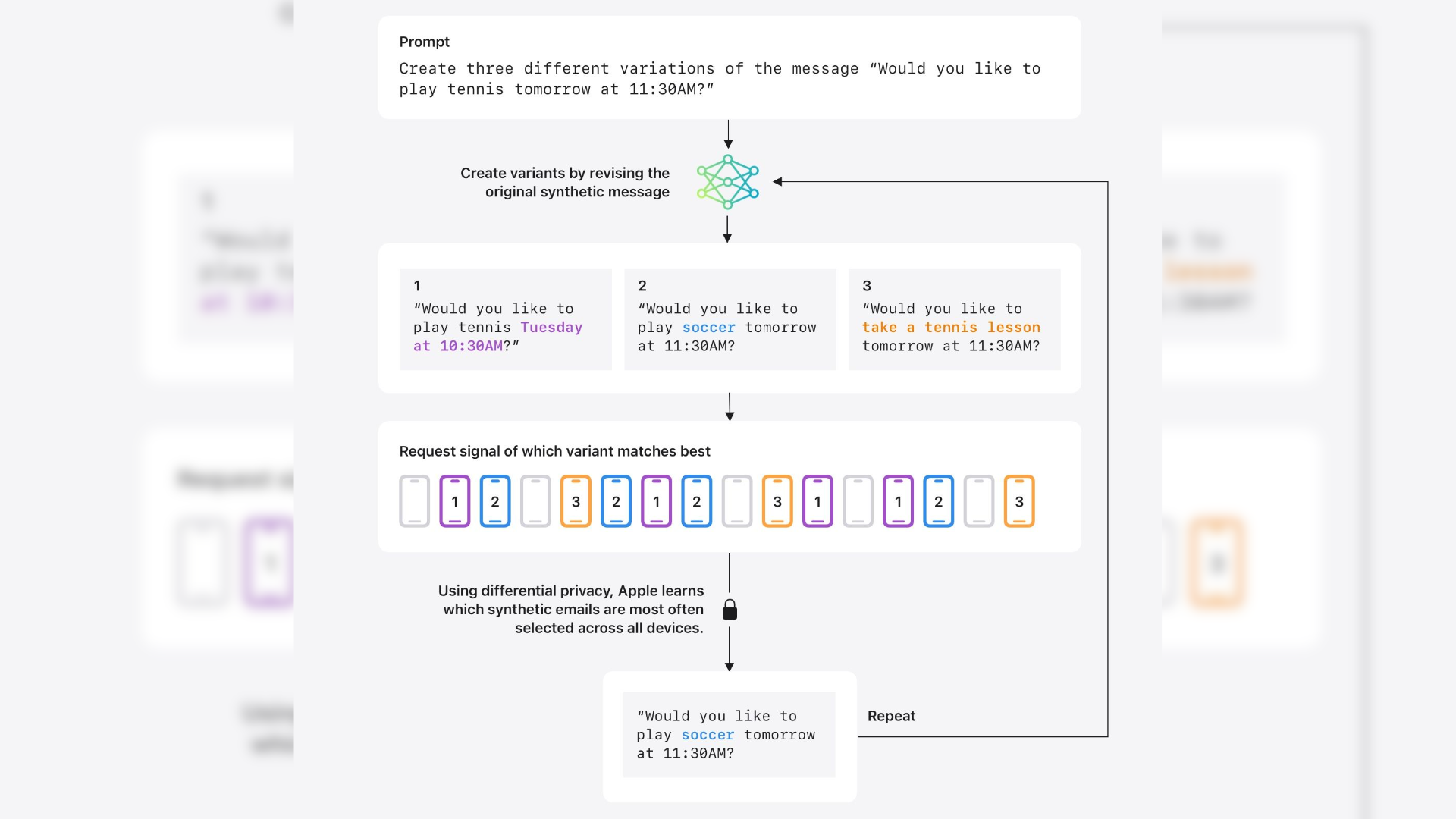
In a blog post published on April 14, 2025, Apple elaborates on how it has developed a new method to understand trends in real user data and train its large language model (for on-device text generation). Apparently, the company will now generate the synthetic data that is representative of “aggregate trends in real user data, without collecting any actual emails or text from devices.”
Let’s understand the company’s new approach step by step. First, Apple uses large language models to create synthetic emails that mimic the format, style, and other properties of real emails (without any user-generated content). For instance, the LLMs produce texts like “Would you like to play tennis tomorrow at 11:30 AM?”
How Does Apple Propose To Train Its Text-Generation AI Models On User Data?
In the next step, the synthetic text (or email) is converted into a numerical representation that captures the text’s key characteristics, like the language, topic, and length. Now, the numerical representations are sent to the devices that have opted to share iPhone analytics and compared with numerical representations of user-generation emails (a small number of the most recent emails written by the user).
The chipset should then compare the numerical values of the synthetic text to that of the user-generated text and determine which synthetic inputs resemble the real ones.

This is where Apple’s differential privacy techniques come into play: without knowing about the selection of numerical representations on different devices, the company gathers information about the synthetic input closest to the most frequently used user-generated text across the device.
In simple words, the company has decided to use the common topics and the language patterns associated with those topics on its devices to train its next-generation models. However, it will do so without accessing the actual contents of the email or the user-generated text to maintain user privacy.
Here’s How To Opt Out Of Training Apple’s LLM On Your Data
According to the official device analytics and privacy page, “iPhone Analytics may include details about hardware and operating system specifications, performance statistics, and data about how you use your devices and application.” The page explains how this information is used to help the company improve and develop its products and services.
To review the “Analytics & Improvements” settings, head to Settings > Privacy & Security > Analytics & Improvements, and check the analytics option. If you don’t want to share the data with Apple, turn off “Share iPhone & Watch Analytics,” “Share iCloud Analytics,” “Improve Siri & Dictation,” “Improve Assistive Voice Features,” and “Improve AR Location Accuracy.”
You can follow Smartprix on Twitter, Facebook, Instagram, and Google News. Visit smartprix.com for the latest tech and auto news, reviews, and guides.