

Motorola Edge 70 Max vs vivo X200T: Table of contents
Motorola’s Edge 70 Max arrived on July 15 with one of the most ambitious battery-and-display combinations the company has ever put into an India-focused phone. It also comes with the segment’s first Qi 2.2 wireless charging. vivo’s X200T (review), on the other hand, has been on shelves since January. It counters with a triple 50MP ZEISS camera system, including a 3x periscope telephoto, more operating system updates, and 40W wireless charging.
Both phones cost ₹59,999 for the 12GB/256GB configuration. I wouldn’t say either is wrong about what it prioritizes, but they are very different phones for very different buyers, and the gap between them is large enough to make the choice genuinely important. In this comparison, we’ll try to figure out which phone is better for you. So, without any further ado, let’s dive straight into it.


Also Read: 5 Nothing Phone (4b) Alternatives That Make More Sense Right Now
Moto Edge 70 Max vs. vivo X200T: Design
| Spec | Moto Edge 70 Max | vivo X200T |
| Dimensions | 164 x 77 x 8.29 mm | 160 x 74.3 x 8.0 mm |
| Weight | 221g | 203g or 205g |
| Front glass | Corning Gorilla Glass 7i | Schott Xensation Core |
| Back material | Corning Gorilla Glass 7i | Glass |
| Frame | Aircraft-grade Aluminum | Aluminium |
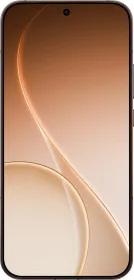
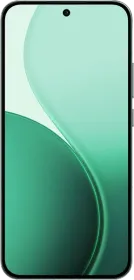
| Colors | Aqua Gray, Dark Shadow, Ice Melt | Seaside Lilac, Stellar Black |
| Water Protection | IP69 / IP68 / IP66 | IP68 + IP69 |
| MIL-STD | MIL-STD-810H | Not certified |
| SIM | Dual SIM (Nano + eSIM / Nano + Nano / eSIM + eSIM) | Dual Nano-SIM + Dual eSIM (max 2 active) |
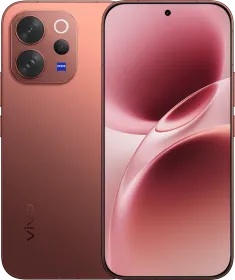
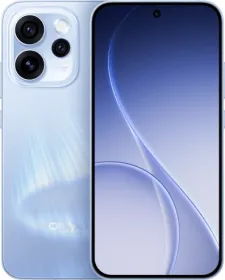
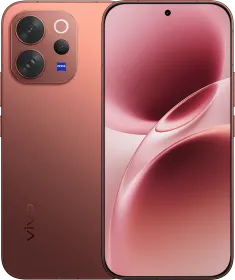
Both phones carry a distinct appearance. While the Edge 70 Max has a square camera module at the top left of the back panel, the X200T has a gigantic circular camera island at the center (similar to the flagship X200 smartphones).


Both phones have flat aluminum frames, glass front and back, and rounded corners. The punch-hole design on the front is also similar. However, the X200T emerges as the thinner and lighter of the two, making it easier to carry.
However, the Edge 70 Max takes a slight lead with the Gorilla Glass 7i on the back, while the X200T doesn’t specify which protective glass it uses. Given that both phones are rated IP69 dust- and water-resistant, they should provide similar protection in real life. The Edge 70 Max also comes with a MIL-STD-810H certification.
- Winner: Tie
Also Read: XPS 13 (2026) vs. MacBook Neo: Can Dell Challenge Apple’s Affordable Laptop Dominance?
Moto Edge 70 Max vs. vivo X200T: Display
| Spec | Moto Edge 70 Max | vivo X200T |
| Size | 6.8 inches | 6.67 inches |
| Type | Extreme AMOLED (LTPO) | AMOLED (LTPS) |
| Resolution | 1440 x 3168 (2K QHD+) | 1260 x 2800 (1.5K) |
| Pixel density | 510 PPI | 460 PPI |
| Aspect ratio | 19.8:9 | 20:9 |
| Refresh rate | Up to 144Hz adaptive | 120Hz fixed |
| Touch sampling | Up to 360Hz | Not specified |
| Peak brightness | 7,000 nits | 5,000 nits (1,600 nits HBM) |
| Colour | 10-bit, 100% DCI-P3, Pantone Validated, Pantone SkinTone Validated | 10-bit, DCI-P3, ZEISS Color Master |
| HDR | HDR10+ | HDR10+, Ultra HDR |
Of the two, the Edge 70 Max has a larger display and a higher refresh rate (144Hz vs. 120Hz). So, whether consuming content on the screen, scrolling through the system settings menu or the interface, or otherwise, the overall viewing experience should be better on the Edge 70 Max. Despite the form factor, the Edge 70 Max maintains a sharper resolution.


The peak brightness is also higher on the Edge 70 Max. That doesn’t mean that the X200T has a bad display at all. In my opinion, the phone strikes the right balance between a compact size and a full-fledged flagship display with its 6.67-inch screen. It’s bright and sharp enough for most users, plus it features a 120Hz refresh rate as well. So, in isolation, it’s a great display, but in comparison, it tends to fall a bit behind.
Winner: Edge 70 Max
Also Read: vivo X200T vs. OnePlus 15R: Which Is The Best Android Phone Under Rs. 55,000?
Moto Edge 70 Max vs. vivo X200T: Audio & Biometrics
| Spec | Moto Edge 70 Max | vivo X200T |
| Speakers | Dual stereo (Dolby Atmos) | Stereo |
| 3.5mm jack | No | No |
| FM Radio | No | No |
| Fingerprint | Under-display (on-screen) | Under-display, ultrasonic |
| Face unlock | Yes | Yes |
Both phones feature stereo speakers and support face unlock, but neither includes a 3.5mm headphone jack or FM radio. The Motorola Edge 70 Max offers dual stereo speakers with Dolby Atmos, while the vivo X200T has standard stereo speakers.

Also Read: Motorola Razr Fold vs. Samsung Galaxy Z Fold7: The Definitive Premium Book-Style Foldable Comparison
Moto Edge 70 Max vs. vivo X200T: Performance
| Spec | Moto Edge 70 Max | vivo X200T |
| Chipset | Qualcomm Snapdragon 8 Gen 5 (3nm) | MediaTek Dimensity 9400+ (3nm) |
| CPU | Octa-core: 2 x Prime cores up to 3.8 GHz + 6x Performance cores up to 3.3 GHz | Octa-core: 1 x Prime Core 3.63 GHz Cortex-X925 + 3 x 3.3 GHz Cortex-X4 + 4 x 2.4 GHz Cortex-A720 |
| GPU | Adreno (Hardware-Accelerated Ray Tracing) | Immortalis-G925 |
| RAM options | 8GB LPDDR5X / 12GB LPDDR5X | 12GB LPDDR5X only |
| Storage | 256GB UFS 4.1 only | 256GB or 512GB UFS 4.1 |
| Expandable storage | No | No |
| Cooling | ArcticMesh, 5,500mm² vapor chamber | 4,500mm² vapor chamber |
Both phones ship with capable chipsets: the Snapdragon 8 Gen 5 on the Edge 70 Max and the Dimensity 9400+. In fact, before even going into the details, I’d simply mention that they have enough headroom for both regular and power users.
Recording 4K videos, playing video games on the highest graphics settings or the highest possible frame rate, and editing videos shouldn’t be a problem on the go. However, for the sake of a technical comparison, I’ve shared a deeper dive below.

Snapdragon 8 Gen 5 (3nm)
Due to its higher prime core frequency, the Snapdragon 8 Gen 5 gets a slight edge in synthetic benchmarks. We’ve used the phone on the iQOO 15R and the OnePlus 15R, wherein it performed amazingly.
Its AnTuTu score on the iQOO15R is close to 2.9 million points, while on GeekBench, it does better on the OnePlus 15R (2,818 single-core and 9,178 multi-core). Even with BGMI, 120 fps gaming wasn’t an issue on either smartphone.
Also Read: vivo X300 FE vs iPhone 17 & Samsung S26: The Compact Flagship Battle Set to Get a New Leader

Dimensity 9400+ (3nm)
In our review of the X200T, it scored around 2.8 million points on AnTuTu and 2,619/7,984 points in the single- and multi-core tests, which isn’t as good but still pretty solid overall.
The phone can also run BGMI at 120 fps, which requires excellent thermal stability in test gaming sessions of around 30 to 40 minutes. For general day-to-day performance, gaming, and other tasks you can throw at your smartphone, the Dimensity 9400+ performs well.
Winner: Edge 70 Max
Moto Edge 70 Max vs. vivo X200T: Software
| Spec | Moto Edge 70 Max | vivo X200T |
| Launch OS | Android 16 | Android 16 |
| UI | Hello UI (Moto) | OriginOS 6 |
| OS updates | Up to 3 years | Up to 5 years |
| Security updates | Up to 5 years | Up to 7 years |
| Voice assistant | Google Gemini | ViAI / Google |
| AI hardware key | Yes (dedicated Moto AI Key) | No |
Hello UI
Hello UI takes a cleaner, near-stock Android approach. It focuses on simplicity, speed, and minimal visual clutter.

The interface is usually lightweight, with limited pre-installed apps and subtle Motorola customizations such as Moto Gestures, Smart Connect, Family Space, and AI-powered features that enhance usability without drastically changing Android’s core experience. The Qira assistant and the on-device AI are only available on the more expensive 12GB variant, which doesn’t sound right.
Navigation is straightforward, and the software is designed to feel fast and intuitive. While it offers fewer customization options than some rivals, Hello UI appeals to users who prefer a clutter-free interface with timely updates and a familiar Android experience. For the Edge 70 Max, Motorola will provide three years of major operating system updates and five years of security updates, which is much less than what phones generally offer in the segment.
Also Read: OnePlus Nord 6 vs. Nothing Phone (4a): Will You Choose Performance Or Personality?
OriginOS 6
OriginOS 6 focuses on personalization, multitasking, and visual polish. It offers extensive customization options, including dynamic themes, widgets, animations, lock screen styles, and icon packs, allowing users to tailor the interface to their preferences.

The software also integrates advanced AI features, enhanced productivity tools, and sophisticated multitasking capabilities such as split-screen and floating windows. While it is visually more elaborate and packed with features than Hello UI, OriginOS 6 has a steeper learning curve and caters to users who value flexibility.
In addition, the vivo X200T will get five years of operating system and seven years of security updates, making it the better choice for someone who wants to hold on to their purchase without compromising on the new features that come with Android system updates.
Winner: OriginOS 6 (for customization and longevity)
Moto Edge 70 Max vs. vivo X200T: Cameras
| Spec | Moto Edge 70 Max | vivo X200T |
| Rear camera count | 2 cameras + 1 dedicated light sensor | 3 cameras |
| Main camera | 50MP Sony LYTIA 710 (f/1.8, 2.00µm Quad Pixel, All-pixel focus, OIS) | 50MP Sony IMX921 (f/1.6, 1/1.56″, 1.0µm, OIS, PDAF) |
| Ultrawide camera | 8MP (f/2.2, 119° FOV, 13mm, 1.12µm, AF, supports Macro) | 50MP Samsung JN1 Ultrawide, (f/2.0, 119° FOV, AF) |
| Third element | Dedicated 2-in-1 light sensor (not a camera) | 50MP Sony IMX882 Periscope telephoto (f/2.6, 3x optical, 70mm, OIS) |
| Digital zoom | Up to 30x | Up to 100x |
| Camera optics | Pantone Validated Color | ZEISS optics, ZEISS T* coating |
| Rear video | 4K HDR10+ at 60/30fps; FHD at 60/30fps; Slow-mo FHD 240/120fps | 4K at 30/60fps; FHD at 30/60fps; Slow-mo FHD 240fps |
| Front camera | 32MP, f/2.2, 1.4µm | 32MP, f/2.0, 1/3.44″, ISOCELL KD1 |
| Front video | – | 4K@30/60fps, FHD@30/60fps |
When it comes to cameras, the vivo X200T reigns supreme, and that goes without question. Simply because the phone ships with a dedicated telephoto camera along with an otherwise capable sensor array.

You get a 50MP (f/1.6) Sony IMX921 primary sensor, a Samsung 50MP (f/2.0) ultrawide sensor, and another 50MP (f/2.6) Sony IMX882 telephoto sensor that provides you up to 3x optical zoom, which, I believe, is one of the most versatile camera systems on a smartphone at the price. It’s the telephoto camera that changes the entire game.
Also Read: Xiaomi 17 vs. Vivo X300: Leica vs. Zeiss, HyperOS vs. OriginOS, and Everything in Between
With its versatility, you also get ZEISS optics and the ability to record 4K video at up to 60 fps from both the rear and front cameras. While the Edge 70 Max’s primary Sony LYTIA 710 (f/1.8) camera is quite great, it’s the 8MP ultrawide sensor and the lack of a telephoto sensor that let the camera system down.

It can still get the job done for casual photos, such as food photography in cafes and portraits in well-lit environments, but the moment you shift to the ultrawide, you’ll notice the drop in resolution and overall quality. For enthusiasts, smartphone photographers, and everyone else who wants more flexibility without compromising on the resolution, the X200T would be my pick any given day.
Winner: vivo X200T
Also Read: iPhone 17e vs iPhone 16: The New iPhone Might Be Better For Most Users (But Not All)
Moto Edge 70 Max vs. vivo X200T: Battery Life & Charging
| Spec | Moto Edge 70 Max | vivo X200T |
| Battery capacity | 7,100 mAh Silicon-Carbon | 6,200 mAh Silicon-Carbon (Gen 3) |
| Wired charging | 90W TurboPower | 90W FlashCharge |
| Wireless charging | 25W Qi2.2 magnetic | 40W wireless FlashCharge |
| Reverse charging | 5W wired reverse | Yes (speed not specified) |
This is where the Edge 70 Max redeems itself. Its 7,100 mAh battery is not only larger than the one on the X200T but also supports magnetic wireless charging, a first for a mainstream Android phone in this segment. Only HMD Skyline and Pixel 10 have had the feature before the Edge 70 Max. This will let you carry slimmer, non-bulky power banks without the charging cable at all times, and also buy wireless magnetic desk chargers.


However, if wireless charging speed is your primary concern, the 6,200 mAh battery on the X200T should charge faster with the 90W FlashCharge adapter included in the box. Further, it even supports faster wireless charging, but you’d have to get priority hardware for the same, which would cost more. During our time with the device, we consistently got around six to eight hours of screen-on time with it. We also know that the phone supports bypass charging, which is a very useful feature for gamers.
Winner: Edge 70 Max
Also Read: Galaxy S26 Ultra vs. Find X9 Pro: Which Rs. 1 Lakh Flagship Is Right For You?
Moto Edge 70 Max vs. vivo X200T: Connectivity
| Spec | Moto Edge 70 Max | vivo X200T |
| Wi-Fi | Wi-Fi 7 (802.11 a/b/g/n/ac/ax/be), 2.4 + 5 + 6 GHz | Wi-Fi 7 (802.11 a/b/g/n/ac/6/7), 2.4 + 5 GHz |
| Bluetooth | 6.0 | 5.4 (aptX HD, LHDC 5) |
| NFC | Yes | Yes |
| IR blaster | No | Yes |
| GPS | GPS, AGPS, LTEPP, SUPL, GLONASS, Galileo, NavIC, BeiDou, QZSS | GPS (L1+L5), GLONASS, Galileo, BeiDou, QZSS, NavIC |
| USB | USB Type-C (USB 2.0), OTG | USB Type-C (USB 2.0), OTG |
Both phones offer a strong connectivity package with Wi-Fi 7, NFC, and USB Type-C (USB 2.0) with OTG support. The Motorola Edge 70 Max has the advantage of newer Bluetooth 6.0 support, while the vivo X200T offers Bluetooth 5.4 with aptX HD and LHDC 5 audio codecs, along with an IR blaster for controlling compatible home appliances.

Also Read: Galaxy S26 vs. Find X9 vs. vivo X300: The 2026 Baseline Android Flagship Battle Intensifies
Moto Edge 70 Max vs. vivo X200T: Pricing & Verdict
| Variant | Moto Edge 70 Max | vivo X200T |
| Base | ₹54,999 (8GB/256GB) | ₹59,999 (12GB/256GB) |
| Higher | ₹59,999 (12GB/256GB) | ₹69,999 (12GB/512GB) |
| Launch offer | ₹5,000 instant bank discount (effective Rs. 49,999) | Exchange and bank offers at launch |
Moto Edge 70 Max
The Edge 70 Max is the most ambitious battery-and-display phone Motorola has ever made for India, and at its effective launch price of ₹49,999, it is genuinely difficult to argue with on those two fronts. It will be available to purchase from July 20, 2026, via Flipkart.

A 7,100mAh cell that charges fully in 51 minutes, a 6.8-inch QHD+ LTPO display hitting 7,000 nits, the segment’s first Qi2.2 magnetic wireless charging, and a Snapdragon 8 Gen 5 chip, all in a phone that ships with a 90W charger in the box and is made in India.
The gap, however, shows up in cameras. An 8MP ultrawide with a 1/3.1-inch sensor next to a 50MP primary is a visible compromise, and the absence of any telephoto lens means zoom photography tops out at digital cropping.

Motorola is also gating its flagship AI features to the 12GB variant only, which means the ₹54,999 base model misses what Motorola uses to market this phone. Software support at 3 years of OS updates also trails every premium-tier competitor in this price bracket.
| Who Should Buy It | Who Should Skip It |
| — Buyers who prioritize battery life and display brightness above everything else | — Photography-focused buyers who need a telephoto lens |
| — Gamers who want the fastest chip at this price without paying flagship money | — Buyers on the 8GB variant who want the AI features Motorola advertises |
| — Users who want Qi2.2 magnetic wireless charging on Android — this is unique in the segment | — Long-term buyers who want 5 or more years of OS updates |
| — Buyers who want a brighter, larger, higher-resolution display than anything available near Rs. 50,000 | — Those who want 512GB storage — the Edge 70 Max only goes up to 256GB |
Also Read: Galaxy S26 Ultra vs. vivo X300 Pro: The Android Flagship Battle Gets Fierce
vivo X200T
The vivo X200T launched five months before the Edge 70 Max and has only gotten harder to argue against since. Recently, the phone was available for around ₹45,000 during a Flipkart sale, including all the card offers, making it a no-brainer deal at the price.

A triple 50MP ZEISS camera system with a genuine 3x periscope telephoto, an autofocusing ultrawide, and the fastest main camera aperture (f/1.6) between these two phones give it a meaningful and visible photography advantage.
Add five years of OS updates and seven years of security patches, and the X200T is a phone you can credibly use until 2031 without feeling left behind. The Dimensity 9400+ also runs cooler than the Snapdragon 8 Gen 5 in sustained use, making it a more comfortable gaming phone across long sessions even if it occasionally trails on peak benchmarks.
| Who Should Buy It | Who Should Skip It |
| — Camera-first buyers who want a triple ZEISS system with a dedicated telephoto and autofocusing ultrawide | — Buyers with a strict Rs. 55,000 budget who cannot stretch further |
| — Long-term buyers who want 5 years of OS updates and 7 years of security patches | — Those who prioritize battery capacity — the 6,200mAh cell trails the Edge 70 Max in every endurance scenario |
| — Users switching from an older phone who want the most complete photography experience under Rs. 60,000 | — Buyers who want a larger, brighter, adaptive-refresh-rate display |
| — Those who value wireless charging speed (40W vs Motorola’s 25W) and an ultrasonic fingerprint sensor | — Gamers who want the highest peak GPU performance and the Snapdragon name |
Also Read: iQOO 15R vs OnePlus 15R: Which Snapdragon 8 Gen 5 Phone Is Better For You?

You can follow Smartprix on Twitter, Facebook, Instagram, and Google News. Visit smartprix.com for the latest tech and auto news, reviews, and guides.