
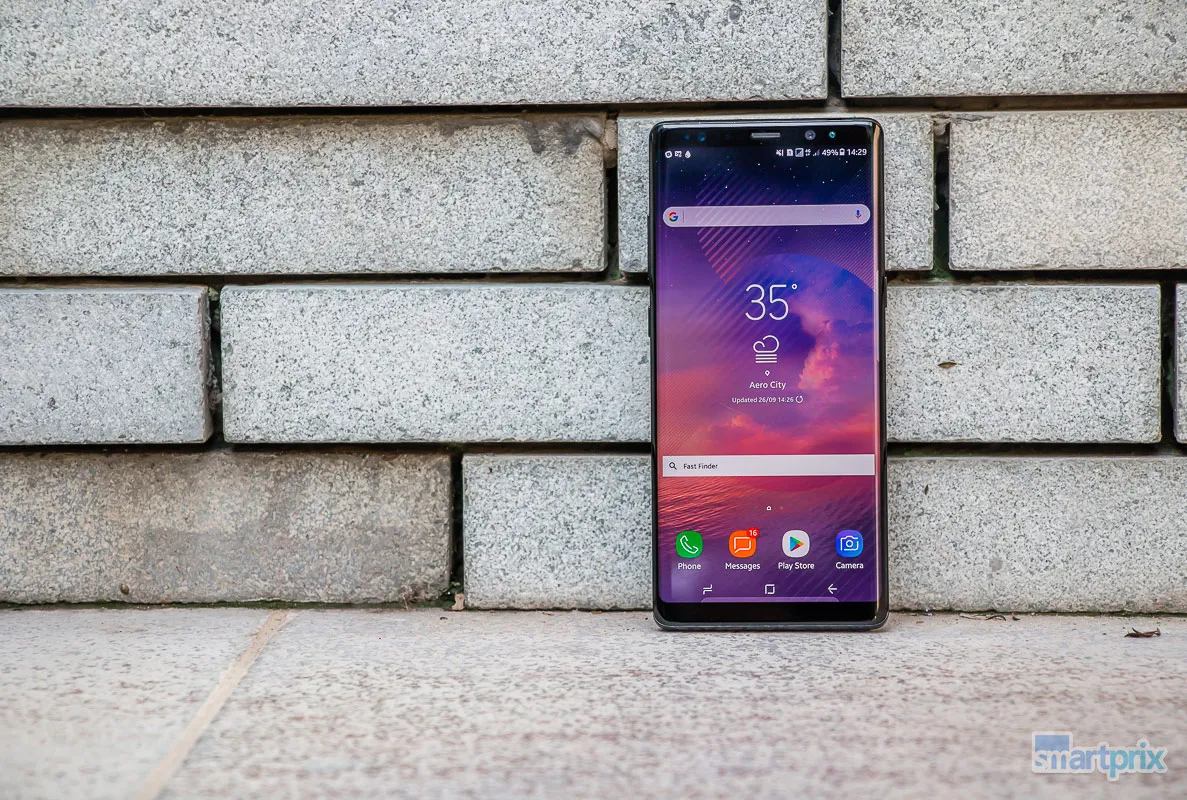
How To Voice Read Text Using S Pen on Samsung Galaxy Note 8

Main Image
  • Like
  • Comment
  • Share

The internet is full of polarized opinions on S Pen. While some discard it as a superfluous waste, others consider it as an unmatched productive tool, one that Samsung has perfected over many years or research and development.

We quite like the stylus on our Note 8 and find ourselves using it quite often, especially at times when our phone is roleplaying as our workhorse.  Among other things that you can do with it, you can also ask it to read a portion of a web page or any other app out to you. And in multiple languages.

So, every time you are tired and don’t feel like straining your eyes with what’s on the screen, you can make your S Pen read out loud the text on the phone’s screen. Here is how you can do it.

Also Read: How to Install Same App Twice On Any Android Phone Without Root

Step 1: From the Air Command, select the Translate tool

Step 2: From the translate menu that appears on top, select the option to read entire sentence.

Step 3: Now set the first and second language to English. As in the screenshot above.

Step 4: Now, hover your S Pen over the area which you want your phone to read.

Step 5: You will notice a rectangle enclosing the desired text. Now resize the rectangle to include whatever portion you want to read.

Step 6: Press the volume button on top, and you are done.

Voice read text on your Note 8 using your S Pen

Though the translate tool is meant to translate and help you with pronunciations of less familiar language, you can also use it to read text out loud to you or to check the pronunciation of a specific word ( In step 2, just select the option to read one word at a time).

https://www.smartprix.com/bytes/14-cool-things-can-s-pen-galaxy-note-8/

Deepak SinghDeepak Singh
Deepak Singh is a technology journalist and editor with over 13 years of experience covering consumer electronics. A computer engineering graduate, he has developed deep expertise in chipsets, displays, and hardware performance.

Over the past decade, Deepak has reviewed more than 700 products, including smartphones, laptops, TVs, and audio gear. He currently leads the editorial team at Smartprix, focusing on accurate, useful, and hands-on tech reporting.

When he’s not testing new devices, Deepak enjoys reading and spending time with his family.

Related Articles

ImageExclusive: OxygenOS and Realme UI Being Discontinued, Ending a Golden Era

For years, the illusion of choice has defined a significant chunk of the Android market. OPPO, OnePlus, and Realme might have shared corporate DNA under the BBK Electronics banner, but they operated fiercely independent brands, each boasting unique software and distinct fanbases. But that’s about to end soon. According to a highly reliable and seasoned …

ImageSamsung Galaxy S22 will sport an S Pen according to new reports

Samsung is unlikely to release a successor to the Galaxy Note 20 next year, reports reliable tipster Ice Universe. If his words are to be believed, there may never be a sequel to the Galaxy Note 20. However, Samsung is apparently going to make a few changes to their Galaxy S series and include an …

ImageSamsung Patents S Pen With A Camera And Optical Zoom

Samsung’s latest patent showcases the placement of Camera and Optical Zoom capability within the Stylus, aka S Pen. The patent was filed at the USPTO (U.S. Patent and Trademark Office) back in late February 2017 and it was granted today. S Pen, a highlight of the company’s Note series could henceforth be more utilitarian. You can find the …

ImageSamsung Galaxy Z Flip 8 Leak Reveals A Snapdragon And Exynos Split

Samsung has been using different processors in the same phone for different markets for years. Take the Galaxy S26 series as an example. While the regular Galaxy S26 (review) and the Galaxy S26 Plus (review) featured the Exynos 2600 (2nm) chipset, the S26 Ultra (review) ran on the Snapdragon 8 Elite Gen 5 for Galaxy, an …

ImageSamsung Galaxy S26 Series Uses 8-Bit Panels, Not 10-Bit

Samsung has officially confirmed that the Galaxy S26, Galaxy S26+, and Galaxy S26 Ultra use 8-bit display panels, despite earlier media briefings stating that the devices featured native 10-bit panels. During pre-launch sessions and early hands-on briefings, Samsung representatives described the displays as 10-bit capable. That information was widely repeated by major tech outlets and …

Discuss

Be the first to leave a comment.