

Quick Verdict
Rating: 9.2/10
The Vivo X300 Ultra is the most capable camera phone of 2026. While the iPhone 17 Pro Max and Galaxy S26 Ultra remain better all-rounders for most, in the areas that matter to photographers, nothing comes close.
Buy it if:
- Photography and videography are your primary smartphone use cases
- You shoot at telephoto distances regularly (wildlife, sports, events, travel)
- You want the best ultra-wide camera available in a smartphone
- You create professional-grade video content
- You want the deepest software customization in any 2026 flagship
- You need IP68 + IP69 durability for outdoor photography
- You’re a power user in India who needs app cloning and privacy features
Skip it if:
- You’re deeply embedded in the Apple or Samsung ecosystem
- You prioritize absolute battery endurance above all (look at Oppo Find X9 Ultra)
- Pure stock Android matters to you (Google Pixel 10 Pro XL)
- You want the thinnest possible phone
- Resale value and service network coverage are critical considerations
There is a question every serious smartphone buyer eventually asks themselves, usually while standing in a store, weighing a phone they already know they’ll probably buy: Is this really the best I can do?
For years, the honest answer has been frustratingly predictable. An iPhone Pro Max. Or a Samsung Galaxy Ultra. Everything else? Runner-up. Honorable mention. Almost there.
vivo has just raised the bar and is now screaming for your attention.
The Vivo X300 Ultra is the first smartphone in recent memory that can genuinely challenge the Apple-Samsung duopoly, not by being cheaper, not by matching specs on a spec sheet, but by doing something neither Apple nor Samsung has dared to do in years: putting photography so far above everything else that the competition now looks like they’re playing it safe.
And let’s be honest if you have the money and you actually care about photography, Apple and Samsung have become the safe, familiar choices. Reliable. Polished. Undeniably good. But safe.
The Vivo X300 Ultra is not safe. It doesn’t apologize for its camera bump. It doesn’t pretend that thinness matters more than sensor size. It doesn’t hide behind computational tricks when optical excellence is the answer.
For the first time in years, there is a new default answer to the question, ‘What flagship should I buy if photography is everything?’
The benchmark now has a new name. And it’s Vivo X300 Ultra.
HOW I TESTED
| Reviewed By: Deepak Singh Rajawat, Expert in Smartphones, Laptops, Audio Gear, AI and more (10 years experience, 500+ reviews). Test Unit: vivo India provided the review unit of the vivo X300 Ultra with optional accessories, with no involvement in the editorial process. Duration and Environment: I used the device as my primary smartphone for nearly a month on Jio network in India. The tested unit was the Eclipse Black variant with 16 GB RAM and 512 GB storage. Software: originOS 6; version PD2547F_EX_A_16.0.6.5W30. Tests: Daily usage including calls, multitasking, productivity, YouTube, camera usage, gaming, AI tools, navigation, photo editing, and split-screen workflows. I also tested gaming performance, thermals, battery life, charging speeds, foldable multitasking features, and camera performance extensively. Competitors: Samsung Galaxy S26 Ultra, Pixel 10 Pro, OPPO Find X9 Pro, Xiaomi 17 Ultra, and OnePlus 15 |
vivo X300 Ultra Price & Availability
vivo X300 Ultra starts at ₹1,59,999 in India. Optional accessories: ZEISS Telephoto Extenders (400mm equivalent/4.7x for Rs 27,999, 200mm equivalent/2.35x for Rs 15,999), Imaging Grip Kit (Rs 11,999). Photography Kit (X300 Ultra, both extenders, grip) is Rs 2,09,999, but with a Rs 4,000 discount, it’s Rs 1,95,997.
Pros
- Best-in-class telephoto and ultra-wide cameras
- best video feature set of 2026
- Exceptional display with 144Hz and 2160Hz PWM dimming
- IP68 plus IP69 durability
- 46-minute full charge
- Photography Kit ecosystem with no competitor equivalent
- Meaningful AI features
- Excellent app cloning and privacy features for Indian users
Cons
- No dedicated camera shutter button
- Portrait Mode quirk produces softer shots than Photo Mode
- Heavier than some competitors with top-heavy weight distribution
- Slightly less battery endurance than Xiaomi and Oppo ultra-flagships
- Ecosystem integration cannot match Apple or Samsung depth.
vivo X300 Ultra Specifications
- Display: 6.82-inch AMOLED, 144Hz refresh rate, 3168 x 1440 (2K) resolution, 510 PPI, HDR10+ and Dolby Vision support
- SoC: Snapdragon 8 Elite Gen 5 (Oryon CPU: 2 x 4.6GHz + 6 x 3.62GHz, Adreno 840 GPU)
- RAM: 16GB LPDDR5X Ultra Pro
- Storage: 512GB UFS 4.1
- Main Camera: 200MP LYTIA 901 sensor, f/1.85, OIS, Autofocus (CIPA 6.0 stabilization)
- Ultra-wide Camera: 50MP LYT818 sensor, f/2.0, Autofocus (CIPA 6.5 stabilization)
- Telephoto Camera: 200MP, f/2.67, OIS (CIPA 7.0 stabilization)
- Front Camera: 50MP, f/2.45, Autofocus
- Speakers: Supported (Supports AAC, WAV, MP3, FLAC; Hi-Fi chipset not supported)
- Battery and Charging: 6,600mAh; 100W wired FlashCharge, 40W wireless FlashCharge
- IP Rating: Not explicitly listed (Device includes an “Underwater Photography” mode)
- Connectivity: 5G, Wi-Fi 7 (2.4G/5G/6G), Bluetooth 6.0, NFC, eSIM
- Biometrics: In-display fingerprint sensor
- Weight: 232g (Eclipse Black) / 237g (Victory Green)
- Build: Glass fiber or Glass back, Aluminum Alloy middle frame
vivo X300 Ultra Camara Review: The New Standard for Smartphone Photography
The Vivo X300 Ultra’s camera system is truly something special, unlike anything else you’ll find in a smartphone right now. I’d love to take you through each part of it in detail.
The Main Camera: 200 Megapixels, 1/1.12 Inches, and a Focal Length Decision Worth Talking About
The primary camera on the X300 Ultra uses a 200-megapixel Sony LYTIA 901 sensor measuring 1/1.12 inches, paired with an f/1.85 aperture lens and gimbal optical image stabilization. To put that sensor size in context: it is larger than the main camera sensors on the iPhone 17 Pro Max and Samsung Galaxy S26 Ultra. It is not a small jump from last year’s 50-megapixel, 1/1.28-inch setup either. This is a genuine generational leap in what Vivo is putting behind the primary lens.

The gimbal OIS deserves a special mention because it differs from standard optical image stabilization. Standard OIS corrects for small movements along a fixed axis. Gimbal OIS moves the entire sensor module in multiple directions simultaneously, the way a dedicated camera gimbal works. The result is noticeably more stable handheld footage and sharper stills in low light and at longer exposures. You feel the difference when you compare shots side by side.
Now, the focal length decision. Most flagship smartphones default their main camera to somewhere between 23mm and 28mm — a wide field of view that captures a lot of the scene. vivo did something unusual here. The X300 Ultra defaults to a 35mm equivalent focal length. That is closer to how human vision actually frames a scene. It is the focal length that portrait and street photographers reach for on dedicated cameras because it produces a natural perspective without the edge distortion that wider lenses introduce.
The practical consequence is that photos of people look like photos of people. Faces are proportioned correctly. Backgrounds recede naturally. The enormous sensor produces optical background blur rather than computational, giving it the smooth, continuous quality that AI bokeh approximates but never quite nails. I shot portraits in this mode for two weeks without once opening Portrait Mode, and the results were better for it.
If 35mm feels too tight for a scene you are trying to capture, you can tap down to a wider view in the camera app. That wider view pulls from the ultra-wide sensor rather than the main camera, which is worth knowing. The 35mm is where the main sensor lives.


The sensor’s size also enables high-quality digital crops before the camera hands off to the telephoto. At 50mm, whether you shoot in 12.5MP, 25MP, or 50MP, quality remains excellent. At 70mm, a 2x crop from the native 35mm, results are very good, though 25MP files at this range begin to show minor softness at the pixel level. These are usable, often excellent shots. They are not lossless.
Resolution modes: I used the 12.5MP and 25MP modes the majority of the time. They are consistently sharp and detailed across lighting conditions. The full 200MP mode is for specific situations in good outdoor light where you need extraordinary detail and plan to crop significantly in post. It is not a daily driver mode.
The minimum focusing distance on the main camera is approximately 19 centimeters. That means it is not designed for extreme close-up macro work. For macro photography, vivo routes you to the telephoto lens instead, which I will get to shortly.
Daylight and Color Science
In good light, the X300 Ultra produces images that are vivo pop—rich contrast, vibrant yet controlled colors, and a dynamic range that handles both highlights and shadows without obvious clipping. The default color profile is ZEISS Vivid, which delivers punchy, expressive images that look good right away. If you prefer something more neutral and true-to-life, ZEISS Authentic offers highly realistic color rendering that suits documentary and journalistic work.
White balance is reliable. I did not have to correct it in post on the majority of my shots, which is the standard I apply to any camera I am evaluating seriously.
Low-Light Performance: This Is Where the Sensor Size Pays Off
Night photography on the X300 Ultra is exceptional, and I mean that in the specific sense that it is among the best I have tested on any smartphone.
The large sensor gathers significantly more light per pixel than a smaller sensor at the same megapixel count. The processing pipeline smartly brightens dark scenes without the artificial glow that ruins so many phone night shots — the ones where a dark alleyway looks like it has been lit by studio equipment. The X300 Ultra keeps night skies dark. Shadows retain shadow. The result looks like a nighttime photograph rather than a daytime photograph with adjusted exposure.
One technical note for global model buyers: the Chinese model’s software occasionally brightens night skies more aggressively than the global version. On the global model, night skies render with natural darkness. This is a processing choice, not a sensor limitation, and it can be adjusted in settings on the Chinese version.
The 25MP mode in low light is genuinely impressive. Most smartphones struggle in resolution modes beyond their default when the light drops. The X300 Ultra’s 25MP mode retains sharpness and detail in dark conditions in an unusual way.
The Telephoto Camera: A 200MP Sensor at 85mm–230mm
The telephoto camera is powered by a custom 200-megapixel Samsung ISOCELL HP0 sensor measuring 1/1.4 inches, with an f/2.7 aperture. At its native 85mm equivalent focal length (3.7× optical zoom), this is one of the finest telephoto cameras ever placed in a smartphone.

The 85mm (3.7× Optical) native lens offers natural contrast, punchy colors, and a wide dynamic range without artificial processing. Its large sensor creates natural shallow depth of field and genuine background blur – optical separation like a real lens – not AI-generated bokeh. The default 12.5MP and 25MP modes are consistently sharp and detailed. For bright outdoor conditions, the full 50MP or 200MP resolution is recommended but indoors and in low light, those modes soften noticeably.


- Extended Digital Zoom (135mm–230mm): This is where the X300 Ultra genuinely separates itself from the competition.
- At 135mm, the 12.5MP shots retain such extraordinary pixel-level detail that they can credibly pass as photos from a dedicated camera.
- At 170mm, quality remains very good in 12.5MP mode, though 25MP introduces visible sharpening.
- At 230mm (10× zoom), the X300 Ultra delivers highly usable, detailed shots that, in direct testing, outperform both the Samsung Galaxy S26 Ultra and Google Pixel 10 Pro XL at the same zoom level.


That last point deserves emphasis. At 10× zoom, in real-world conditions, the Vivo X300 Ultra is better than the Galaxy S26 Ultra. Not marginally meaningfully. That’s the new benchmark.


Low-Light Telephoto: The telephoto excels in low-light conditions, delivering sharp, well-balanced exposures with excellent color. At 10× in low light, Vivo’s “Extreme Telephoto Enhancement” feature kicks in automatically and works impressively well.
Portrait Photography: One significant software quirk deserves mention. Photos taken in dedicated Portrait Mode tend to come out slightly softer and less sharp than those shot in standard Photo Mode. This is a documented bug across multiple reviews. Vivo needs to fix this in a software update. Until then: shoot portraits in Photo Mode.
Telemacro: With a minimum focusing distance of 15cm, the telephoto lens doubles as a macro lens, producing extraordinarily detailed close-up shots without casting shadows on your subject. Class-leading.
The Ultra-Wide Camera: Bigger Than the iPhone 17 Pro Max’s Main Sensor
Here’s a specification that stops most people in their tracks: the X300 Ultra’s ultra-wide camera uses a 50-megapixel Sony Lytia LYT-818 sensor measuring 1/1.28 inches with a 14mm f/2.0 lens.
That ultra-wide sensor is physically larger than the primary camera sensor on the iPhone 17 Pro. Let that settle in.


The practical consequence is that the typical image-quality cliff between a phone’s main camera and its ultra-wide simply doesn’t exist here. In daylight, the ultra-wide captures excellent photos with wide dynamic range, accurate white balance, and expressive, vibrant colors at full 50MP resolution with virtually no softening. In low light, the ultra-wide keeps pace with the other lenses; Vivo’s engineers have dialed in exposure balance, color accuracy, and detail retrieval to a degree where you genuinely don’t hesitate to use the ultra-wide after dark.
The 28mm digital crop (an intermediate zoom level between ultra-wide and main camera) also works better here than on the previous generation.
Video Performance: Aims for the Crown of The Best Video Phone of 2026
All three rear cameras are capable of shooting 8K at 30 fps and 4K at up to 120 fps. The 50MP selfie camera tops out at 4K at 60fps. The codec support covers H.265 (HEVC) for everyday use, H.264 for broad compatibility, and Samsung’s professional APV codec for LOG recording.
What makes the X300 Ultra the best video phone of 2026 is not any single specification but it’s the combination of features no competitor can match simultaneously:
- 4K at 120fps with Dolby Vision across all three rear cameras
- 10-bit LOG video recording across all lenses
- Custom 3D LUT import with real-time color grading preview in the viewfinder
- A dedicated Pro Video mode with a cinema-camera-style UI including waveforms, audio level monitoring, and manual focus
- Expert-level electronic stabilization with no jello artifacts on walking footage
- Consistent color balance across all lenses while filming a technical achievement that most rivals still struggle with
The Pro Video mode interface deserves specific mention. It genuinely resembles the UI of a dedicated cinema camera, not a phone. Videographers who have spent time with professional cameras will feel at home immediately. The ability to preview custom LUT color grades in real-time while shooting, a feature typically found on dedicated cinema equipment, is extraordinary for a device you can fit in your pocket.
The new image processing pipeline also actively reduces artificial oversharpening, resulting in footage that has a more organic, cinematic character rather than the hyperprocessed “phone look.” The footage from this device shows that vivo was thinking about professional video users, not just smartphone camera benchmarks.
The Photography Kit: A Camera System Within a Camera System
Vivo offers an optional Photography Kit (also called the Imaging Grip Kit) that transforms the X300 Ultra into something that has no real parallel in the smartphone industry.
The centerpiece is a camera grip that attaches to the bottom of a specialized protective case via USB-C, adding a 2,300mAh battery that doubles as a power bank. Physical controls on the grip include a dual-stage shutter button, a dedicated video record button, a zoom lever, a control dial, a flash button, and a customizable function button. You can remap these buttons in software, i.e., double-pressing the shutter button, for example, to instantly launch Street Photography mode.

The case also features a built-in bayonet mount around the camera island that accepts two teleconverter lenses: a 200mm equivalent and a 400mm equivalent. These lenses don’t have internal focusing elements or adjustable apertures they function as teleconverters, multiplying the zoom range of the phone’s existing optical system. To use them, attach the lens to the mount with a rotate-and-lock bayonet mechanism, then tap the Telephoto Extender icon in the camera app and select the lens you attached. The software handles the rest.


The 400mm combination, specifically, is unprecedented for a smartphone camera system. With the included two-piece tripod collar and Arca-Swiss mounting plate, you can mount the entire rig on a professional tripod for wildlife, sports, or landscape photography.
Can you buy the lenses separately? No. The 200mm and 400mm teleconverters are only available as part of the Photography Kit, which includes the lenses, the protective case, the grip, tripod collars, and a lanyard strap. A dedicated camera bag is sold separately.
While this kit doesn’t make the X300 Ultra perfect, well, nothing does, it does give it a unique selling point: a modular professional-grade imaging platform unmatched by any other smartphone in 2026.
vivo X300 Ultra Design Review: The Camera-First Aesthetic
Let me say this plainly: the Vivo X300 Ultra is not a phone that tries to hide what it is.

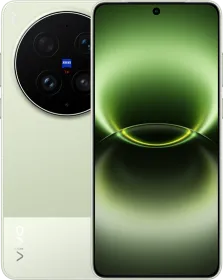
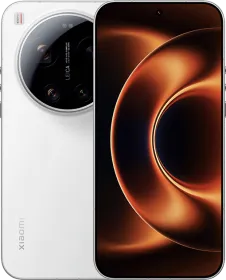
On the back sits a massive, circular camera module that Vivo has deliberately designed to evoke the look of a professional DSLR lens barrel. A knurled metallic ring. Engraved detailing. Prominent ZEISS branding. This isn’t subtle industrial design — it’s a statement. A declaration. A camera system that happens to also make phone calls.


That’s either going to excite you immediately or give you pause. There is no middle ground.
Built to Last in All Conditions with IP68 + IP69 ratings
Beyond the camera module, the X300 Ultra is an exceptionally well-built device. The flat aluminum frame has zero flex and no hollowness when you press on it. The front and back are covered in Armor Glass, which resists daily scratches reasonably well. The matte finish on the back is one of the best fingerprint-resistant surfaces I’ve used on any flagship this year. It stays clean almost effortlessly.

Where the X300 Ultra genuinely surpasses both the iPhone 17 Pro Max and the Galaxy S26 Ultra is its durability certification. vivo has given this phone both IP68 and IP69 ratings, making it dust-tight, submersible to 1.5 meters for 30 minutes, and resistant to high-pressure water jets. Most flagships only claim IP68. The X300 Ultra goes further, and that matters if you’re shooting outdoors in rain, near water, or in dusty environments, which, if you’re a serious photographer, you inevitably will be.
Samsung and Apple offer IP68. Vivo offers IP68 and IP69. That’s not a small distinction for a camera-first device.
Top-Heavy, But Cleverly Managed
At 230–237 grams, the X300 Ultra is a dense, chunky phone, and its weight distribution skews toward the camera module. One-handed use over extended periods will fatigue your wrist. This is a real trade-off, and I won’t minimize it.

The massive camera bump serves a secondary purpose: it functions as a natural anchor point for your index finger when you’re gripping the phone for shooting. Combined with the completely flat back, the X300 Ultra is actually more secure in the hand than its weight implies.
The body itself is just 8.19mm thin (excluding the bump), which is competitive with any 2026 flagship. The camera bump is the deliberate optical sacrifice vivo made to fit a larger sensor. That’s the right trade-off.
No Dedicated Shutter Button
vivo has opted for an ultrasonic under-display fingerprint sensor, which is fast and accurate. The volume rocker and power button, both sitting on the right edge, offer satisfying, clicky tactile feedback.
Last year, vivo boasted that a dedicated camera shutter button had been ditched from this year’s Ultra. For a phone explicitly positioned as the most serious camera smartphone of 2026, removing a physical shutter release feels like a step backward.
The IR blaster on top is a nice touch, and USB-C 3.2 handles data transfer and video output adequately.
Design Comparison: vivo X300 Ultra vs. iPhone 17 Pro Max vs. Samsung Galaxy S26 Ultra
| Specs | vivo X300 Ultra | iPhone 17 Pro Max | Samsung Galaxy S26 Ultra |
| Weight | 232g | 228g | 226g |
| Body Thickness | 8.19mm | 8.4mm | 8.3mm |
| Camera Bump | Massive, DSLR-style, knurled ring | Large but subdued | Prominent square module |
| Frame Material | Aluminum | Titanium | Titanium |
| Glass | Armor Glass | Gorilla Glass Victus 3 | Ceramic Shield |
| IP Rating | IP68 + IP69 | IP68 | IP68 |
| Display Edges | Completely flat | Completely flat | Flat |
| Dedicated Camera Button | ❌ Removed | ❌ | present |
| IR Blaster | ✅ Yes | ❌ | ❌ |
| USB Version | USB-C 3.2 | USB-C 3.2 | USB-C 3.2 |
| Fingerprint Sensor | Ultrasonic under-display | Ultrasonic under-display | Face ID only |
vivo X300 Ultra Display Review: Top Notch
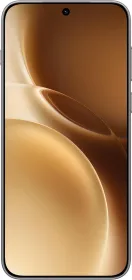
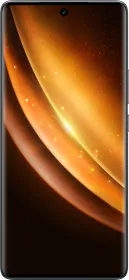
The Vivo X300 Ultra’s display is, quite simply, stunning.
A flat 6.82-inch LTPO AMOLED panel with a 2K resolution of 3168 × 1440 pixels (~510 ppi), support for 1 billion colors (10-bit), and an adaptive refresh rate ranging from 1Hz all the way to 144Hz.
Brightness That Laughs at Indian Summer Sunlight
Outdoor visibility is often a challenge in bright South Asian sunlight. It is not a challenge here. vivo claims a peak brightness of 4,500 nits. In lab testing, it actually peaks at 3,328 nits on a 10% white pattern and around 1,935 nits for full-screen content, numbers that comfortably exceed both the iPhone 17 Pro Max and Galaxy S26 Ultra in real-world conditions. In direct noon sunlight in Delhi or Mumbai, the X300 Ultra remains fully legible.

144Hz and Extremely Comfortable at Night
Since it’s a 144Hz panel, it delivers an incredibly fluid animation, scrolling, and multitasking experience. General UI navigation tops out at 120Hz. But day to day, the smoothness difference is perceptible. You get to witness a 144Hz refresh rate in select games via frame interpolation.
The 2160Hz PWM dimming is among the highest available on any smartphone. This matters enormously for extended use, as it minimizes screen flicker and eliminates the eye strain that lower PWM rates cause during long sessions. The display can also dim to just 1 nit, making late-night reading genuinely comfortable. For anyone using their phone for hours a day (so, everyone), this is an underrated quality-of-life advantage.
HDR, Dolby Vision, and Streaming

The vivo x300 Ultra display also supports Dolby Vision, HDR10+, and HDR Vivid. Android Ultra HDR renders photos with accurate high-dynamic range. Since it is certified with Widevine L1 for Netflix and YouTube streams at full HD and 4K, respectively. The dual stereo speaker setup complements the display with loud, clear, and surprisingly rich audio.
Display Comparison: vivo X300 Ultra vs. iPhone 17 Pro Max vs. Samsung Galaxy S26 Ultra
| Specs | vivo X300 Ultra | Samsung Galaxy S26 Ultra | iPhone 17 Ultra |
| Size | 6.82 inches | 6.9 inches | 6.9 inches |
| Panel | LTPO AMOLED | Dynamic AMOLED 2X | LTPO Super Retina XDR OLED |
| Resolution | 3168 × 1440 (~510 ppi) | 3120 × 1440 (~500 ppi) | 2868 × 1320 (~460 ppi) |
| Refresh Rate | 1Hz–144Hz | 1Hz–120Hz | 1Hz–120Hz |
| Peak Brightness (claimed) | 4,500 nits | 2,600 nits | 3,000 nits |
| PWM Dimming | 2160Hz | 480Hz | 480Hz |
| HDR Support | Dolby Vision, HDR10+, HDR Vivid | HDR10+, HDR Vivid | Dolby Vision, HDR10 |
| Minimum Brightness | 1 nit | 1 nit | 1 nit |
vivo X300 Ultra Software Review: OriginOS 6 Unapologetically Inspired, Genuinely Useful
The vivo X300 Ultra runs OriginOS 6, based on Android 16. vivo is committing to five years of major OS upgrades and seven years of security patches, making it genuinely competitive with Samsung’s policy.
OriginOS 6 wears its design influences openly. The lock screen depth-effect wallpapers look familiar. The Origin Island, vivo’s contextual notification system wrapping the camera cutout, is clearly inspired by Apple’s Dynamic Island, surfacing music controls, active timers, and AI information cards dynamically.

Is it a clone? In places, yes. But here’s the more important question: does it work well? Also yes. The Origin Island adds genuine utility rather than just aesthetic mimicry, and the overall UI feels snappy, fluid, and responsive. The “Gradient Blur” transitions are smooth and modern without being distracting.

Customization
This is where OriginOS 6 earns its place. The level of visual and functional customization available here vastly exceeds what iOS offers:
- Lock screen grid layout and depth layers
- App icon shapes (round, squircle, organic, and more)
- Font styles and display scaling
- Always-On Display themes
- Fingerprint scanner and facial recognition animations
Power users who prioritize personalization and multi-account flexibility will find OriginOS 6 delivers.


AI Features That Actually Matter
Vivo’s AI integration in OriginOS 6 is, refreshingly, practical rather than gimmicky.
| AI Feature | What does it do |
| AI Writing Assistant | Proofreads, rewrites, and summarizes text |
| Universal Document Viewer | AI-enhanced reading for PDFs and Word files |
| AI-Generated Note Summaries | Auto-summarizes long notes |
| Screen Translation | Real-time translation on foreign websites |
| AI Video Captions | Transcribes and translates video audio in real-time |
| Voice Recorder Transcription | Automatic text transcription of recordings |
The standout is the AI Video Captions feature. The vivo X300 Ultra lets you add subtitles in Englis to your Korean drama or a Japanese tutorial on the fly. The X300 Ultra transcribes and translates in real time. For travelers, researchers, and multilingual content consumers, this is seriously helpful.
Privacy Features
Vivo has included several features that the users in India will appreciate:
- App Cloning — Run two instances of any app simultaneously (two WhatsApp accounts, two Instagram profiles)
- App Hiding — Remove apps from the drawer without uninstalling
- App Locker — Password-protect individual apps
- Private Space — An encrypted, isolated environment for sensitive files and applications
Cross-Platform Connectivity
Quick Share on the X300 Ultra now works with Apple’s AirDrop ecosystem. Now, you can share files across devices.
vivo X300 Ultra Performance Review: Reliable
The Vivo X300 Ultra runs Qualcomm’s Snapdragon 8 Elite Gen 5 on a 3nm process, paired with up to 16GB of LPDDR5X RAM and 1TB of UFS 4.1 storage. These are 2026 flagship-tier specifications in every sense.
Benchmark Numbers
| Benchmark Test | Score |
| AnTuTu | 3,717,822 |
| Geekbench 6 Single-Core | 3,730 |
| Geekbench 6 Multi-Core | 11,494 |
| 3DMark Wildlife Extreme (Peak) | 6,541 |
| 3DMark Wildlife Extreme (Lowest) | 4,270 |
| 3DMark Stability | ~55.9% |
The stability score is the one number that deserves scrutiny. The X300 Ultra delivers explosive peak performance, but under extreme sustained gaming loads, it throttles more aggressively than some competitors. For most users who game in short bursts, this won’t be noticeable. For hardcore mobile gamers who run demanding titles for hours continuously, it’s worth understanding.
Effortless Day-to-Day Performance

In everyday use, the X300 Ultra delivers an immediate and smooth experience. It handles GPS navigation, heavy social media multitasking, simultaneous Chrome tabs, Spotify and WhatsApp without any lag or stutter. The RAM management is exceptional; apps remain resident in memory for much longer than on many competitors, eliminating the annoyance of reloading apps mid-session.
Gaming Performance
| Game | Frame-rates you get |
| BGMI (Battlegrounds Mobile India) | Stable 120fps |
| Call of Duty: Mobile | Stable 120fps |
| Genshin Impact | Solid 60fps |
These are top-tier gaming results that match or exceed those of the Galaxy S26 Ultra.

Thermal Management
The X300 Ultra’s 5,800 mm² vapor chamber is substantially larger than those in many 2026 flagships. In typical daily use, the phone stays cool. During moderate gaming sessions, it warms slightly. During extended Genshin Impact sessions, surface temperatures reach approximately 35°C acceptable for a device this powerful.
Vivo’s cooling system is designed to protect camera performance. Prioritising camera reliability over aggressive CPU throttling during extended photography and 4K video sessions, many flagship devices will shut down the camera app when thermal limits are reached. However, the X300 Ultra continues to shoot in Delhi’s scorching summer heat during long outdoor sessions.
Video export speed also stands out: a CapCut video exported in just 5.74 seconds in testing among the fastest recorded for any 2026 Android flagship. For content creators under a deadline, this, combined with the rest of the camera system, makes the X300 Ultra a genuinely professional mobile production tool.
vivo X300 Ultra Battery and Charing Review: Excellent Endurance, Blazing-Fast Refill
The Vivo X300 Ultra boasts a 6,600mAh silicon-carbon battery containing 15% silicon. This impressive battery life ensures the X300 Ultra easily withstands even the busiest days. Whether you’re capturing extended photography sessions, recording 4K video, or gaming, it effortlessly lasts a full day. Even power users, who tested the phone extensively, managed to finish the day with 6–7 hours of screen time and still had 30–40% battery remaining. Moderate users can stretch it even further, potentially achieving two full days of usage.
The X300 Ultra ran continuous YouTube playback for 23 hours and 41 minutes just four minutes behind the Galaxy S26 Ultra. In mixed active-use testing, it lasted 15 hours and 45 minutes, compared with Samsung’s 16 hours and 23 minutes. The margins are narrow.
Where the X300 Ultra lags is against its Chinese ultra-flagship peers. In the same active-use tests, the Xiaomi 17 Ultra managed 19 hours and 9 minutes, and the Oppo Find X9 Ultra dominated with 20 hours and 10 minutes. If maximum possible battery endurance is your single most important criterion, the X300 Ultra isn’t the choice within the Chinese premium segment. But it beats the iPhone and Samsung equivalents, which is the more relevant comparison for most buyers considering this device.
Charging Speed: Zero to Full in 46 Minutes
This device offers 100W wired charging, allowing a full charge from zero in just 46 minutes. Say goodbye to waiting and battery anxiety, and no need to search for outlets mid-day. For those preferring cable-free convenience, there’s also 40W wireless charging. A thoughtful bypass charging feature lets the device draw power directly from the charger, bypassing the battery. This helps manage heat and actively preserves long-term battery health during extended gaming or video recording sessions.
vivo X300 Ultra Frequently Asked Questions
Q: Is the Vivo X300 Ultra worth buying in India in 2026?
A: If photography and video are your primary reasons for spending flagship money, yes. It has the best camera system available in a smartphone at any price in 2026.
Q: How does the Vivo X300 Ultra compare to the Samsung Galaxy S26 Ultra?
A: The X300 Ultra has a better telephoto camera from 5x to 10x, a better ultra-wide, and a more comprehensive professional video feature set. The Galaxy S26 Ultra has better ecosystem integration, a marginally stronger update commitment, and a more established service network in India.
Q: How does the Vivo X300 Ultra compare to the iPhone 17 Pro Max?
The X300 Ultra leads in telephoto, ultra-wide, video features, display refresh rate, PWM dimming, IP rating, and charging speed. The iPhone 17 Pro Max leads in iOS software quality, ecosystem depth, app selection, and service infrastructure.
Q: Does the Vivo X300 Ultra overheat during photography?
It warms up during extended 4K recording, reaching around 35 degrees Celsius on the surface. Unlike many competitors, it does not shut down the camera during outdoor shoots in summer heat. The thermal management is specifically tuned to keep the camera running.
Q: What is the battery life of the Vivo X300 Ultra?
Approximately 15 hours and 45 minutes in mixed active-use testing, and 23 hours and 41 minutes in continuous video playback. Full charge from zero takes 46 minutes with the 100W charger.
Q: Can the Vivo X300 Ultra run two WhatsApp accounts?
Yes. App Cloning in OriginOS 6 runs two simultaneous instances of any application.
Review Verdict: Should You Buy the vivo X300 Ultra?

Smartprix ⭐ Rating: 9.2/10
The Vivo X300 Ultra isn’t a phone for everyone. It is a phone for the person who asks, with complete seriousness, “If money were no object, how good could a phone camera actually be?”
The answer, in 2026, is this: the Vivo X300 Ultra.
The massive DSLR-style camera housing isn’t a design gimmick it’s a structural consequence of putting genuinely superior sensors and optics inside a phone. The Photography Kit with its 200mm and 400mm teleconverter lenses isn’t a marketing accessory it’s an engineering solution to a real limitation. The removal of artificial sharpening from the video pipeline isn’t a coincidence it’s a deliberate decision by people who understand what makes footage look good.
Samsung and Apple will still sell tens of millions of units. They make great phones. But for the first time in years, the most interesting, most capable, most photographically ambitious smartphone isn’t made by either of them.
Vivo has done something genuinely difficult: it has made the iPhone Pro Max and Galaxy Ultra feel conservative.
First reviewed in May 2026.