


Porsche has launched the new version of their popular EV, the Porsche Taycan. The new Taycan, similar to some other EVs in the market, comes with a transmission. Yes, you heard that right, an EV with a transmission. But the Porsche Taycan isn’t the only EV to come with something like this. Sure, it sounds gimmicky until you understand what it’s actually solving.
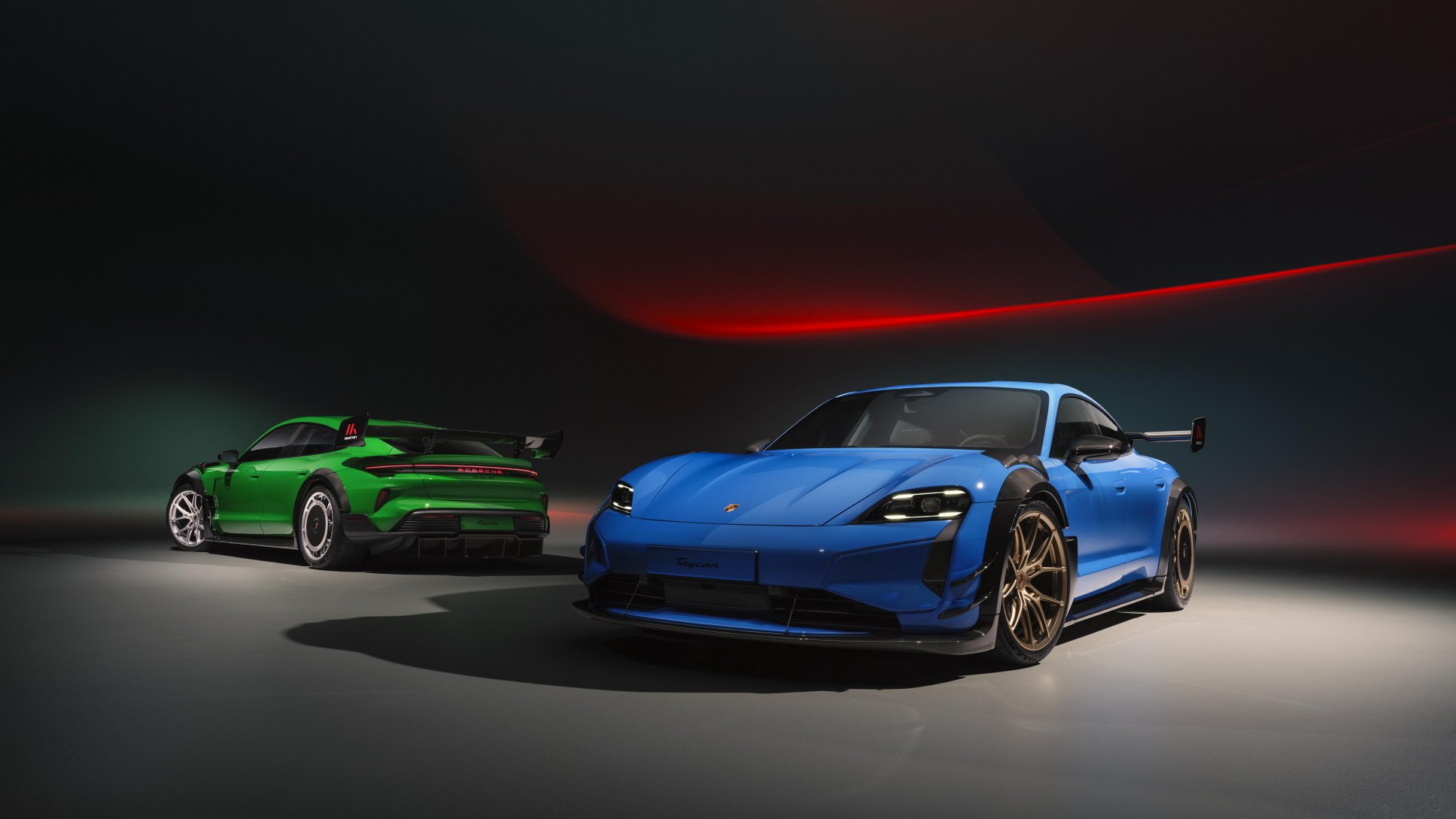
Porsche has just done something that sounds almost backwards for an electric car: it’s added gears. Virtual ones. The updated 2027 Taycan comes with a feature called E-Shift, and it lets you shift through eight simulated gears using paddles on the steering wheel, complete with gear-change sounds, a simulated shift “kick,” and a virtual rev counter on the dashboard. You can also switch it off entirely and go back to the smooth, uninterrupted acceleration that EVs are known for.
On the surface, this seems like a solution looking for a problem. Electric motors don’t need gears. So why is Porsche building an elaborate system to fake them? To answer that, you need to understand what’s actually missing in an EV, and why some carmakers think that gap is worth filling.
ALSO READ: Tata Sierra EV Officially Teased Ahead Of June 30 Launch: Here’s What To Expect
Why EVs Don’t Have Gears in the First Place
A petrol engine only produces good power and torque within a certain rev range. Too low, and it struggles. Too high, and it’s screaming uselessly. That’s exactly why petrol cars need a gearbox, to keep the engine spinning in its happy zone no matter how fast the car is going. First gear gets you moving, the higher gears let you cruise efficiently at speed.
Electric motors don’t have this problem. They produce maximum torque almost instantly, right from 0 rpm, and they can rev all the way up to 15,000-20,000 rpm also in some performance EVs. Because of this, a single, well-chosen gear ratio is often all an electric motor needs to cover an EV’s entire speed range, from a standstill to its top speed. That’s exactly why almost every electric car on sale today, from a basic hatchback to a Porsche Taycan, uses just one gear (or in some performance models, two).

This is also why EVs feel the way they do to drive that uninterrupted, seamless surge of acceleration with no pause, no jerk, no shift. It’s good for quicker 0-100 times and scaring the hell out of your passengers. This is also why EVs have always felt emotionally flat to drive, especially for people who grew up enjoying the theatre of a manual or a quick-shifting automatic.
So What Is E-Shift Actually Doing?
Now this is where the E-Shift and other EV transmissions come in. E-Shift doesn’t change how the Taycan’s motor or single-speed transmission actually works. The car is still mechanically a one-gear EV underneath. What E-Shift changes is the experience layered on top of that mechanical reality. Basically, it is mimicking a gear shift.
When you pull the paddle to “shift up,” the system briefly and deliberately interrupts the flow of power for a fraction of a second, mimicking the tiny pause you’d feel during a real gear change in a petrol car. Along with this, Porsche has gone a step ahead with its Electric Sport Sound system that plays a gear-change noise through the speakers and the instrument cluster shows a rev counter.
Now this all is just there to mimick the way an internal combustion car would behave, which to the enthusiast in me, feels quite redundant and unnecessary when we already have the cars. Sure, once the petrol and diesel cars are extinct for good this might be needed but unless that is the case, this feels a lot of unnecessary effort to make the EV feel like something it isn’t or could ever be.
ALSO READ: Hyundai Smart Care Clinic Offers Free Vehicle Check-Ups And Up To 30% Off On Service From June 24
Not the First Attempt
Porsche isn’t the only manufacturer thinking along these lines. Other EV makers have experimented with synthetic engine sounds and simulated shift points in recent years. But E-Shift, as part of the 2027 Taycan update, appears to be one of the more fully realised versions of this idea, combining sound, simulated shift feel, and a responsive virtual rev counter into one coordinated system rather than just piping in noise.
Whether this becomes a standard feature across the EV industry or remains a Porsche-specific party trick remains to be seen. But it does point to something real: as EVs become the default rather than the novelty, manufacturers are starting to realise that going electric doesn’t have to mean stripping away everything that made driving fun in the first place. Sometimes, you can simply fake it — convincingly enough that it doesn’t feel fake at all.
You can follow Smartprix on Twitter, Facebook, Instagram, and Google News. Visit smartprix.com for the latest tech and auto news, reviews, and guides.