


Both Qualcomm and Samsung have outed their next generation of chipsets, the Snapdragon 845 and the comparable Exynos 9810, that promise a healthy upgrade for 2018 flagships. The new chips assure of significant performance gains (hopefully maintaining the same power efficiency) and have been designed to support upcoming technology trends like AI and AR, but the biggest change this cycle will be the inclusion of DynamIQ ARM architecture.
Let’s try and simplify DynamIQ and its probable impacts in upcoming smartphone chipsets.
What is DynamIQ in Chipsets?
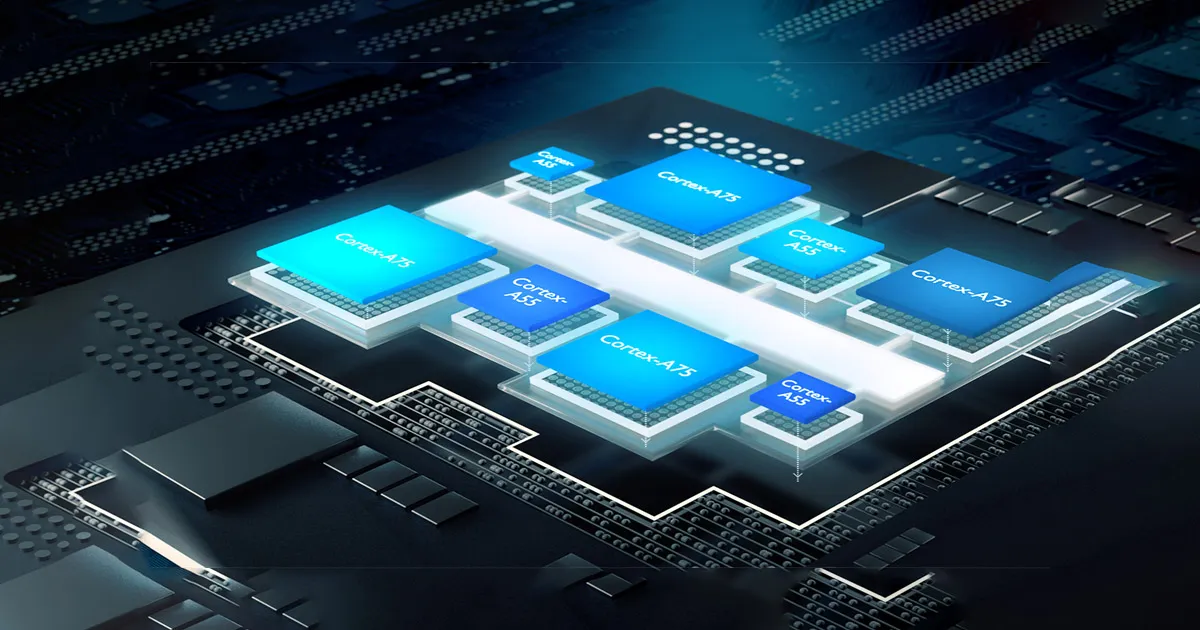
DynamIQ is essentially a new ARM solution for connecting different cores on a chipset. It is the next generation to the popular big.LITTLE architecture where different (or same) sets of cores were arranged in two (or more) clusters. So, we would usually see 4 Cortex-A72 cores paired with 4 Cortex A53 cores, or 4 Cortex-A53 cores paired with other 4 Cortex-A53 cores and so on.
With DynamIQ, however, different types of cores can be placed in the same cluster. You can have a performance and power cores placed within one cluster, instead of two separate clusters.

Placing the cores in the same cluster should ensure better communication between them.
These cores will share an L3 Cache which, in simple terms, will help these cores communicate faster with each other. This will also give OEMs more freedom to chose different core combinations, especially for mid-range phones. For instance, Qualcomm could have a mid-range chip with 3 high-performance cores and 5 power cores.
Currently, only Cortex-A75 and Cortex-A55 cores support DynamIQ and these are the only cores that will be used in DynamIQ chips at least for another year. Qualcomm’s Krait 385 Gold and Samsungs M3 cores in Snapdragon 845 and Exynos 9810 use Cortex-A75 as base architecture.
Also Read: A Beginner’s Guide For Understanding Smartphone Processors
DynamIQ VS big.LITTLE: What has changed
- With DynamIQ, Big and Little cores can now be placed in the same cluster. You can keep up to 8 cores in one cluster (unlike 4 in big.LITTLE). There is an option to add multiple clusters (up to 32, total 256 cores) as well, but that isn’t a practical usage scenario for smartphone application processors.
- Moving all cores under one cluster will help reduce memory latency. Or, in other words, will result in performance gains without an increase in power consumption. ARM has also made powering down cores faster and that should further help conserve battery.
- We can have any combination of Cortex-A55 and Cortex-A75 cores: 1+7; 2+6, 3+5; 4+4. The 1+7 configuration will be interesting for mid-range devices.
- Each Core can now be operated at different frequencies. Manufacturers have the option of individually powering down each core. Manufacturers can have different frequencies for all 8 cores, but implementing that will incur more cost.

- All this flexibility in core architecture hinges on DynamIQ Shared Unit (DSU) that bridges all cores and Cache memories together. It makes easier for cores within a cluster to communicate with one another. Relying on DSU instead of software for memory and cache management will also help save power and time.
- The new DynamIQ cores (Cortex-A55 and Cortex-A75) have private L2 Cache (unlike shared L2 Cache in big.LITTLE chips). Placing Cache closer to the CPU should reduce memory latency as well.
- With DynamIQ, ARM processors will have the L3 cache for the first time (something Apple introduced in A6). Chipset makers can add up to 4GB of L3 Cache (16 way).
- DynamIQ based SoCs will include Cortex-A55 cores in the power cluster unlike the Cortex-A53 ones on almost all other big.LITTLE architecture chips. With Cortex-A55 ARM has focused on improving performance by improving memory system and thus the DynamIQ chips will benefit from better power efficiency.
- Not only the Cortex-A55, but the Cortex-A75 cores that will be used in DynamIQ based Chipsets also focus on improving performance (rather than power efficiency or thermal efficiency that have been the focal points for last generation chips like Cortex-A73 and Cortex -A72).

Will we see many DynamIQ based chipsets in 2018?
While its true that DynamIQ will make chipsets more flexible, give chip makers a lot more room for innovation and offer better performance, many manufacturers might not be keen on giving up big.LITTLE technology they have developed and customized over the years so soon, especially not for mid-range phones. We don’t expect DynamIQ to go beyond flagship chipsets for some more time to come.