

TL; DR
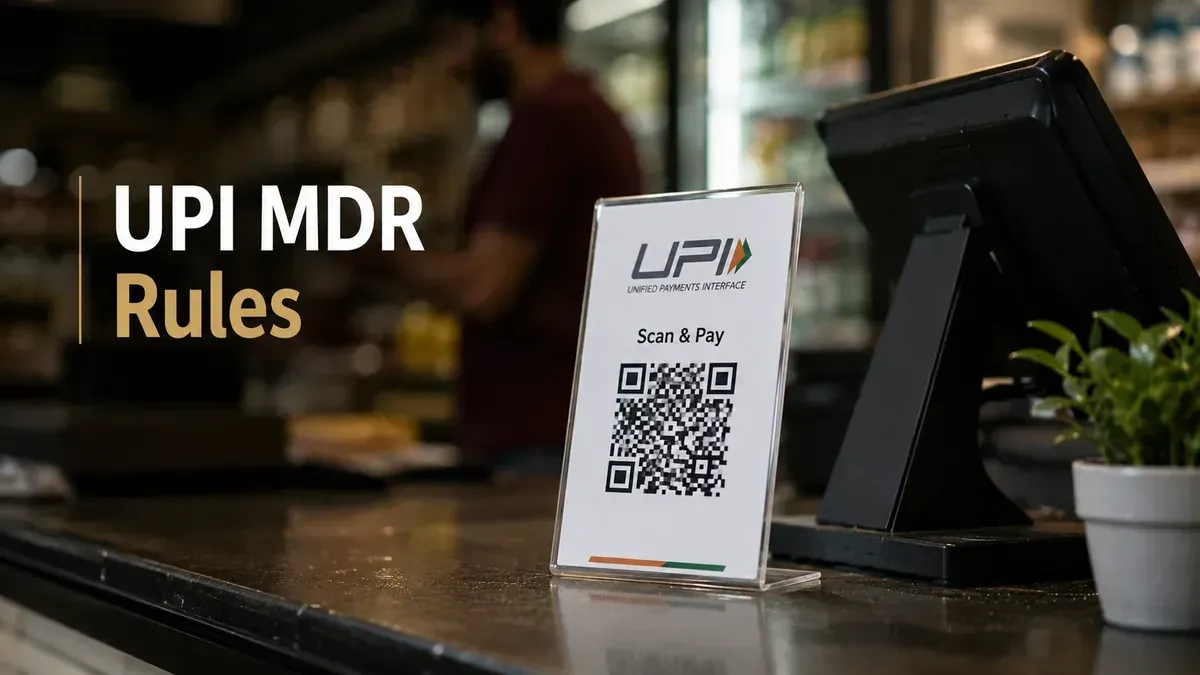
- NPCI has deferred the 0.4% MDR on select UPI person-to-merchant (P2M) transactions above ₹2,000 until after Diwali (November 8, 2026). The exact implementation date is yet to be announced.
- Merchants pay the fee, capped at ₹300. Customers cannot be charged separately for it.
- Person-to-person transfers, merchant payments of ₹2,000 or less, and payments received by eligible small merchants remain free. Around 95–96% of P2M transactions are expected to remain outside the charge.
NPCI’s UPI and Services Steering Committee decided on October 13, 2026, to defer the rollout of the new Merchant Discount Rate (MDR) until after Diwali, citing the festive season. The framework was originally scheduled to take effect on October 15. With Diwali falling on November 8 this year, the revised implementation window has arrived, although NPCI has yet to announce an exact date.
The charge applies to eligible bank-account-funded UPI payments made by customers to merchants for transactions above ₹2,000. Standard merchants will pay an MDR of 0.4%, capped at ₹300 per transaction once the payment reaches ₹75,000. For example, a ₹3,000 payment would attract a ₹12 merchant fee, while a ₹50,000 payment would cost the merchant ₹200.
Certain essential and thin-margin categories, including railways, telecom, insurance, fuel and agricultural inputs, will pay a flat ₹5. Capital-market transactions involving mutual funds, securities and stockbrokers will attract an MDR of 0.02%, also capped at ₹300.
Which UPI Transactions Remain Free?
The revised framework covers a limited category of merchant payments. The following transactions remain free:
- Person-to-person transfers: No MDR applies, regardless of the amount.
- Merchant payments up to ₹2,000: These remain free.
- Small merchants: Businesses classified under the P2PM category remain exempt. This covers merchants receiving up to ₹1 lakh per month through UPI QR codes into their accounts, regardless of individual transaction size.

NPCI and the Finance Ministry have stated that payments of ₹2,000 or less account for most P2M transaction volume. Around 95–96% of merchant transactions are expected to remain outside the new charge.
Will Customers Have to Pay the UPI MDR?
No. The MDR is a merchant-side fee that goes into the payments ecosystem, including acquiring banks, issuing banks, payment service providers and apps. Customers are not responsible for paying it.

NPCI’s FAQs and Finance Ministry clarifications explicitly prohibit merchants from passing the MDR on to customers as a separate charge. UPI apps also cannot impose platform fees on these payments. Customers will continue to pay the displayed price of their goods or services.
Banks have been advised to enforce these rules. NPCI reiterated the restrictions in an affidavit filed before the Supreme Court in early November, stating that the fee applies to a narrow category of higher-value merchant transactions and cannot be directly passed on to consumers.
Supreme Court Case and Implementation Date
A legal challenge to the MDR framework is pending before the Supreme Court. The court has declined to stay its implementation while it examines the case. Until NPCI announces the final rollout date, the existing zero-MDR rules remain in effect for all UPI transactions.

What the New UPI Charge Means for Shoppers
Most shoppers are unlikely to notice a change when paying through UPI. Small kirana stores and street vendors using regular QR codes will largely remain exempt, while eligible larger merchants will eventually pay the fee on higher-value transactions.
The rules prohibit merchants from adding a separate “UPI charge” to customer bills (although there are reports of merchants charging extra for UPI payments). The MDR is intended to create a revenue stream for banks and payment companies to support UPI infrastructure, security and operations after years of zero-MDR transactions. What are your thoughts on this whole thing? Let us know in the comments section below.

You can follow Smartprix on Twitter, Facebook, Instagram, and Google News. Visit smartprix.com for the latest tech and auto news, reviews, and guides.