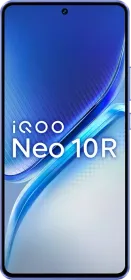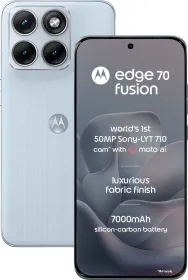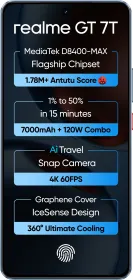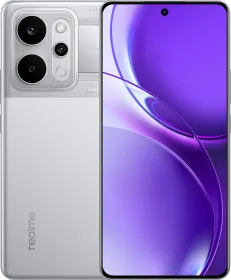




The Snapdragon 6 Gen 4 and MediaTek Dimensity 6400 are set to power upcoming budget and mid-range smartphones from realme, OPPO, HONOR, Redmi, and POCO. HONOR is already confirmed to adopt the Snapdragon 6 Gen 4. Both chipsets bring minor improvements over their predecessors. In this comparison, we’ll see which one performs better and the chipset you should look out for when buying a phone in this segment. Let’s get started.
Manufacturing Process & CPU

The Snapdragon 6 Gen 4 is built on a 4nm process, while the Dimensity 6400 uses a 6nm process. A smaller node generally improves efficiency, and Qualcomm has the advantage here.
Snapdragon 6 Gen 4 has an octa-core Kryo CPU with the following configuration:
- 1x Cortex-A78 Prime core @ 2.3 GHz
- 3x Cortex-A78 Performance cores @ 2.2 GHz
- 4x Cortex-A55 Efficiency cores @ 1.8 GHz
The Dimensity 6400 follows a big.LITTLE setup with:
- 2x Cortex-A76 cores @ 2.5 GHz
- 6x Cortex-A55 cores @ 2.0 GHz
Despite the slightly higher clock speeds on MediaTek’s side, the newer CPU architecture in the Snapdragon should offer better sustained performance.
Compared to their predecessors (Snapdragon 6 Gen 3 and Dimensity 6300), both chipsets see only a marginal improvement in CPU performance, with Qualcomm claiming an 11% CPU boost over its predecessor.
ALSO READ: Dimensity 6400 SoC Shares A Lot Of Similarities With Its Predecessor
GPU & Gaming

The Snapdragon 6 Gen 4 features an upgraded Adreno GPU, which delivers about 29% better performance compared to its predecessor. The Dimensity 6400, however, uses the same GPU as its predecessor—the Mali-G57 MC2, which is approximately 13% less powerful than the Adreno GPU (unspecified) on the Snapdragon 6 Gen 4.
Qualcomm does not disclose specific GPU clock speeds, but it includes features like:
- Snapdragon Game Super Resolution (AI-powered upscaling to near-4K)
- Adreno Frame Motion Engine (frame rate boosting without power increase)
- Adreno HDR Fast Blend, which renders complex scenes 2x faster than previous-gen Snapdragon chips
Snapdragon 6 Gen 4 also supports Full HD+ @ 144 Hz displays, while MediaTek only lists standard Full HD+ support, meaning variable refresh rate handling is likely better on Qualcomm’s side. Both chipsets now support Vulkan 1.3, which should help improve the gaming performance.
Camera & Video Capabilities

The Snapdragon 6 Gen 4 has a triple 12-bit ISP, supporting:
- Up to 200 MP photo capture
- 64 MP single camera with Zero Shutter Lag @ 30 FPS
- 32+16 MP dual-camera setup @ 30 FPS
- 16+16+16 MP triple-camera setup @ 30 FPS
- 4K HDR video recording @ 30 FPS
- Slow-motion video: 1080p @ 120 FPS
- Multi-Frame Noise Reduction (MFNR)
Dimensity 6400, by contrast, supports:
- Up to 108 MP single camera
- No Zero Shutter Lag support
- Dual-camera up to 32 MP + unknown secondary sensor
- Video recording limited to 2K @ 30 FPS
As evident, the Snapdragon 6 Gen 4 has advantages in both resolution and video recording, with 4K HDR capabilities versus the Dimensity 6400’s 2K limitation. Qualcomm also includes Snapdragon Low-Light Vision (LLV) for improved night photography.
ALSO READ: Qualcomm Brings Gen AI to Mid-Range Phones with the new Snapdragon 6 Gen 4 SoC
Connectivity & Network Support

Snapdragon 6 Gen 4 features the Snapdragon X63 5G Modem, supporting:
- mmWave and sub-6 GHz 5G
- Peak download speeds of 2.9 Gbps
- 4×4 MIMO on sub-6 GHz bands
- Global 5G multi-SIM support (5G/4G DSDA)
Dimensity 6400 uses a sub-6 GHz-only 5G modem, with no mmWave support. MediaTek does not specify maximum download speeds, but it is expected to be around 2.5 Gbps.
In terms of Wi-Fi and Bluetooth:
- Snapdragon 6 Gen 4: Wi-Fi 6E, Bluetooth 5.4, LE Audio
- Dimensity 6400: Wi-Fi 5, Bluetooth 5.2
Snapdragon 6 Gen 4 offers better overall wireless connectivity, with Wi-Fi 6E (6 GHz band support) and a more advanced Bluetooth version.
ALSO READ: List of Phones to Feature the Snapdragon 6 Gen 4 Chipset
Memory, Storage & Battery Efficiency

- Snapdragon 6 Gen 4: LPDDR5 @ 3200 MHz, UFS 3.1 storage
- Dimensity 6400: LPDDR4X @ 2133 MHz, UFS 2.2 storage
Qualcomm’s chipset supports faster RAM and storage, meaning lower latency and faster app launch times. However, it depends on the OEM (smartphone maker), whether they take advantage of this or not.
Battery life should also be better on Snapdragon 6 Gen 4, thanks to its 4nm node and Qualcomm 5G PowerSave 2.0. Both chips support Quick Charge 4+ and standard fast charging, with no major differences in power delivery.
Verdict: A Minor Upgrade for Both, but Snapdragon 6 Gen 4 is More Future-Proof

Neither chipset is a massive leap forward compared to its predecessor. Snapdragon 6 Gen 4 is about 11% faster in CPU performance and 29% better in GPU performance compared to the Snapdragon 6 Gen 3, while the Dimensity 6400 has only minor refinements over the Dimensity 6300.
Nonetheless, Qualcomm’s chipset wins in gaming, camera performance, video recording, connectivity, and power efficiency. Dimensity 6400, while decent, feels more like a rebranded refresh of its predecessor rather than a true upgrade. Overall, the Snapdragon 6 Gen 4 is the more well-rounded choice for future budget smartphones.
You can follow Smartprix on Twitter, Facebook, Instagram, and Google News. Visit smartprix.com for the latest tech and auto news, reviews, and guides.