



Quick Verdict
The realme P4R 5G is built around an unapologetic promise: an 8,000mAh battery that genuinely gets you through two days or more, depending on your usage. The MIL-STD-810H certification, aluminium camera housing, and reliable side-mounted fingerprint sensor add real-world confidence at ₹18,999. However, the HD+ (720p) display is a genuine step back, and so is the single-speaker setup. Two years of OS updates with three years of security patches isn’t as good as a few other competitors.
Buy it if:
- You want a phone that lasts around two days between charges
- You need durability for outdoor or field use
- You’re a light user who doesn’t stream much
- You want a complete charger-and-case package
Skip it if:
- Raw or gaming performance (90fps BGMI) matters to you
- Long-term software updates are a priority
- You’re a photography enthusiast
realme’s P4R is the newest entrant in the company’s ongoing P4 series, and at ₹18,999, it cuts through the ongoing component-cost squeeze that is pushing prices up across the board. The smartphone bets on solving one core user problem — battery anxiety — and it does excellent at that. Promotional and marketing terms aside, the P4R 5G is genuinely capable of lasting for two days on a single charge, depending on how you use it.
To hit that capacity at this price, realme has made trade-offs the spec sheet doesn’t shout about. The display resolution is one, and so is the software update runway. To be fair, that’s true for most smartphones in the segment, as it’s only possible to go after one particular practical aspect and do exceptionally well at this budget.

The realme P4R’s particular bet of going bigger on the battery and adjusting the other specifications around it is either the most pragmatic ₹18,999 you’ll spend this year, or a compromise too far. I’ve spent about three weeks finding out the answer to the question.
HOW I TESTED
| Reviewed By: Shikhar Mehrotra (Consumer Tech, Auto, and AI Expert with 6+ years of experience) Test Unit: realme provided the review unit of the P4R 5G, with no involvement in the editorial process. Duration and Environment: I used the device for around two weeks, on the Jio network in Northern India. The unit tested was the Titanium Glare variant with 6GB RAM and 128GB storage. Tests: Daily usage including calls, YouTube, social media, multitasking, navigation, photography, and gaming. I also tested BGMI to evaluate gaming performance, thermals, and battery life, along with benchmarks to check peak performance. Battery drain tests were conducted under both heavy and moderate usage conditions. Competitors: Oppo K14x (review), vivo T5x (review), realme P4x, OnePlus Nord CE6 Lite (review) |
realme P4R 5G Price & Availability
The realme P4R 5G is available in India in three different memory and storage variants, on sale from June 17, 2026.
- realme P4R 5G (4GB + 128GB): ₹18,999
- realme P4R 5G (6GB + 128GB): ₹20,999
- realme P4R 5G (6GB + 256GB): ₹22,999
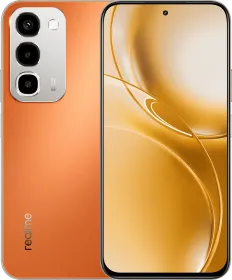
Color options include Titanium Glare, Silver Glare, and Lavender Glare. You can get the phone on Flipkart and the company’s official website.
Pros
- Genuinely lasts two days between charges
- 45W charger included in the box
Unique rear panel design - Slim and light despite massive battery
- Aluminium camera ring feels premium
- Side-mounted fingerprint sensor never misses
- Survives splashes, drops, and rough handling
- 400% Ultra Volume helps in noisy places
- Comprehensive AI photo editing tools
Cons
- Display resolution feels dated in 2026
- Netflix and Prime stuck at SD quality
- Single speaker limits movie/game audio
- Weakest software update promise yet
- No ultrawide camera for landscapes
- Charging takes nearly two hours
realme P4R 5G Specifications
- Display: 6.8-inch HD+ IPS LCD, 720p resolution, 144Hz refresh rate, up to 180Hz touch sampling rate, 1,200 nits claimed peak brightness, Widevine L3, no HDR, DC dimming, Smart Touch, large-radius rounded corners
- Processor: MediaTek Dimensity 6300 (6nm): 4x 2.6GHz Cortex-A78 + 4x 2.0GHz Cortex-A55, Mali-G57 MC2 GPU
- RAM and Storage: 4GB / 6GB LPDDR4X RAM (virtual RAM expansion up to 14GB), 128GB / 256GB UFS 2.2 storage, microSD expandable via hybrid SIM slot
- Main Camera: 50MP, f/1.8, autofocus/PDAF, 27mm equivalent, 1080p@30fps video, up to 10x digital zoom
- Depth Camera: 2MP, f/2.4, fixed focus
- Front Camera: 8MP, f/2.0, autofocus, EIS, 1080p@30fps, Screen Fill Light
- Battery and Charging: 8,000mAh Si/C “Titan Battery”, 45W SUPERVOOC wired (charger included), 6.5W reverse wired charging, bypass charging, no wireless charging
- Connectivity: 5G Sub-6GHz, Wi-Fi 5 (802.11ac), Bluetooth 5.3, no NFC, no IR blaster, USB Type-C (USB 2.0), dual Nano-SIM, no eSIM
- Audio: Single oversized “Super-Linear Speaker”, 400% Ultra Volume Mode, no Dolby Atmos
- Biometrics: Side-mounted capacitive fingerprint sensor, face unlock
- Build and Durability: Polycarbonate back, plastic frame, aluminium alloy camera housing, Panda-1681 glass front, IP65, MIL-STD-810H (ArmorShell)
- Software: realme UI 7.0 based on Android 16, 2 years OS updates + 3 years security patches
- Dimensions and Weight: 8.8mm thickness, 224 grams
- Colors: Titanium Glare, Silver Glare, Lavender Glare
- Other Features: 5,300mm² vapor chamber cooling, One Tap Cooling, AI Pulse Light (9 colors, 5 modes), AI Portrait Glow, AI Eraser 2.0, AI Ultra Clarity, AI Unblur, Text Scanner, AI Assistant for Notes, Google Gemini, AI Anti-Theft, Google Remotely Lock, Dual-View Video, Tilt-Shift mode, Cinematic mode, Extended Use Care, AI Long-Life Algorithm, AI Night/Cold Charging modes
realme P4R 5G Review: Design & Build
Before we get into the pros and cons of the design, the phone comes with a transparent TPU case, a SIM ejector tool, a USB-A to USB-C cable, and a 45W SUPERVOOC charger, a genuinely complete package that deserves some credit.

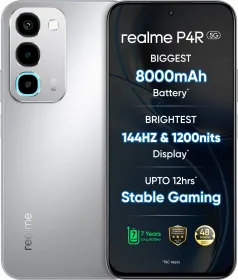
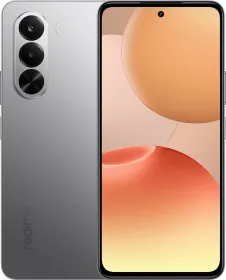
The realme P4R comes with the new Floating Light Design, which refers to how light appears to ripple off the phone’s rear panel, creating a glimmering effect when looking at the phone from an angle.
In the Titanium Glare unit that I received, it appears as if the rear panel consists of thousands of tiny mirrors reflecting the light from different angles. This is the kind of addition that makes the phone look more expensive than it is.


The back itself is polycarbonate with a matte finish that resists fingerprints well (and so is the frame), though I noticed dust settling onto the rear panel faster than I’d like. While the volume buttons are tactile enough, the power button (that doubles as a fingerprint sensor) feels a bit softer.
There’s another headline feature that hides in plain sight on the back panel: the Pulse Light. It sits within the rectangular aluminum camera housing. It can light up in nine different colors, supports five glow modes that sync with MLBB’s in-game highlights, and reacts to music from over 34 supported apps.

You can decide whether you want the Pulse Light to be active the entire day or within a scheduled time, set contact-specific light effects for calls, app-specific light colors, and it also shows up while playing music from supported apps (Spotify and YouTube Music included), charging the smartphone, using the camera countdown, or talking to Gemini.
I wouldn’t go as far as to call the Pulse Light a gimmick. It’s a fun little addition that adds some personality to the smartphone, but it wasn’t as useful for me. The phone feels comfortable in hand, though owing to the screen size, one-handed usage is a bit difficult.

Despite housing a massive battery, the P4R stays at 8.8mm, slim enough that it never felt uncomfortable in my jeans pocket. The phone is a bit heavier at 224 grams, but nothing that you won’t get used to in a couple of days.
On the durability front, realme’s ArmorShell branding brings MIL-STD-810H military-grade certification to the table, which is a confidence-instilling addition. The IP65 rating, however, only covers dust and splash protection.

Now, coming to the things that I didn’t like about the P4R’s design. First up is the gigantic chin at the bottom of the display. It makes me feel like I’m using a phone from a couple of years ago, and this is true for most entry-level smartphones today.
Then there’s the hybrid SIM tray that forces a choice between dual SIM and expandable storage: you can’t have both. Finally, the USB-C port is limited to USB 2.0, something that might bother buyers who go the wired route for transferring files.
realme P4R 5G Review: Display
Out of the box, the realme P4R 5G ships with a 6.8-inch HD+ LCD screen that supports a refresh rate up to 144Hz, and there’s a lot I want to talk about here.

The screen size suits content consumers; it doesn’t put the strain that comes with watching content on a 6.3- or a 6.4-inch screen. The panel can achieve a peak brightness of 1,200 nits, which does well indoors, but only seems to hold up outdoors, especially under direct sunlight.
Although realme doesn’t reveal the number, it claims that the P4R offers segment-leading DC dimming, and not for once did I find the screen uncomfortable to use during my late-night testing and gaming sessions.

The refresh rate, however, is a two-edged sword. On the one hand, support for 120Hz makes scrolling through the interface and supported apps buttery smooth (except for the random jitters here and there). On the other hand, I could only see the developer’s refresh rate overlay reaching 144Hz in two apps: Recorder and Compass.
Exploring the “Display & brightness,” I found that the phone supports a software-simulated dark mode, which is quite good for late-night usage. The default color mode (Vivid + Default) also seems to strike the right balance between vibrancy and accuracy.

As mentioned earlier, the phone features an HD+ panel, which feels like a major letdown in this segment. Most rivals, even those with LCD panels, are providing FHD+ resolution, which should be the baseline in 2026. While decreasing the font and display size does help a bit, it also makes the text much harder to read.
The panel carries Widevine L3 certification, implying that OTT platforms like Netflix and Prime Video cap out at SD quality. The viewing angles of the display could have been better as well. The Smart Touch feature, however, worked well when I tried using the smartphone immediately after washing my hands.
Moreover, the realme P4R’s screen tries to punch well above its segment, especially with the higher refresh rate, but remains capped due to its shortcomings.


realme P4R 5G Review: Speaker, Biometrics, & Haptics
The single oversized “Super-Linear Speaker” on the realme P4R gets really loud, helping with hands-free calls in noisy environments. It tends to distort a bit at the 400% volume level, but still maintains enough clarity. Like other phones in the segment, the speaker lacks fullness or low-end. The lack of stereo speakers results in a less engaging gaming experience.
The side-mounted fingerprint sensor, built into the power button, was fast and accurate throughout my testing. Face unlock is also on board for quick, casual access, though I’d stick to the fingerprint sensor. Haptics are functional, but nothing that stood out as particularly.
realme P4R 5G Review: Performance
Under its glimmering hood, the realme P4R 5G is powered by MediaTek’s Dimensity 6300 chipset, an entry-level to mid-range chipset that is designed for regular usage.

Released in 2024, the chipset is based on 6nm fabrication technology (when 4nm is quite common within this segment in 2026). The chipset consists of two Cortex-A76 performance cores clocked at 2.4GHz and six efficient Cortex-A55 cores at 2GHz.
Day-To-Day Performance
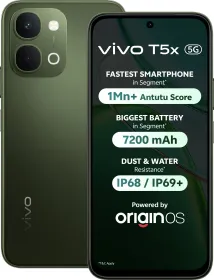
The company has paired this chipset with up to 6GB of LPDDR4X RAM (along with 8GB of virtual RAM) and 256GB of UFS 2.2 storage (not UFS 3.1). This is where realme seems to have cut corners, as UFS 3.1 isn’t as uncommon in the segment as it used to be a couple of years ago (the vivo T5x offers it). Technical commentary aside, the P4R 5G seems to hold up well under daily workloads.

Accessing my emails, using WhatsApp, attending calls, spending a couple of cautious minutes on Instagram, switching between apps in the review period, and exploring all the corners of the software felt quite smooth, I’d say. The handset did stutter a couple of times, particularly when switching between other apps with a heavy app (like BGMI) running in the background, but nothing major that should alter your buying decision.
Synthetic Benchmarks
I’d also give credit to realme UI’s 7.0 Flux Engine for making things more efficient and easier to run on the software part. The RAM management is a bit too aggressive, only because the phone kept on killing the fourth or the fifth app in the background, especially when running a couple of heavy apps.


| Realme P4R 5G (Dimensity 6300) | |
| AnTuTu Score | 571,081 |
| Storage (Score, Sequential Read Speed, Write Speed) | Score: 57,722; Sequential Read: 539.3 MB/s; Sequential Write: 541.8 MB/s |
| Geekbench 6 CPU (Single-Core, Multi-Core) | Single-Core: 782; Multi-Core: 1955 |
| Geekbench 6 GPU (OpenCL, Vulkan) | OpenCL: 1396; Vulkan: 1424 |
| 3DMark Wildlife Extreme (Score, Avg FPS) | Score: 385; Avg FPS: 2.31 |
| 3DMark Wildlife Extreme Stress Test (Best Loop, Lowest Loop, Stability) | Best Loop: 384; Lowest Loop: 382; Stability: 99.5% |
Gaming Performance
You can play games on the realme P4R 5G as well, just don’t expect any titles to run at higher refresh rates. The Dimensity 6300 isn’t designed for serious gaming. I played a couple of TDM and Erangel matches on Super Smooth + Extreme (60fps) settings, and the phone comfortably returned an average frame rate of around 58.7 fps (with GT mode enabled).


However, 60fps is all you get. The highest available setting in the game is HDR + Ultra (40 fps). The 144Hz refresh rate doesn’t apply to any titles, simply because the GPU isn’t capable of achieving it. What’s good, however, is that the phone comes with a 5,300mm² vapor chamber, which keeps the temperature under control, even during long gaming sessions.
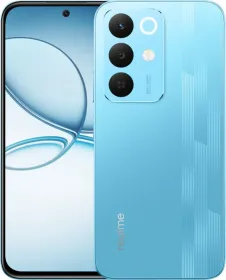
It’s worth mentioning here that the realme P4x 4G that I reviewed in December 2025 comes with a more powerful chipset that is capable of 90fps on BGMI, and it’s still more affordable than the realme P4R. I do appreciate the gaming sidebar, as it contains a couple of handy tools like Cleanup, screen recording, mistouch prevention, and in-game voice changer.
realme P4R 5G Review: Software
Out of the box, realme UI 7.0, built on Android 16, feels exactly as smooth and familiar as I’ve come to expect from realme’s recent skins. Daily navigation, app switching, and animations all felt fluid during my time with the phone, despite the hardware limitations we discussed earlier.

The smartphone comes with plenty of AI-based features, and most of them are related to editing pictures. Once you’re in the Photos app, tap the edit button for a picture, select AI Editor, and you should see all of them in one place. There’s AI Eraser, AI Portrait Glow, AI Ultra Clarity, AI Perfect Shot, Unblur, Remove Reflections, and AI Glare Remover.
I’ve tried most of them, and they work surprisingly well. Like in the example attached below, I captured a selfie with lots of reflections on my glasses and glare in the background (on the left), but using the Remove Reflections and AI Glare Remover tools, I was able to get a decent result (on the right).


I’ve also attached another example of the AI Portrait Glow feature and how well it lights up the subject in the pictures. Google Gemini and Gemini Live are also baked in, letting you share your camera or screen for real-time AI assistance. AI Ultra Clarity and AI Unblur both did what they promised on soft or shaky images, and the Text Scanner auto-corrected a skewed document photo without me asking.
And yes, the phone ships with a couple of pre-installed apps like Instagram, Facebook, LinkedIn, and Netflix. What did annoy me was the Intelligence Search Service and “Show app suggestions” features enabled by default in the app drawer’s settings, as they were adding to the clutter. I disabled them rightaway for a cleaner experience.


What doesn’t sit well with me is only two years of Android and three years of security fixes. I understand the cost pressures, but buyers in this segment usually hold on to their devices for a longer time, unless something falls apart, and the two-year operating system commitment doesn’t match that intent.
realme P4R 5G Review: Cameras
The P4R’s camera setup is straightforward: a 50MP primary sensor at f/1.8 with autofocus, backed by a 2MP depth sensor, and an 8MP front camera.

This is a pattern that I’ve been seeing in the entry-level and mid-range smartphone segments for a while now, wherein there’s a single rear-facing camera doing most of the heavy lifting.
In daylight, results are genuinely decent, I’d say. Details hold up well, and colors look pleasant straight out of the camera app. The one thing I noticed consistently was that exposure runs a touch more aggressive, with shots often coming out brighter than the scene actually was. If you’re shooting with strong highlights, I’d recommend pulling the exposure meter just a bit.


Portrait mode on the realme P4R 5G impresses me more than I expected. Despite a somewhat inaccurate edge detection around hair, the overall result comes out quite good, even in the evening with no sunlight. In trickier lighting, though, some shots tipped into overexposure. HDR takes a second or two to kick in when viewing pictures (only for the first time).


The lack of optical image stabilization on the primary camera is something that is immediately obvious, especially if you’re trying to capture pictures while walking or from a moving vehicle.


The front camera does a decent job as well, enough to justify the price point, but nothing that punches above its weight.


Details are decent, so is HDR, and portrait mode works fine. Both cameras also support Motion Photo, capturing a brief moving clip alongside your still.

realme P4R 5G Review: Battery Life & Charging
The strongest suite of the realme P4R, in my opinion, is its 8,000 mAh Si/C Titan Battery. During my testing, which contained benchmark runs, gaming, consuming media, and file transferring, and possibly everything you could do and categorize as heavy usage, the phone returned around 13 to 14 hours of screen-on time (with a SIM card), with the performance profile set to balanced.

Remember, we always include the screen-on time of a phone’s battery, as that provides you with an actual idea of how long the phone will charge you. For the realme P4R, you can spread the 13 to 14 hours of screen-on time over two days (as nobody uses their phone continuously), or perhaps even three days if you’re a call-and-text user.
The results are truly exceptional. I believe it’s the combination of the lightweight chipset and heavyweight battery that is leading to such numbers. As mentioned previously, the phone comes with a 45W charger in the box, which takes around two hours to recharge the battery from zero to 100%.

At first, the charging speed might appear to be slow, but for a phone that requires charging once every day-and-a-half or two, it doesn’t come across as a trade-off to me. The phone also supports reverse wireless charging (at 6.5W), so if your earbuds ever run out of charge, you can plug them in and get an emergency boost on the go.
The “Battery Saving Settings” menu contains plenty of features, such as automatically entering/exiting Power Saving mode, ”App Quick Freeze” for reducing battery consumption by idle apps, Screen Battery Optimization, and per-app battery management. And yes, the phone also supports Bypass Charging.

There’s a dedicated Phone Cooling option in the battery settings menu as well, which cools down the phone by up to 2°C in two minutes.
Review Verdict: Should You Buy the realme P4R 5G?
The realme P4R 5G makes a promise and keeps it well: the 8,000mAh Si/C battery delivers the kind of endurance that changes how you think about charging. You don’t need to charge the smartphone every single day. Add to it the capable 50MP primary camera, realme UI 7.0’s AI photo editing features, the 45W charger provided in the box, and you’ve got a complete package that should suit most people for regular day-to-day usage (without the hassle of carrying a powerbank).
But the compromises are real. The HD+ display is a clear step back in 2026, Widevine L3 caps Netflix at SD, and the single speaker limits media playback (shouldn’t be a problem if you own a pair of TWS earbuds). Raw performance isn’t the best in the segment. And two years of OS updates and three years of security patches could be a potential dealbreaker for a phone many will keep for years.
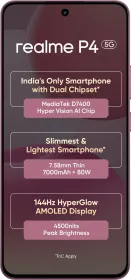
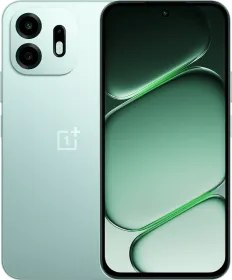
If display quality and performance matter more to you, the OnePlus Nord CE6 Lite is worth stretching for (it even supports 90fps BGMI gaming), or the realme P4x provides a similar gaming experience if you’re looking for a more affordable option, but it lacks on the battery life front. If cameras and an AMOLED screen are priorities, realme’s own P4 5G offers both at a similar price (since its a bit old). But for sheer endurance at ₹18,999, the P4R is hard to beat.

Smartprix ⭐ Rating: 7.75/10
- Design and Build: 8.25/10
- Display: 7.0/10
- Speakers: 7.0/10
- Software: 8.25/10
- Haptics: 7.25/10
- Biometrics: 8.0/10
- Performance: 7.25/10
- Cameras: 7.5/10
- Battery Life & Charging: 9.25/10
First reviewed in June 2026.