


Quick Verdict
Rating: 9.3/10
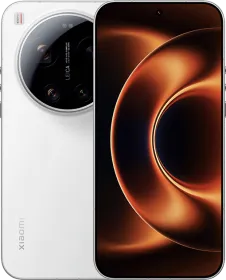
The OPPO Find X9 Ultra is one of the most complete smartphones I’ve used in 2026. OPPO has refined almost everything that already made the Find X8 Ultra great and then pushed the camera system even further. The new 10X quintuple-prism telephoto camera is incredible, the Master Mode experience is unmatched on any smartphone right now, and ColorOS 16 makes this phone incredibly enjoyable to use every single day.
This is not just a “camera phone.” The Find X9 Ultra nails the entire flagship experience. The display is excellent, battery life is outstanding, haptics are one of the best on Android, and the Snapdragon 8 Elite Gen 5 delivers flagship-tier performance without compromise. More importantly, OPPO finally brought the Ultra to India officially.
There are still some small issues. The 10X lens occasionally struggles with focus, the huge camera module can interfere with some wireless chargers and accessories, and Auto Mode still leans slightly brighter than I personally prefer. But honestly, these are very small complaints on what is otherwise the best smartphone experience available right now.
If you care about photography, portrait shots, travel photography, videography, or simply want the most versatile smartphone camera system currently available, the OPPO Find X9 Ultra absolutely delivers.
Buy it if:
- You want the best smartphone camera system currently available
- You shoot lots of portraits, travel photos, wildlife shots, or videos
- You enjoy manual photography and want an incredible Master Mode experience
You want flagship battery life with fast charging - You care about software quality, haptics, speakers, and display as much as cameras
You want a true no-compromise Android flagship
Skip it if:
- You prefer compact or lightweight phones
- You want Qi2 or MagSafe-style magnetic accessories
- You rarely use advanced camera features or zoom cameras
- Spending around ₹1.5 lakh on a smartphone feels excessive for your needs
You know a smartphone is special when you keep taking photos even after you’re technically done testing it. That happened with the OPPO Find X9 Ultra. I kept opening the camera app randomly throughout the day just because the experience itself was so addictive.
The Master Mode, the natural image processing, the insane 10X optical zoom, the portrait quality, the best 3X telephoto, the sheer versatility across focal lengths, all of it comes together in a way very few smartphones manage to achieve.
The Find X8 Ultra was already my favorite smartphone camera from 2025. Somehow, OPPO improved it again. After using the OPPO Find X9 Ultra as my primary smartphone for some time, here’s why I think this is currently the best smartphone in the world.
HOW I TESTED
| Reviewed By: Mehtab Ansari, expert in smartphones, cameras, and consumer tech (5 years experience, 150+ reviews) Test Unit: Review unit of the OPPO Find X9 Ultra running ColorOS 16.0.8, tested independently without any input from OPPO. Duration and Environment: Used the Find X9 Ultra for around 1 month in India on a Jio SIM card. Competitors: vivo X300 Ultra, Xiaomi 17 Ultra, Galaxy S26 Ultra, iPhone 17 Pro Max |
OPPO Find X9 Ultra Price & Availability
The OPPO Find X9 Ultra is priced at ₹1,69,999 for the sole 12GB + 512GB variant. There’s a 10% instant bank discount available, which brings down the price to around ₹1,53,000.
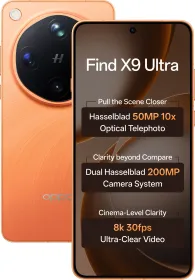
The Find X9 Ultra is available in two finishes including Tundra Umber and Canyon Orange. You can buy it on Flipkart, OPPO Experience Stores, offline retailers, and OPPO e-store.
Pros
- Incredible 10X optical telephoto camera
- Probably the best smartphone for portrait photography
- Outstanding Master Mode experience
- Excellent 20X lossless-quality zoom
- 50 MP default photos across multiple focal lengths
- Gorgeous 2K display with 1.4mm slim bezels
- Amazing haptics and speaker tuning
- Excellent battery life
- 100W wired and 50W wireless charging
- Excellent software with ColorOS 16
- USB 3.1, IR blaster, IP66/68/69 ratings, ultrasonic fingerprint scanner
Cons
- Huge camera module can interfere with some accessories
- 10X focus inconsistencies
- Auto Mode can still look slightly brighter than natural
- Device gets warm during heavy outdoor camera usage
- No magnetic ecosystem support like MagSafe
OPPO Find X9 Ultra Specifications
- Display: 6.82-inch QHD+ 10-bit LTPO OLED, BOE X3 panel, 3186 x 1440 resolution, 510 PPI, 1-144 Hz refresh rate, Dolby Vision, HDR Vivid, 3600 nits peak brightness, 1800 nits HBM brightness, 2160 Hz PWM dimming + DC dimming, Display P3 Pro chip, circular polarization technology, 1.4 mm symmetrical bezels
- Processor: Qualcomm Snapdragon 8 Elite Gen 5
- RAM: 12 GB LPDDR5X
- Storage: 512 TB UFS 4.1
- Main Camera: 50 MP Sony LYT-901, 1/1.12-inch, f/1.5, 23 mm, OIS, 4K30/60/120, 8K30
- Mid-Telephoto: 200 MP OmniVision OV52A, 1/1.28-inch, f/2.2, 70 mm, 3X, 15 cm MFD, OIS, 4K30/60/120, 8K30
- 10X Telephoto: 50 MP Samsung ISOCELL JNL, 1/2.75-inch, f/3.5, 230 mm, 10X, sensor-shift OIS, 4K30/60
- Ultra-wide: 50 MP Sony LYT-600, 1/1.95-inch, f/2.0, 14 mm, AF, 4K30/60
- Multispectral: 3.2 MP 24-channel “True Color”
- Front Camera: 50 MP Samsung JN5, 1/2.75-inch, f/2.4, 21 mm, AF, 4K30/60
- O-Log2 with ACES workflow, 3D LUT support with LUT burn-in and real-time preview
- Battery and Charging: 7050 mAh silicon-carbon, 100W SUPERVOOC, 50W AIRVOOC wireless charging
- Audio: Dual symmetrical stereo speakers, quad microphone system
- Connectivity: 5G, Wi-Fi 7, Bluetooth 6, NFC, USB 3.2 Gen 1, IR blaster
- Biometrics: Ultrasonic in-display fingerprint scanner
- Durability: IP66 + IP68 + IP69 dust and water resistance, SGS Premium Performance 5-Star drop resistance, Gorilla Glass Victus 2 front protection
- Software: ColorOS 16 based on Android 16, 5 OS updates + 6 years of security updates
- Dimensions & Weight:
- Tundra Umber: 9.1 mm thickness, 236g
- Canyon Orange: 8.65 mm thickness, 235g
- Colors: Tundra Umber, Canyon Orange
OPPO Find X9 Ultra Review: Unboxing

The OPPO Find X9 Ultra comes in a premium black retail box with Hasselblad branding and a fairly complete in-box package. Inside the box, you get the smartphone itself, a 100W SUPERVOOC charger, USB-A to USB-C cable, SIM ejector tool, documentation, and a protective case.
OPPO Find X9 Ultra Review: Design and Build

The OPPO Find X9 Ultra is a huge phone, but OPPO has done a surprisingly good job with the ergonomics. Even with the massive camera hardware inside, the phone still feels balanced in hand. The Tundra Umber variant that I tested weighs 236 grams and measures 9.1 mm thick, while the Canyon Orange version is slightly thinner and lighter at 8.65 mm and 235 grams.

What really helps is the weight distribution. The phone does not feel top-heavy in normal usage despite the giant camera module. OPPO has clearly spent time balancing the internals properly.

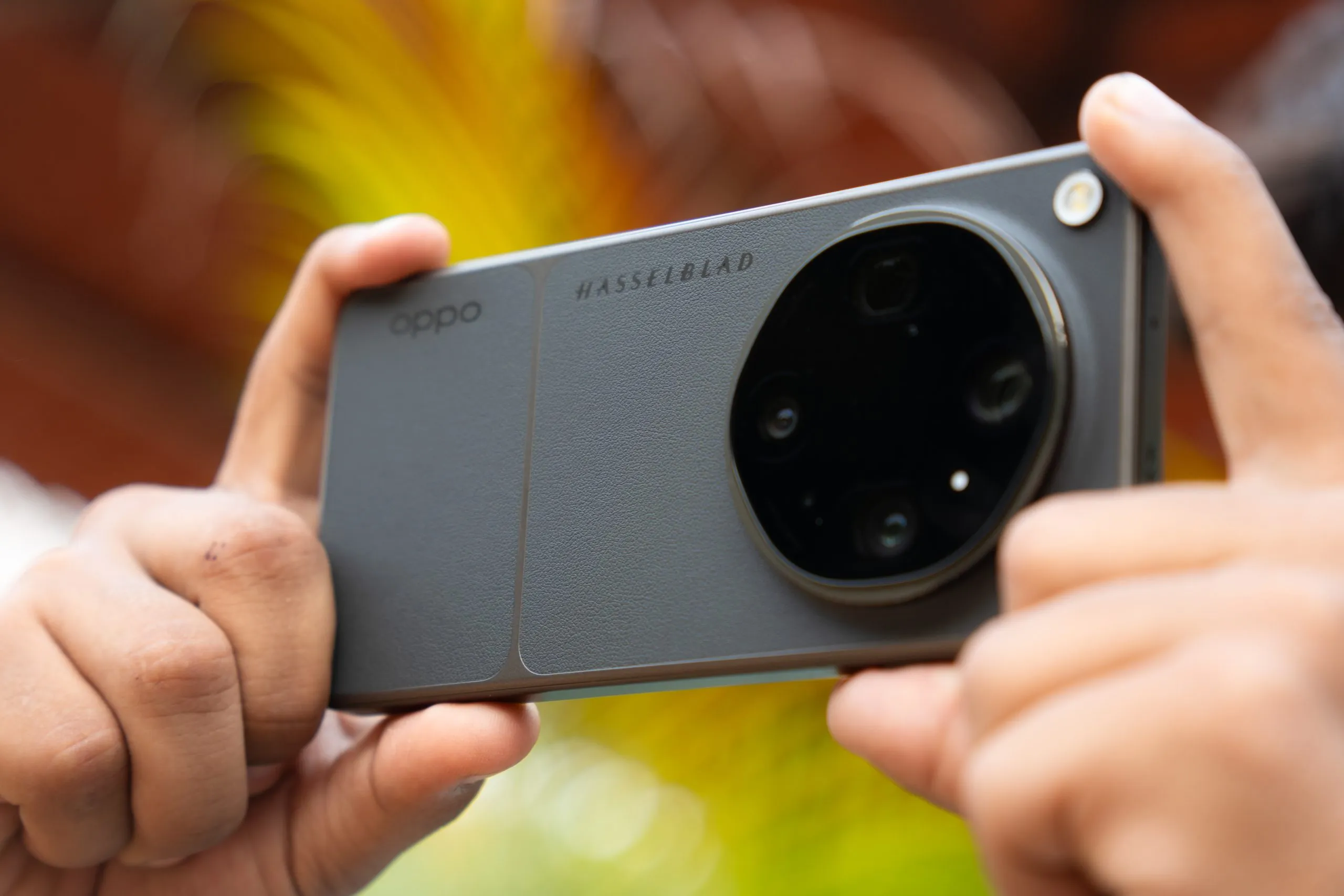
The design itself looks gorgeous. Tundra Umber is easily my favorite color. It has this earthy brown finish with a very camera-inspired aesthetic, with the Hasselblad branding and the orange-accented Quick Button. The texture at the back also helps with grip and fingerprints.


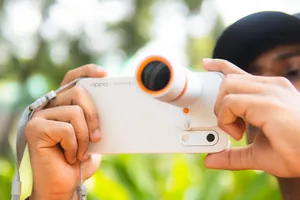
The camera module itself is inspired by Hasselblad cameras and looks much more unique than the standard circular camera layouts most brands are using now. It’s still large, of course, but OPPO has managed to keep it more controlled compared to some other Ultra phones. The vivo X300 Ultra still has the more intimidating camera island overall.

The bezels are extremely slim at around 1.4 mm and remain symmetrical on all sides. They are slightly thicker than the Find X9 and Find X9 Pro, but still among the thinnest on any flagship smartphone right now. The front of the phone looks incredibly immersive because of this.

Build quality is excellent throughout. You get Gorilla Glass Victus 2 protection on the front along with IP66, IP68, and IP69 ratings. OPPO also claims SGS Premium Performance 5-star drop resistance certification. The frame feels extremely solid and premium in daily usage.

On the right side, you get the power button and volume rockers. The buttons are positioned slightly high, though I got used to them quickly. The orange-accented Quick Button is also here. Personally, I disabled the scrolling gestures because I found them annoying, but I still use the button for quickly launching the camera app.

There’s also the Snap Key, which is customizable for shortcuts and actions like Ring/Vibrate/Silent, Screenshots, Camera, Snap to MindSpace, Do Not Disturb, Torch, Recorder, and Translate.

At the bottom, you get the USB 3.2 Gen 1 port, SIM tray, speaker grille, and microphones. Unlike many flagships, OPPO still includes an IR blaster here, which is genuinely useful. NFC support is present too, alongside Wi-Fi 7 and Bluetooth 6 connectivity.

One thing to note is that the giant camera module can interfere with some wireless chargers and magnetic accessories. There’s no native magnetic ecosystem support either. It’s not a dealbreaker, though it’s something worth knowing before buying.

Overall, the Find X9 Ultra looks and feels like a true ultra-flagship. The Tundra Umber finish especially stands out in a market filled with generic black slabs.
OPPO Find X9 Ultra Review: Display

The OPPO Find X9 Ultra features a 6.82-inch QHD+ LTPO OLED panel, and this is one of the best smartphone displays currently available.
OPPO uses a BOE X3 10-bit panel here with support for a 1 Hz to 144 Hz adaptive refresh rate. System animations and most UI interactions still operate at 120 Hz, but the panel itself can dynamically scale depending on the workload. Everything feels incredibly smooth on ColorOS 16.

The resolution is extremely sharp, colors look excellent, and the panel has fantastic contrast. OPPO’s tuning on this display is very balanced. Colors look vibrant, and HDR performance is excellent while watching content.
The display supports Dolby Vision and HDR Vivid, and video playback quality is flagship-grade. Outdoor visibility is also superb thanks to the 1800 nits HBM brightness. Even under harsh sunlight, I had no visibility issues.

Another thing I really appreciate is the display comfort. OPPO includes both 2160 Hz PWM dimming and DC dimming support here. Combined with the circular polarization technology, this display is much easier on the eyes during longer usage sessions and nighttime scrolling.
If I had to nitpick, an anti-reflective coating similar to Samsung’s Ultra series would’ve made the experience even better outdoors. Apart from that, this is an outstanding display.
OPPO Find X9 Ultra Review: Speakers and Haptics
The Find X9 Ultra comes with dual symmetrical stereo speakers, and they sound excellent. Loudness is very good, vocals sound clear, and there’s surprisingly decent bass presence for a smartphone.
The quad microphone system also deserves praise. Audio capture during video recording is good, and OPPO’s sound focus implementation works really well when zooming into subjects while recording videos. What I didn’t like was the lack of an audio eraser (or audio mix) feature.
Haptics are simply phenomenal here. OPPO continues to have the best haptic tuning on Android in my opinion. The X-axis “Bionic” vibration motor feels extremely precise and tightly integrated throughout ColorOS 16.

Whether you’re typing, adjusting sliders, interacting with the camera app, using gestures, or pressing the Quick Button, the haptic feedback feels crisp and refined.
The Find X9 Ultra easily sits among the best smartphones for speakers and haptics right now.
OPPO Find X9 Ultra Review: Software

The OPPO Find X9 Ultra runs ColorOS 16 based on Android 16, and this is currently my favorite Android skin overall. OPPO has refined the animations, responsiveness, multitasking, and visual consistency to a level where the phone feels smoother than almost every other Android flagship.

The animations across ColorOS 16.1 are extremely fluid. App opening and closing transitions, multitasking animations, blur effects, gesture navigation, and lock screen interactions all look very polished. OPPO has clearly spent a lot of time optimizing the software for high refresh rate displays because the entire UI consistently feels smooth and responsive.

One of the biggest additions is Live Space. It sits between the lock screen shortcuts and the status bar area and shows live activities in real time. You can see things like food delivery progress, navigation directions, timers, hotspot usage, music playback controls, and ongoing calls directly there.

Customization is still one of the strongest parts of ColorOS. You get Flux Themes, customizable lock screens, font adjustments, icon resizing, icon shape customization, wallpapers, clock styles, always-on display options, and plenty of smaller UI customization throughout the system.

Multitasking is also very good here. Floating windows, split screen, sidebar shortcuts, File Dock, and Open Canvas all work smoothly and feel properly integrated into the software.

AI Features
OPPO has heavily expanded its AI ecosystem this year. The Find X9 Ultra includes AI features across the gallery, notes, recording tools, system search, translation, productivity, and camera experience.
In the gallery app, you get AI Eraser, AI Reflection Eraser, AI Unblur, AI 4K Clarity Enhancer, AI Perfect Shot, AI Recompose, and AI Portrait Glow.
Mind Space creates an AI-powered memory space where you can save screenshots, text, images, and interactions. You can then ask MindPilot questions conversationally using integrated assistants like ChatGPT, Gemini, and Perplexity.

The new AI Bill Manager is also very practical. You can manually add expenses, use voice recordings, or quickly save transactions directly from screenshots and notifications. It tracks income, expenses, averages, and spending patterns automatically.

AI Menu Translation is another useful addition. In addition to translating restaurant menus, the system can actually identify items and create an interactive menu directly inside the Translate app.

AI VoiceScribe, AI Summary, AI Writer, AI Speak, AI Notes, AI Call Summary, AI Call Translation, AI Recorder Summary, and AI Document Scanning are all present too. Document scanning can remove reflections, shadows, and perspective distortion automatically.


ColorOS 16 also improves ecosystem connectivity significantly. Quick Share now supports direct file sharing with Apple devices like iPhone, iPad, and Mac without any additional apps. O+ Connect is still available for deeper integration, though most users probably won’t need it anymore.

There’s also BeaconLink support, AI LinkBoost for better signal stability, a self-developed RF chip, and a NetworkBoost chip to improve connectivity performance in crowded environments.

Overall, ColorOS 16 on the Find X9 Ultra feels extremely polished, feature-rich, and mature. OPPO has managed to add a huge number of features without compromising on smoothness.
OPPO Find X9 Ultra Review: Biometrics

The Find X9 Ultra uses an ultrasonic in-display fingerprint scanner, and it’s extremely fast and reliable in daily use. Unlock speeds are almost instant, and it works well even with slightly wet fingers.
Face unlock is available too, though this is still a standard 2D implementation mainly useful for convenience in good lighting conditions.
OPPO Find X9 Ultra Review: Performance

The OPPO Find X9 Ultra is powered by the Qualcomm Snapdragon 8 Elite Gen 5 chipset paired with 12 GB LPDDR5X RAM and up to 512 UFS 4.1 storage. 12 GB RAM on an Ultra flagship is a bit stingy, and I think it should’ve been 16 GB.
Still, apps open quickly, multitasking is smooth, gaming performance is excellent, and ColorOS 16 fully takes advantage of the hardware. Combined with the fast UFS 4.1 storage and excellent RAM management, the phone simply flies through daily usage.
Synthetic Benchmarks
| Benchmark | OPPO Find X9 Ultra (Snapdragon 8 Elite Gen 5) |
| AnTuTu Score | 3790368 |
| Storage (Score, Sequential Read Speed, Write Speed) | Score: 211903; Sequential Read: 4187 MB/s; Sequential Write: 3983 MB/s |
| Geekbench 6 CPU (Single-Core, Multi-Core) | Single-Core: 3533; Multi-Core: 9306 |
| Geekbench 6 GPU (OpenCL, Vulkan) | OpenCL: 24203; Vulkan: 27816 |
| 3DMark Wildlife Extreme (Score, Avg FPS) | Score: 7351; Avg FPS: 44.02 |
| 3DMark Wildlife Extreme Stress Test (Best Loop, Lowest Loop, Stability) | Best Loop: 6698; Lowest Loop: 2734; Stability: 40.8% |


Thermals are managed by its advanced vapor chamber and graphite cooling system. The phone can still get warm while shooting outdoors under Hyderabad heat conditions around 40°C, especially during extended camera sessions or 4K recording.
I did notice the camera app freeze when shooting in JPEG Max under extremely hot outdoor conditions, though it wasn’t something that happened regularly.
Gaming
BGMI supports 120 FPS gameplay and runs extremely smoothly. Frame pacing remains stable even during longer sessions, and touch responsiveness is excellent too. Thermals also stay in control, and the device doesn’t get too hot.
Genshin Impact also runs smoothly at maximum settings with stable 60 FPS gameplay. The GPU performance here is among the best currently available on Android. It can get a bit warmer than usual, but that’s expected in this hot weather.
OPPO Find X9 Ultra Review: Cameras

The OPPO Find X9 Ultra has one of the best and most complete smartphone camera systems I’ve used so far. OPPO has managed to combine insane hardware with refined processing, excellent focal length consistency, advanced video capabilities, and a camera experience that actually feels more enthusiast-focused.
This is a phone that makes you want to go outside and shoot photos. Whether I was shooting sunsets, city lights, food, portraits, landscapes, pets, products, or random street shots, the Find X9 Ultra consistently impressed me. More importantly, it gave me confidence across almost every focal length.
The versatility here is insane. You effectively get high-quality results from 14 mm ultra-wide all the way to 230 mm optical zoom, and even beyond that at 460 mm, OPPO’s processing still holds up really well.
The Find X9 Ultra uses a 50 MP LYT-901 main camera, a 50 MP LYT-600 ultra-wide camera, a massive 200 MP OV52A 3X telephoto camera, a 50 MP JNL 10X periscope camera with OPPO’s new quintuple-prism structure, and a new 3.2 MP 24-channel True Color multispectral sensor. And yes, this is also the first OPPO phone to support 8K recording.
Note: We’re still updating the review with camera samples. Please check back later.
Main Camera
The main camera uses a 50 MP Sony LYT-901 sensor measuring 1/1.12 inches paired with a bright f/1.5 aperture and 23 mm focal length. Even though this sensor is technically smaller than the 1-inch sensor from the Find X8 Ultra, the brighter aperture allows it to gather more light overall.
Photos from the main camera look detailed, sharp, natural, and balanced. OPPO has done an excellent job with HDR tuning this year. Bright skies, sunsets, neon signs, difficult indoor lighting, and nighttime highlights are all handled extremely well.


Depending on lighting conditions, the phone can automatically capture 50 MP, 25 MP, or 12.5 MP photos. The main camera frequently captures 50 MP shots by default, even in not-so-good lighting.
The 35 mm crop from the main camera, though not as good as the 35 mm main on the X300 Ultra, also looks excellent because of the large sensor size. It retains very strong detail and natural depth.
Low-light performance is incredible too. The larger aperture allows the sensor to pull in a lot of light, and OPPO avoids overbrightening nighttime scenes excessively.
Auto Mode can still occasionally expose scenes slightly brighter than I personally prefer. Lowering EV by around -0.3 or -0.7 fixes this instantly. Thankfully, OPPO allows you to permanently retain EV adjustments.
Master Mode
Master Mode is what truly separates the Find X9 Ultra from almost every other smartphone. This is the mode I kept coming back to throughout my testing period.
Master Mode dramatically reduces computational processing and AI enhancement, giving photos a much more natural, realistic, and camera-like appearance. You retain more texture, more natural contrast, realistic shadows, and significantly fewer AI artifacts.
In auto mode, zoom starts looking heavily processed or artificially sharpened. This is not the case with Master Mode. Even though the zoom is limited to 20X, the results look natural and clean.
You can adjust soft light, tonality, saturation, temperature, sharpness, vignetting, cyan-magenta balance, and more. You also get histogram support, metering controls, timers, focus controls, and full Pro Mode controls directly integrated.
OPPO includes a huge number of film simulations including Hasselblad Standard, Primrose, Vibrant, Vintage, Fresh, Clear, Neon, Cold Flash CCD, Warm Flash CCD, TX400 Black & White, Serenity, and many others.
You can shoot in JPEG, JPEG Max, RAW, and RAW Max. JPEG Max and RAW Max capture full 50 MP images and extract incredible detail from the cameras.
The phone also supports Night Mode inside Master Mode now, which is a huge improvement over previous generations.
There’s support for saving presets too, and OPPO plans to improve preset importing functionality further. You can also save shooting setups inside Mind Space.
If you enjoy photography and want smartphone photos that look closer to real camera output, Master Mode is genuinely amazing.
Ultra-Wide Camera
The ultra-wide camera is one of the strongest ultra-wide implementations currently available. OPPO uses a 50 MP Sony LYT-600 sensor measuring 1/1.95 inches paired with a 14 mm focal length and f/2.0 aperture.


That 14 mm focal length means the field of view looks much wider and more dramatic. Photos maintain excellent detail levels with strong HDR. There’s some noticeable chromatic aberration though, which needs to be fixed.
3X Periscope Camera
The 3X telephoto camera is absolutely ridiculous in the best way possible. OPPO uses a massive 200 MP OV52A sensor measuring 1/1.28 inches paired with a 70 mm focal length and f/2.2 aperture. This is an absurdly large sensor for a smartphone telephoto camera.
This camera also supports telemacro photography with a minimum focusing distance of just 15 cm. The 3X lens quickly became one of my favorite focal lengths on the phone. Compression looks beautiful, background blur appears natural, and the sensor gathers a huge amount of detail.


The 6X crop from this sensor is effectively lossless in most situations. Even without pixel peeping, it’s extremely difficult to notice quality degradation between 3X and 6X.
Low-light performance from this lens is also exceptional.
10X Periscope Camera
The 10X telephoto camera is what truly makes the Find X9 Ultra special. This uses a 50 MP Samsung JNL sensor measuring 1/2.75 inches paired with a 230 mm focal length, f/3.5 aperture, sensor-shift stabilization, and OPPO’s industry-first quintuple prism reflection periscope structure.
Traditional L-shaped periscopes would require significantly more space for this kind of focal length and sensor combination. OPPO’s quintuple-prism system allows the company to fit this inside the phone while still maintaining strong image quality.
Even handheld 10X shots come out surprisingly stable. OPPO also uses triple active optical alignment during manufacturing to improve alignment precision between the lens, prism, and sensor. The results are incredible.


10X photos look detailed, natural, and surprisingly clean. 20X remains very usable too and often looks almost lossless because the phone simply crops into the sensor. Though there are times when the results can be oversharpened in Photo mode.


Unlike some competing phones, OPPO avoids excessive AI hallucination at medium zoom levels. Images maintain a much more natural character overall. Even low-light 10X shots look shockingly good, especially in the Master Mode.
There are some focus inconsistencies beyond certain zoom ranges or while shooting moving objects, and hopefully OPPO improves this via updates.
Portrait Mode
The portrait mode on the Find X9 Ultra is currently the best I’ve used on any smartphone. To start things off, you can continuously zoom from 1X to 10X while shooting portraits, which gives you insane flexibility creatively.
The portrait rendering here looks camera-like. OPPO has nailed skin tones, edge detection, texture retention, depth separation, and background rendering.
Hair separation is excellent, difficult accessories are handled properly, and the phone avoids the overly artificial smoothing that many smartphones still apply aggressively.
The 3X portraits especially are incredible. You get beautiful compression, natural depth, and stunning background blur. The 10X portraits are also shockingly usable and can create extremely cinematic-looking shots.
High Resolution Mode
The Find X9 Ultra supports Hasselblad High Resolution mode with up to 200 MP capture from both the main camera and the 3X telephoto camera.
Processing speeds are dramatically faster this year compared to the previous generation. Capturing a 200 MP image takes roughly three seconds now.
If you enjoy landscapes, architecture, product photography, or cropping heavily into images later, this mode is extremely useful.
Selfie Camera
OPPO uses a new 50 MP Samsung JN5 sensor measuring 1/2.75 inches paired with autofocus and a very wide 21 mm focal length for the selfie camera. Although not as wide as the iPhone’s selfie camera, 21 mm is still pretty wide.
Image quality itself is excellent too. Selfies are detailed with good HDR, skin tones, and texture retention. Autofocus also helps significantly while recording videos or moving around.
Video
The Find X9 Ultra is one of the strongest smartphones for videography right now. The main and 3X cameras support 8K 30 FPS recording along with 4K 120 FPS recording. The ultra-wide, 10X, and selfie cameras support 4K 60 FPS recording. Dolby Vision recording works across all lenses.
OPPO has also introduced O-Log2 with ACES workflow support, which is genuinely impressive for creators. You get support for 3D LUTs, LUT burn-in, real-time LUT previews, live color grading previews, histogram tools, focus peaking, stabilization toggles, and full manual controls directly inside Pro Video mode.
This is a seriously powerful setup for filmmakers and creators. Video stabilization is excellent across lenses, especially from the 10X camera where the sensor-shift stabilization works incredibly well. The front camera can struggle with highlight control with faces sometimes.
XPan, Stage Mode, Silhouette Mode, and More
OPPO still includes all its specialty shooting modes too.
XPan mode remains one of the most enjoyable camera features on any smartphone. The cinematic 65:24 aspect ratio completely changes how you frame shots.
You also get Stage Mode, Silhouette Mode, Fireworks Mode, Long Exposure Mode, Action Mode, Dual View Video, and more.
OPPO Find X9 Ultra Review: Battery Life and Charging

The OPPO Find X9 Ultra packs a massive 7,050 mAh silicon-carbon battery, and the endurance on this phone is incredible. With medium to heavy usage involving camera testing, Instagram, Telegram, Chrome, YouTube, hotspot usage, navigation, and photography outdoors, I consistently got around 10 to 11 hours of screen-on time. That’s with 120 Hz enabled, 5G active, Bluetooth connected, and a decent amount of camera usage throughout the day.

The phone supports 100W SUPERVOOC wired charging along with 50W wireless charging. OPPO also supports PD and 55W PPS charging standards this time, which adds better compatibility with third-party chargers. Using the included 100W charger, it takes about 55 minutes for the X9 Ultra to go from 0 to 100%.
Wireless charging is nice, though the huge camera module can sometimes interfere with certain wireless chargers and magnetic accessories. The Find X9 Ultra does not support Qi2 or MagSafe-style magnetic alignment unfortunately.
Review Verdict: Should You Buy the OPPO Find X9 Ultra?
The OPPO Find X9 Ultra is one of the most complete smartphones I’ve used so far. OPPO has managed to combine insane camera hardware, polished software, flagship-level performance, excellent battery life, premium build quality, incredible haptics, and one of the best Android software experiences into a single device.
The camera system is the highlight here, and I think this is currently one of the best smartphone cameras on the market. The 10X telephoto camera changes what’s possible on a smartphone. The portraits are phenomenal. The ultra-wide is excellent. The Master Mode experience is addictive. And the focal length coverage from 14 mm to 460 mm is something very few phones manage properly.
There are still some flaws of course. The phone is heavy, the camera module is massive, certain zoom ranges can occasionally struggle with focus consistency, and Auto Mode can sometimes brighten scenes slightly more than I personally prefer. The Quick Button also remains somewhat annoying for me personally, though thankfully it can be customized or disabled.
The price is obviously extremely high too. At ₹1,69,999 officially for the 512 GB variant, this sits directly against phones like the iPhone 17 Pro Max and vivo X300 Ultra. Thankfully, offline discounts and offers can bring the effective price closer to around ₹1,50,000.
If you care about photography, videography, software experience, premium hardware, and the overall flagship experience, the OPPO Find X9 Ultra is easily one of the best smartphones you can buy right now.

Smartprix ⭐ Rating: 9.3/10
- Design and Build: 8.8/10
- Display: 9.4/10
- Speakers: 9/10
- Software: 9.5/10
- Haptics: 9.5/10
- Biometrics: 9.5/10
- Performance: 9.1/10
- Cameras: 9.5/10
- Battery Life & Charging: 9.8/10
First reviewed in June 2026.