

JioTag 2 vs. Apple AirTag (2nd Gen): Table of Contents
If you’re looking to buy a Bluetooth tracker, there’s a new option in the market: the JioTag 2. So now, the obvious question is whether the JioTag 2 is better than the AirTag (2nd Gen), especially since it’s much more affordable and compatible with both Android and iOS. In this comparison, we’ll try to figure out the differences between the two Bluetooth trackers, and in the end, recommend which one is better for you.
Also Read: JioTag 2 Launches in India With Apple Find My and Google Find Hub Support for ₹1,249
JioTag 2 vs. AirTag 2: Design, Durability & Form Factor
| Spec | JioTag 2 | Apple AirTag (2nd gen) |
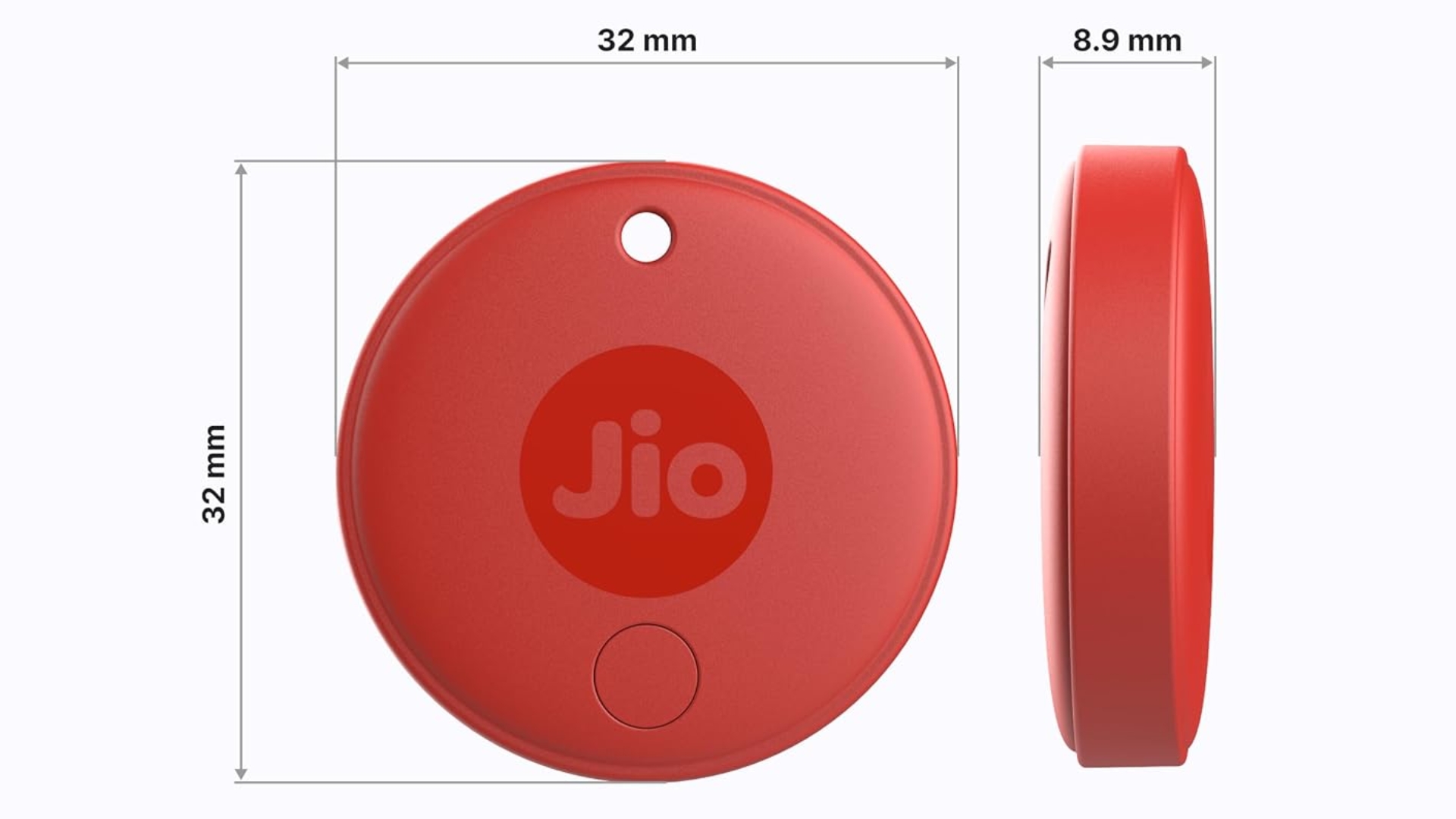
| Dimensions | 32 x 32 x 8.9 mm | 31.9 x 31.9 x 8.0 mm |
| Weight | 30g | 11.8g |
| Build Material | Polycarbonate | Aluminum and plastic (85% recycled plastic enclosure) |
| Water/Dust Rating | IP64 (splash and dust resistant) | IP67 (submersible up to 1m for 30 mins) |
| Battery Type | Replaceable, up to 1 year (spare included) | Replaceable CR2032 coin cell |
| Colours | Black, Green, Red | Silver (with optional accessory colors) |
| Price | Listing Price: ₹2,999Offer Price: ₹1,249 | Listing Price: ₹3,790 (single)Offer Price: ₹3,190 |
The JioTag 2 is similar in size to the AirTag (2nd Gen), though it’s slightly thicker and much heavier. Unlike the first JioTag, this one is circular in shape. Even so, there’s a start difference in the trackers’ design. While the JioTag has a plastic build, the AirTag features an aluminum casing, which makes it feel more premium.
Another key difference is the presence of a built-in mounting loop, which makes it easier to secure onto bags, bicycles, or luggage handles without needing a separate case, something AirTag owners often end up buying anyway. Furthermore, the JioTag 2 is available in three colors, while the AirTag comes in one and only one finish.
Also Read: Google Confirms August 12 Pre-Orders For The Pixel 11 In India
On durability, Apple pulls ahead on paper. The AirTag’s IP67 certification means it can survive brief submersion, while the JioTag 2’s IP64 rating only guarantees protection against splashes and dust, not a dunk in water. That gap should matter for anyone who tracks gear that might get rained on or dropped near or in water.
Both trackers run on a replaceable battery and are rated to last up to one year. However, the JioTag 2 comes with two batteries in the box, which doubles the effective battery life after purchase. For the AirTag, you’d need to invest in a new battery from the second year onward.

Also Read: OPPO Find X10 Ultra Could Get a Much Larger 10X Camera Sensor, Leak Suggests
JioTag 2 vs. AirTag 2: Connectivity & Ecosystem
| Spec | JioTag 2 | Apple AirTag (2nd gen) |
| Bluetooth | Bluetooth Low Energy (BLE) | Bluetooth Low Energy (BLE) |
| UWB Chip | Not included | Apple-designed 2nd-gen Ultra Wideband chip |
| NFC | Not mentioned | Yes (NFC tap for Lost Mode) |
| Compatible Ecosystems | Apple Find My + Google Find Hub | Apple Find My only |
| SIM/Cellular Required | No | No |
| Community Network Size | Billions of Android and iOS devices | Apple’s Find My network only |
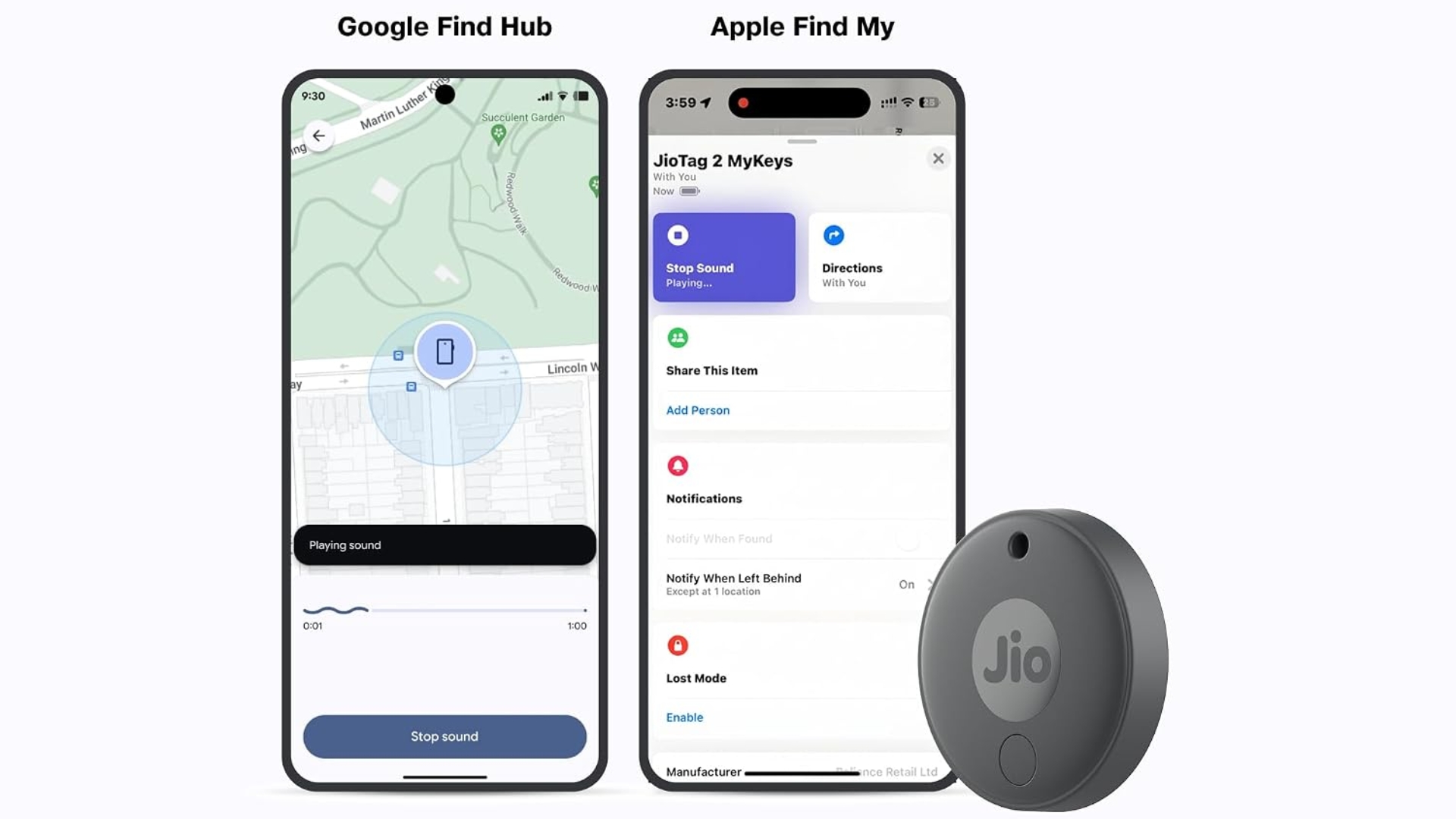
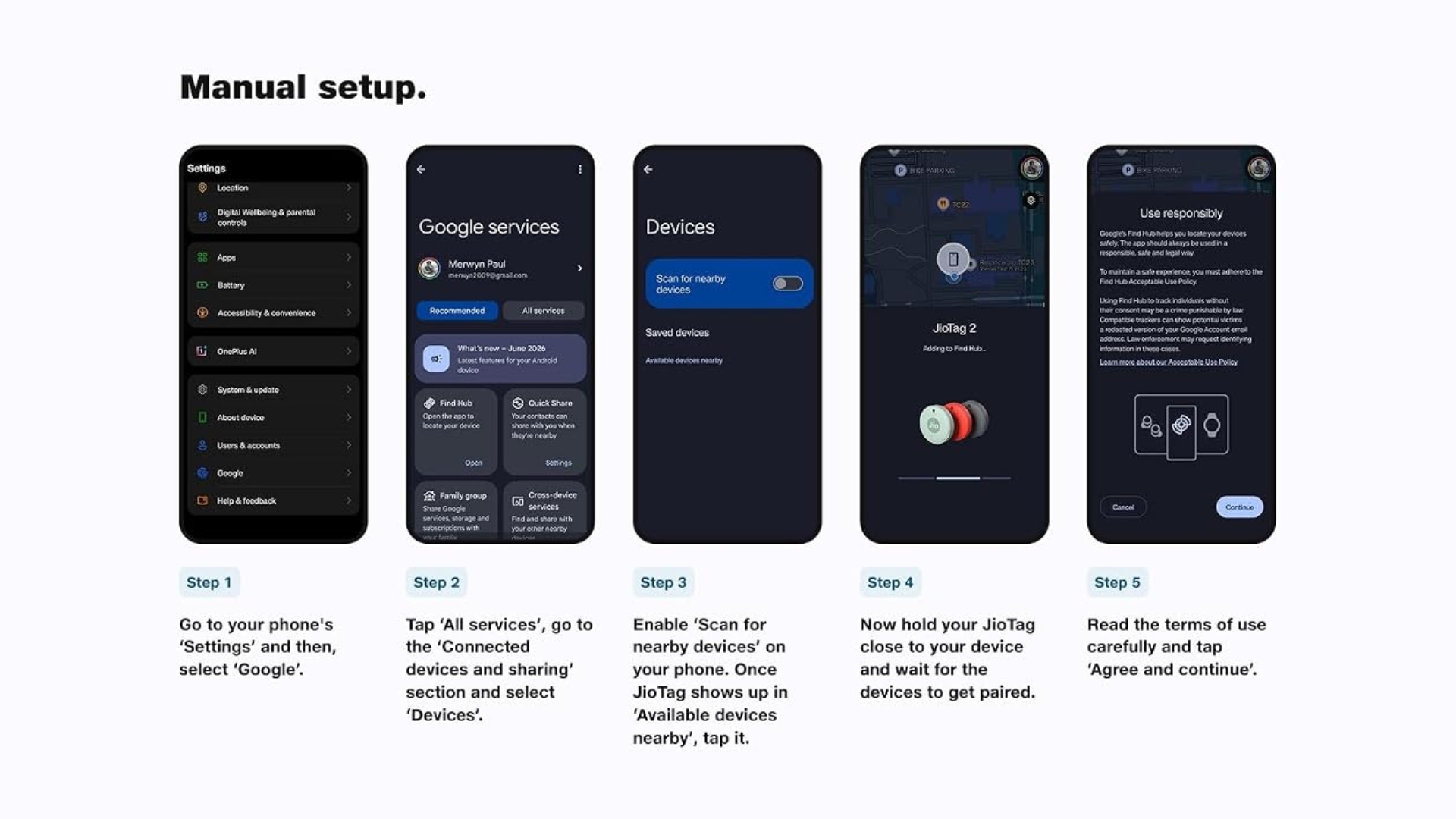
The JioTag 2’s biggest selling point, especially in the segment that it is targeting, is that it works with both Apple’s Find My and Google’s Find Hub. In other words, you can use it with an iPhone or an Android phone by following the required setup process. Naturally, this makes the JioTag 2 compatible with a larger pool of devices than the AirTag.
Apple’s AirTag, in contrast, is built exclusively around Apple’s ecosystem. So, it simply won’t pair with an Android device for active tracking. Sure, the JioTag 2 is the obvious choice for a massive pool of customers. However, there are a couple of things that the AirTag offers over the JioTag, particularly in terms of connectivity.

Also Read: OnePlus’s Independence Day Sale 2026 Cuts Prices Across Its Entire Lineup
For the additional price that the AirTag commands, it offers some genuinely useful features. AirTag’s second-generation Ultra Wideband chip, the same that is found on the iPhone 17 series, enables genuinely precise short-range direction-finding. It is something that no Bluetooth-only tracker, including the JioTag 2, can offer.
It also features an NFC tap feature for triggering Lost Mode, another small but useful addition the JioTag 2 completely misses. If you’re already fully inside Apple’s ecosystem, this hardware advantage is real. However, if you’re on Android or split across both platforms in your household, you can’t use the AirTag.
Also Read: POCO M8 Power Launched in India: Check Pricing and Specifications
JioTag 2 vs. AirTag 2: Tracking Features
| Spec | JioTag 2 | Apple AirTag (2nd gen) |
| Precision Finding | Not available | Yes, up to 50% farther range than 1st-gen AirTag |
| Audio Alert | 120 dB built-in buzzer | Built-in speaker, 50% louder than 1st-gen |
| Real-Time Location | Semi real-time, community-based | Semi real-time, community-based + Precision Finding for exact direction |
| Apple Watch Integration | Not applicable | Yes (Series 9+/Ultra 2+) |
Both trackers rely on the same fundamental approach. It includes passive Bluetooth beaconing, which is backed by a crowd-sourced network of devices that send their own location (not the tracker’s location) when you try to locate a device outside the Bluetooth range. None of them have built-in GPS. Doesn’t matter which one you choose, you don’t get real-time location tracking.

Where they differ is in what happens once you’re close to the trackers (or in the Bluetooth range), and the comparison tilts in the favor of the AirTag. Apple’s Precision Finding uses UWB to guide you directly to the object with on-screen directions. The JioTag 2 leans entirely on its 120 dB buzzer for close-range discovery. It works well enough in a quiet room. However, it is far less useful in a noisy environment or a cluttered space.
Also Read: Apple’s iPhone 18 Pro Price Hike Might Be Steeper Than Its Recent Mac And iPad Increases

Conclusion: Which One Should You Buy?
The honest answer depends entirely on which phone is in your pocket, how much precision you actually want, and, ultimately, your budget. If you’re using an Android smartphone, or your household mixes both platforms, the JioTag 2 isn’t just the cheaper option; it’s also the only one that actually works for you. At less than a third of the AirTag’s price, it’s hard to argue against it for straightforward everyday tracking.
If you’re deep in the Apple ecosystem, the AirTag’s UWB-powered Precision Finding and higher water resistance justify its price premium. However, there’s one scenario where I see even iPhone users buying the JioTag 2 in India. If they don’t want to spend over ₹3,000 on one Bluetooth tag, or they want to purchase multiple tags for luggage bags they’re taking on a vacation, then purchasing three JioTag 2 would cost as much as the AirTag (2nd Gen)’s listing price.

Frequently Asked Questions (FAQs)
Q: Can an AirTag be used with an Android phone?
No, AirTags only pair and track actively through Apple’s Find My network, which requires an iPhone or iPad.
Q: Does the JioTag 2 work with iPhones?
Yes, it natively supports Apple’s Find My network alongside Google’s Find Hub, making it usable on both platforms.
Q: Which tracker has a better water resistance rating?
The AirTag’s IP67 rating beats the JioTag 2’s IP64, allowing brief submersion versus splash resistance only.
Q: Does the JioTag 2 offer precision directional finding like the AirTag?
No, it lacks a UWB chip, so it relies solely on a loud buzzer for close-range item recovery.
Q: Do either of these trackers need a SIM card or data plan?
No, both rely entirely on Bluetooth beaconing and community device networks, with no cellular connectivity required.
You can follow Smartprix on Twitter, Facebook, Instagram, and Google News. Visit smartprix.com for the latest tech and auto news, reviews, and guides.