

Quick Verdict
The Infinix Note 60 Pro is one of the most feature-packed phones you can buy around ₹31,000 right now. You get a premium aluminum frame, a sharp 144 Hz AMOLED display, wireless charging, JBL-tuned stereo speakers, a huge 6,500 mAh battery, and a surprisingly decent software experience with XOS 16. The Active Matrix display on the back also gives the phone a unique personality that stands out in a market full of identical-looking slabs.
At the same time, there are a few compromises that stop it from being an easy recommendation. The use of UFS 2.2 storage at this price, the camera hardware is decent rather than exceptional, and the IP64 rating falls behind newer IP68/IP69 competitors. The Snapdragon 7s Gen 4 delivers decent everyday performance, though the overall experience is not as good as other devices in this segment.
Buy it if:
- You want a premium metal-frame phone with flagship-inspired design.
- You want wireless charging and reverse wireless charging around ₹30K.
- You care about display quality, speakers, and multimedia experience.
- You want a large battery with strong charging features and good thermals.
Skip it if:
- You want faster UFS 3.1 or UFS 4.0 storage.
- You want the best camera performance.
- You want better water resistance like IP68/IP69.
- You prefer a smoother and more polished software experience like ColorOS.
The Infinix Note 60 Pro focuses on design, battery life, charging, display quality, and a few unique additions like the Active Matrix display on the back. It also marks an important shift for Infinix, as one of its first mainstream phones powered by a Snapdragon chipset.
The phone starts at ₹30,999 and brings an aluminum frame, slim profile, Snapdragon performance, and a few hardware additions that make it different from Infinix’s earlier devices. So, does the Infinix Note 60 Pro justify its ₹30,999 starting price? Let’s find out in this review.
HOW I TESTED
| Reviewed By: Mehtab Ansari, Expert in Smartphones, Laptops, Audio Gear, AI and more (5 years experience, 100+ reviews). Test Unit: Infinix provided the review unit of the Infinix Note 60 Pro, though the company had no involvement in the editorial process of this review. Duration and Environment: The phone was used for a little over two weeks during testing on Jio’s 5G network in India. The unit ran XOS 16 based on Android 16 during the review period. Tests: I ran benchmarks such as AnTuTu, Geekbench 6, and 3DMark, tested gaming performance in BGMI and Call of Duty Mobile, evaluated the cameras across different lighting conditions, and monitored battery life during mixed Wi-Fi and 5G usage. I also tested the Active Matrix display features, wireless charging, reverse charging, and bypass charging behavior during gaming. Competitors: Motorola Edge 70, POCO X8 Pro, Nothing Phone (4a), OnePlus Nord CE6 |
Infinix Note 60 Pro Price & Availability
The Infinix Note 60 Pro starts at ₹30,999 for the 8 GB + 128 GB variant, while the 8 GB + 256 GB version is priced at ₹34,999.
The phone is available in Deep Ocean Blue, Mocha Brown, and Solar Orange color options through Flipkart and the official Infinix India store.
Pros
- Premium aluminum frame and slim design
- Excellent AMOLED display
- JBL-tuned stereo speakers sound very good
- Large 6,500 mAh battery
- 90W fast charging
- Wireless charging support at this price is rare
- Active Matrix display adds a unique touch
- XOS 16 animations and smoothness have improved noticeably
- Good haptics
Cons
- UFS 2.2 storage feels outdated for ₹31K
- IP64 rating falls behind IP68/IP69 competitors
- Camera system is decent but not class-leading
- Software still has occasional jitters and polish issues
- Infinix software updates are not usually very fast
Infinix Note 60 Pro Specifications
- Display: 6.78-inch AMOLED display, 1208 x 2644 resolution, 429 PPI, 144 Hz refresh rate, 2304 Hz PWM dimming, 700 nits typical brightness, 1600 nits HBM, 4500 nits peak brightness, Ultra HDR support, Gorilla Glass 7i protection
- Processor: Qualcomm Snapdragon 7s Gen 4, Adreno 810
- RAM: 8 GB / 12 GB LPDDR5
- Storage: 128 GB / 256 GB UFS 2.2
- Main Camera: 50 MP, f/1.6, 1/1.95-inch sensor, PDAF, OIS, 23 mm focal length, 4K30 video
- Ultra-wide Camera: 8 MP, 1/3.5-inch, f/2.2, 14 mm, 2K30 video
- Front Camera: 13 MP, f/2.2, 1/3-inch sensor, fixed focus, 24 mm focal length, 4K30 video
- Battery: 6,500 mAh silicon-carbon battery, 90W wired charging, 30W wireless charging, 7.5W reverse wired charging, 5W reverse wireless charging
- Build: Gorilla Glass 7i front, aluminum frame, aluminum back
- Audio: Stereo speakers tuned by JBL, Hi-Res audio, Hi-Res wireless audio
- Connectivity: Wi-Fi 6, Bluetooth 5.3, NFC, IR blaster, GPS, USB Type-C 2.0, OTG
- Biometrics and Sensors: In-display fingerprint scanner, heart rate sensor, SpO2 sensor, physical proximity sensor, accelerometer, gyroscope, compass
- Software: XOS 16 based on Android 16; 3 OS updates + 5 years of security updates
- Special Features: Active Matrix display, RGB notification light, One Tap button, bypass charging, Matrix Mini Play
- Weight and Thickness: 201 grams, 7.4 mm
- Protection: IP64 dust and splash resistance
- SIM: Dual Nano-SIM + eSIM support
- Colors: Deep Ocean Blue, Mocha Brown, Solar Orange
Infinix Note 60 Pro Review: Unboxing

The Infinix Note 60 Pro box includes the phone itself along with a magnetic protective case. You also get a 90W charger, a USB-A to USB-C cable, a SIM ejector tool, and the usual documentation.
The bundled magnetic case is a nice addition since it works with the phone’s wireless charging functionality. Infinix also includes a pre-applied screen protector out of the box.
Infinix Note 60 Pro Review: Design and Build

The design is easily one of the strongest aspects of the Infinix Note 60 Pro. The phone immediately gives off a far more premium impression than most devices around this price range. The flat aluminum frame, matte rear finish, slim chassis, and symmetrical design language together make the device look and feel expensive in hand.
At just 7.4 mm thick, the Note 60 Pro is surprisingly slim considering it packs a massive 6,500 mAh battery inside. Even the weight distribution is handled quite well. At around 201 grams, the phone never becomes uncomfortable during longer usage sessions and the chassis actually feels denser and more premium compared to many plastic-frame competitors.

The Mocha Brown variant that I used looks especially clean. The darker finish combined with the metallic frame gives the device a subtle flagship-like appearance. Infinix is clearly taking some inspiration from recent iPhone designs here, particularly around the camera module and frame styling, though the phone still manages to build its own identity through the Active Matrix system on the back.
One of the biggest highlights is the Active Matrix display integrated into the rear camera module area. Infinix combines this with an RGB notification light system that can light up during calls, charging, notifications, gaming, music playback, and system events. You can also customize animations, brightness, and effects through Matrix Studio inside settings.

The Matrix system can show charging animations, battery percentage, icons, pixel animations, and even mini games like Star Blast and Dot Dash. It’s not an essential feature, though it definitely gives the phone more personality than most devices in this segment.


The One Tap button placed on the side is another interesting addition. By default, it acts as a mute switch, though you can customize it to launch apps, turn on the flashlight, trigger screen recording, or activate other shortcuts. After using it for a few days, it actually becomes quite convenient.

The phone uses Gorilla Glass 7i protection on the front and an aluminum frame around the sides. The overall chassis feels sturdy with very little flex. Despite the premium materials, the device still maintains a comfortable grip because of the flat sides and rounded corners.

That said, the IP64 rating feels underwhelming at this price. Several phones in this segment are now moving toward IP68 or even IP69 protection, so the splash resistance here does not feel particularly competitive anymore.
Ports and connectivity are mostly good. The bottom houses the USB Type-C 2.0 port, primary speaker, SIM tray, and microphone, while the top includes the dedicated secondary JBL speaker, another microphone, and the IR blaster. The USB 2.0 port is disappointing, but that’s pretty standard in this segment nowadays.


Connectivity performance overall was solid during my usage. The phone supports Wi-Fi 6, Bluetooth 5.3, dual Nano-SIM support, eSIM support, NFC, and a physical proximity sensor, which is nice to see since many brands still rely on virtual proximity implementations.

There’s also a built-in heart rate sensor integrated near the power button. It works reasonably well for quick readings, though I don’t see most users relying on it regularly.
Overall, the Infinix Note 60 Pro delivers one of the best in-hand experiences you can currently get around ₹30,000. The aluminum frame, slim chassis, wireless charging support, Matrix system, and premium finishing make the device stand out immediately. The IP64 rating and USB 2.0 port are noticeable compromises, though the overall hardware package still leaves a strong first impression.
Infinix Note 60 Pro Review: Display

The Infinix Note 60 Pro uses a 6.78-inch AMOLED display with a 1208 x 2644 resolution and a 144 Hz refresh rate. The panel itself is one of the strongest parts of the phone and easily delivers a flagship-like visual experience in several areas.
Sharpness is excellent thanks to the 429 PPI, and the AMOLED panel produces rich colors with deep blacks. Text clarity is very good while scrolling social media, reading articles, or watching videos. The bezels are also fairly slim, which helps the phone look more immersive from the front.

The display supports refresh rate switching between 60 Hz, 90 Hz, 120 Hz, and 144 Hz. However, the system only runs at 120 Hz. In the default mode, many apps are locked to 90 Hz, though you can manually force them to run at 120 Hz. You can only run a few apps like Phone, WhatsApp Business, Facebook, at 144 Hz.
Brightness performance is solid. The panel reaches around 700 nits in typical brightness, 1600 nits in HBM, and up to 4500 nits peak brightness in HDR scenarios. Outdoor visibility was not an issue during my usage, even under harsh sunlight.
Interestingly, the OnePlus Nord CE 6 actually pushes slightly higher sustained brightness in regular usage, though the difference is not massive in day-to-day use. Both displays are excellent overall.

The display includes 2304 Hz PWM dimming as well, which helps reduce flickering at lower brightness levels. Infinix also includes multiple eye-care and display customization options inside XOS.
That said, the software optimization is still not fully polished. There are occasional micro-stutters and animation inconsistencies throughout the UI. It is nowhere near bad, though you can still tell that ColorOS and even Funtouch OS remain more refined overall.
The always-on display implementation is another area where Infinix could improve. The AOD transitions seamlessly into the lock screen, though it disappears after a few seconds instead of remaining fully active.
Infinix Note 60 Pro Review: Speakers and Haptics
The Infinix Note 60 Pro features a stereo speaker setup tuned by JBL, with a dedicated secondary speaker placed at the top of the device. The overall speaker quality is impressive for this segment.
The speakers get very loud without sounding overly distorted at higher volumes. Vocals are clear, stereo separation is decent, and media consumption in general is enjoyable on this phone.
A separate magnetic speaker accessory for the Infinix Note 60 Pro was bundled for free during the initial offer period, though it is now sold separately. It connects over Bluetooth, gets reasonably loud, and also works as a 5W magnetic wireless charger and a stand.

That said, the accessory itself does not add a lot of value. The stereo speakers on the Infinix Note 60 Pro are already surprisingly good, so most users probably would not feel the need for an external speaker like this. The charging speed is also quite slow at 5W, which limits its practicality beyond casual desk use.

Haptics are also surprisingly good. The phone uses an X-axis motor and the vibration feedback feels tighter and more refined than older Infinix devices. Typing feedback, gesture navigation, and UI interactions all feel reasonably tactile.
It still does not match the quality and O-Haptics integration on the OnePlus Nord CE6, though for this segment, the haptics are definitely above average.
Infinix Note 60 Pro Review: Software

The Infinix Note 60 Pro runs XOS 16 based on Android 16, and this is probably the biggest software improvement I’ve seen from Infinix in quite some time.
The overall interface now looks much more modern compared to older XOS versions. Animations are smoother, and the entire UI carries a more glass-inspired visual style throughout the system. There is very obvious inspiration from iOS in several parts of the interface, especially with transparency effects, icon styling, depth layering, and certain animations.

Surprisingly though, the implementation is not bad at all. The software actually feels visually attractive most of the time, and Infinix has clearly put effort into making the UI appear more premium. Features like Depth Perspective wallpapers, floating windows, smart panels, glass-style quick settings, and smoother animation behavior all help the experience feel more polished than previous generations.

One area where XOS has improved significantly is animation smoothness. It’s still not as smooth as OxygenOS 16 on Nord CE6, though Infinix is no longer as far behind like before. General navigation feels responsive and fluid throughout the system.
Infinix AI

The AI suite here is massive, and Infinix has packed in pretty much every AI feature you’d expect right now.
You get AI HD Enhancement for increasing photo resolution, AI Flare Remover for clearing flare from point light sources, AI Shadow Remover for removing shadows from document shots, and AI Reflection Eraser too.
AI Eraser lets you remove objects by selecting or painting over them, and AI Extender can expand images beyond the original frame. There’s also text selection directly from photos.
The Recorder app can summarize recordings, supports multiple languages, and even works offline after downloading language packs. In the Notes app, you can paste YouTube links to generate summaries (though Gemini already does this pretty well inside YouTube).
There’s an AI Suggestions widget for contextual recommendations, Folax AI for more on-device AI commands, Translation Assistance for on-screen text translation, and AI Subtitles for real-time translated captions from video speech.
AI Writing tools are integrated system-wide too, so you can rewrite text, fix grammar/spelling, or generate summaries by long pressing text. You can also summarize selected text while browsing.
And yes, there’s even an AI Theme Generator that can create themes from text prompts, images, or generate a full home screen theme based on a photo.
Some features overlap with Gemini and Circle to Search, but overall, Infinix has loaded this thing with AI tools.
Gaming-related features are also quite extensive. XArena allows performance prioritization, notification blocking, thermal management, and gaming optimization controls. Bypass charging is supported during gaming and navigation, which helps reduce heat buildup while plugged in.
Update policy is actually competitive here. Infinix promises 3 OS updates and 5 years of security updates, which is better than the OnePlus Nord CE 6’s 2 + 4 policy. That said, Infinix historically has not been the fastest brand when it comes to pushing updates consistently, so long-term execution still remains a question mark.
Overall, XOS 16 is surprisingly good now. The software experience is much smoother, visually modern, and feature-packed compared to older Infinix phones. It still lacks the refinement and consistency of OxygenOS, though it no longer feels like a major weakness of the device.
Infinix Note 60 Pro Review: Biometrics

The Infinix Note 60 Pro uses an in-display optical fingerprint scanner for biometric authentication. The scanner itself is reasonably quick and reliable during normal usage. The positioning could have been slightly higher though.
Face unlock is also available using the front camera. It works quickly in good lighting conditions and is perfectly usable for convenience, though it remains a standard 2D implementation without advanced security features.
Infinix Note 60 Pro Review: Performance

The Infinix Note 60 Pro is powered by the Snapdragon 7s Gen 4 chipset built on a 4 nm process. This is an important device for Infinix because it marks one of the company’s first mainstream phones using a Snapdragon platform instead of MediaTek.
The chipset itself is fairly capable for this segment and thermal management is also handled reasonably well. The bypass charging feature also helps while gaming plugged in. That said, the biggest limitation here is definitely the storage.
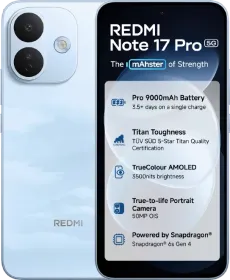
The phone still uses UFS 2.2 storage, which simply does not feel acceptable anymore at ₹31,000. Both the vivo T5 Pro and OnePlus Nord CE 6 offer UFS 3.1 storage, and you can notice the difference in certain situations.
Synthetic Benchmarks
| Benchmark | Infinix Note 60 Pro (Snapdragon 7s Gen 4) |
| AnTuTu Score | 1087196 |
| Storage (Score, Sequential Read Speed, Write Speed) | Score: 48334; Sequential Read: 935 MB/s; Sequential Write: 925 MB/s |
| Geekbench 6 CPU (Single-Core, Multi-Core) | Single-Core: 1241; Multi-Core: 3403 |
| Geekbench 6 GPU (OpenCL, Vulkan) | OpenCL: 3618; Vulkan: |
| 3DMark Wildlife Extreme (Score, Avg FPS) | Score: 1212; Avg FPS: 7.26 |
| 3DMark Wildlife Extreme Stress Test (Best Loop, Lowest Loop, Stability) | Best Loop: 1196; Lowest Loop: 1192; Stability: 99.7% |


App installation speeds, heavier multitasking, file transfers, and some parts of the system responsiveness already show the limitations of UFS 2.2. Right now the experience is still mostly smooth, though this is the kind of compromise that will age poorly over time.
Gaming performance is decent overall, though not perfect. BGMI supports Smooth + Extreme+ settings with 90 FPS mode enabled. However, the frame rate fluctuates quite a bit during actual gameplay. The phone averages around 77 FPS, so stability could definitely be better.

Call of Duty Mobile performs much better. The game supports 120 FPS and the overall experience is smoother and more stable compared to BGMI. Free Fire also supports 120 FPS gameplay and runs very smoothly on the device.
Genshin Impact is where the limitations become more noticeable. The game averages around 35-40 FPS during normal gameplay, though there are frequent frame drops and inconsistent performance during heavier scenes and combat.
Infinix Note 60 Pro Review: Cameras

The Infinix Note 60 Pro uses a dual rear camera setup consisting of a 50 MP main camera with OIS and an 8 MP ultra-wide camera. On the front, you get a 13 MP selfie camera.
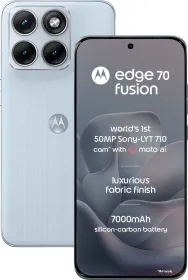
On paper, the hardware looks fairly decent for the segment, though competitors like the Nothing Phone (4a) and Motorola Edge 70 Fusion do have an advantage with larger sensors and a higher resolution 32 MP front camera.
Note: We are still updating the review with camera samples. Please check back later.
Main Camera
The primary camera uses a 1/1.95-inch sensor with an f/1.6 aperture and OIS support. In good lighting conditions, the phone can capture fairly decent-looking images with respectable detail levels and balanced colors.
The camera processing generally avoids extremely overprocessed or oversaturated results, which I actually appreciated. Colors usually look natural enough and dynamic range is acceptable, though HDR performance still feels somewhat average compared to Edge 70 Fusion.


OIS helps stabilize shots reasonably well and low-light performance is decent enough for casual usage. The phone can retain usable detail in darker environments with Night Mode, though the image can become soft.
Inside the camera app, you can zoom digitally up to 15X, switch between Standard and Bright color profiles, and use a bunch of filters like Vintage, Dusk, Cream, and Morning.


Switching between lenses, or even cropping can result in different exposures.


There are also scene presets for Stage, Sunset, and Food that automatically tune the image accordingly.
There’s a Snap mode for quick street-style photography with four focal length options, and a Super Macro mode that uses the ultra-wide camera.
The Sky Shop feature is pretty fun too. You can replace the sky with presets like Sunny, Azure Sky, Sunset, Twilight, Starry, Milky Way, Aurora, and Moon.
Ultra-wide
The ultra-wide camera is serviceable at best. It gets the job done for occasional shots, though detail levels are noticeably weaker compared to the primary sensor and dynamic range drops quite a bit.


Portraits
Portrait mode supports 24 mm, 35 mm, and 50 mm focal lengths, with adjustable blur and beauty filters. Edge detection is decent, though it could still improve a bit. Portrait mode also supports flash, which is nice to see.
The portraits are usable overall, though definitely not among the best in this price segment.


Selfies
The 13 MP front camera actually performs reasonably well. Selfies usually come out sharp with pleasing skin tones and decent facial detail in good lighting.
The beauty filter is enabled fairly aggressively by default though, so I would strongly recommend turning it down immediately.


Dynamic range from the front camera is decent enough and the overall selfie experience is perfectly acceptable for social media and casual usage.
Video

For video, the main camera supports up to 4K 30fps, while the ultra-wide can shoot at 1080p 30fps or 2K 30fps (though it gets pretty noisy). The front camera also supports 4K 30fps, plus Cinematic Video at 1080p 30fps. Cinematic mode is available on the rear camera too at 1080p 30fps.
You also get Dual Video for recording from the front and rear cameras simultaneously, a Pro mode (though RAW shooting is missing), and a dedicated Document mode for scanning documents.
Overall, the camera system on the Note 60 Pro is decent enough and not a major highlight of the device.
Infinix Note 60 Pro Review: Battery Life and Charging
The Infinix Note 60 Pro packs a 6,500 mAh silicon-carbon battery, which is still a large capacity by normal standards, though some direct competitors have started pushing even bigger batteries recently, at 8,000 mAh and 9,020 mAh.

Despite that, the actual battery life on the Note 60 Pro still turns out to be quite decent in daily usage. With mixed usage involving 5G, social media, YouTube, gaming, camera usage, and photography, the phone consistently delivered around 7.5 hours of screen-on time during my testing.
The phone supports 90W wired charging and Infinix includes the charger inside the box. It takes about 45 minutes for the device to go from dead to a full 100%. The Note 60 Pro also supports 30W wireless charging, which is still extremely rare around this price segment.

Neither the vivo T5 Pro nor the OnePlus Nord CE6 offer wireless charging support, and this alone gives the Infinix a unique advantage for buyers who actually care about convenience features.
You also get 7.5W reverse wired charging and 5W reverse wireless charging support for accessories and smaller devices.
Another useful addition is bypass charging support during gaming and navigation. This allows the phone to directly power the system instead of constantly charging the battery while plugged in, helping reduce heat buildup during longer gaming sessions.
Review Verdict: Should You Buy the Infinix Note 60 Pro?
The Infinix Note 60 Pro stands out because of the overall hardware package. You get an aluminum frame, slim design, wireless and reverse wireless charging, JBL-tuned stereo speakers, a large AMOLED display, solid battery life, and the Active Matrix system on the back. The overall multimedia experience is very good, and XOS 16 is much better than older Infinix software versions.
At the same time, there are a few compromises. UFS 2.2 storage at ₹30,999 is disappointing when rivals like the Motorola Edge 70 Fusion, vivo T5 Pro, and the OnePlus Nord CE6 offer UFS 3.1. Gaming performance is decent, though stability in heavier games could be better, and while the cameras are good enough, they don’t really stand out.
If you want a phone with a premium design, good multimedia experience, wireless charging, and a flagship-style in-hand feel, the Note 60 Pro is a solid option. If gaming and long-term performance matter more, the Motorola Edge 70 Fusion, vivo T5 Pro, and the OnePlus Nord CE6 could be better-balanced choices.

Smartprix ⭐ Rating: 7.7/10
- Design and Build: 8.8/10
- Display: 8.5/10
- Speakers: 8.5/10
- Software: 7.8/10
- Haptics: 8/10
- Biometrics: 7.8/10
- Performance: 7.5/10
- Cameras: 7/10
- Battery Life & Charging: 8.2/10
First reviewed in May 2026.