

Quick Verdict
The OPPO F33 Pro looks premium, stays slim, has a good AMOLED display, excellent battery life, fast charging, and a really strong selfie camera. ColorOS also adds plenty of useful features for daily use.
At the same time, performance is only fine for regular tasks, and the rear camera setup is underwhelming. Overall, it makes the most sense if design, battery comfort, and selfies matter more to you than anything else.
Buy it if:
- You want a beautiful phone with excellent battery life and fast charging.
- You care about selfies, display quality, and a feature-rich everyday software experience.
Skip it if:
- You want better gaming performance and faster overall smoothness.
- You want a more versatile rear camera setup with features like ultra-wide or 4K video.
The OPPO F-series usually targets buyers who care about design, cameras, battery life, and a polished everyday experience more than benchmark numbers. The OPPO F33 Pro follows that same formula closely.
At first glance, it checks a lot of boxes people usually like. It looks premium, is pretty slim, charges quickly, has a bright AMOLED display, and comes with a super wide selfie camera. For a lot of casual users, that alone can make it appealing.
However, once you look at the price segment it enters, things become more important. Around ₹38,000 to ₹41,000, buyers usually expect stronger performance, fewer compromises, and a more complete hardware package. That’s where the F33 Pro becomes a more selective recommendation.
This is a phone that will suit some people very well, especially if selfies, design, and battery comfort matter most to you. Others may find something that fits them better depending on their priorities. Let’s break it all down.
HOW I TESTED
| Reviewed By: Mehtab Ansari, Expert in Smartphones, Laptops, Audio Gear, AI and more (5 years experience, 100+ reviews). Test Unit: Review unit of the OPPO F33 Pro, with no involvement of OPPO in the editorial process. Duration and Environment: I used the device smartphone for over two weeks on the Jio network in India. Testing included indoor, outdoor, commuting, and warm weather use. The temperatures in my city were higher than usual, due to summers. Tests: Calls, social media, messaging, camera use, gaming, video streaming, hotspot use, navigation, charging, long scrolling sessions, standby drain, and daily multitasking. Competitors: OnePlus Nord 6, vivo V70 FE, POCO X8 Pro Max, Nothing Phone 4a |
OPPO F33 Pro Price & Availability
The OPPO F33 Pro is available in two variants:
- 8 GB + 128 GB: ₹37,999
- 8 GB + 256 GB: ₹40,999
The phone is available through OPPO’s official channels, major online platforms, and offline retail stores across India.
Pros
- Slim and beautiful design
- Good in-hand feel
- Bright AMOLED display
- 120 Hz refresh rate
- Strong selfie camera with autofocus
- Good battery life
- Fast charging
- Solid stereo speakers
- Useful ColorOS features
- IP68/IP69K
Cons
- Competition offers better performance
- No ultra-wide camera
- No 4K video
- No OIS
- Springy haptics
- Some bloatware pre-installed
- Camera processing speed is slow
OPPO F33 Pro Specifications
- Display: 6.57-inch AMOLED, 1080 x 2372 resolution, 120 Hz, 600 nits typical, 1400 nits HBM, Asahi Glass DT-STAR D+
- Processor: MediaTek Dimensity 6360 Max (2x 2.4 GHz Cortex-A76 + 6x 2.0 GHz Cortex-A55), Mali-G57 MC2 GPU
- RAM: 8 GB LPDDR4X
- Storage: 128 GB / 256 GB UFS 2.2
- Card Slot: Hybrid Slot, Dual Nano SIM or Nano SIM + microSD
- Main Camera: 50 MP OV50D 1/2.88-inch, f/1.8, 27mm, PDAF, 1080p30/60, no OIS
- Secondary Camera: 2 MP depth
- Front Camera: 50 MP Samsung JN5, 1/2.76-inch, f/2.0, 100° ultra-wide, AF, 18mm, 1080p30
- Battery: 7000 mAh Si/C battery
- Charging: 80W wired, 55W PPS, 13.5W PD, reverse wired charging
- Connectivity: 5G, Wi-Fi ac dual-band, Bluetooth 5.4, GPS, GLONASS, GALILEO, BDS, QZSS, USB Type-C 2.0, OTG, Dual nano-SIM
- NFC: No
- Audio: Stereo speakers, no 3.5mm jack
- Biometrics: Optical in-display fingerprint scanner, face unlock
- Build: Glass front, plastic frame, plastic back
- Durability: IP68 / IP69K, MIL-STD-810H
- Software: Android 16, ColorOS 16
- Dimensions: 158.4 x 75.2 x 8.3 mm
- Weight: 194g
- Colors: Misty Forest, Passion Red, Starry Blue

OPPO F33 Pro Review: Unboxing
Inside the box, OPPO includes the F33 Pro handset, 80W SUPERVOOC charger, USB-A to USB-C cable, protective case, SIM ejector tool, and documentation. A screen protector comes pre-applied as well, which many buyers still appreciate.
OPPO F33 Pro Review: Design and Build
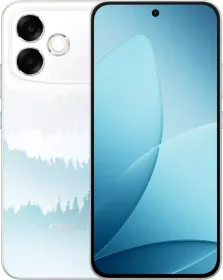
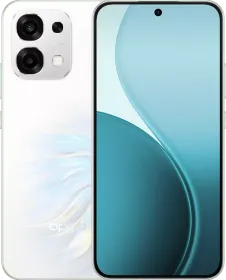
The OPPO F33 Pro clearly spends a lot of its effort on first impressions. From a distance, it looks cleaner and more polished than many phones in this price range. The flat frame design, clean rear layout, and slim profile help it look more expensive than it is.

At 194 grams and 8.3 mm thick, it is not ultra-light, but pretty impressive considering that it packs a 7,000 mAh battery inside. The in-hand feel is comfortable, and the flat sides give better grip than curved glossy phones that slide around too easily.
The phone comes in Misty Forest, Passion Red, and Starry Blue. I have the Passion Red and it has one of the most beautiful finishes of red I’ve ever seen on a smartphone.

Unfortunately, you get a plastic frame and plastic back. It does not necessarily feel cheap, though it does not give the dense, premium feel some other devices in the segment manage with better materials.
Durability is one of the stronger parts here. IP68 and IP69K ratings are here, and useful in real life. Rain, dust, splashes, and rougher use are less stressful on this phone. OPPO also claims MIL-STD-810H testing, which adds some reassurance.

The power button and volume rockers are on the right side. At the bottom, you get a USB 2.0 port, which is disappointing at this price, along with a microSD + nano SIM hybrid slot, the microphone, and the primary speaker. Up top, there’s the second stereo speaker and another noise-canceling microphone.


The OPPO F33 Pro also supports AI Link Boost 3.0, which is designed to improve network performance. The company has also partnered with Jio to bring 5G++ connectivity.
Overall, I think OPPO has done a good job with the design of the F33 Pro. It looks really good, especially in this Passion Red color that I have with me. The camera bump is almost non-existent, which is nice, and the bezels on the front are even on all sides.

The phone just looks clean and well put together. Even the flash has a donut-style shape, which adds a bit of character to the design.
OPPO F33 Pro Review: Display
The F33 Pro uses a 6.57-inch AMOLED panel with a 120 Hz refresh rate and 1080 x 2372 resolution. On paper, that is a decent setup for this segment, and in daily use it does enough right.

Colors look pleasing, blacks are deep, and contrast is what you would expect from AMOLED. Social media, streaming, and casual browsing all look good. Sharpness is fine at this size, so text and icons stay clear.

Brightness reaches up to 1400 nits HBM. Outdoor visibility is respectable. Under harsh sunlight, content remains readable without too much struggle. The PWM frequency is also rated at 2,160 Hz, which is good news for people with sensitive eyes.

Bezels are reasonably slim (and uniform), and the flat panel is practical for typing and also screen protectors. Also, many users still prefer flat screens because accidental touches are less annoying.

There are limits. This is not an LTPO panel, there is no advanced HDR class experience, and the limited performance struggles to keep the display running at a smooth 120 Hz at all times. Still, for most buyers, the display will be one of the more likable parts of this phone.
OPPO F33 Pro Review: Speakers and Haptics
The OPPO F31 Pro comes with a stereo speaker setup, and the audio is actually pretty good. When you pair that with its display, the overall multimedia experience for watching videos or casual content is good, which is what you’d expect at this price.

These speakers are not the loudest, though the quality is still good enough for your daily use. You also get the 300% volume boost mode. It does mess with the tuning quite a bit, but if you just want extra loudness, the option is there and it’s completely optional.

When it comes to haptics, the OPPO F31 Pro is a bit disappointing. You get that springy vibration style, and there’s no X-axis linear motor here.
OPPO F33 Pro Review: Software
The F33 Pro runs ColorOS 16 based on Android 16, and the software is one of the better parts of the phone. OPPO knows how to make Android look clean, modern, and feature-packed. Menus are easy to understand, and the UI is simple to get used to.

You get a good amount of customization too. Things like icon styles, fonts, wallpapers, fingerprint animations, home screen layouts, floating windows, split screen, app cloning, private safe, screen recording, file dock, and privacy features are all here.

Although there isn’t a dedicated OPPO AI page in the Settings app, there are also plenty of AI features such as AI Recorder, AI Translate, AI Eraser, Reflection Eraser, AI Unblur, AI Recompose, AI Perfect Shot, AI Portrait Glow for lighting up faces, and document scanning inside the camera app. The Photos app also has a built-in editor for trimming, filters, music, and simple reel-style edits.

Unfortunately, features like AI Mind Space, Circle to Search, and AI Call Summary are completely missing here. I was especially surprised to see Circle to Search missing on a phone in this price range. Hopefully, OPPO adds these through a future OTA update.


You do get occasional glitches, lag, and random slowdowns. It becomes more noticeable while gaming, where the smoothness just isn’t there.
Animations for opening and closing apps are present, but some visual polish is missing. There is no proper background blur in many places, apart from some blur in the quick panel. So the interface looks clean, though not as refined as stronger devices.

The always-on display is one of the weaker areas here. You only get a single clock style with almost no customization, and the display turns off after around 10 seconds, so it is not truly always on.

There is also the usual OPPO clutter with pre-installed apps, search page promotions, and lock screen extras that you may want to clean up on day one.
The good news is that OPPO has promised 3 major OS updates and 4 years of security updates for the F33 Pro. Overall, ColorOS 16 does help the F33 Pro in daily use, but there is still room for improvement.
OPPO F33 Pro Review: Biometrics

The phone uses an optical in-display fingerprint scanner. Unlock speed is good, recognition is reliable, and day-to-day use is straightforward. It is not class-leading, though it is dependable enough that you stop thinking about it after setup.
Face unlock is available through the front camera. It works quickly in good lighting and is convenient for casual use. In darker rooms, consistency drops as expected from camera-based face unlock.
OPPO F33 Pro Review: Performance
The phone uses the MediaTek Dimensity 6360 Max with 8 GB RAM and UFS 2.2 storage. For light use such as calling, messaging, streaming, maps, and social apps, it performs adequately. If your usage is simple, the phone remains usable and stable.
Once workload increases, the limitations become obvious. This chipset is quite weak for a phone priced this high. Multitasking is not its strength. Switching between multiple apps can lead to reloads, slower resumes, and pauses that competitor devices handle more smoothly. And games like BGMI put pressure on the processor quickly.

Synthetic Benchmarks
| Benchmark | OPPO F33 Pro (Dimensity 6360 Max) | OnePlus Nord 6 (Snapdragon 8s Gen 4) | vivo V70 FE (Dimensity 7360) |
| AnTuTu Score | 556632 | 2290104 | 933342 |
| Storage (Score, Sequential Read Speed, Write Speed) | Score: 79771; Sequential Read: 548 MB/s; Sequential Write: 553 MB/s | Score: 131276; Sequential Read: 3987 MB/s; Sequential Write: 3600 MB/s | Score: 99695; Sequential Read: 1921 MB/s; Sequential Write: 1872 MB/s |
| Geekbench 6 CPU (Single-Core, Multi-Core) | Single-Core: 748; Multi-Core: 1792 | Single-Core: 2033; Multi-Core: 6369 | Single-Core: 1030; Multi-Core: 2943 |
| Geekbench 6 GPU (OpenCL, Vulkan) | OpenCL: 1456; Vulkan: 1465 | OpenCL: 13160; Vulkan: 18262 | OpenCL: 2530; Vulkan: 2521 |
| 3DMark Wildlife Extreme (Score, Avg FPS) | Score: 378; Avg FPS: 2.27 | Score: 4485; Avg FPS: 26.86 | Score: 868; Avg FPS: 5.20 |
| 3DMark Wildlife Extreme Stress Test (Best Loop, Lowest Loop, Stability) | Best Loop: 380; Lowest Loop: 378; Stability: 99.5% | Best Loop: 4227; Lowest Loop: 2130; Stability: 50.4% | Best Loop: 867; Lowest Loop: 861; Stability: 99.3% |


Storage performance is also average by current standards. UFS 2.2 is serviceable, though it does not help the phone feel especially fast. It’s also probably the reason why the phone can feel slow randomly.

Lighter games should be fine on moderate settings. BGMI runs at a maximum of 60 FPS and I got an average of 55.8 FPS in a 13 minute session, with temperatures hovering around 39°C (thanks to the 4,289mm² vapor chamber). The gameplay wasn’t exactly impressive, but playable.
OPPO F33 Pro Review: Cameras
The F33 Pro is clearly built around one camera more than the others, and that is the selfie camera. On the back, you get a 50 MP main camera with an auxiliary sensor. There is no ultra-wide camera here, and that is something many people will notice at this price. Group shots, landscapes, and tighter indoor scenes would have benefited from a second usable lens.
Main Camera
In daylight, the main camera is decent. Photos come out clean, colors are punchy, and it is easy to get social media-ready shots. Dynamic range is acceptable in easier scenes, though brighter skies and harsh sunlight can still be a challenge. 2X crops lack any details.


Shutter speed is okay in good light, though image processing can take a bit longer than expected after capture. The HDR preview in the viewfinder is also not very impressive, so the final image often looks better than what you see before taking the shot. Portraits are underwhelming, with unpleasant bokeh and poor edge detection.


There is no OIS here, so photos and videos can be a bit shakier than expected. In low light, the camera is usable with enough surrounding light. Once scenes get darker, detail drops, smearing increases, and highlights can blow out.


Video recording is limited to 1080p at 30 fps or 60 fps on the rear camera. There is no 4K support, which is disappointing in this price range. That limitation also comes from the chipset itself, so the phone does not support 4K playback either. Even 1080p footage can look shaky with visible jerkiness during movement.
Selfie Camera
This is where the phone makes the strongest case for itself. The 50 MP front camera uses an 18 mm ultra-wide field of view and autofocus, which is actually useful in daily use. Group selfies are easier, framing is more flexible, and focus is more reliable than fixed-focus front cameras.


Selfies come out detailed with pleasant skin tones in good light. Front camera video is good enough (though limited to 1080p at 30 fps), so if you care about video calls, social media, or casual vlogging, this is a solid part of the phone.


The camera setup is selective. The front camera gets proper attention, while the rear camera system is more basic for the price. If selfies are your main priority, the F33 Pro has clear appeal. If you care more about anything else, there are better options in this range.
Realme Review: Battery Life and Charging
Battery life is one of the easiest things to like here. The phone packs a 7,000 mAh silicon-carbon battery, which is a huge capacity for a fairly normal-sized device. For most people, this should comfortably last two days with light to moderate use.

Even if you use your phone more heavily, getting through a long day should not be an issue. I could get 10-12 hours of screen time on 5G and Wi-Fi mixed use.
Charging is rated at 80W wired, with support for 55W PPS and 13.5W PD. That also gives you more flexibility with third-party chargers, which is nice to have. It takes around 1 hour and 15 minutes to fully charge this device.
There is also 5W reverse wired charging for accessories or emergency top-ups. Battery life is easily one of the main reasons someone would pick this phone.
Review Verdict: Should You Buy the OPPO F33 Pro?
The OPPO F33 Pro is a phone with a very specific pitch. It gives you a premium-looking AMOLED display, excellent battery life, strong IP ratings, and a good selfie camera. Those parts of the experience are easy to appreciate.
At the same time, performance is underwhelming for the segment, the rear camera is too basic, storage is only UFS 2.2, there is no NFC, and it lacks Circle to Search. Even then, if battery life, selfies, display quality, and OPPO’s software matter more to you, you could consider the F33 Pro.

Smartprix ⭐ Rating: 7.1/10
- Design and Build: 8/10
- Display: 8/10
- Speakers: 7/10
- Software: 8/10
- Haptics: 7/10
- Biometrics: 7.5/10
- Performance: 5.5/10
- Cameras: 6.5/10
- Battery Life & Charging: 9/10
First reviewed in April 2026.