

Quick Verdict
The Galaxy S26 5G is a refined, compact flagship that gets a lot of things right. It includes an excellent display, a capable camera system, and a genuinely capable 2nm Exynso 2600 chip that handles day-to-day usage, multitasking, and gaming like a pro. All of this is rounded up by the One UI 8.5 experience (along with the seven-year software promise). However, like no other smartphone, it is not without its compromises, which include absense of magnetic wireless charging and a lack of higher optical zoom camera.
Smartprix Ratings: 8.2/10
Buy it if:
- You’re upgrading from a Galaxy S23 or older Samsung flagship
- You want one of the best compact Android flagship
- Long-term software support (7 years) is a priority for you
- You’re deeply invested in the Samsung ecosystem (Galaxy Watch, Buds, DeX)
- You want 120 fps BGMI gaming
Skip it if:
- You already own a Galaxy S25 the upgrade is marginal, and Galaxy AI is coming to your phone anyway
- Fast charging matters to you
- You shoot a lot of zoom or low-light photography and want updated hardware
I picked up the Galaxy S26, and found its pitch quite convincing. A compact, premium build, powerful phone that features the world’s first 2nm chipset, and a mature camera system backed by Samsung’s increasingly capable AI. While One UI offers a clean and refined user interface, it also takes care of long-term users. On paper, and in hand, the smartphone checks every flagship box with quiet confidence.
I’ve spend a few weeks with the Galaxy S26 now, getting a chance to actually check most of the check boxes, and, well, the phone holds its ground quite well, especially for a user like me who uses an iPhone as a daily driver. It’s the tension between what the spec sheet says and what the phone actually feels like to live with is exactly what this review is about.
HOW I TESTED
| Reviewed By: Shikhar Mehrotra (Consumer Tech, Auto, and AI Expert with 6+ years of experience) Test Unit: Samsung provided the review unit of the Galaxy S26 5G. The company had no involvement in the editorial process. Duration and Environment: I used the device as my primary smartphone for over four weeks on the Jio network in North India, including a road trip to Mussoorie. The unit I tested was the Cobalt Violet variant, 12GB + 256GB, running the Exynos 2600 chipset. Tests: Daily usage, including calls, social media, streaming, navigation, and multitasking. I also tested gaming performance in BGMI at the Smooth + Ultra Extreme (120fps) setting, camera performance across a wide range of lighting conditions and environments, and ran several mainstream benchmarks including AnTuTu V11 and Geekbench 6. Competitors: Apple iPhone 17, Google Pixel 10, vivo X300, oppo Find X9. |

Jump to :
Galaxy S26 5G Price & Availability
The Galaxy S26 5G is available in India in two configurations.
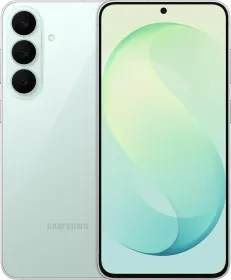
Color options: Cobalt Violet, White, Black, Sky Blue, Pink Gold (Samsung.com exclusive), and Silver Shadow (Samsung.com exclusive).
Pros
- Compact, lightweight flagship at just 167g
- Premium build materials front and back
- Excellent LTPO AMOLED display with vivid colors
- World’s first 2nm smartphone chipset
- Better sustained performance under heat
- 12GB RAM and 256GB storage standard
- Reliable, versatile primary camera system
- Most feature-dense Galaxy AI suite yet
- Seven years of OS and security updates
- Future-ready Wi-Fi 7 and Bluetooth 6
Cons
- Camera hardware unchanged since Galaxy S23
- 25W charging slow for a ₹87,999 flagship
- No built-in Qi2 magnets for wireless charging
- Galaxy AI exclusivity already eroding to S25
- Exynos battery life still trails behind Snapdragon
Samsung Galaxy S26 5G Specifications
- Display: 6.3-inch Dynamic LTPO AMOLED 2X, FHD+ (2340 × 1080), 120Hz adaptive (1Hz–120Hz), 441 ppi, 2,600 nits peak brightness, HDR10+ support, Android Ultra HDR, Corning Gorilla Glass Victus 2 protection
- Processor: Samsung Exynos 2600 (2nm) with AMD Xclipse 960 GPU (RDNA 4 architecture)
- RAM and Storage: 12GB LPDDR5X RAM, 256GB / 512GB UFS 4.0 storage (no microSD support)
- Main Camera: 50MP Samsung ISOCELL GN3, 1/1.56-inch, f/1.8, OIS, dual-pixel PDAF, 23mm equivalent, 8K30 / 4K60 video
- Telephoto Camera: 10MP Samsung ISOCELL 3K1, 1/3.94-inch, f/2.4, OIS, PDAF, 3x optical zoom (69mm equivalent), 4K60 video
- Ultrawide Camera: 12MP, 1/2.55-inch, f/2.2, fixed focus, 14mm equivalent, 120° field of view, 4K60 video
- Front Camera: 12MP Samsung ISOCELL 3LU, 1/3.2-inch, f/2.2, dual-pixel PDAF, 23mm equivalent, ~85° field of view, 4K60 video
- Battery and Charging: 4,300mAh battery, 25W wired fast charging (0–55% in ~30 minutes), 15W wireless charging, 4.5W reverse wireless charging (PowerShare); no built-in Qi2 magnets
- Connectivity: Wi-Fi 7 (802.11 a/b/g/n/ac/ax/be), Bluetooth 6, NFC, 5G (Sub-6 GHz), USB Type-C (USB 3.2), Dual nano-SIM + eSIM; GPS, GLONASS, Galileo, QZSS; no Ultra-Wideband (UWB)
- Audio: Stereo speakers, Dolby Atmos support, no 3.5mm headphone jack
- Biometrics: Ultrasonic in-display fingerprint sensor, face unlock
- Build and Durability: Armor Aluminum 2 frame, Corning Gorilla Glass Victus 2 front and back (matte finish), IP68 dust and water resistance (1.5 metres, 30 minutes)
- Software: One UI 8.5 based on Android 16, 7 years of OS upgrades + 7 years of security patches
- Dimensions and Weight: 149.6 × 71.7 × 7.2mm, 167 grams
- Other Features: Galaxy AI (Now Nudge, Now Brief, Audio Eraser, Call Screening, Photo Assist, Creative Studio), ProVisual Engine, Horizon Lock, Gemini / Perplexity / Bixby assistant support, Privacy Protection (Gemini Nano on-device), Smart Clipboard, Samsung Knox
Samsung Galaxy S26 5G Review: Design
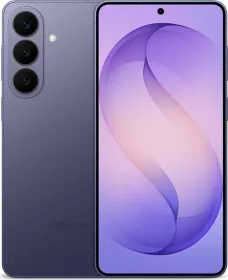
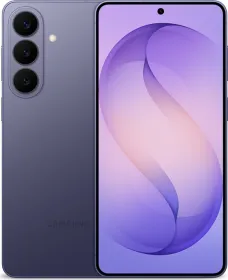
The first thing that I noticed about the Galaxy S26 wasn’t a spec; it was how lightweight and slim the device is. At 167 grams, 7.2mm thin, the phone is noticeably slimmer than my iPhone 17, which is supposed to be its direct competitor in 2026, and much more comfortable to grip.

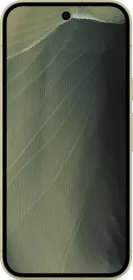
The phone features a boxy design, flat panels (very slightly curved toward the back), and symmetrical front bezels, all of which scream flagship in 2026. The punch hole is larger than I’ve seen on some Android smartphones, but it’s still smaller than the Dynamic Island on my iPhone 17.

The materials backing up the design are legitimately good. We’re talking about the Armor Aluminum 2 frame (with a very light texture) and Corning Gorilla Glass Victus 2 on the front and the back (matte finish), with “SAMSUNG” etched toward the bottom.

It’s the combination of the design, dimensions, and materials that creates an in-hand feel that’s genuinely hard to fault at this price point. The phone sits in my palm without any awkward overhang. One-handed use, including reaching the top corners, dismissing notifications, and typing with a thumb, feels natural.

The Galaxy S26 comes in six colors: Cobalt Violet (the one we’ve received for this review), White, Black, Sky Blue, and two Samsung-exclusive finishes: Pink Gold and Silver Shadow. The Cobalt Violet color shifts from a deep shade of violet to shades of dark blue in different lights.
The camera module, I’d say, is a two-edged sword on the Galaxy S26. While it does have a cleaner, more cohesive look, and draws more attention to the camera module (when you’re using the phone without a case), it protrudes noticeably more than the flush-camera setup on the Galaxy S25 series.
This leads to increased wobble on a flat surface when you’re using the phone face down, especially while typing. Over weeks of use, I also noticed some dust and lint buildup between and around the lenses.

The Galaxy S26, like every other modern flagship, features an official IP68 rating. However, there’s more nuance to it than you’d think. While Samsung rates the Galaxy S26 for submersion in up to 1.5 meters of freshwater for 30 minutes, Apple rates the iPhone 17 for six meters of submersion under the same conditions.
For most people, who might drop their phone in the kitchen sink or a puddle on the road, spill a bottle of water on it, or expose it to a sudden outpour, the difference won’t matter. However, if you’ve ever dropped your phone in a swimming pool, the difference in submersion depth adds up quickly. As with other flagships, you don’t get a charger in the box.
Samsung Galaxy S26 5G Review: Display

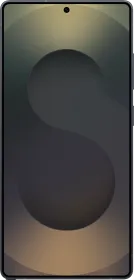
The 8-bit 6.3-inch Dynamic LTPO AMOLED 2x panel on the Galaxy S26 is ever so slightly bigger than the Galaxy S25’s 6.2-inch panel, and about the same size as the iPhone 17. It does exactly what it’s designed for: producing vivid and punchy colors, with genuinely deep blacks, excellent contrast, and support for HDR10+ content (which helps while viewing both YouTube and Netflix content).
Since it’s an LTPO panel, the adaptive refresh rate can go all the way down to 1Hz for the always-on display, saving the battery, and to 120Hz when you’re scrolling past the user interface or gaming. In fact, the screen also supports the Android Ultra HDR standard, wherein supported photos display brighter highlights in both Samsung’s Gallery app and Google Photos. You can control the feature via Settings > Advanced Features > Super HDR.

I’ve extensively tested the smartphone’s screen in various lighting conditions: in a dark room at night, the same room with sunlight coming in from a window in the afternoon, under artificial lights, on a sunny day under a shade, and under direct sunlight, and it doesn’t disappoint, well, for the most of it. It is under direct sunlight that I wish the brightness slider had some more room left.
Rated peak brightness — 2,600 nits — is great in isolation, but the iPhone 17 and the Pixel 10 10 break that threshold by going up to 3,000 nits. It’s the Pixel 10, in particular, that has an ever-higher HBM brightness than the iPhone 17 (2,000 nits vs. 1,600 nits). The S26’s resolution, at least on paper, is lower than its rivals, but the difference is quite negligible in day-to-day use.

Post the smartphone’s launch, some users reported screen flickering issues under specific brightness conditions, but I didn’t notice the issue on my unit, which is a good sign. Last year, I also tested the Galaxy S25 Plus, which, by Samsung’s grace, has a QHD+ panel, and the difference in resolution is quite evident on the baseline Galaxy S26. I’d also expect the S27 to improve upon the PWM Dimming.
The speakers, I’d say, are noticeably louder and acceptably clearer than my iPhone 17, which is commendable for a phone that’s actually slimmer. However, I’d still say that the iPhone edges out in terms of the richness and the soundstage.
Samsung Galaxy S26 5G Review: Performance

Let’s address the elephant in the room: the 2nm Exynos 2600 chip that powers the Indian version of the Galaxy S26 and the Galaxy S26 Plus. Whether it affects your usage, however, is a complicated story that I’d need some time to explain.
New CPU + More Powerful GPU & NPU
The Exynos 2600 is the world’s first smartphone chipset to be built on a 2nm fabrication technology, which results in a considerable gain in both performance and efficiency. The CPU architecture has also changed; Samsung has removed the low-powered cores entirely. Instead, the chipset now features one C1-Ultra prime core at 3.8 GHz, three C1-Pro performance cores at 3.25 GHz, and three C1-Pro performance cores at 2.75 GHz.
Along with the CPU, the chipset also features the new third-generation, AMD-based Xclipse 960 GPU, built on the RDNA 4 architecture. The GPU doubles the compute performance of its predecessor and improves ray-tracing by up to 50%. It also sports a new technology called Exynos Neural Super Sampling (ENSS, which is Samsung’s answer to Nvidia’s DLSS or AMD’s FSR on PC.
Personal Usage

The NPU has seen the widest improvement of all, now offering up to 113% higher AI performance compared to the NPU on the Exynos 2500 chip. In day-to-day usage, wherein I transferred my SIM to this smartphone, used it for emailing, messaging, scrolling YouTube Shorts and videos, switching between apps quite aggressively, and leaving multiple apps running in the background, the Galaxy S26 performed surprisingly well.
I didn’t notice any serious lags or stutters throughout my time with the device, except when the device got warm under heavy workloads. Everything from system animations, launching the camera, the in-display ultrasonic fingerprint scanner, and booting the phone felt quick, as it should on a 2026 flagship. The app opening time and multitasking responsiveness are further aided with 12GB of LPDDR5X RAM and 256GB of UFS 4.X storage on the baseline variant (goes up to 1TB).
Synthetic Benchmarks

| Benchmark | Samsung Galaxy S26 (Exynox 2600) | Samsung Galaxy S25 (Snapdragon 8 Elite) |
| AnTuTu v11.1.0 Score | Average over 3 tests: 2,667,878 Highest: 2,985,906 | N.A. |
| Storage (Score, Sequential Read Speed, Write Speed) | Score: 158,355; Sequential Read: 4158.0 MB/s; Sequential Write: 3053.1 MB/s | N.A. |
| Geekbench 6 CPU (Single-Core, Multi-Core) | Average single-core: 3,061; multi-core: 10,064.8Highest single-core: 3,286; multi-core: 11,023 | Single-Core: 2,473; multi-core: 8,923 |
| Geekbench 6 GPU (OpenCL, Vulkan) | OpenCL: 25,104; Vulkan: 27,627 | OpenCL: 18,450; Vulkan: 21,280 |
| 3DMark Wildlife Extreme (Score, Avg FPS) | Score: 6,526; Avg FPS: 39.08 | Score: 5,746 |
| 3DMark Wildlife Extreme Stress Test (Best Loop, Lowest Loop, Stability) | Best Loop: 5,335; Lowest Loop: 3,604; Stability: 67.6% | Best Loop: 5,928; Lowest Loop: 3,106; Stability: 50.9% |
Gaming Performance


The gaming performance of the Galaxy S26 is quite good, actually. I played a couple of Erangel matches in the Smooth + Ultra Extreme (120 fps) setting, wherein I got around 113-115 fps of average frame rate, which isn’t the best, but certainly worth talking about. My iPhone 17 can’t do that, and neither could the Galaxy S25 or Galaxy S25 Plus, so that definitely deserves a kudos. Among the highest graphics settings available on the device are HDR + Extreme and Ultra HDR + Ultra.
I didn’t notice the device was exceptionally hot during an hour-long gaming session. However, the CPU temperature, during the AnTuTu benchmark test, did reach over 60°C (per the app) in a room with the ambient temperature around 31°C. The one instance when the phone got extremely hot to touch was when I was trying to capture camera samples for this review on my terrace, under direct sunlight, wherein the ambient temperature was close to 40°C.
Sustained performance, I’d say, is better than that of the previous Galaxy S smartphones powered by the Exynos chipsets. As seen above, the smartphone’s stability during the 3DMark Wildlife Extreme Stress Test is higher than the Galaxy S25 with a Snapdragon chip, and that’s a clear indicator of improvement.
Samsung Galaxy S26 5G Review: Software

The Galaxy S26 ships with One UI 8.5 built on Android 16. While it doesn’t come with a visual overhaul, Samsung focuses on refinement and polishing with its latest user interface. As usual, the device should receive seven years of the latest Android and security updates. There’s a subtle 3D effect to the default app icons, dynamic wallpapers for the lock screen and home screen, and pill-shaped navigation.
Given that I use iOS on a daily basis, switching to One UI for this review felt quite refreshing. Animations felt quicker, the Quick Settings panel reminds me of my time with an Android smartphone, there are plenty of customization options available, especially with the Good Lock ecosystem, while multitasking is much better (with floating windows) as well. Further, it’s the sheer number of useful Galaxy AI features that makes Apple Intelligence look immature (at least for now).

One of the headline additions to the Galaxy AI suite on the S26 series is Now Nudge, which watches what you’re doing across apps in real time and offers contextual suggestions in the middle of a conversation or a task. Now, Brief has also been improved. Now, it gives you a smarter summary of your calendar, messages, and the to-dos on a daily basis.
Another feature called Call Screening, which has been borrowed from Google’s Pixel playbook, answers unknown calls automatically, asks the caller to identify themselves, and shows the conversation’s transcript so you can decide whether you want to pick up the call or not.

Audio Eraser is no longer just a post-processing tool for video editing. On the S26, it works in real-time. Whether you’re watching a video on Instagram, Netflix, or YouTube, enabling the Audio Eraser from the Quick Panel actively reduces the ambient noise, wind, or crowd sound from the audio as it plays from the speakers.
There’s a dedicated Voice Focus toggle as well, which boosts the volume of vocals or voice in the streamed content. This, in my opinion, is one of the most useful features for users who watch content without wearing headphones or earphones.

Quick Note: My Galaxy S26 unit didn’t have the Perplexity app installed, though I was under the impression that it would be the case. I still have access to Google’s Gemini AI assistant and the improved Bixby assistant. The latter seems to be sourcing its responses from Perplexity, though. If you want to set Perplexity as the default voice assistant (perhaps you like its responses or have a paid plan in place), you can download the app from the Play Store, head to Settings > Apps > Choose default apps > Digital assistant app > Digital assistant app (yes, two times), and select Perplexity.
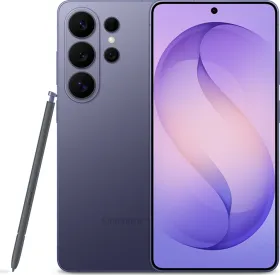
One UI 8.5 also comes with a couple of other useful yet less-talked-about additions. For instance, there’s the Privacy Protection feature (not to be confused with the Privacy Display on the S26 Ultra), which detects sensitive information in a screenshot, picture, or document, and blurs it using the Gemini Nano on-device AI model.

Then there’s the new Creative Studio app, which takes the “Sketch to Image” ability to another level. It allows you to either draw a doodle or type a prompt to generate high-quality stickers, invitation cards, or profile pictures. I used it, and it worked like a charm. The Smart Clipboard has been upgraded with a new pill-shaped overlay that offers to translate, summarize, or take a contextually relevant action (like creating an event).

I’ve also been enjoying the native AirDrop integration in Samsung’s Quick Share, as it works quite well on the device. Other features include particle screen recording, a refined battery and power menu, and Theft Protection (borrowed from Android 16). The Galaxy S26’s software story is a generous one in the long run. The company provides a clean user interface, with a long-term support promise, and a Galaxy AI suite that leaves the competition in a catch-up mode.
Samsung Galaxy S26 5G Review:Cameras

The Galaxy S26 retains the same camera system as its predecessor: a 50MP primary camera, a 10MP 3x telephoto, a 12MP ultrawide camera, and a 12MP selfie shooter on the front. And you, if you think you’ve already heard about the configuration in one of our previous reviews, or more of them, you’re right.
Samsung has been using this sensor combination for years now. However, it’s the advancements in computational photography — the ProVisual Engine and the AI ISP inside the Exynos 2600 chipset — that provide any noticeable improvements in image processing, dynamic range, or, in general, better-looking pictures. Colors are mostly consistent across all the sensors; that’s another plus point.
Primary Camera
This is the strongest aspect of the Galaxy S26’s camera array. The 50MP (f/1.8) ISOCELL GN3 sensor, paired with optical image stabilization and dual-pixel PDAF, captures excellent results in broad daylight.


Details are sharp and natural, white balance is quite reliable, and the dynamic range is one of the best you’ll find on a 2026 flagship. Although the colors come out slightly warm and saturated (including skin tones), the pictures look vibrant.


I’ve captured mountains, busy streets, a beautiful dam, flowers, humans, and potentially everything else I found on my way from my house to Mussorie and then on my way back home, and never for once did the Galaxy S26’s primary camera disappoint me. I came back with over 2,000 pictures on my smartphone.


Portrait mode works really well, with appropriate subject detection and edge detection. In low-light scenarios, the night mode improves pictures significantly. I did notice softer focus in a couple of shots, but nothing noteworthy. The in-sensor 2x zoom level is quite usable as well, especially if you’re using it in the 50MP mode.


Telephoto Camera
The 10MP (f/2.4) is among my favorite camera sensors on the Galaxy S26. Daylight shots are great, with pleasing colors, decent dynamic range, and plenty of details, making the sensor great for capturing architecture, a faraway subject, compressed street scenes, or portraits. The minimum focusing distance (17cm) is yet another advantage of the sensor; you can use it to get closer to smaller subjects.


However, the trouble begins when the lights drop. The ISOCELL 3K1 sits on a tiny 1/3.94″ sensor, and even though it’s paired with optical image stabilization, the sensor doesn’t do as well in low-light conditions, especially without the night mode. Shots come out with noticeably more noise, though dynamic range and colors hold strongly.


In some scenarios, I also noticed the camera app defaulting to in-sensor crop rather than switching to the optical sensor even at the 3x zoom levels. At 10x zoom, results are passable as references, unless the subject is exceptionally bright. While the iPhone 17 doesn’t have a dedicated zoom lens, the Pixel 10 has a 10.8MP (f/3.1) 5x telephoto camera that’s bigger than the S26.


While the ISP dramatically improves the telephoto camera’s photography, the sensor’s age shows more in video.
Ultrawide Camera
The 12MP sensor sits behind an f/2.2 aperture covering a 13mm equivalent field of view with a 120° angle. It is ideal for capturing vast landscapes, group shots at a closer range, and cramped interiors, where taking steps backward isn’t possible. Like the other sensors, it does quite well in the day.


However, there’s one downside: the camera has no autofocus, so you can’t get closer to smaller subjects with it.


Selfie Camera
The front camera uses the ISOCELL 3LU sensor, but it’s mounted behind a slightly wider lens (with approximately 85° field of view). It allowed me to capture selfies for a group of six people without taking a few steps forward, which is usually what I have to do (not with my iPhone 17, though).


Skin tones are mostly accurate, the facial features are preserved well, and the dynamic range is quite good, even when the sun is right behind the subject. In daylight and even in indoor environments, selfies look quite natural, sharp, and well-exposed. Using dual-pixel PDAF, the camera locks focus onto your face for crisp results.


In low light, however, I did notice some noise in a limited number of pictures, though the portrait mode works quite well even so.
Videos
All the sensors are capable of 4K@60 video, which comes out quite smooth and sharp on the Galaxy S26 series, particularly in broad daylight. Indoors and at night, the primary sensor does the best in videos. It is also capable of shooting 8K videos in 24 or 30 fps. Horizon Lock is perhaps the most innovative and useful feature on the Galaxy S26 series. It keeps the horizon level even when you tilt the phone.
The camera app also features plenty of useful features, such as Audio Eraser, Photo Assist, Instant Slow-Mo, and Portrait Studio. You can also download and install the Expert RAW module, take manual control using Pro or Pro Video modes.
Samsung Galaxy S26 5G Review: Battery Life & Charging Speed

The Galaxy S26 comes with a 4,300 mAh battery, a 300 mAh improvement over the baseline Galaxy S25. With heavy usage that included benchmark testing, capturing photos and videos, sharing media and documents with other devices, and playing games on the device, it provided me with around five to seven hours of screen-on time.
However, for an average user who doesn’t run benchmarks repeatedly or keep playing games on the device, the battery should last longer. There are no upgrades to the charging speed whatsoever. The phone still supports 25W wired charging and 15W wireless charging. Like the previous model, the S26 skips built-in Qi2 magnetic, even though the Pixel 10 has adopted the technology. You can still use magnetic charging cases with the phone with wireless magnetic charging, though.
Review Verdict: Should You Buy the Samsung Galaxy S26 5G?
In my opinion, the Galaxy S26 is a compact flagship done right by Samsung. Refined, capable, and genuinely comfortable to live with. The smartphone’s biggest strengths are its premium build, the 2nm Exynos 2600 chipset, a feature-dense Galaxy AI suite, and a seven-year software support promise that no Android rival matches. The primary camera remains one of the most reliable on a compact flagship, and One UI 8.5 is the best Samsung has ever shipped.
Where it falls short, however, is harder to ignore at a asking price of ₹87,999. The camera hardware is three years old, 25W charging feels dated, and the Exynos variant’s battery endurance isn’t as good as the competition. If a polished stock Android experience with great cameras are your priority, you could go with the Google Pixel 10. The oppo Find X9 and the vivo X300 also offer excellent cameras and performance at the price.
The Galaxy S26 5G is a brilliant phone that plays it safe in places it shouldn’t.

Smartprix ⭐ Rating: 8.2/10
- Design and Build: 8.5/10
- Display: 8/10
- Speakers: 8.5/10
- Software: 9/10
- Haptics: 8/10
- Biometrics: 8.5/10
- Performance: 8.2/10
- Cameras: 7.7/10
- Battery Life & Charging: 7.5/10
First reviewed in April 2026.