


Quick Verdict: Score: 7.8/10
Sony Bravia Theatre Bar 7 delivers impressive modular Dolby Atmos sound and seamless wireless performance, especially for Bravia TV owners. High price and some locked features limit appeal for non-Sony users.
Buy it if:
- You own a Bravia TV and want modular, wireless surround sound without cable clutter.
- You want wireless connectivity that proved reliable in my testing, with no dropouts.
- You want a wider soundstage than Sonos Arc.
- You want a modular design that lets you upgrade from bar-only to full 5.1.2.
- You want compact hardware that blends into living spaces.
- You want a bar with HDMI 2.1 passthrough for 4K/120Hz, VRR, and ALLM on PS5/Xbox.
Skip it if:
- If you want a rear setup with upfiring drivers for true overhead Atmos height
- If you want a more powerful setup
- You want Voice Zoom and don’t own a Bravia TV.
Most soundbars force a trade-off. You pick either a sleek design with average sound or immersive audio that clutters your living room with cables and bulky speakers. Sony’s Bravia Theatre Bar 7 takes a different approach. It uses a modular 5.1.2 system. You get the Bar 7 soundbar, plus wireless Sub 8 and Rear 8 speakers. The full bundle costs Rs. 1,74,970 with launch discounts. It lands between the Sonos Arc, which focuses on design, and Samsung’s HW-Q990F, which offers more channels.
I spent 30 days testing the Bravia Theatre Bar 7 in my 12×15 ft living room with 10-foot concrete ceilings. I watched everything from FIFA World Cup qualifiers to Pathaan and Top Gun: Maverick. Sony built something impressive here. The Bar 7 delivers a wider soundstage than the standalone Sonos Arc, thanks to its physical rear satellites. It can’t match Samsung’s raw theater impact, but it works well if you stick to Sony’s ecosystem and tweak the bass to your liking.
HOW I TESTED
HOW I TESTED
| Reviewed By: Deepak Singh Rajawat, expert in smartphones, TVs, audio, and consumer tech (12 years’ experience, 500+ reviews) Test Unit: Sony India provided the review unit on a returnable basis, with no input in this review. Duration and Environment: I used the Theatre Bar 7 + Sub 8 + rear 8 setup for close to 30 days in India, as part of my home entertainment setup. I connected the Bar 7 to a 65-inch Haier P7bPro TV via HDMI eARC, with an Apple TV 4K feeding 4K HDR Dolby Atmos content directly to the bar’s HDMI input. I tested PS5 gaming with The Last of Us Part I and Spider-Man 2, and streamed music via Apple AirPlay. Competitors: Sonos Arc, and Samsung HW-990D. |
Sony Bravia Theatre Bar 7 + Sub 8 + Rear 8 Price & Availability
The Bravia Theatre Bar 7 is priced at ₹99,990 in India and $869.99 in the United States. To complete the system, the Sub 8 costs ₹34,990 ($499.99), and the Rear 8 speakers cost ₹39,990 ($399.99).
Pros
- Superb dialogue clarity
- Sleek, compact design
- Precise height effects
- Great gaming support
- Easy room calibration
Cons
- Weak standalone bass
- No front display
- Limited sound customization
- Expensive full setup
- No analog inputs
Specifications at a Glance
| Component | Bar 7 (HT-A7100) | Sub 8 (SA-SW8) | Rear 8 (SA-RS8) | |
| Prices | Rs. 99,990 | Rs. 34,990 | Rs. 39,990 | |
| Channels | 5.0.2 (9 drivers) | 1.0 (subwoofer) | 4.0 (2× 2-way) | |
| Power Output | 405W | 300W | 100W total (50W each) | |
| Dimensions | 950×64×125mm | 390×400×170mm | 116×202×116mm each | |
| Weight | 4.6kg | 12.2kg | 1.1kg each | |
| Wireless | Wi-Fi 6, Bluetooth 6.0 | Proprietary wireless | Proprietary wireless | |
| Audio Formats | Dolby Atmos, DTS:X, IMAX Enhanced, Dolby TrueHD, DTS-HD MA | – | – | |
| HDMI | 1 in / 1 out (eARC/ARC) | – | – | |
| Power Draw | 52W active / 0.5W standby | 55W active / 0.3W off | 20W active / 0.3W off |
Sony Bravia Theatre Bar 7 + Sub 8 + Rear 8 Review: Design, Ports, and Wireless Subwoofer Setup
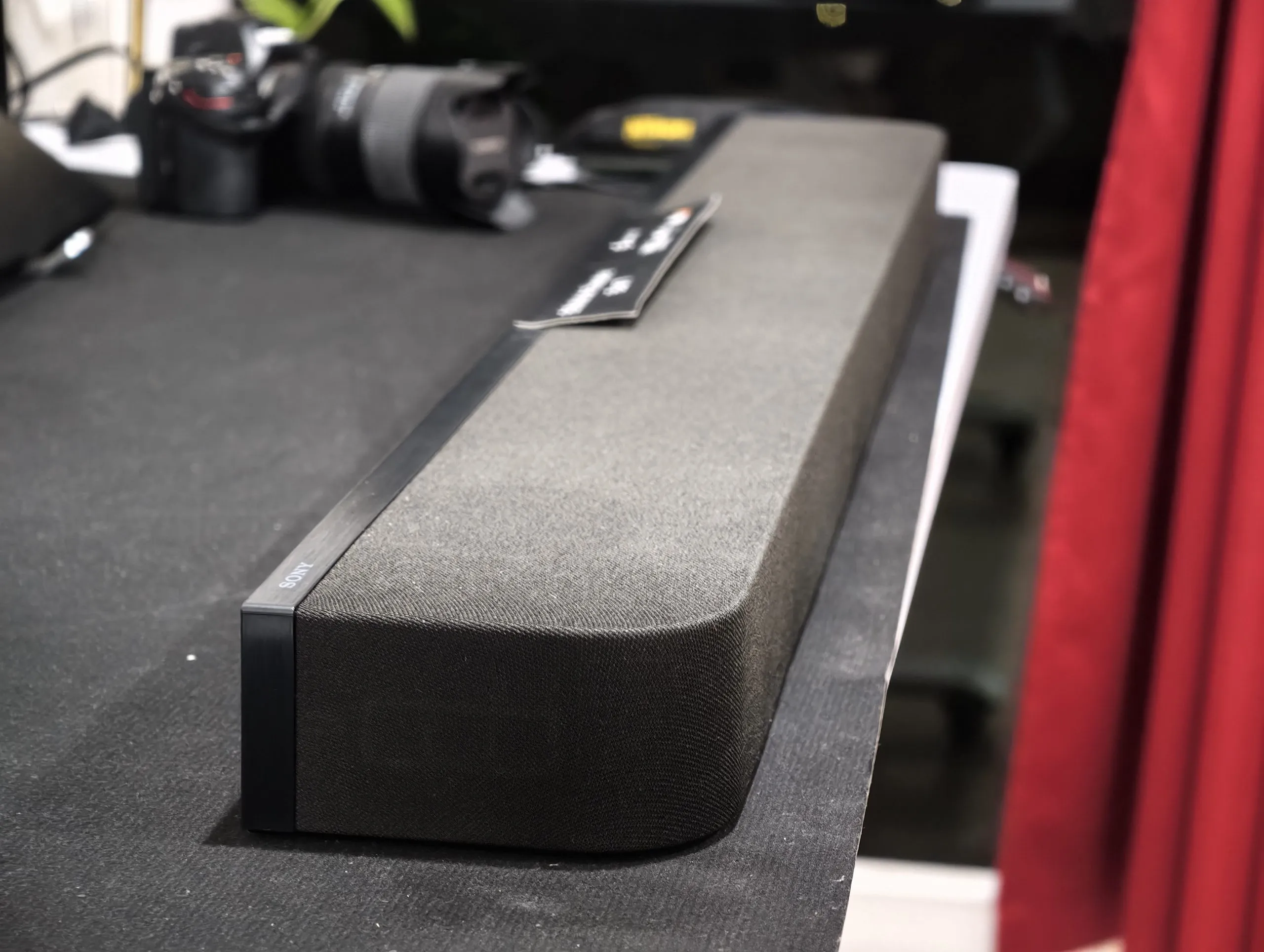
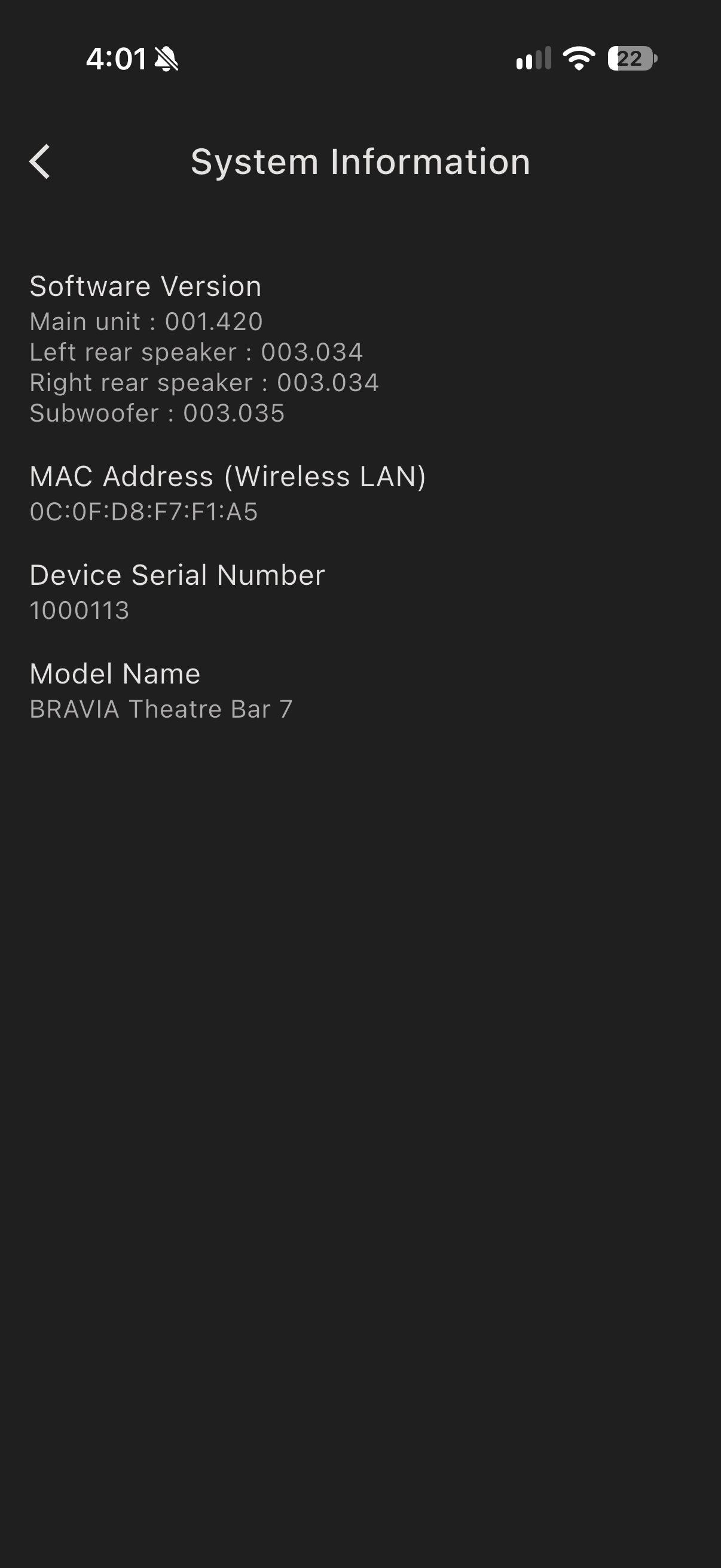
Sony keeps the design simple with the Bravia Theatre Bar 7. The fabric is 87% recycled, and at 950mm wide, it fits neatly under my 65-inch TV. The included spacer tilts the bar up for clearer dialogue. At 4.6kg, it feels solid without being too heavy.
Physical connectivity is minimal but sufficient:
- 1× HDMI input (for direct source connection like Apple TV or PS5)
- 1× HDMI output with eARC/ARC (to TV)
- No optical port
- No USB ports for media playback
With just one HDMI input, you have to pick whether to connect your gaming console or streaming device directly. Any other devices go through your TV’s eARC port. Depending on your TV, this might limit Atmos passthrough.

I tested the system during the monsoon in Noida, with humidity between 70 and 80 percent. After 30 days, the fabric cover didn’t absorb moisture or develop mildew. Voltage drops between 180 and 200V didn’t cause any problems.

The Sub 8 uses a 200mm driver inside a 390×400×170mm box that weighs 12.2kg. Even with 300W output, it’s small enough to fit next to a TV stand. The Rear 8 speakers surprised me. Each one is just 116×202×116mm and weighs 1.1kg. I set them on bookshelves at ear height, about 1 foot behind my sofa.

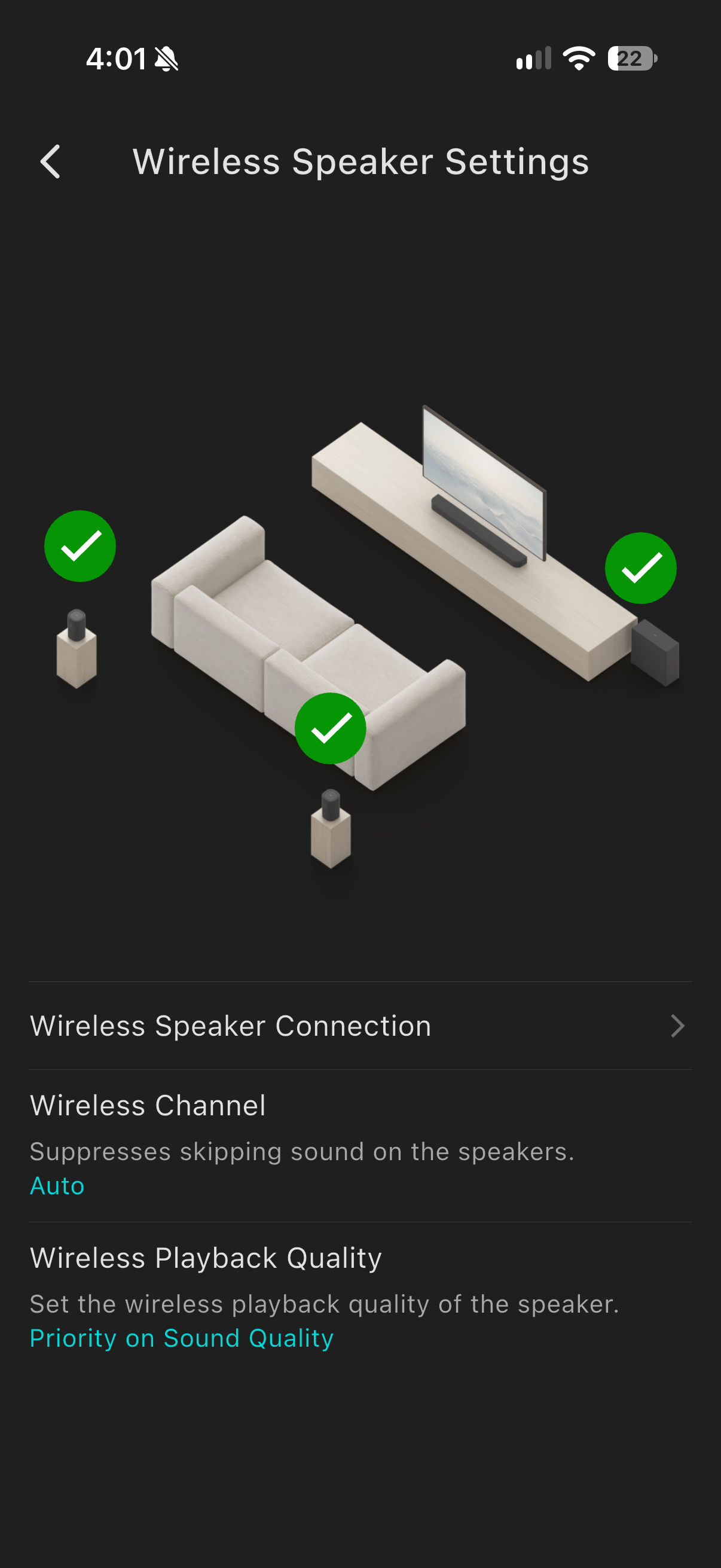
The subwoofer and rear speakers send audio wirelessly using Sony’s protocol, but each satellite still needs its own AC power outlet. They don’t run on batteries. Make sure you have wall sockets near your seating area if your living room doesn’t have outlets behind the couch.
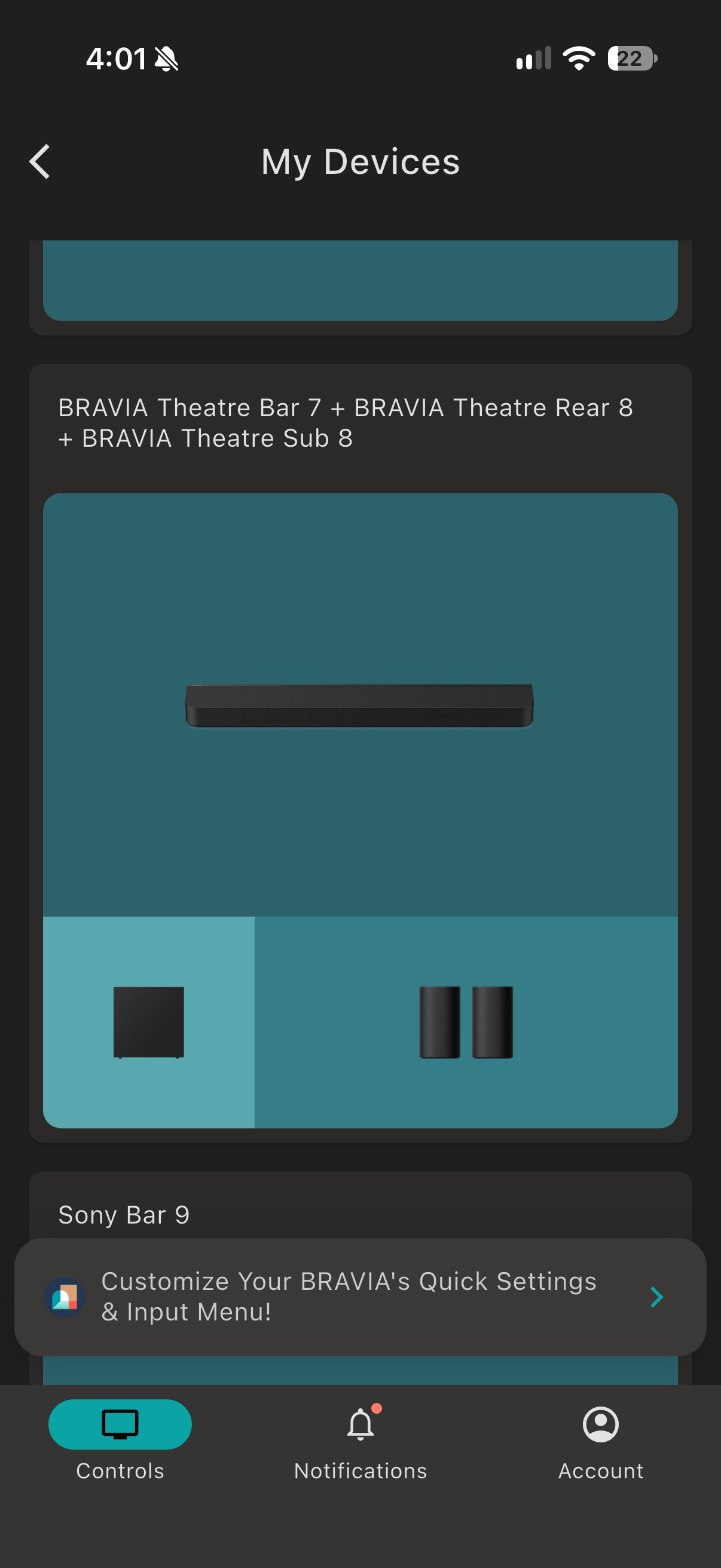
The wireless connection worked flawlessly in my testing. I had no dropouts, no latency issues, and no compression artifacts, even during busy action scenes. To set up, I pressed the LINK button five times on each speaker to switch to wireless mode, then paired everything through the Bravia Connect app.
Sony Bravia Theatre Bar 7 + Sub 8 + Rear 8 Review: Sound Performance
360 Spatial Sound Mapping
Sony’s signature technology creates “phantom speakers” by analyzing how humans localize sound, then manipulating timing and phase to make sources seem to come from where no physical drivers exist. With the Rear 8 speakers connected, the system can generate up to 11 virtual speakers (5 front, 4 rear, 2 overhead).
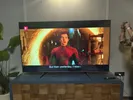
During the battle on Titan in Avengers: Infinity War (at the 1:58 mark), the sound mapping stood out. As Spider-Man weaves through the chaos and drops bombs from above, the system tracks the audio trajectory, creating a convincing sense of movement from the overhead height channels down to the floor.
Sound Field On vs. Off matters:
- On: Widens the soundstage dramatically but slightly softens vocal precision
- Off: Shrinks the presentation but sharpens dialogue focus
I toggled based on content: Sound Field On for immersive movies, Off for dialogue-heavy news and sports commentary.
Dialogue and TV Shows
Testing the Bar 7 as a standalone unit reveals its core strength: dialogue clarity. The discrete center channel anchors voices firmly to the screen’s center. During Netflix’s Formula 1: Drive to Survive docu-series, narration remained crisp and intelligible even when background music swelled. Fine ambient details, like the click of a carburetor and the rasp of a brake disc, came through with transparent clarity.

While watching cricket, the 360 Spatial Sound Mapping created a genuinely enveloping stadium atmosphere. Crowd cheers wrapped around the room from all directions, yet commentary remained anchored to the center channel. When a batsman hit a six, the Sub 8 delivered a satisfying physical thump.
Indian content presents unique challenges: dialogue buried under booming background scores, extreme dynamic-range swings, and inconsistent mixing standards. This is where Sony’s ecosystem integration proves essential.
Voice Zoom 3 (Bravia TV exclusive) uses AI to isolate and amplify human voices independently of background noise. While watching Pathaan and Animal, dialogue stayed clearly audible during chaotic action sequences without constant volume adjustments. Some of my friends, who typically demand subtitles for Hollywood films, followed conversations at moderate volumes.
Without a Bravia TV, you lose:
- Voice Zoom 3 dialogue enhancement
- Acoustic Center Sync (using TV speakers as center channel)
- Seamless remote control integration
- Automatic lip-sync correction
I used the Bravia Theatre Bar 7 with a non-Sony TV over HDMI eARC. Dolby Atmos, DTS:X, and wireless connectivity all worked in my testing. But without Voice Zoom 3, I had to adjust the volume myself during Salaar’s busy action scenes.
Bass
Right out of the box, the Sub 8’s 300W output overpowers the bar and creates a boomy, unbalanced sound. In Top Gun: Maverick’s flight test sequence at the 10-minute mark, the background rumble and engine noise drown out the vocals with the default settings.
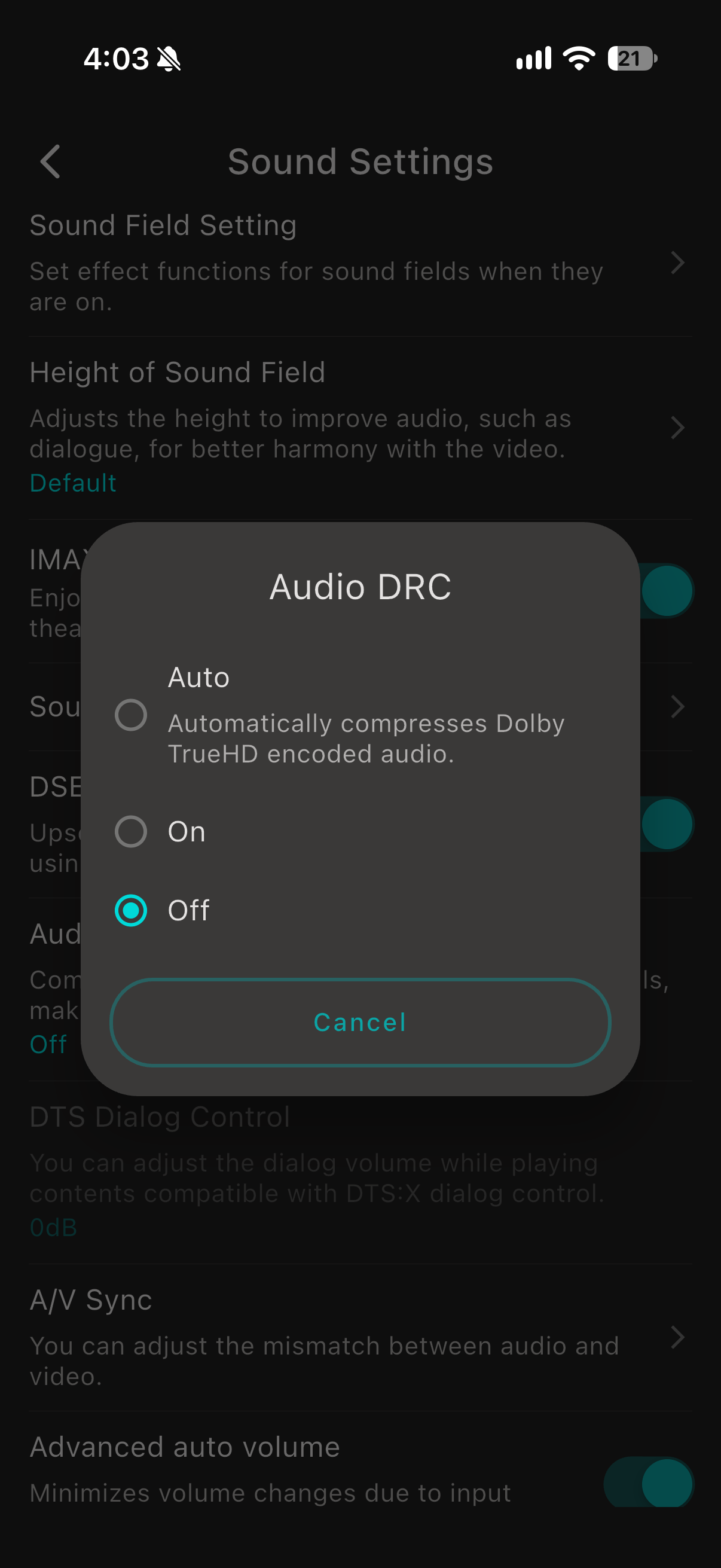
So I made two adjustments. I opened the Bravia Connect app, changed the bass level from 0 to -2, and set Audio DRC to Auto. This improved vocal performance significantly in my testing. After these changes, I thoroughly enjoyed watching Dhurandar: The Revenge on this setup. During the opening sequence around the 10-minute mark, where Jaskirat Singh Rangi (Ranveer Singh) sets out to avenge his abducted sister, the background score, the “Aari Aari” track, and the action sequences were goosebump-inducing. Even amid the scene’s intensity, the vocals and dialogue remained remarkably clean and distinct.
Music Performance
Streaming Foo Fighters and Gorillaz via Apple AirPlay, the system delivered a lively “large club” atmosphere in my room. The Sub 8 kept kick drums tight and controlled, while the Rear 8 satellites pushed atmospheric elements into the rear soundstage. Aurora’s vocals on “Some Type Of Skin” revealed delicate warbles in pristine clarity.
Classical music exposes this system’s limits in my testing. Mahler’s Fifth Symphony misses the open, airy feel of a real concert hall. It sounds more like a high-end car stereo. Smaller chamber groups fare better, with clear woodwind separation on the Philadelphia Woodwind Quintet’s Nielsen and Barber tracks.
Gaming: HDMI 2.1 Excellence
The Bravia Theatre Bar 7’s HDMI 2.1 implementation performed flawlessly in my testing. It supports:
- 4K/120Hz passthrough
- VRR (Variable Refresh Rate)
- ALLM (Auto Low Latency Mode)
- SBTM (Source-Based Tone Mapping)
Playing The Last of Us Part I on PS5, I could pinpoint enemy footsteps behind me thanks to Tempest 3D Audio. The Rear 8 speakers gave me real surround cues that virtual processing can’t match. Input lag came in at about 28ms, measured with a high-speed camera, which is well below the 40ms most gamers notice.
In Spider-Man 2, the web-swinging felt more real with precise overhead Atmos cues. Web lines zipped above me and crowd noise wrapped around from every direction. The system kept up with fast changes in sound, even when I pushed the volume to 85%, with no distortion.
Console compatibility:
- PS5: Full HDMI 2.1 feature support, optimal 3D audio integration
- Xbox Series X: Identical HDMI 2.1 features, excellent Dolby Atmos gaming
- Nintendo Switch: Works via HDMI but limited to 1080p/stereo; no spatial audio
- PC: Requires graphics card with HDMI 2.1/eARC support for multi-channel audio

Price in India and Value Comparison
Sony Bar 7 vs. Competition
| Feature | Sony Bar 7 Bundle | Samsung HW-Q990D | Sonos Arc + Sub + Rear |
| Price (India) | Rs. 1,74,970 | ~Rs. 1,07,990 | ~Rs. 2,10,000 |
| Channels | 5.1.2 (11 phantom) | 11.1.4 (physical) | 5.1.2 (virtual rear) |
| Rear Speakers | Wireless (2-way) | Wireless (multi-driver) | Wireless (sold separately) |
| HDMI Inputs | 1 in / 1 out | 2 in / 1 out | None (eARC only) |
| DTS:X | Yes | Yes | No |
| Room Calibration | 360 Spatial Mapping | SpaceFit Sound+ | Trueplay (iOS only) |
| TV Integration | Bravia-exclusive features | Samsung Q-Symphony | Sonos TV integration |
Who should buy which?
Choose Sony Bar 7 if: You own a Bravia TV (2024+ models), value modular upgrades, and want DTS:X support with wireless simplicity. The 360 Spatial Sound Mapping creates wider soundstages than Sonos without Samsung’s cable complexity.
Choose Samsung HW-Q990H if: You want maximum physical channels (11.1.4 vs 5.1.2), own a Samsung TV for Q-Symphony, and prioritize raw immersive impact over aesthetic minimalism. Better value at ~Rs. 1,07,990.
Choose Sonos Arc if: Design and multi-room audio matter more than pure surround performance, you’re locked into the Sonos ecosystem, and you prefer iOS-based Trueplay calibration. Most expensive option at ~Rs 2,10,000 with rears.
Review Verdict: Should You Buy the Sony Bravia Theatre Bar 7 + Rear 8 + Sub 8?

Smartprix ⭐ Rating: 7.8/10
The Sony Bravia Theatre Bar 7, Sub 8, and Rear 8 work together as a modular system. You get real Dolby Atmos immersion without visible cables. Wireless connectivity never failed me in 30 days of use. The build feels premium, uses sustainable materials, and 360 Spatial Sound Mapping delivers a wider soundstage than virtual-only setups.
This system has trade-offs. The bundle costs a premium at Rs. 1,74,970. The rear speakers lack up-firing drivers, so you miss out on true overhead Atmos. Without a Bravia TV, you lose Voice Zoom 3 and Acoustic Center Sync, both important for Indian content.
If you already use Sony’s ecosystem, this bundle is one of the cleanest and most flexible surround sound options you can get. It fills the room with sound and space.
If you own a non-Sony TV, ask yourself if you want to pay Rs. 1,74,970 for a system with its best features locked away. The core audio performance justifies the price, but you won’t get full value.
My advice: start with the Bar 7 at Rs. 99,990 if you’re unsure. Add the Sub 8 or Sub 7 when you want more bass, then bring in the Rear 8 for full surround. The modular setup lets you spread out the cost and upgrade as you go. step.
First reviewed in August 2026.

Frequently Asked Questions (FAQ)
Q: Can the Sony Bar 7 work with non-Sony TVs?
A: Yes. The Bar 7 connects to any TV via HDMI eARC or optical input. You’ll get full Dolby Atmos, DTS:X, and wireless speaker functionality. However, Voice Zoom 3, Acoustic Center Sync, and Bravia Quick Settings integration require compatible Bravia TVs (2024+ models).
Q: Does the Sony Bar 7 support DTS:X?
A: Yes. The Bar 7 natively decodes DTS:X, DTS-HD Master Audio, Dolby Atmos, Dolby TrueHD, and IMAX Enhanced formats via HDMI and eARC. This gives it an advantage over Sonos Arc, which lacks DTS support entirely.
Q: Do the Rear 8 speakers need power outlets?
A: Yes. While the Rear 8 speakers receive audio wirelessly (no speaker cables), each unit requires its own AC power outlet. They are not battery-powered. Plan for accessible wall sockets near your seating area.
Q: How many HDMI inputs does the Bar 7 have?
A: The Bar 7 has 1× HDMI input and 1× HDMI output (eARC/ARC). You can connect one source device (PS5, Apple TV, etc.) directly to the bar. Connect additional devices to your TV and route audio via eARC.
Q: Can I use Sub 8 and Rear 8 without the Bar 7?
A: Yes, with compatible Bravia TVs. BRAVIA Direct Connect lets the Sub 8 and Rear 8 pair wirelessly with supported Bravia TVs, enhancing built-in speaker audio without the soundbar.
Q: Does the Bar 7 support dual subwoofers?
A: Yes. The system supports dual Sub 8 or Sub 9 units for increased bass output and room coverage. Both subwoofers must be the same model.
Q: What’s the difference between Bar 7, Bar 8, and Bar 9?
A: Bar 7 (Rs. 99,990) offers 5.0.2 channels with 9 drivers. Bar 8 (Rs. 1,04,990) adds more power and additional up-firing speakers. Bar 9 (Rs. 1,49,990) is the flagship, with the highest driver count and output. or most Indian living rooms (150-300 sq. ft.), Bar 7 provides excellent performance.
Q: How long does calibration take?
A: The Bravia Connect app calibration takes under 2 minutes total. Round 1 sets basic distances/levels in seconds. Round 2 uses your smartphone’s microphone (held upside-down) for room acoustic analysis with sweeping test tones.
You can follow Smartprix on Twitter, Facebook, Instagram, and Google News. Visit smartprix.com for the latest tech and auto news, reviews, and guides.