


Smartphone cameras have come a long way, but one thing remains confusing, and that is, sensor size. You’ve seen manufacturers throwing around terms like “1/1.28-inch” or “1/0.98-inch”, but what do these numbers actually mean? And does a bigger sensor really mean better photos? Let’s break it down.
First, let’s do some homework: what is sensor size?
The sensor is the part that captures light and turns it into an image. Bigger sensors collect more light, leading to better photos, especially in low light. They also affect:
- Detail and sharpness (more light = more data = better image quality).
- Depth of field (larger sensors create better background blur).
- Better low-light performance (larger sensors = less noise in the dark).
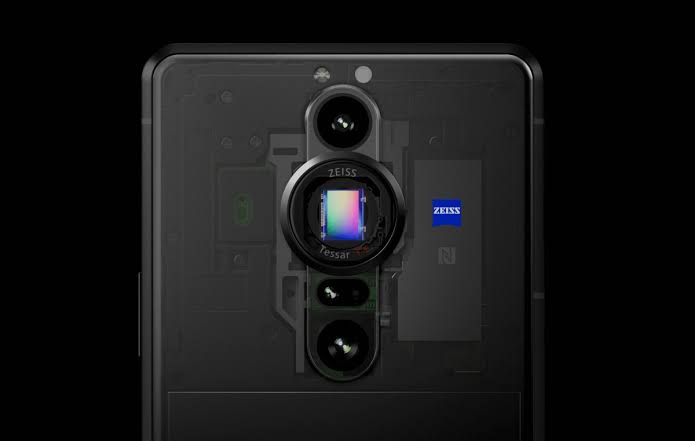
2 ways to measure sensor size
Sensor size is described in two ways:
Physical Dimensions (in mm)
- Width x Height (e.g., 9.18 mm x 6.88 mm) or diagonal area.
- Total sensor area (this is more accurate).
Diagonal Measurement
- Used in the “1/n-inch” notation (e.g., 1/1.4-inch, 1/2.76-inch)
- BUT: This notation does not actually reflect the real size of the sensor.
The “1/n-inch” sensor origin

You’d assume a 1-inch sensor (or 1-inch type) measures 1 inch diagonally (25.4 mm), right? Wrong. The “1/n-inch” system is an outdated measurement from 1950s TV camera tubes.
So, in the 1950s, TV cameras used large vacuum tubes with circular sensors. The “1/n-inch” measurement referred to the outer diameter of the tube—not the actual sensor inside. Over time, manufacturers kept using the system, even though modern sensors are rectangular now.
This means that the actual sensor size is much smaller. For example:
- 1-inch sensor is approximately 16 mm diagonal, not 25.4 mm.
- 1/1.4-inch sensor is approximately 11.47 mm diagonal, not 18.14 mm.
- 1/2.76-inch sensor is approximately 6.5 mm diagonal, not 9.2 mm.
Manufacturers still use this outdated system because, well, tradition. The key takeaway? A smaller “n” means a bigger sensor—so a 1/1.4-inch sensor is larger than a 1/2.76-inch sensor.
ALSO READ: Samsung Galaxy S25 Ultra’s Camera Sensors and Specs Revealed
Some examples

Here’s how some popular smartphone camera sensors compare. Remember, the total area is what matters, at the end of the day. The pixel size also matters but that’s a story for another day.
Sony LYT808 (1/1.4-inch)
- Diagonal: 11.47 mm
- Size: 9.18 mm x 6.88 mm
- Area: ~63.1 mm²

Samsung JN1 (1/2.76-inch)
- Diagonal: 6.5 mm
- Size: 5.24 mm x 3.93 mm
- Area: ~20.6 mm²

Samsung JN3 (1/2.4-inch)
- Diagonal: 7.14 mm
- Size: 5.71 mm x 4.28 mm
- Area: ~24.4 mm²

But sensor size isn’t everything
A bigger sensor helps, but aperture matters too. The aperture (f-number, like f/1.8) controls how much light enters. A wider aperture (lower f-number) lets in more light, helping in low-light conditions.
Example: A phone with a 1/1.4-inch sensor & f/1.6 aperture can outperform a 1/1.3-inch sensor with f/2.4 aperture in night shots.
Other things, such as the pixel size, sensor technology (stacked or not), software processing, and lens quality, also affect the image. But, sensor size, I think, plays the most crucial role on a smartphone.
ALSO READ: Vivo X200 Pro’s Camera: A Step Back in Sensor Size, But a Leap Forward in Performance?
How 1/n-inch is calculated (sort of)
If you want to estimate a sensor’s “1/n-inch” value? Use this formula: n = (25.4 x 2)/(Diagonal x 3). Make sure the diagonal is in mm.

Example for Sony LYT808 (1/1.4-inch sensor) with 11.47 mm diagonal: (25.4 x 2)/(11.47 x 3) = 1.48

It’s not perfect (because these values are very small and a lot of rounding off is involved), but it explains why a “1-inch sensor” is nowhere near 1 inch.
The bottom line

The “1/n-inch” sensor size system is outdated but still widely used. Larger sensors do improve image quality, but aperture, pixel size, sensor technology, software processing, and lens quality also play major roles. Next time you see “1-inch sensor”, you’ll know exactly what it is.
You can follow Smartprix on Twitter, Facebook, Instagram, and Google News. Visit smartprix.com for the latest tech and auto news, reviews, and guides.







Where does the mega pixel number rules? For ex: 50MP, 1/1.3, f 1.6 Vs 200MP, 1/1.56, f 1.8 Which is better?