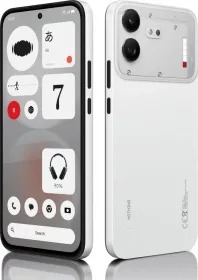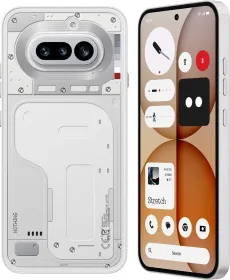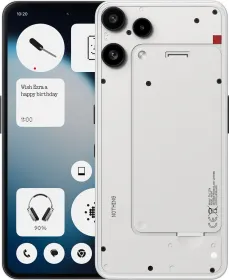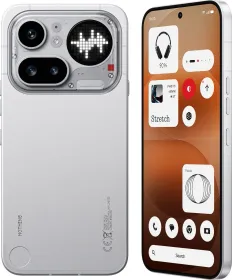


Every Nothing phone since the original Phone 1 has sold itself on one idea: you could see inside it. The screws, the coils, the internals dressed up as design that transparent back was the whole pitch, the thing that made a Nothing phone recognizable from across a room. The Phone (4b) is the first device from the company where that idea is barely present. What’s left is a glass window around the camera module and not much else. Everything around it is solid polycarbonate.
We focused on the design change in this hands-on. Our short time with the Phone (4b) before the July 14 launch let us judge design, display, and software. We still need more time for performance, cameras, and battery life. Here’s what stood out.
Note: This is a first-impressions piece based on a short pre-launch hands-on at a Nothing India briefing in Leh. Nothing India handled logistics, but the opinions here are based on personal experience. We did not share this piece with Nothing India before publishing, and they did not provide any input.

Why the “b” Series, Why Now
Nothing already covers the sub-₹25,000 segment with the Phone 3a, 3a Lite, and Phone 4a, and CMF sits below that. So the Phone (4b) at ₹34,999 raises an obvious question: who is this for?
The real reason is timing, not strategy. Component and memory prices have risen this year, and Nothing is not alone in raising prices. Vivo, Oppo, Realme, and Apple have done the same. The jump from the Phone 3a Lite at ₹20,999 to the (4b) at ₹34,999 is big, even with the bank offer bringing it down to ₹29,999. We’ll see if the phone is worth that extra money in the full review, but the first impression is more complicated than a simple price hike.
Design: Tracing the Slow Retreat From Transparency
This is the main story with the Phone (4b). Nothing built its brand on the Phone 1’s see-through back, which stood out in a sea of glass phones. The Phone 4a Pro began moving away from that, adopting a more solid, less transparent look. The Phone (4b) goes further. Now, you only see through a small window around the camera, where the screws and Glyph Bar show through. The rest is a solid, soft-touch polycarbonate shell that feels more like a CMF phone than the original Nothing design.

When you hold the 4b next to a Phone 1 or Phone 4a, it feels like a different brand with the same lights. Some will see this as design growing up; others will call it a loss of identity. Fans will definitely have opinions.
After handling it, we can say the build feels solid, not cheap. At 210g and 8.6mm, it’s not the lightest in this price range, but the IP64 rating and unibody build suggest it should handle daily bumps. The Glyph Bar looks brighter than before. Nothing confirms the old ‘yellow bleed’ problem is fixed, but we’ll check that after more use.


We tried the white version and liked the contrast of the black button. The phone also comes in Black, Blue, and a red RCB special edition. The RCB version is a rare tech-and-cricket collaboration that will definitely excite RCB fans.

Display: Bright in Short Bursts, But the Bezels Are Impossible to Miss
The 6.77-inch Super AMOLED screen looked good outdoors in our short test. The claimed 2,000-nit peak and 1,200-nit outdoor brightness held up in sunlight, and the 120Hz refresh made the UI feel smooth.

The bezels stand out right away. They’re thicker than most rivals at this price, and the corners curve in a way that looks odd on a phone that’s otherwise well-designed. It’s not a dealbreaker, but it feels out of place.
Hardware
We can’t judge long-term performance from a short, hands-on experience, so we won’t. It uses the Snapdragon 6 Gen 4, a step below the Snapdragon 7s Gen 4 in other phones at this price and about the same as MediaTek’s Dimensity 7300 or 7400. It uses LPDDR4X RAM and UFS 2.2 storage, not the faster UFS 3.1 that the chip supports.
In our short test, daily navigation and app switching felt smooth. Light gaming ran without stutter. We still need to test heavy use, heat, and demanding games. That’s a priority for the full review.

You get a 50MP main camera with OIS, an 8MP ultra-wide, and a 16MP selfie camera. Here are some daylight samples:


We haven’t tested low-light, zoom, video stabilization, or the ultra-wide yet. We’ll cover all of that in the full review, rather than guessing now.

This is the big upgrade on paper. The Indian version has a 6,000mAh battery, the biggest Nothing has ever shipped, with 33W wired charging. Nothing says it will keep 90% of its capacity after 1,200 charge cycles, or about three years of use. Only the Indian model gets this battery. Other markets get a 5,200mAh cell at the same charging speed.
We haven’t used the phone long enough to test real battery life. For now, ‘largest battery yet’ is just a spec, not a proven result. We’ll confirm or challenge that in the full review.
Nothing OS 4.1 on Android 16 feels familiar. Even in a short test, it’s clear the software isn’t cut down to justify the lower price. You get the full Essential suite: Essential Space, Essential Search, Essential Apps, Essential Voice, plus Glyph extras like delivery tracking for Zomato and Swiggy.
Nothing promises three years of OS updates and six years of security patches. Since Android 17 is already out in some places, this promise may not feel as long as it sounds. We’ve seen the same thing with Redmi’s Note series.
Who Is Chasing Nothing With This Phone
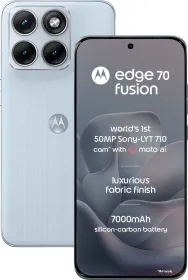
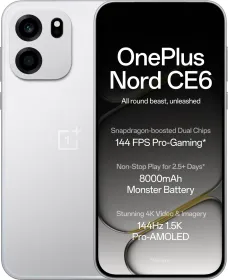
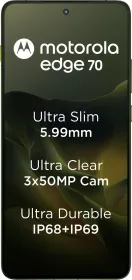
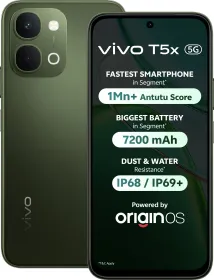
Nothing is targeting students and first-time upgraders who want to join its ecosystem without paying for the 4a Pro. This group overlaps with CMF buyers and people looking at the Redmi Turbo, Poco X-series, or Moto Edge. The IPL ads and RCB collaboration have made the brand well-known in India this year, which may matter as much as the specs.
So, First Impressions?
The Phone (4b) is the clearest evidence yet that Nothing is willing to trade the transparent design language that made it famous for something more conventional — and, on the evidence of this brief hands-on, more mass-market. The build quality and Glyph Bar upgrades suggest this isn’t a corner-cutting exercise; it’s a deliberate repositioning. Whether that repositioning is worth ₹34,999 once the Snapdragon 6 Gen 4’s real-world performance and cameras are properly tested is the question our full review will answer.
We’re not giving a final verdict yet. The full review, with real battery numbers, camera samples under all lighting conditions, and performance tests, is coming soon.

Q: When does the Nothing Phone (4b) launch in India, and what’s the price?
The Nothing Phone (4b) launches in India on July 14 at ₹34,999 for the 8GB/128GB variant, with an effective price of ₹29,999 after bank offers, via Flipkart and retail partners.
Q: What processor powers the Nothing Phone (4b)?
It uses Qualcomm’s Snapdragon 6 Gen 4, an entry-level 4nm chipset, roughly comparable to the MediaTek Dimensity 7300/7400 and a step below the Snapdragon 7s Gen 4 used by some rivals in this price band.
Q: How big is the Nothing Phone (4b)’s battery?
The India variant ships with a 6,000mAh battery, the largest on any Nothing phone to date with 33W wired charging.
Q: Does the Nothing Phone (4b) support 4K video?
Yes, the 50MP OIS main camera records 4K video at up to 30 fps, and the phone supports Dual Video for simultaneous front- and rear-facing recording.
Q: How long will the Nothing Phone (4b) get software updates?
Nothing has committed to three years of Android OS updates and six years of security patches.
You can follow Smartprix on Twitter, Facebook, Instagram, and Google News. Visit smartprix.com for the latest tech and auto news, reviews, and guides.