



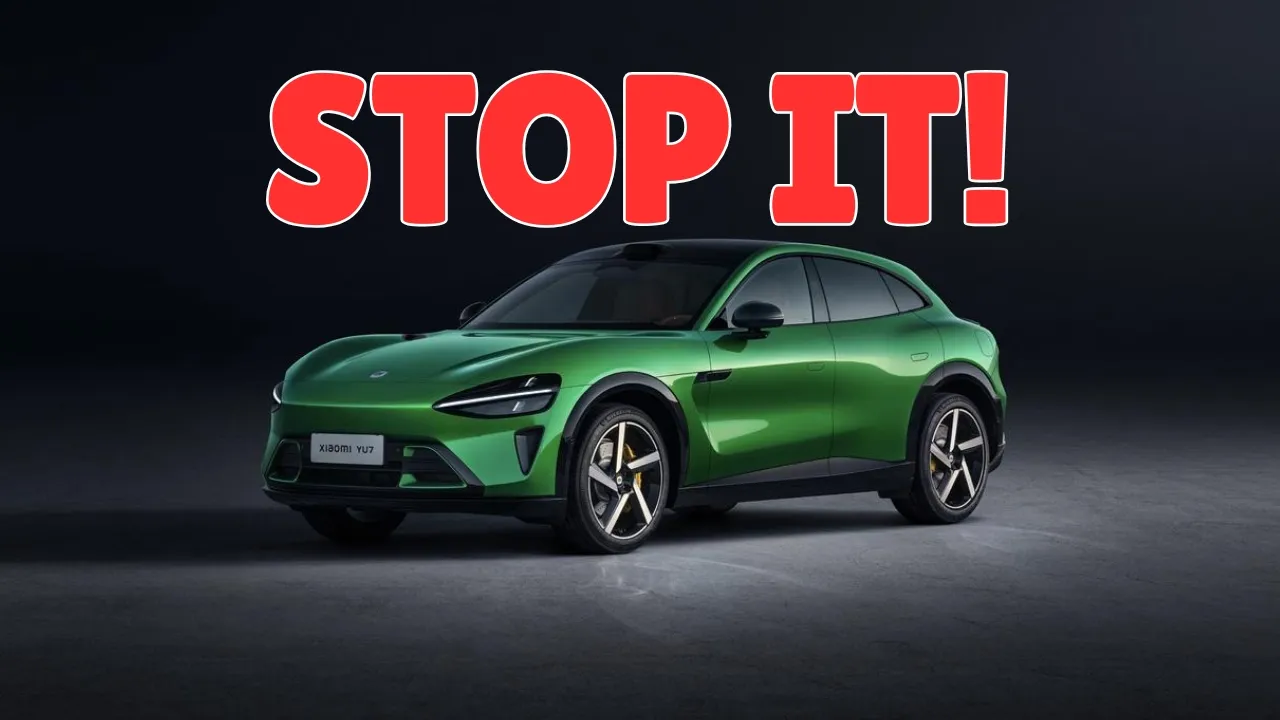
Xiaomi has been making some cool cars lately. Back in December 2023, the Chinese smartphone maker unveiled their first car, the Xiaomi SU7. I remember watching the livestream and the presentation was less of a car launch and more of a civilisational leap. Core technologies, a hyper-engine, a battery architecture that will redefine range, and a chassis so advanced that it would make the SU7 one of the fastest EVs around the Nurburgring track a few months down the line. Xiaomi’s automotive division has been talked-about a lot in the EV and the car world. Not necessarily for good things.
Now everything that we were told during the December 2023 showcase would have been great, if it weren’t for the keynote theatrics. Because one look at what’s actually bolted under the Xiaomi SU7 or any other subsequent car that they have launched so far, a very different picture forms, one that Xiaomi’s marketing department has been noticeably reluctant to paint. Let’s “brake” it down, shall we?
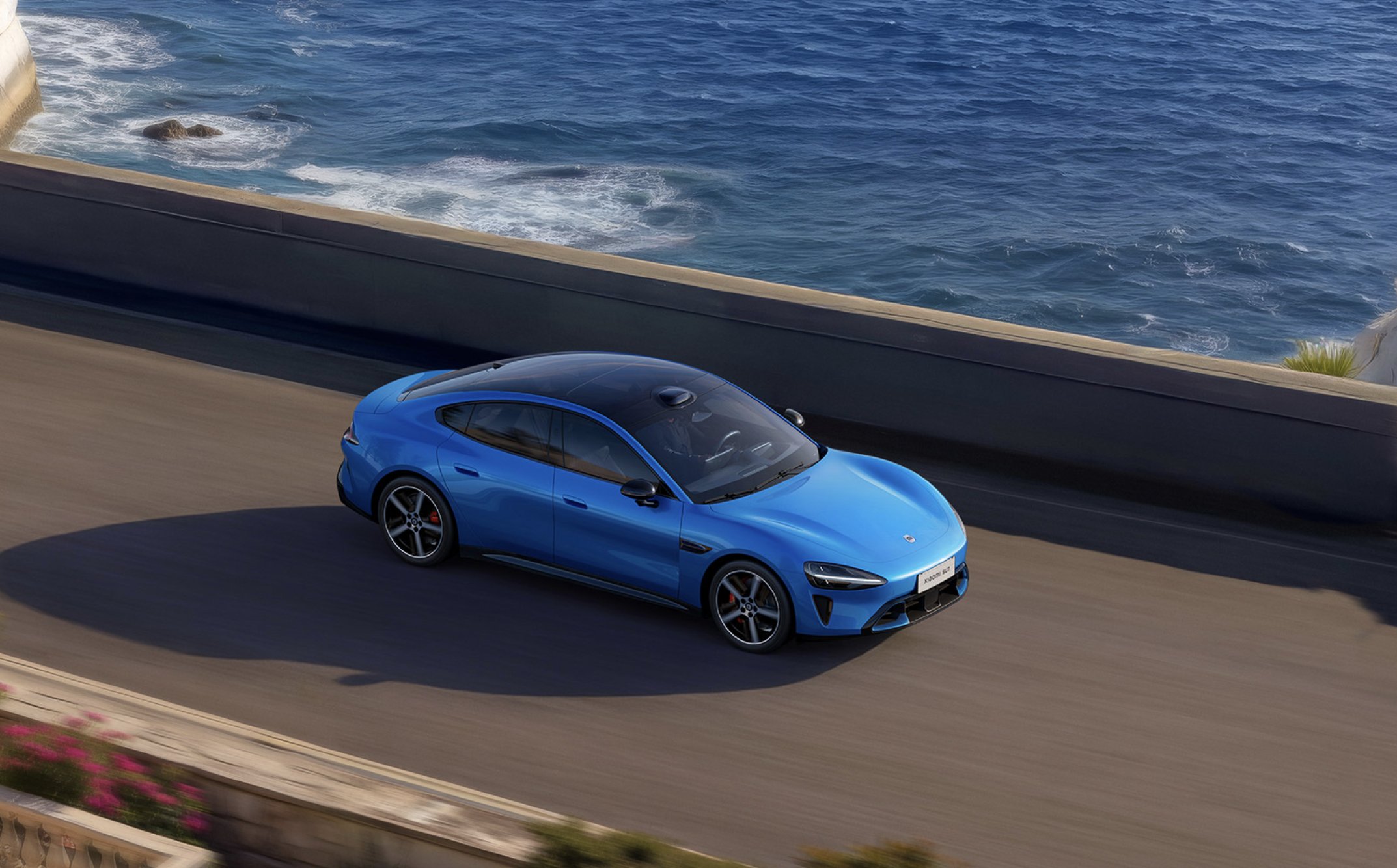
Apart from the car design looking like Xiaomi has taken notes (to put it politely) from Porsche and/ or McLaren, Xiaomi is sourcing batteries for its cars from Chinese manufacturers Contemporary Amperex Technology Co. (CATL) and BYD. The brakes are sourced from Brembo and the brake-by-wire and stability control systems are made by Bosch. The shock absorbers are supplied by ZF Friedrichshafen, air springs by Tuopu (Ningbo Tuopu Group), bearings by Schaeffler, tyres by Michelin and Pirelli, front subframes by Gestamp, rear subframes by Benteler, steering by Nexteer, and so on. This is the documented, publicly reported supply chain of the Xiaomi SU7. The same car that Xiaomi markets as “A revolutionary EV experience.”
Now sourcing components is not an unusual thing in the automotive industry. What is unusual is the gap between how Xiaomi talks about these components and what it actually did to create them.
ALSO READ: Skoda Kylaq Review: Best Car For Enthusiasts On A Budget
Reducing Mention Of Supply Chains In Keynotes
At the SU7’s launch in March 2024, Xiaomi did mention its supplier list. CATL’s Qilin and Shenxing batteries were presented as a headline feature, developed in partnership with “thousands of engineers” over two years. That much is fair: battery pack integration, thermal management and the CTB (cell-to-body) structural design genuinely do involve real engineering collaboration between an automaker and its cell supplier. This isn’t a case of Xiaomi doing nothing.

But watch how the story changed a year later. When the YU7 launched in June 2025, industry observers noted something telling: despite every single YU7 variant running on CATL cells, with Xiaomi having become CATL’s largest automotive customer by that point, accounting for close to 10% of its shipments, the launch presentation made no mention of CATL at all. Even during the recent Skynomad SUV launch presentation, there was little to no mention of the suppliers. That’s not a technical decision. That’s a messaging decision, and it points to exactly the kind of framing problem at the heart of this piece: Xiaomi mentions suppliers when doing so amplifies the “cutting-edge tech” narrative, and omits them when doing so might dilute the impression that Xiaomi itself is the source of the innovation.
The braking system tells a similar story. The SU7 Max’s Brembo four-piston monobloc calipers, paired with Bosch’s DPB (decoupled brake-by-wire) system and ESP 10.0 stability control, are presented in Xiaomi’s marketing as part of the car’s “33.3-metre stopping distance” achievement, a number attributed to the car’s overall engineering, not to the fact that two of the world’s most established braking-systems companies designed and built the hardware doing the actual stopping. Bosch has been refining brake-by-wire and ESP systems for the better part of three decades; Brembo has been in motorsport braking since the 1960s. Their expertise is precisely why the SU7 stops as well as it does. Xiaomi’s contribution here is integration and tuning, a real but fundamentally different kind of work than “inventing” a braking system.

The suspension picture is even more layered. ZF Friedrichshafen, one of the largest chassis and suspension component makers on Earth supplies shock absorbers; Tuopu supplies air springs; Schaeffler supplies wheel bearings. Xiaomi’s “fully self-developed Smart Chassis control algorithm” sits on top of this hardware, tuning how it behaves in real time. That’s a legitimate software and calibration achievement. But it is calibration of someone else’s dampers, someone else’s bearings, someone else’s springs, not the invention of a suspension system, whatever the keynote slide implied.
ALSO READ: Hyundai’s Smallest EV Could Be First to Feature ‘Pleos’ Tech in India
Gap In Marketing And Hardware Comes With Real-World Problems In Cars
Now this isn’t just some purist approach coming from an automotive nerd. The consequences of Xiaomi’s tendency to oversell what it built have shown up twice in very concrete, costly ways.
The first came in March 2025, when an SU7 Standard travelling at 116 km/h in NOA (Navigate on Autopilot) mode struck a concrete barrier in a highway construction zone in Anhui province, killing three young women. The driver-assistance system reportedly gave the driver roughly two seconds of warning before the crash. The fallout was severe: Xiaomi’s stock lost over HK$120 billion in two days, and within weeks Chinese regulators moved to ban automakers from using terms like “smart driving” or “autonomous driving” in marketing altogether. This rule change was triggered substantially by scrutiny of how Xiaomi (and the wider industry) had been describing Level-2 driver-assistance systems as something closer to genuine autonomy.


In September 2025, Xiaomi recalled nearly 117,000 SU7 Standard units because the driver-assistance system had, in the regulator’s words, “insufficient recognition capability” in certain scenarios, a direct acknowledgment that the marketing had outpaced the actual capability of the underlying technology.
The second, almost farcical in retrospect, was the SU7 Ultra’s carbon-fibre hood saga. Xiaomi marketed the RMB 42,000 (roughly $5,800) optional hood as featuring “dual air ducts” for cooling and aerodynamic performance, replicating the prototype race car’s functional design. When owners started disassembling their cars, the ducts led nowhere. The internal structure was nearly identical to the standard aluminium hood.
More than 300 demanded refunds from Xiaomi; Chinese courts subsequently ruled that Xiaomi’s promotional language was “exaggerated” and violated good-faith advertising principles, though it stopped short of fraud. Xiaomi ultimately issued a public apology, offered a free retrofit of actual aerodynamic vanes starting in March 2026, and paid compensation in at least one case after losing a court appeal.

Both episodes share the same root cause – a marketing operation, built by people who spent a decade selling smartphones on the premise that specs and superlatives sell units, applied to a product category where specs translate directly into physics, safety, and liability. Calling driver assistance “intelligent driving” wasn’t just aspirational branding; it changed how people used the car in an emergency. Calling a decorative hood “aerodynamic” wasn’t just enthusiasm; it was untrue, and a court agreed.
ALSO READ: Kia Just Showed India Its First Flex-Fuel Car, But You Can’t Buy One Yet
Not All Is Bad
To be fair to Xiaomi, not every claim on stage is empty. The HyperEngine V6, V6s and V8s motors are described by Xiaomi as “independently designed and manufactured,” and the company has published genuinely specific engineering detail, 27,200 rpm peak speed, a proprietary 960 MPa silicon steel lamination, an S-shaped oil-cooling circuit that suggests real in-house motor engineering work, even if some development, such as the V6s, involved collaboration with motor specialist Huichuan (Inovance).

Xiaomi’s die-casting programme, including its self-developed “Titans Metal” alloy and the giant Xiaomi-built T9100 die-casting rig used to produce the rear underbody as a single piece, is a genuine manufacturing capability no consumer electronics company has any business building and one Tesla pioneered with its own gigacasting approach. These are not nothing. Xiaomi has spent real money and real engineering hours on motors, castings, and software.

The problem is proportion and framing, not the presence of any in-house work at all. A five-part “core technology” keynote slide that puts “self-developed HyperEngine” alongside “battery,” “chassis control,” “intelligent cabin” and “intelligent driving” creates the impression of a company that has vertically built an entire vehicle from first principles, the same impression conveyed by phrases like “super tech SUV” and “Human x Car x Home” ecosystem thinking. In reality, the car is a showcase of best-in-class outsourced hardware. Batteries from the world’s two biggest cell makers, brakes from Brembo, chassis internals from ZF, Tuopu, Gestamp, Benteler and Schaeffler, all wrapped in a smartphone company’s software layer, industrial design sensibility, and brand ecosystem. That is a perfectly respectable way to build a car. BYD, Tesla, and most automakers rely on Bosch, ZF, Continental and Brembo too. The modern automotive supply chain is built around specialisation, and no single company forges its own brake calipers from raw steel. What sets Xiaomi’s messaging apart is the deliberate emphasis on words like “innovation,” “self-developed” and “core technology,” applied broadly across a keynote where much of what’s being shown is licensed, sourced or co-developed hardware from firms who have spent decades perfecting exactly these components.
What honest transparency would actually look like
Now the point of this article is not to prove that Xiaomi cars are bad cars, they definitely are not. Nor is using CATL cells and Brembo brakes is something to be embarrassed about, it is an industry norm. However, honest marketing would frame Xiaomi’s real contribution accurately: outstanding industrial design, a genuinely capable software, and cabin-integration layer, credible in-house motor and die-casting engineering, and the operational skill to select, qualify and integrate components from the best specialist suppliers in the business. That’s a legitimate, saleable story. Plenty of premium and luxury manufacturers from Porsche to Rivian build extraordinary cars this way, and they generally don’t pretend the brake supplier’s decades of engineering are their own.

What consumers deserve, and what regulators in China have already started to demand, is language that matches the hardware. “Co-developed with CATL” is honest. “Self-developed battery” when the cells and pack engineering come substantially from an outside supplier is not. “Tuned by our engineers” is honest for the suspension; “revolutionary chassis technology” implying Xiaomi invented the dampers is not. The difference matters because, as the Anhui crash and the carbon-fibre hood both demonstrated, exaggerated claims about a physical product eventually meet physical reality, and when they do, it is mostly a human behind the wheel.
Xiaomi has built a genuinely interesting car business in a remarkably short time. It would be an even more credible one if its messaging also described what it actually built, rather than what sounds better in a press release.
You can follow Smartprix on Twitter, Facebook, Instagram, and Google News. Visit smartprix.com for the latest tech and auto news, reviews, and guides.

















I never heard Ferrari, Bugatti, Porsche, Pagani and others pointing out during a new car presentation more Brembo, AP Racing, Pirelli, Michelin, Ohlins than his own name. At least Xiaomi (a newcomer, I would underline once more) made chassis and engines; Pagani buy engines from Mercedes, Bugatti chassis from Dallara and so on and I've never heard criticism to Pagani or Bugati for doing so. Why should you expect better from Xiaomi than those others big names?
There is no engine first of all, this is an EV and the battery is sourced from BYD and CATL. Also are you seriously comparing Pagani/ Bugatti to Xiaomi your cars are 22k theirs are 22M please sit tf down 😄😄
Mr. Precision replied to my comment questioning about "engine" instead of "electric motor"; I thought I was commenting to people smart enough to understand my reference to the power unit, "what push the car forward", whatever it is. The fact is, Pagani and Bugatti buy their power units while Xiaomi build them in house. No doubt about that. Mr. Precision should evaluate the result (the car) and not the process (make or buy) but it's easier to read other comments online and put it all together, eventually with AI help.
Result is multiple crashes each day. You don't want me doing stories on that and the thousands of units called back. Xiaomi cars are not safe and only someone from xiaomi with fake alias would argue in favour of this. Multiple failures each day. That's the "result"😂 follow this space to know more about a man burned alive in this electronic they're calling "car".