

Every time I start looking for a new laptop, I find myself asking the same question: Do I really need to spend more, or can I find a machine that can comfortably keep up with my work for the next few years?
So, I did what most of us do when beginning the search—I opened the Amazon app and started browsing high-performance laptops. I came across options from HP, ASUS, Lenovo, and Apple, with plenty of configurations to choose from. But a few HP models stood out to me because they took a slightly different approach to performance, particularly when it came to RAM and storage.
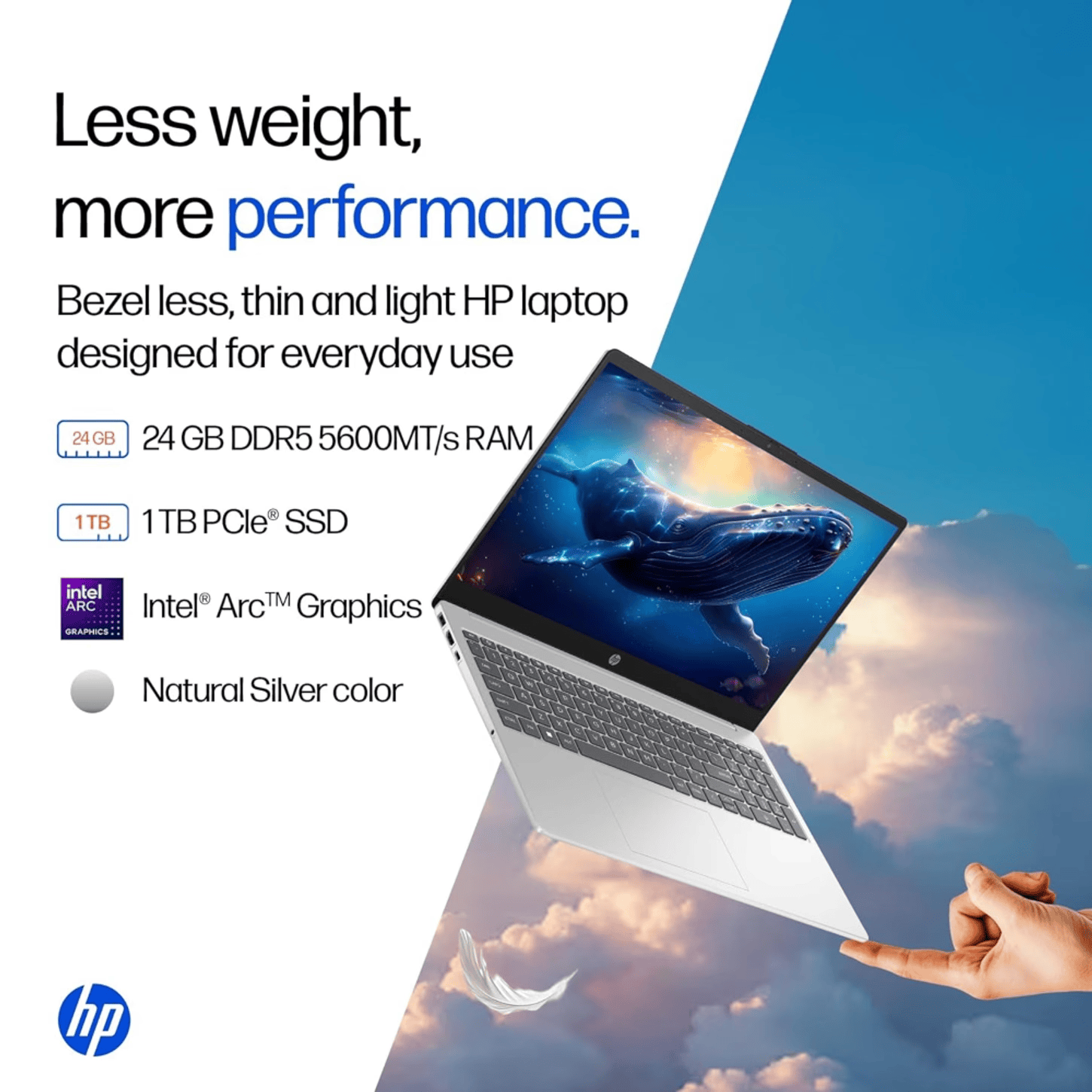
While several of the Lenovo and ASUS options I came across were capped at 16GB RAM, HP had models offering up to 24GB RAM and 1TB of storage. For someone looking for a laptop that can handle demanding productivity tasks today while remaining useful for years to come, that combination immediately caught my attention.
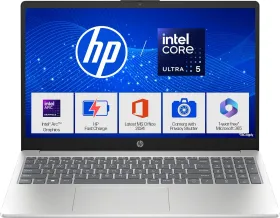
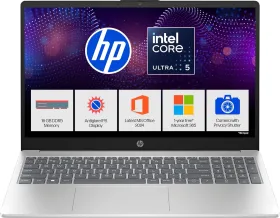
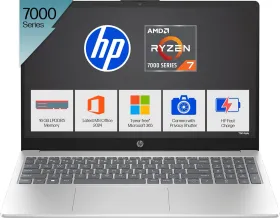
I ended up spending time on three HP laptops in particular: the HP 15 Smartchoice FD1458TU, which pairs 24GB RAM with 1TB storage; the more affordable HP 15 FD0682TU, with 16GB RAM and 512GB storage; and the HP OmniBook 3, which takes a more AI-focused approach with a Snapdragon X processor, up to 16GB RAM and 512GB storage, along with a dedicated 45-TOPS NPU for AI workloads.
Now having used all three, I have realised that comparing them purely on processor names, RAM, or storage numbers doesn’t really tell the whole story. The more useful question is: What kind of user is each laptop actually built for, and how well does it fit into the way we work and use our devices every day?
That became particularly important as I looked beyond conventional productivity. A laptop today needs to handle everything from documents, presentations and multitasking to entertainment, content creation and increasingly AI-powered applications. And while specifications on an Amazon product page can give you a good idea of what a laptop offers, actually living with the machine can tell you much more.
So, here’s a closer look at these three HP laptops, what sets them apart, and which kind of everyday user each one makes the most sense for.
The HP laptop I kept coming back to for work
If I had to describe the HP 15 Smartchoice FD1458TU in one line, it would be this: it feels ready for serious multitasking.
The reason is simple. It comes with 24GB DDR5 RAM and a 1TB PCIe NVMe SSD.
Those numbers may not sound particularly exciting on a spec sheet, but they become useful very quickly in everyday work. If, like me, your typical workday involves a ridiculous number of browser tabs, documents, spreadsheets, messaging apps, video calls, and the occasional image or video file, having more memory means you don’t have to constantly think about what you have open.
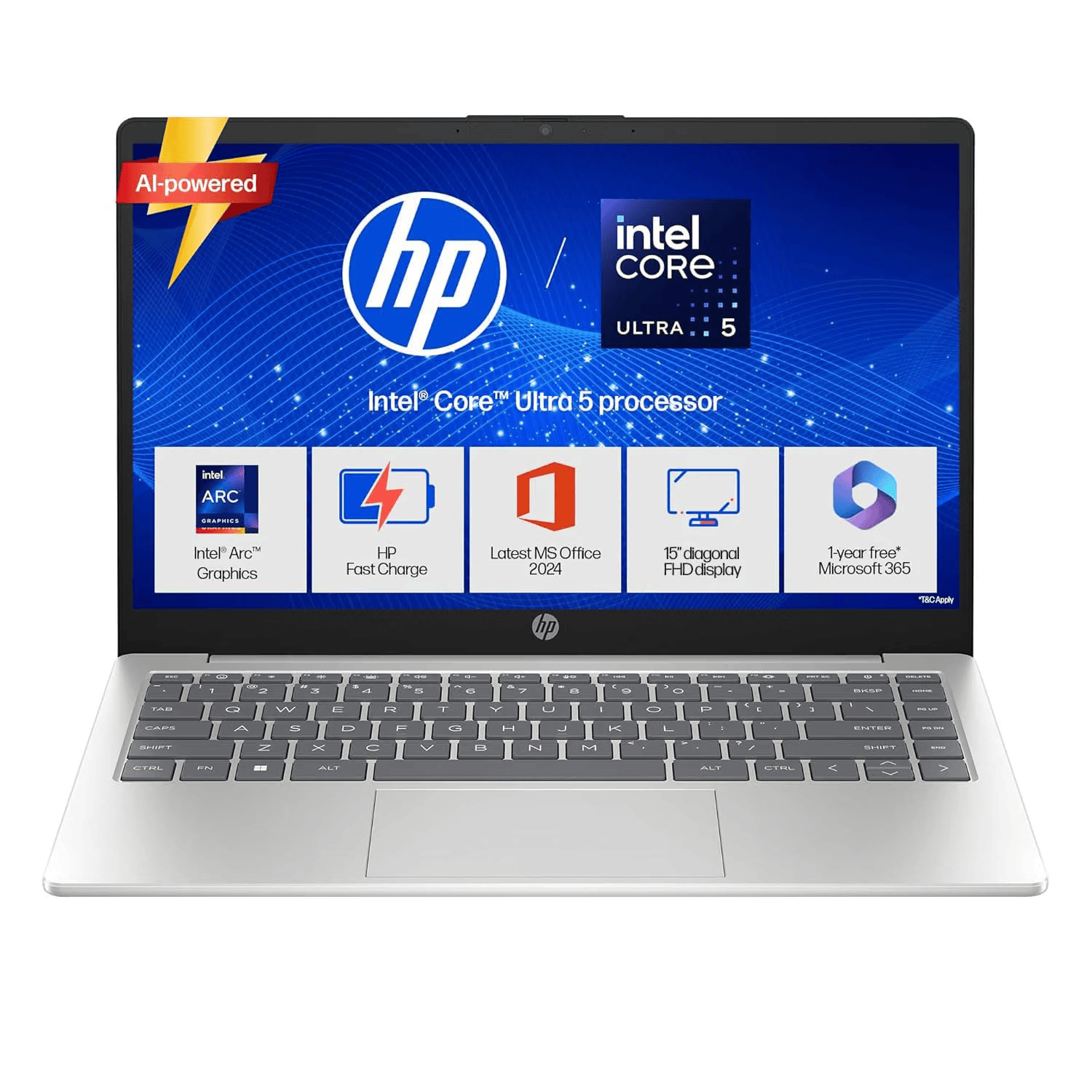
The 1TB SSD is equally useful. I have always found 512GB manageable, but it fills up quickly once you add applications, work files, downloads, and media. With 1TB, you have more breathing room.
The processor is an Intel Core Ultra 5 125H with 14 cores and 18 threads, clock speeds up to 4.5GHz, and an 18MB L3 cache. More importantly for where laptops are headed, it also includes an NPU for AI workloads.
The supplied specification lists 12 TOPS of NPU performance, so this isn’t just a conventional laptop with the word AI added to its marketing material. If you give it some AI task, it handles it well, thanks to the 24GB DDR5 RAM.
Amazon currently lists the HP 15 FD1458TU at Rs 94,990, and the listing shows a No Cost EMI option of Rs 15,832 per month for six months with the Amazon Pay ICICI Credit Card, subject to applicable terms.
For a laptop that will mostly sit on a work desk, the rest of the package is practical too.
You get an FHD anti-glare display, which makes it easier to work indoors and outdoors. The Intel Arc graphics handle graphic duties particularly well, and even if your work includes some graphics-intensive tasks, it will get the job done. Or, some lightweight games — should you wish to play in spare time. Keeping that aside, it has a full-size backlit keyboard and, importantly for anyone who spends time with spreadsheets, a numeric keypad.
It also has a 1080p HP True Vision camera with temporal noise reduction and dual-array digital microphones. For regular video meetings, that is a useful upgrade over the 720p webcams still found on some laptops.
Then there is the more affordable HP 15
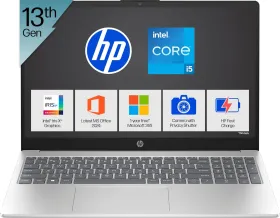
Now, I know not everyone wants to spend close to Rs 95,000 on a laptop. That is where the HP 15 FD0682TU becomes interesting.
It costs Rs 74,990 on Amazon today and gives you the fundamentals without pushing the price too far. You get an Intel Core 5-120U, 16GB DDR4 RAM, and a 512GB SSD — the storage, of course, can be extended for more room. But in its stock form, for someone whose laptop workload is primarily Microsoft Office, browsing, email, video meetings, streaming, and general productivity, this is already a fairly sensible configuration at a reasonable price.
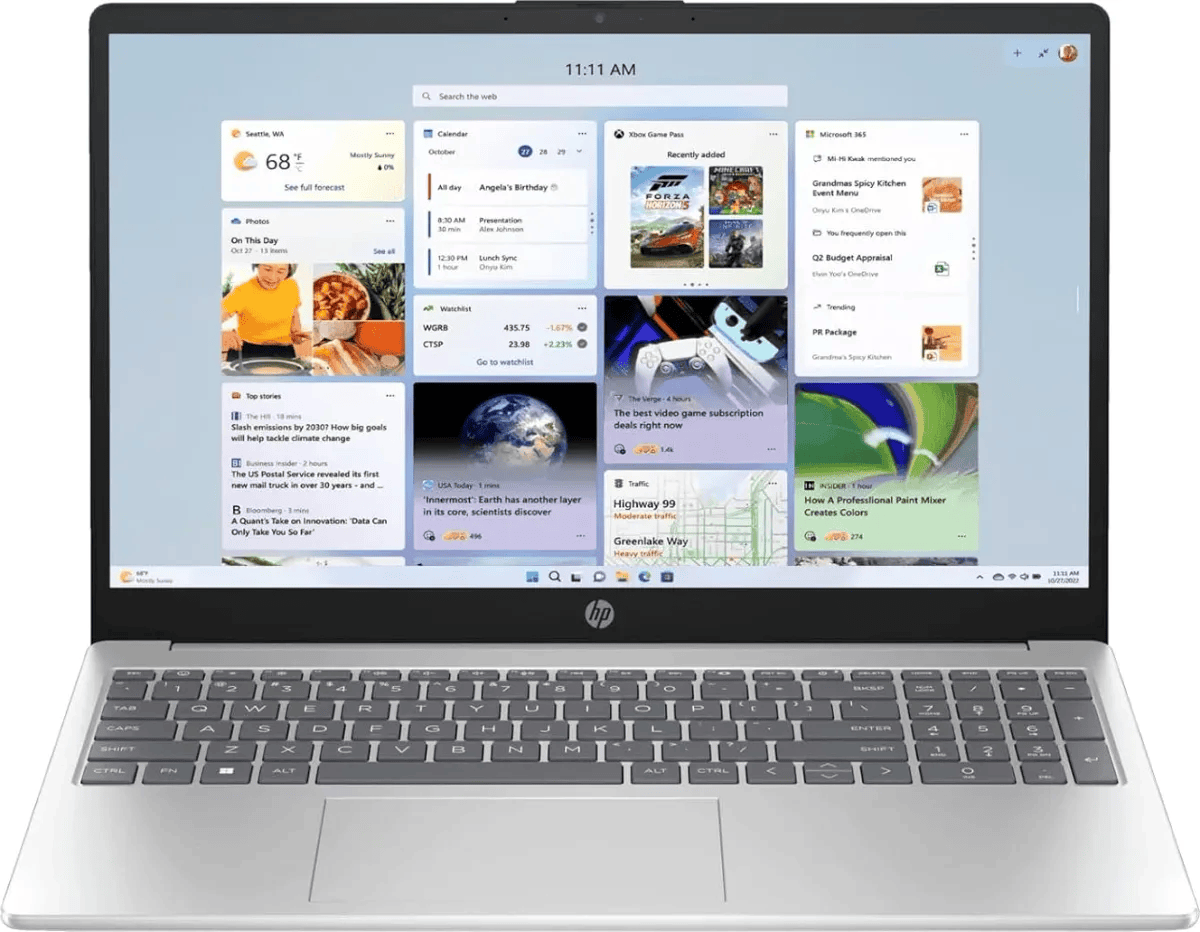
It has a 15.6-inch FHD anti-glare display, Intel Iris Xe graphics and a full-size backlit keyboard with a numeric keypad. It also weighs 1.59kg.
I particularly like that HP hasn’t stripped away useful everyday features just to hit a lower price. It still has a 1080p camera, dual-array microphones, and Wi-Fi 6.
The 41Wh battery can deliver around 8 hours of use and also supports fast charging, which comes in handy in a rush. One difference is worth noting: its USB-C port is for data transfer and doesn’t support charging or external monitors. The more expensive FD1458TU gets USB-C with Power Delivery and DisplayPort support.
So, if the FD1458TU feels like overkill for your workload, the FD0682TU gives you a more accessible entry point into the HP 15 range.
The HP OmniBook 3: The one that delivers an all-in-one solution
The HP OmniBook 3 feels different the moment you stop looking at the specifications and start thinking about actually carrying it around.
It weighs only 1.42kg, has a 14-inch display, and comes with a compact 65W USB-C Mini GaN charger.
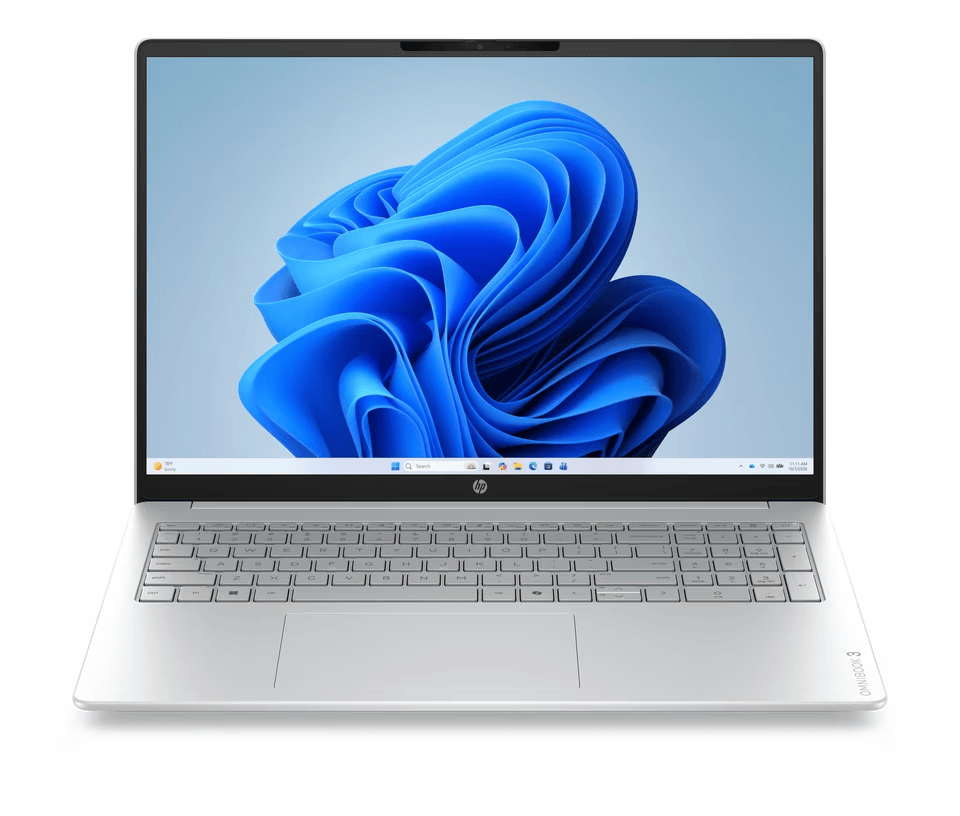
That makes a difference if your laptop regularly moves between home, office, coffee shops, cafes, or a travel bag.
But portability isn’t the only reason HP has put the OmniBook 3 in this lineup.
This is the AI-focused HP laptop of the three.
It runs on the Snapdragon X X1-26-100, paired with 16GB LPDDR5x RAM and a 512GB PCIe Gen4 NVMe SSD. Its NPU is rated at up to 45 TOPS, making it a Microsoft Copilot+PC and loading it with Windows 11 AI features.
That is a considerably different approach from the Intel-powered HP 15 models.
The OmniBook 3 also has a 14-inch 1920×1200 2K IPS display with 300-nit brightness and an anti-glare coating. The display gives you more vertical space than a conventional 16:9 FHD panel, which I find useful for documents and web pages. Plus, the added resolution makes it feel more premium, not only in design but also in utility.
Then there is the battery.
HP claims up to 36 hours of usage from the 60Wh battery. Actual results will naturally depend on what you are doing. Still, the combination of an ARM-based Snapdragon X processor, a relatively large battery, and an efficient platform can deliver up to 12 hours of battery life with medium load. Amazon lists this configuration at Rs 89,990, with the supplied listing showing 10% savings.
It’s an AI era, and your laptops should be able to handle it
There was a time when every laptop advertisement seemed to have AI somewhere in the headline, whether the laptop actually did anything different or not.
That is changing.
With the HP 15 FD1458TU and OmniBook 3, the AI hardware is actually part of the processor platform.
The Core Ultra 5 125H in the FD1458TU has an NPU rated at 12 TOPS, while the Snapdragon X chip in the OmniBook 3 goes up to 45 TOPS.
The point of an NPU is to handle compatible AI workloads locally and efficiently rather than making the CPU or GPU do everything.
That can help with AI-assisted features, image processing, video-call enhancements, and other applications designed to use local AI acceleration.
I wouldn’t buy a laptop simply because one NPU number is bigger than another. The software matters just as much. What I like about these HP machines is that the hardware is being built around where Windows PCs are heading rather than treating AI as an afterthought.
That is where the FD1458TU makes an interesting case for itself. You get an NPU, plus 24GB RAM and 1TB storage. For someone whose AI use is part of a much broader workday, that combination may be more useful than focusing on NPU performance alone.
The OmniBook 3, meanwhile, makes more sense if you need AI processing paired with portability and long battery life.
What about the other laptops on my list?
I also looked at other options in a similar price range—for instance, the Lenovo IdeaPad Slim 3, ASUS Vivobook 16, and even the Apple MacBook Neo.
The Lenovo IdeaPad Slim 3 comes with a 13th Gen Intel Core i7-13620H, 16GB DDR5 RAM, and a 512GB SSD. It has a 15.3-inch WUXGA IPS display with 300-nit brightness and weighs 1.59kg.
It is a conventional productivity laptop with an H-series processor, whereas the HP FD1458TU combines a newer Core Ultra platform with an NPU, 24GB RAM, and 1TB storage. It also lacks an anti-glare panel, which HP offers.
Then the ASUS Vivobook 16 is interesting for a completely different reason. Its 16-inch 1920×1200 OLED display is the obvious attraction. It also gets a Core i5-13420H, 16GB RAM, and a 512GB SSD.
If entertainment and display quality are at the top of your list, that OLED panel is worth considering. The trade-off is weight: at 1.88kg, it is heavier than all three HP laptops. Plus, it has a slightly older processor and limited storage.
Lastly, the Apple MacBook Neo has the A18 Pro processor, 8GB unified memory, and a 256GB SSD. It lands around the same price as the HP 15 FD1458TU.
The MacBook is lighter at 1.23kg, runs macOS rather than Windows, and has considerably less memory and storage. Plus, the display resolution is lower, and it has no backlit keyboard.
That doesn’t make it unsuitable; it simply means the decision is also about which ecosystem and workflow you want. And, most importantly, what you as a buyer want from a laptop. After all, you don’t upgrade a laptop daily. It is something you invest in for several years.
Here is how the specifications stack up:
| Feature | HP 15 FD1458TU | HP 15 FD0682TU | HP OmniBook 3 | Lenovo IdeaPad Slim 3 | ASUS Vivobook 16 | Apple MacBook Neo |
| Processor | Core Ultra 5 125H | Core 5-120U | Snapdragon X | Core i7-13620H | Core i5-13420H | A18 Pro |
| RAM | 24GB DDR5 | 16GB DDR4 | 16GB LPDDR5x | 16GB DDR5 | 16GB DDR4 | 8GB |
| Storage | 1TB | 512GB | 512GB | 512GB | 512GB | 256GB |
| NPU | 12 TOPS | — | Up to 45 TOPS | — | — | — |
| Display | 15-inch FHD | 15.6-inch FHD | 14-inch 2K | 15.3-inch WUXGA | 16-inch OLED | 13-inch |
| Camera | 1080p | 1080p | FHD IR | — | 720p | — |
| Weight | 1.65kg | 1.59kg | 1.42kg | 1.59kg | 1.88kg | 1.23kg |
| OS | Windows 11 | Windows 11 | Windows 11 | Windows 11 | Windows 11 | macOS |
| Office | Office Home 2024 | Office Home 2024 | Office Home 2024 | Office 2024 | Office 2024 | — |
Why I think HP’s approach works for a work laptop
The thing I kept coming back to while using these machines was that HP hasn’t tried to solve the laptop problem with one specification.
The HP 15 FD0682TU is the straightforward option. You get 16GB RAM, 512GB storage, and a 15.6-inch display for Rs 74,990.
Move to the HP 15 FD1458TU, and the configuration becomes much more comfortable for heavier multitasking: 24GB DDR5 RAM, 1TB storage, Intel Core Ultra 5, and Intel Arc graphics.
Then there is the OmniBook 3, which changes the priorities completely. At 1.42kg, with a 2K display, Snapdragon X processor, 45-TOPS NPU, and 60Wh battery, it is the laptop in this group that I would be most interested in carrying around every day.
That variety matters because “best laptop” is rarely useful without knowing what the person actually does with it.
There is also the Amazon factor
If you’re shopping during the Diwali sale, the HP lineup becomes particularly easy to understand.
You don’t necessarily have to jump from a Rs 75,000 laptop to a Rs 95,000 laptop just because you want an HP. There is a clear step between the three configurations.
The HP 15 FD0682TU at Rs 74,990 gives you the basics for everyday work.
The HP OmniBook 3 at Rs 89,990 adds a different kind of value with its lightweight design, 2K display, Snapdragon X platform, and 45-TOPS NPU.
The HP 15 FD1458TU at Rs 94,990 focuses on raw specs, with 24GB RAM and 1TB storage alongside the Core Ultra platform.
Amazon also offers No Cost EMI options through the Amazon Pay ICICI Credit Card, along with additional bank discounts on top of the offers, to make buying more affordable.
So, which one would I pick?
This isn’t really about picking a winner. If I were recommending one of these HP laptops to a friend, I would first ask what their typical day looks like.
If they told me, “I work on a laptop all day, keep a lot of things open and don’t want to worry about storage,” I’d point them towards the HP 15 FD1458TU. The 24GB RAM and 1TB SSD are the two specs that make the biggest immediate difference, while the Core Ultra processor adds AI hardware.
If they said, “I just need a reliable laptop for work, college, browsing and Netflix, and I don’t want to spend close to Rs 1 lakh,” the HP 15 FD0682TU makes more sense. Its 16GB RAM and 512GB SSD cover the basics without unnecessarily pushing the budget.
And if they said, “I travel a lot and want something light, but I also want an AI PC,” I’d look at the HP OmniBook 3. The 1.42kg weight, 2K display, 60Wh battery, compact GaN charger, and Snapdragon X platform give it a very different character.
That’s ultimately what I liked about testing these three HP laptops. They don’t feel like three versions of the same machine. They address three different ways of using a laptop — work, everyday entertainment, and the emerging AI workload — while keeping Windows and productivity at the center.
For the Diwali sale, that makes HP’s lineup worth looking at before you make your final laptop decision on Amazon.
Disclaimer: This is a brand story, so views and opinions expressed here are of the sponsor and not of the editorial team.