

Pollution and humidity are different problems that need different machines. Hifresh’s air purifiers and dehumidifiers target each one, and this guide explains which fits your Indian home and household needs.
Ask around, and you will find that Indian households deal with two very different indoor air problems. In Delhi-NCR and other parts of North India, pollution becomes a bigger concern around Diwali and through winter, with smoke, dust and PM2.5 levels rising sharply. Fine particles can also make their way indoors through gaps around windows and doors. In Mumbai, Goa, Kerala, Chennai and Kolkata, the problem is often excess humidity, which can leave wardrobes smelling musty, walls damp and clothes taking days to dry. Hifresh, which says it has been operating in India for over five years, offers products for both concerns, with H13 True HEPA air purifiers to tackle airborne particles and compact dehumidifiers to remove excess moisture. Here is how the two appliances differ, what the Hifresh range offers and how to decide which one makes sense for your home.
Air purifier vs dehumidifier: what each one actually does
Let’s clear up the biggest confusion first. A lot of people search for an air purifier and dehumidifier as if one machine can do both jobs. It can’t, and buying the wrong one is the most common mistake in this category.
An air purifier deals with particles. It pulls room air through a stack of filters, usually a pre-filter, a HEPA layer and activated carbon, and traps dust, pollen, smoke and PM2.5. What it doesn’t do is touch the moisture in your room. If your cupboard is damp or the furniture is damp, a purifier will happily run beside it for months without doing anything about that.
This is where a dehumidifier comes into the picture, as it deals with water. It draws in humid air, condenses the vapour into a tank and sends drier air back out. Some models, including the Hifresh ones, have a carbon filter that catches a bit of dust and odour on the way in, but that’s a bonus. It won’t clear Delhi smog.
So the real question isn’t which machine is better. It’s what your home is struggling with. Dust on every surface, a burning smell in winter, and a red PM2.5 reading mean you need an air purifier for pollution. Mould, rust, a clammy feel and clothes that never smell fully dry mean you need a dehumidifier for humidity. Humidity control at home matters because dust mites and mould thrive once relative humidity crosses about 60 per cent, so indoor air quality can suffer from both directions.
Which problem does your home have?
If you live in the north, your enemy is smoke and fine dust. Closing the windows helps, but not completely, and then Diwali crackers, incense, mosquito coils and cooking fumes add to whatever is already inside. A room air purifier for home use is the logical first buy.
If you live on the coast, your enemy is moisture. Along the Konkan, in Goa, Kerala, Chennai and Kolkata, monsoon humidity brings mould to walls and wardrobes, musty bedding, laundry that takes days to dry, rust on electronics and dust mites that multiply above 60 per cent relative humidity. Many families put up with this as a fact of life, but a machine can fix it. Chennai’s northeast monsoon typically arrives around this time of year, so the season is relevant right now.
And plenty of homes face both. Delhi has monsoon humidity in July and August and heavy smog from November. Mumbai and Kolkata deal with traffic pollution all year on top of long, wet monsoons. If that sounds like your city, you may need a purifier and a dehumidifier at different points in the year, and sometimes at the same time.
Hifresh air purifiers: For the pollution side
1. Hifresh air purifier for bedroom, 300 m³/h CADR, up to 500 sq ft: Rs 9,499
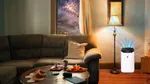
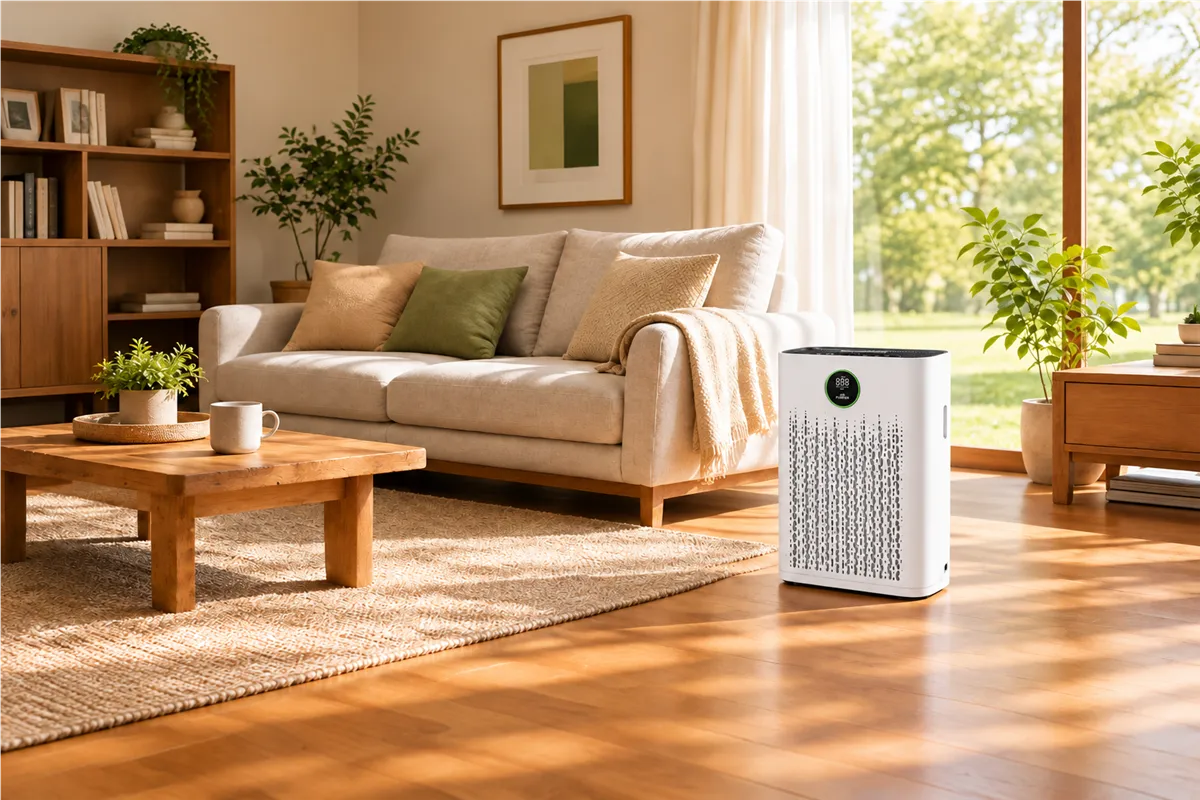
Designed for bedrooms, study rooms and rented homes, this Hifresh air purifier combines an H13 HEPA filter with activated carbon to tackle dust, smoke and other airborne particles. It has a CADR of 300 m³/h and is rated for rooms of up to 500 sq ft. The purifier comes with a PM2.5 display and an infrared sensor that adjusts the fan speed automatically. Its front and dual-side air inlets help draw in air, while the 22 dB Sleep Mode keeps noise down at night. There is also an aroma function, three fan speeds and a timer with 2, 4, 6 and 8-hour settings. The model comes with a two-year warranty.

2. Hifresh four-stage air purifier, 300 m³/h CADR, up to 700 sq ft: check listing for price
This Hifresh air purifier uses a four-stage filtration system comprising a pre-filter, True HEPA filter, activated carbon and a cold catalyst layer. The company claims it captures 99.99% of particles as small as 0.3 microns, including dust, pollen, smoke and pet dander, while also helping with odours. It is rated for areas of up to 700 sq ft, although its 300 m³/h CADR means air cleaning will take longer in larger rooms. Air exits through a top-mounted 360-degree outlet, and users can choose between Auto, Sleep and Purification modes, along with three fan speeds of 180, 240 and 300 m³/h. The purifier also has a touch panel, LED display and a remote with a range of around 6 metres. Sleep Mode switches off the lights and operates at 20 dB. A 12-hour timer, 35W power consumption and a two-year warranty round off the features.
What the purifiers are built around
1. H13 True HEPA filtration
Hifresh’s air purifiers use H13 True HEPA filters, which the company claims can remove 99.99% of particles between 0.1 and 0.3 microns. These include dust, pollen, pet hair, smoke, bacteria and PM2.5. The filters also help remove formaldehyde and odours. For homes in cities where dust, smoke and other airborne pollutants are a concern, filtration is the main feature to look at.
2. Air quality monitoring
The purifiers come with a PM2.5 sensor that displays air quality readings, along with a tri-colour indicator that uses red, yellow and green to show changes in air quality. A filter-life reminder also tells users when the filter needs replacing. The readings can help users track changes in indoor air quality, whether they are cooking, dealing with smoke or trying to reduce dust indoors.
Noise levels and air delivery
CADR, or clean air delivery rate, indicates how much filtered air a purifier delivers in an hour. A 150 sq ft bedroom with a standard ceiling has an air volume of roughly 38 cubic metres. A purifier with a CADR of 300 m³/h can therefore deliver air equivalent to around eight room volumes per hour under ideal conditions. Actual performance will depend on the room layout, airflow and operating speed. Hifresh says its purifiers use a DC brushless motor and operate at up to 50 dB, while its two 300 m³/h models have Sleep Modes rated at 20 dB and 22 dB, respectively. These lower noise levels make them more suitable for use in bedrooms at night.
Hifresh dehumidifiers: For the damp side
Here Hifresh makes its sharpest pitch. The dehumidifiers pull moisture out of the air actively through condensation, which is a different thing from the passive boxes that rely on desiccant crystals. There are two models you can consider.
The 2.5L compact model: Rs 10,499
It uses dual-semiconductor condensation and, in humid, enclosed conditions of 30 degrees Celsius and 80 per cent relative humidity, can extract up to 800 ml of moisture a day. It also carries a replaceable HEPA and activated carbon filter that captures dust, pet dander and odours before air enters the unit. It runs at 39 dB, measures 200 x 158 x 355 mm and draws about 70W. An LCD for live humidity and temperature, a timer, a seven-colour light, an aromatherapy box and a drain hose connection for continuous drainage complete the package.
The 4L model: Rs 11,499
The larger machine removes up to 3 litres a day and is rated to dehumidify spaces up to 485 sq ft, with its carbon filter working as an air purifier for areas up to 865 sq ft. It has three fan speeds, a 38 dB Sleep Mode that turns every light off except the sleep icon, 12, 24 and 48-hour timers and a warm-air mode meant to dry clothes faster. A hose can be attached for continuous drainage, thermal overload protection shuts it down if it overheats, and it measures 22.5 x 22.5 x 50 cm.

What the dehumidifiers are built around
True moisture extraction
These machines are designed to fight damp walls, mouldy furniture and musty cupboards by actually removing water: up to 800 ml a day from the 2.5L model and up to 3 litres a day from the 4L model. The conditions behind the 800 ml figure resemble a Mumbai monsoon afternoon.
Two ways to manage the collected water
You can let the water collect in the tank or drain it away continuously. Both models support both options.
- Water tank: Water collects in the built-in tank. When the tank is full, the unit shuts off automatically and you need to empty the tank by hand before restarting. At the rated best-case output, the 2.5L tank fills in roughly 75 hours and the 4L tank in about 32. The unit also shuts off if it is tilted, so it is safe to run unattended.
- Drain hose: Alternatively, connect a drain hose and the water drains out automatically, so you never need to empty the tank by hand during use. This suits wardrobe rooms and long monsoon stretches when you don’t want to check the tank every day.
- Whisper-quiet running: At 38 to 39 dB, these dehumidifiers are suitable for nurseries, bedrooms and overnight use without causing any distraction.
- Live readout and target humidity: An LCD shows humidity and temperature in real time, and you can set a target humidity on the unit.
- Lifestyle touches: A seven-colour ambient light can cycle through colours or switch off for a pitch-black room, and the aromatherapy box releases fragrance while the unit dehumidifies. At about 70W, it uses far less power than a 200W-plus compressor unit. Running eight hours a night costs roughly Rs 4.50, or around Rs 135 a month.
- No Wi-Fi, no app: Controls are one-touch on the unit itself and simple enough for elderly family members, so nobody needs to pair a phone or connect to Wi-Fi.
Which household needs which
Parents of newborns: This is where quiet and safety becomes important. The 39 dB dehumidifier and the 20 to 22 dB purifier Sleep Mode suit overnight rooms, and the dehumidifier’s auto shut-off and lights that switch off in Sleep Mode help in a room with a baby.
Allergy sufferers: Dust, pet dander and mould spores are common triggers. A purifier handles the first two, a dehumidifier keeps humidity below the level where dust mites and mould spread, and running both covers all three. These machines support a cleaner room, but they are not medical treatment.
Remote workers: If your desk is in the bedroom, both machines are quiet enough to run through a workday.
Renters: Nothing needs installation. Plug in, set it down and carry it to the next flat or home when the lease ends or you choose to move.
Monsoon-hit households: If your wardrobe smells damp every June and your laundry takes days to dry, the 4L model with its higher 3-litre daily output and warm-air mode is the more suitable pick. Either dehumidifier can run on continuous drainage through a hose, so you can skip emptying the tank.
High-pollution households: The 300 m³/h purifiers are the main pick, with the 700 sq ft four-stage model for larger living rooms.

How to pair both through the year
In the monsoon and the wet weeks after it, the dehumidifier does the heavy lifting, with the purifier on a lower speed to catch dust and odours. When winter smog arrives, swap the roles: the purifier runs day and night with windows closed, while the dehumidifier stays off unless a damp patch demands it.
In cities that swing between the two, you may need both in the bedroom for stretches of the year. Leave clear space around the purifier, keep the dehumidifier close to the damp source and remember that the dehumidifier, at 38 to 39 dB, will be the louder of the two.
Why a mid-priced machine can earn your trust
Buyers in India have reason to be cautious about dehumidifiers. Desiccant boxes at Rs 1,500 to Rs 4,000 and toy-grade mini units taught many people that these products do not work, and compressor units from large appliance brands cost Rs 18,000 and more. Hifresh sits between the two, at roughly Rs 10,000 to Rs 12,000, and builds its case on active extraction you can measure on the LCD, quiet running and low power draw.
Use them for what they are. These are compact machines for bedrooms, nurseries, study rooms and wardrobe rooms. The 800 ml rating applies at 30 degrees Celsius and 80 per cent humidity, and output falls in cooler, drier air. A large hall or a whole flat needs a bigger unit.
The India service promise
Many imported appliances follow a sell-and-forget model. Hifresh says it wants to avoid that. The brand lists a toll-free helpline at 1800-274-7442, on-call support and warranty of up to 2 years from the date of purchase. It says it has built local after-sales support in India, has been here for over five years and plans to stay.
A practical tip: keep the invoice, note the serial number and call the helpline once in the first few weeks, so you know it works before you need it. Also check what a replacement filter costs and how easily you can order one.
Right machine for the right problem
Clean indoor air in India is not a one-machine job. Smoke, dust and PM2.5 need an air purifier with True HEPA filtration, while damp walls, mouldy wardrobes and musty bedding need a dehumidifier that actually pulls water out of the room. Hifresh covers both sides with its bedroom and four-stage air purifiers and its 2.5L and 4L dehumidifiers, all designed to run quietly in real Indian homes. Match the machine to the problem, pair both when the seasons change, and back the purchase with the brand’s local helpline and two-year warranty.
Disclaimer: This is a brand story, so views and opinions expressed here are of the sponsor and not of the editorial team.