

TL; DR
- Google has announced Googlebook, a new AI-native laptop category that merges Android and ChromeOS, with devices from Acer, ASUS, Dell, HP, and Lenovo arriving this fall.
- The standout feature is Magic Pointer, a Gemini-powered cursor that offers contextual suggestions based on whatever is on your screen, built with Google DeepMind.
- Googlebook features deep Android phone integration through Quick Access file sharing and seamless app switching, alongside Create My Widget for building personalized AI-driven desktop dashboards.
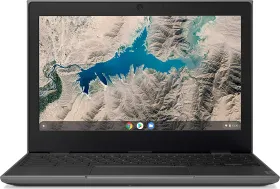
About fifteen years ago, Google launched the Chromebook, a new category of devices built for cloud-based workflows that required relatively lighter hardware but helped users get a capable machine at a very reasonable price. The browser-first device found its way into schools, offices, and homes around the world.
Also Read: From Grocery Lists to Custom Widgets: Google Gemini Intelligence Is Redefining What Android Can Do
What Is A Googlebook?
Now, the company has come up with another category of devices that is purpose-built for AI: Googlebook. Revealed at the Android Show 2026, Googlebook is an entirely new category that is similar to Chromebook, but different with respect to its user experience, which will be dominated by Gemini Intelligence.
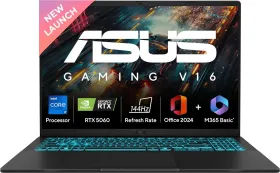
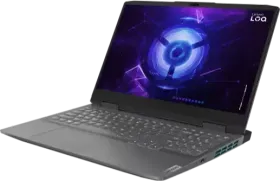
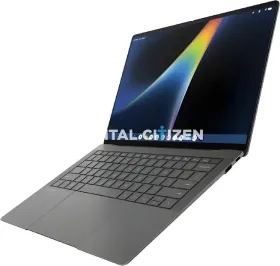
The device essentially merges the best of Android, including its app ecosystem, Google Play, and Gemini Intelligence, with the best of ChromeOS. The first Googlebook devices are expected to go on sale this fall (between September and November). The company has already confirmed hardware partnerships with Acer, ASUS, Dell, HP, and Lenovo.
Also Read: Gemini Is Finally Making Your Car’s Voice Assistant Stop Being Dumb
Googlebook Design: Premium Hardware With A Signature Touch
Every Googlebook will carry a design element called the glowbar. It’s a hardware signature that, per Google, is both functional and aesthetic. Beyond this, the company says that all Googlebook devices will be made with premium materials across a range of form factors.
Expect more hardware details closer to the launch window. Pricing, unfortunately, hasn’t been revealed yet. And it will be the partner manufacturers that determine the price.
Googlebook Features A New Gemini-Powered Cursor
The most unexpected part of the Googlebook announcement is that Google is changing the cursor, something that hasn’t evolved since right-click was first introduced. The new Magic Pointer is built in collaboration with Google DeepMind.
It integrates Gemini AI directly into the cursor, implying that you can access the AI assistant via the cursor, wherever it is on the screen. The Magic Pointer offers several text-specific features, such as summarization, contextual queries, and direct integration with other apps, all without switching between apps.
Also Read: Google’s Pause Point Is a Genius Attack on Your Doomscrolling Reflex
For instance, if you hover over a date in an email, Magic Pointer can offer to schedule a meeting on the same date. Or if you select two images, say, a photo of your living room and a picture of a couch you’re considering buying, Magic Pointer can help you visualize them together before you make a purchase.
Basically, it’s an attempt to compress a multi-step decision into a single, in-place interaction, which sounds quite intuitive.
Your Phone And Your Laptop In Perfect Sync
One of Googlebook’s most practical selling points is how well it syncs your Android phone with your laptop. Basically, you should be able to interact with one device using the other, without facing any major friction points.

For instance, you’re mid-work on the Googlebook but feeling hungry. Without taking out your smartphone, which might be plugged in across the hall, you can tap into a phone app from the Googlebook and place an order, without leaving the desk or closing the app you were previously working in.
Also Read: Snapdragon 6 Gen 5 vs. Dimensity 7450: Which Mid-Range Chipset Is Better And Why?
Then there’s the Quick Access feature, which lets you browse, search, and use files from your phone directly in the Googlebook’s file manager, without any cables, cloud uploads, or transfer steps. If I recall correctly, Apple also provides a similar feature, called iPhone Mirroring, with macOS Sequoia.
While Chromebook was a bet on Google’s Chrome browser, Googlebook is a bet on personal intelligence. The company believes that the next leap in smartphone or laptop technology won’t come from faster chips or larger-than-powerbank batteries, but from software that understands context and reduces the number of steps between what you want to do and actually doing it.
Whether that bet pays off depends entirely on how well Google integrated Gemini Intelligence, and whether the personal intelligence system actually works in real-life scenarios without any hiccups.

You can follow Smartprix on Twitter, Facebook, Instagram, and Google News. Visit smartprix.com for the latest tech and auto news, reviews, and guides.