

TL; DR
- HOMOLAB says Apple uses TLC NAND in the 256GB and 512GB iPhone 18 Pro models, and QLC NAND in the 1TB and 2TB variants.
- The 1TB model uses an SLC cache to maintain high write speeds before falling back to QLC storage.
- The cache reportedly drops from around 250GB to 58GB when the phone reaches 60% storage usage.
- At 60% capacity, the average direct-QLC write speed fell to around 45 MB/s, with a minimum result of 1.14 MB/s.
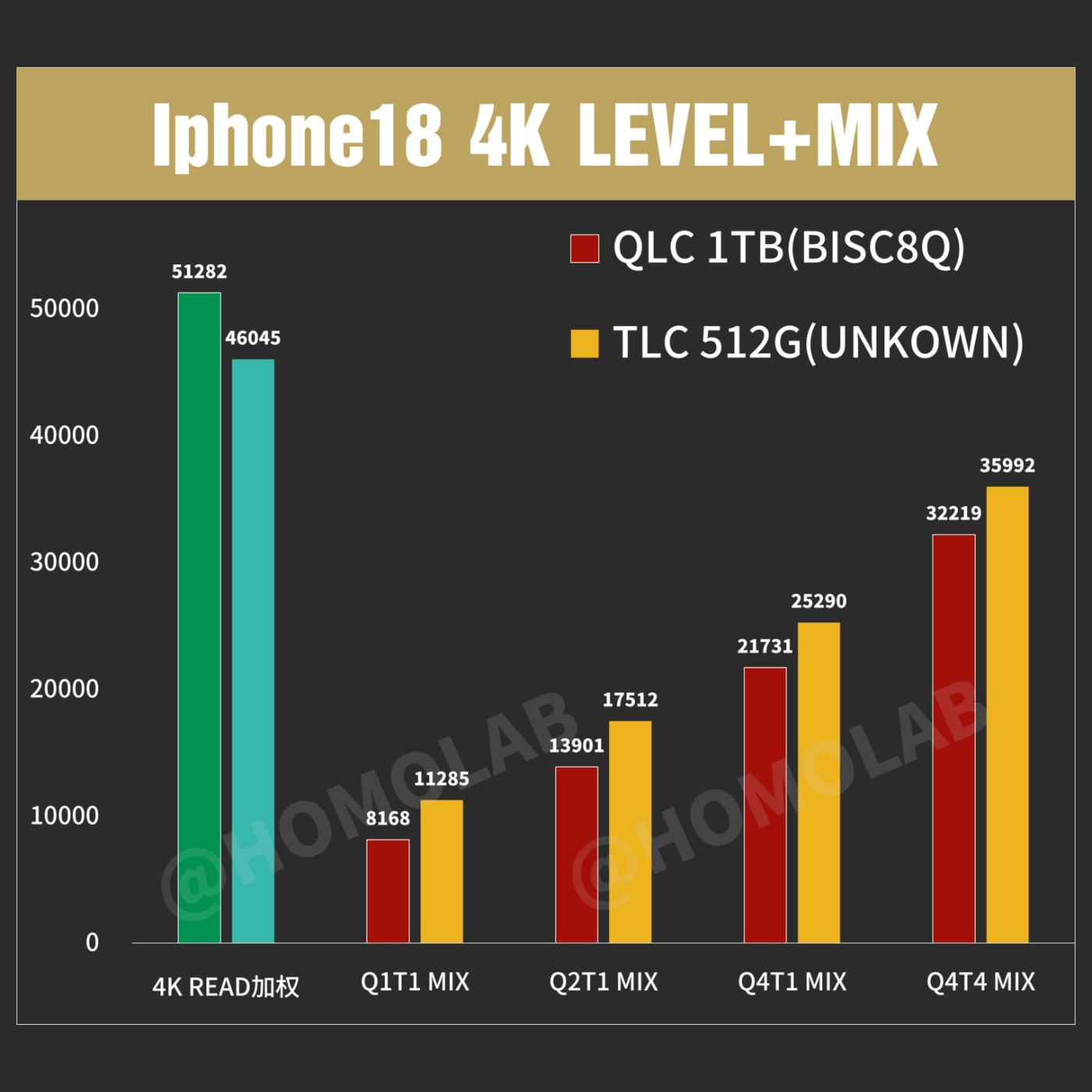
- The 512GB TLC model reportedly performed 38% better in mixed read/write testing.
Apple’s 1TB and 2TB iPhone 18 Pro models reportedly use different NAND storage from the 256GB and 512GB versions. Testing by HOMOLAB found QLC NAND in the higher-capacity models, while the lower-capacity versions continue to use TLC.
The difference is largely invisible during everyday use because the QLC storage uses an SLC cache to handle fast write bursts. Sustained workloads expose the difference once that cache is exhausted.
1TB iPhone Uses QLC NAND

TLC NAND stores three bits per memory cell, while QLC stores four. QLC can therefore store more data in the same physical area, making it suitable for higher-capacity storage.
The limitation is write performance, particularly during sustained workloads. The iPhone compensates with an SLC cache, which temporarily handles incoming data before it is written to the underlying QLC NAND.
HOMOLAB’s testing found that the 1TB iPhone 18 Pro Max can have around 250GB of SLC cache when the storage is relatively empty. Once storage usage reaches around 60%, that figure reportedly falls to approximately 58GB.
So, naturally, after the cache is exhausted, data is written directly to the QLC NAND. In testing, sustained write speeds averaged 79.4 MB/s, with the lowest recorded result at 25.6 MB/s. At 60% storage usage, direct-QLC writes averaged around 45 MB/s, while the minimum result dropped to 1.14 MB/s.
The 512GB Model Uses TLC
The 512GB iPhone 18 Pro models reportedly continue to use TLC NAND. HOMOLAB found that the TLC-based 512GB model performed around 38% better than the 1TB model in mixed read/write testing.
That creates a clear difference between the two storage tiers. The 1TB model has twice the capacity, but its QLC NAND can produce lower sustained write performance once the SLC cache is exhausted.

For normal smartphone workloads, the difference should be limited. Apps, photos, messaging and other short write operations can generally remain within the cache. Large sustained workloads like data transfers of large video files are more likely to expose it.
ProRes recording is one example. High-resolution ProRes video can generate several gigabytes of data per minute. A storage system that has moved beyond its SLC cache has considerably less write headroom than it has during cached writes.
Large file transfers and local backups can also take longer when the QLC layer is handling the writes directly. A 50GB transfer at 45 MB/s would take roughly 19 minutes. At 1.1 MB/s, the same transfer would take around 12.6 hours.
Apple Doesn’t Specify the NAND Type to Buyers

Apple’s public specifications don’t identify the NAND type used in each iPhone storage configuration. That means someone choosing between 512GB and 1TB sees the capacity difference, but not the underlying storage technology.
For a phone that can cost close to ₹2,50,000 in its higher-capacity configurations, Apple should have done better. What they have done is simply unacceptable and, in a way, dishonest to consumers spending lakhs on their product.

You can follow Smartprix on Twitter, Facebook, Instagram, and Google News. Visit smartprix.com for the latest tech and auto news, reviews, and guides.