Apple iPhone 13 Pro Models to Include Samsung’s 120Hz LTPO Displays

Main Image
  • Like
  • Comment
  • Share

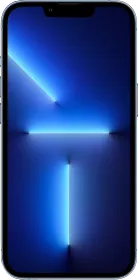
We have been hearing rumors of Apple taking to 120Hz displays for more than a year, and it’s about time. A report from the Korean website ‘ The Elec’ confirms that Samsung will be providing LTPO OLED panels to Apple for iPhone 13 Pro and iPhone 13 Pro Max. 

Every AMOLED display has a backplane that determines when individual pixels turn on and how bright they glow. Most backplanes use two separate transistors (TFTs) – one for switching on a pixel (Switching TFTs) and for maintaining its brightness (driving TFTs). 

LTPO displays use faster LTPS for switching circuits and more power-efficient IGZO material for driving circuits. Thus LTPO displays combine the benefits of both IGZO and LTPS backplanes. These displays can quickly switch between different refresh rates in a power-efficient manner and thus make VRR possible. 

Also Read: What are LTPO displays?

Samsung currently uses LTPO displays only on its top-of-the-line flagships like Note20 Ultra and Galaxy S21 Ultra (not on Galaxy S21 and Galaxy S21+) or on its phones that support Variable Refresh Rate in order to conserve battery. 

Apple also uses LTPO displays on Apple Watch and that’s how it manages an Always-On mode that switches to a low frame rate to ensures that it doesn’t completely obliterate the battery. 

Also Read: Why High Refresh Rate Displays Consume Excessive Battery?

Samsung Technologies will also supply rigid flexible printed circuit boards (RFPCB) used to connect OLEDs to the mainboard. 

According to the report by The Elec, Samsung will supply 110 million panels to Apple. LG and BOE will supply 50 Million and 9 Million, respectively.

Deepak SinghDeepak Singh
Deepak Singh is a technology journalist and editor with over 13 years of experience covering consumer electronics. A computer engineering graduate, he has developed deep expertise in chipsets, displays, and hardware performance.

Over the past decade, Deepak has reviewed more than 700 products, including smartphones, laptops, TVs, and audio gear. He currently leads the editorial team at Smartprix, focusing on accurate, useful, and hands-on tech reporting.

When he’s not testing new devices, Deepak enjoys reading and spending time with his family.

Related Articles

ImageAmazon Prime Day 2026 India: Everything You Need To Know

Amazon has officially announced Prime Day 2026 in India, marking the 10th edition of its annual members-only shopping event.  The sale will run for 72 hours, from 12:00 AM on July 4 to 11:59 PM on July 6. It arrives about a week earlier than Prime Day 2025, which ran from July 12 to 14 …

ImageWhat are LTPO Displays? How do they help with VRR on Phones?

Although LTPO tech on a smartphone first came into notice with Samsung Galaxy Note 20 Ultra, lately, we have seen this being adopted by several brands. It brings in several big and small refinements over the traditional technology used for the display. You may hear it under different names like HOP (hybrid oxide and polycrystalline …

ImageSamsung Galaxy Fold 2 leak suggests S Pen, 120Hz display and more

Galaxy Fold was an innovative piece of hardware from Samsung. Although it suffered a troubled start, the South Korean giant managed to release a phone that’s still coveted by tech enthusiasts half a year later. Well, as it seems, the successor is en route. Yes, probably months ahead of its launch (Q2, 2020), we now …

ImageThe New Dell XPS 13 Starts At $699, And It Includes Everything That Apple’s MacBook Neo Omits

Dell has been making Windows ultrabooks since before the term was coined, and at Computex 2026, the company launched what is arguably its most important XPS in over a decade. Spoiler alert: it’s because of Apple’s MacBook Neo.  The new XPS 13 (model DX13260) is the thinnest and lightest XPS laptop Dell has ever built. …

ImageApple May Borrow Samsung’s Privacy Display For Its 2029 MacBook Pro Models

You must have read about the Privacy Display feature confirmed to arrive on the Galaxy S26 series (we’re assuming it will remain exclusive to the Galaxy S26 Ultra) by now. The technology reportedly uses a “Flex Magic OLED” panel with pixels that can emit light in a specific direction and change it on the go. …

Discuss

Be the first to leave a comment.