

Galaxy Z TriFold vs. Huawei Mate XTs Ultimate: Table of Contents
Samsung and Huawei may have taken wildly different approaches to the tri-folding form factor, but their newest devices still make for an interesting comparison, even if most buyers will never see both in the same market. Samsung’s Galaxy Z TriFold is aiming to bring tri-folding phones into the global mainstream, while Huawei’s Mate XTs Ultimate remains a China-focused, highly experimental showcase of folding tech.
In this breakdown, we look at how the two devices differ in design, displays, performance, software, cameras, and everyday usability, and what those differences reveal about the future of tri-folding smartphones.
Galaxy Z TriFold vs. Huawei Mate XTs Ultimate: Design
| Samsung Galaxy Z TriFold | Huawei Mate XTs Ultimate | |
| Dimensions: Unfolded | 159.2 x 214.1 x 3.9-4.2 mm | 156.7 x 219 x 3.6-4.8 mm |
| Dimensions: Folded | 159.2 x 75 x 12.9 mm | 156.7 x 73.5 x 12.8 mm |
| Weight | 309 grams | 298 grams |
| Hinge | Titanium | Ultra-high strength steel |
| Frame | Advanced armor aluminum frame | Metal frame |
| IP Rating | IP48 (dust > 1mm, depth < 1.5m for 30 minutes) | N.A. |
| Dedicated Cover Screen | Yes, Corning Gorilla Glass Ceramic 2 is protected | No |
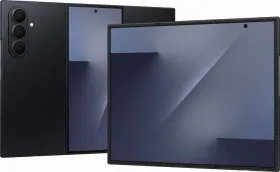
Right off the bat, the Galaxy Z TriFold is a tad thicker than the Mate XTs Ultimate, especially when unfolded. However, when folded, the difference is negligible. Samsung’s first tri-foldable is about 11 grams heavier than its competition.
When it comes to hinge material, Samsung goes with titanium, while the Huawei handset reportedly uses ultra-high-strength steel. Furthermore, the TriFold comes with an official IP48 rating, whereas the Mate XTs Ultimate lacks one.

While these are differences in the hardware of the foldables, there’s another drastic difference that has to do with how people will use (read: unfold) the smartphones. The Galaxy Z TriFold uses an “inward-folding” G-shaped mechanism (it unfolds twice from the right).
It is through this mechanism that the foldable has a dedicated cover screen. To avoid folding in the wrong order, the phone relies on rather aggressive on-screen alerts and haptic feedback.

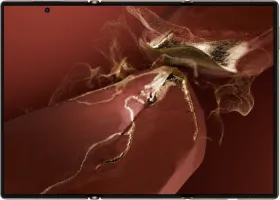
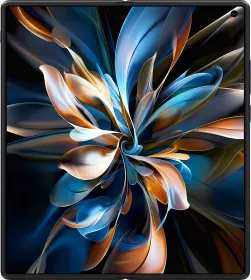
On the other hand, the Mate XTs Ultimate uses a “Z-shaped” mechanism, wherein one section of the relatively softer inner display remains exposed as the cover screen. While the phone doesn’t have a dedicated cover screen, it offers a more flexible experience, letting you use the device as a conventional foldable with two display panels facing you.
Also Read: Find X9 vs. OnePlus 15 vs. Pixel 10: Which Android Flagship Is Right For You?
Galaxy Z TriFold vs. Huawei Mate XTs Ultimate: Displays
| Samsung Galaxy Z TriFold | Huawei Mate XTs Ultimate | |
| Cover Screen | 6.5-inch Dynamic LTPO AMOLED 2x, 1-120Hz, 2600 nits (peak), HDR | 1/3 of the main display: 6.4-inch LTPO OLED |
| 422 ppi | – | |
| Inner Screen | 10.0-inch Dynamic LTPO AMOLED 2x, 1-120Hz, 1600 nits (peak), HDR | 10.2-inch LTPO OLED, 1-90Hz, 1800 nits (HDR) |
| 269 ppi | 381 ppi | |
| Dual Display Mode | – | Yes |
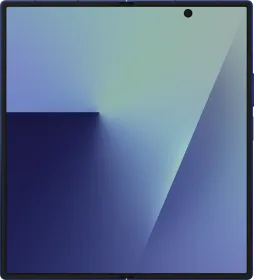
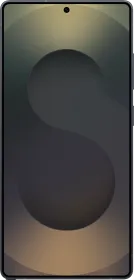
As mentioned earlier, both phones use different folding mechanisms, resulting in distinct cover-screen setups. The Galaxy Z TriFold has a dedicated, outward-facing 6.5-inch cover screen that is brighter and sharper than the inner display. As seen in pictures and videos, the cover screen looks similar to that on the Galaxy Z Fold 7.
The main foldable screen on the phone is a 10-inch Dynamic LTPO AMOLED 2x display that is divided (and folds) into three unequal parts with the help of two hinges. Though the screen supports a 120Hz adaptive refresh rate, it isn’t quite as sharp as the cover screen, or the main screen of the Fold 7, for that matter.

In the official press release, Samsung also states that it has used a reinforced, shock-absorbing display layer, which could potentially make the TriFold’s display more durable than the Fold 7 (though the company hasn’t made any direct comparisons yet).
Huawei’s Mate XTs Ultimate, on the other hand, features a slightly larger 10.2-inch LPTO OLED screen that reportedly delivers higher peak brightness and more pixels per inch than the Galaxy Z TriFold. However, the display can refresh at up to 90Hz.

While buyers don’t get a separate cover screen on the Mate XTs Ultimate, they can use 1/3 of the foldable screen as the cover screen. This surely sounds more convenient, but given that the inner screen on both dual and triple-folding phones is softer and much less durable than conventional smartphone screens (or the cover screen), it could be a durability issue for people using the phone as their primary device.
Either way, both phones offer a massive, foldable screen that can benefit multitasking, immersive gaming, content consumption, or creative tasks like editing photos or videos.
Also Read: OnePlus 15 vs. OnePlus 13: What’s Changed? A Rs. 72,999 Question
Galaxy Z TriFold vs. Huawei Mate XTs Ultimate: Processor
| Samsung Galaxy Z TriFold | Huawei Mate XTs Ultimate | |
| Processor | Snapdragon 8 Elite for Galaxy (3nm) | Kirin 9020 (7 nm) |
| CPU | 8-core CPU: 2 x 4.47 GHz + 6 x 3.53 GHz | 8-core CPU: 1 x 2.4 GHz, 3 x 2.00 GHz, 4 x 1.6 GHz |
| GPU | Adreno 830 (1.2 GHz) | Maleoon 920 |
| NPU | Qualcomm Hexagon NPU | |
| Memory + Storage | 16GB (LPDDR5X) RAM / 512GB or 1TB (UFS 4.0) storage | 16GB (LPDDR5X) RAM / 256GB, 512GB, 1TB (UFS 4.0) storage |
Although drawing a direct comparison between the tri-folding devices isn’t practical, I’ll give you a brief overview of the platforms they’re based on.
This is one of the areas where Samsung’s global presence and position as one of the largest smartphone makers (and the largest Qualcomm customer) helps the company tip the scales in its favor.

Samsung’s first tri-folding phone relies on the Snapdragon 8 Elite for Galaxy (3nm), also seen on handsets like the Galaxy Z Fold 7 and the Galaxy S25 Ultra. Although it isn’t Qualcomm’s latest handset, it’s certainly one of the most powerful, reliable, and well-optimized chipsets on the market.
With an octa-core CPU, the Adreno 830 GPU (which supports hardware-accelerated ray tracing), and the Qualcomm Hexagon NPU, the TriFold should deliver flagship-tier performance. Further, the chipset is paired with 16GB of LPDDR5X RAM and up to 1TB of UFS 4.0 storage, which should be more than enough for both regular and power users.

Given that the Chinese manufacturer doesn’t have access to the latest Qualcomm chips, its tri-folding phone is powered by an in-house Kirin 9020 (7nm) chipset. It is a midrange chipset based on an older fabrication technology, but it is good enough for day-to-day tasks like multitasking, capturing pictures/videos, and casual gaming.
So, whether it is about real-world day-to-day performance, gaming, multitasking, or other creative tasks, the Galaxy Z TriFold is leaps and bounds ahead of the Mate XTs Ultimate.
Galaxy Z TriFold vs. Huawei Mate XTs Ultimate: Operating System
| Samsung Galaxy Z TriFold | Huawei Mate XTs Ultimate | |
| User Interface | One UI 8 | HarmonyOS 5.1 |
| Operating System | Android 16 | N.A. |
| App Availability | Google Play Store | Huawei’s AppGallery |
| Desktop Mode | Samsung DeX | Multi-window / split-screen multitasking |
| AI Features | Galaxy AI | Huawei’s AI tools |
| Voice Assistant | Google Gemini / Samsung Bixby | Celia assistant |
Out of the box, the Galaxy Z TriFold runs on One UI 8 based on Android 16. It is a very familiar user interface, as we’ve already used it on the Galaxy S25 series and the latest Fold 7 and Flip 7.
So you get all the popular features like smart AI integration across the UI elements (such as Now Bar and Now Brief) for curated daily updates, enhanced multitasking with greater flexibility in split-screen view (as much as 90:10), improved Quick Share, a new accessibility menu with new features, and a refined user interface.

With the Galaxy Z TriFold, Samsung has also introduced a couple of new features. For instance, there’s the standalone Samsung DeX experience that allows for a full desktop-like setup with up to four workspaces (and around four to five apps in each workspace). The multi-window view has been optimized to run up to three portrait-style apps side by side.
You also get access to multimodal Gemini Live, dynamic UI transitions optimized for larger screens, and safety prompts to guide you on the correct folding technique. Obviously, the entire suite of Galaxy AI features is also available on the device, ensuring early adopters don’t miss out on advanced AI capabilities.

Among the key features of HarmonyOS 5.1 are a PC-level office experience, a three-pane parallel display, multi-window management, seamless form switching (from single-screen to dual-screen to all-screen), and Super Transfer Station. The built-in assistant can perform multi-step tasks, understand on-screen content, summarize documents, and offer general assistance.
For all intents and purposes, One UI is the more refined, equipped, and user-friendly user interface with access to Google Play services. Further, Samsung’s promise of seven years of operating system and security updates also applies to the phone.
Also Read: realme GT 8 Pro vs. OnePlus 15 vs. iQOO 15: Camera Comparison
Galaxy Z TriFold vs. Huawei Mate XTs Ultimate: Cameras
| Samsung Galaxy Z TriFold | Huawei Mate XTs Ultimate | |
| Primary Camera | 200MP (f/1.7, 1/1.3″, OIS) | 50MP (f/1.4-f/4.0, 1/1.56″, OIS) |
| Secondary Camera | 12MP (f/2.2, 1/2.55″, PDAF) | 40MP (f/2.2, PDAF) |
| Tertiary Camera | 10MP (f/2.4, 1/3.94″, OIS) 3x optical zoom | 12MP (f/3.4, 1/3.6″, OIS) 5.5x optical zoom |
| Inner-Screen Camera | 10MP (f/2.2, 1/3.0″) | 8MP (f/2.2, 1/3.6″) |
| Outer-Screen Camera | 10MP (f/2.2, 1/3.0″) | – |
Comparing the camera configuration mentioned above, it is clear that the Galaxy Z TriFold has a bigger, higher-resolution primary sensor (but it lacks the variable aperture of the Mate XTs Ultimate). On the other hand, Mate’s ultrawide camera offers more pixels, while its telephoto camera offers a higher optical zoom range.

For capturing selfies, Samsung has included a 10MP selfie shooter on both the main and cover screens. The Mate XTs Ultimate only includes one 8MP selfie camera on the inner screen. While this remains a sensor-by-sensor comparison, other aspects of the tri-folding phones’ cameras are different as well.
For instance, the TriFold can record 8K30 videos and 4K60 videos (I can’t figure out why the company didn’t include support for 4K120, though). The Mate XTs Ultimate’s cameras can only record 4K60 videos, and the front camera maxes out at 4K30. Furthermore, the AI-based photo editing features in One UI 8.0 far outweigh those in HarmonyOS 5.1.
Galaxy Z TriFold vs. Huawei Mate XTs Ultimate: Battery Capacity & Charging Rate
| Samsung Galaxy Z TriFold | Huawei Mate XTs Ultimate | |
| Battery Capacity | 5,600 mAh | 5,600 mAh Si/C |
| Wired Charging Speed | 45W, QC2.0, 50% in 30 minutes | 66W |
| Wireless Charging Speed | 15W | 50W |
| Reverse Wireless Charging | 4.5W | 7.5W |
When it comes to battery and charging rates, the Mate XTs Ultimate redeems itself with a similar battery (5,600 mAh) but significantly faster wired charging (66W vs. 45W) and wireless charging (50W vs. 15W). Further, the Chinese tri-fold uses a silicon-carbon battery, whereas Samsung sticks to a lithium-ion cell.
Even so, I believe the 5,600 mAh battery on the Galaxy Z TriFold should last longer, thanks to the advanced 3nm fabrication technology its processor is built on and Samsung’s One UI optimization.
Also Read: realme GT 8 Pro vs. iQOO 15: Two Snapdragon 8 Elite Powerhouses, But One Edges Ahead in Practicality
Galaxy Z TriFold vs. Huawei Mate XTs Ultimate: Pricing & Availability
| Samsung Galaxy Z TriFold | Huawei Mate XTs Ultimate | |
| Launch Date | December 12, 2025 | September 2025 |
| Launch Availability | South Korea | China |
| Pricing | 16GB RAM/512GB: 3,594,000 KRW (approximately $2,450 USD or ₹2,20,000 INR) | 16GB RAM/256GB: CNY 17,999 (~ ₹2,22,000 INR or $2,520 USD) 16GB RAM/512GB: 19,999 CNY (~ ₹2,47,000 INR or $2,800 USD) 16GB RAM/1TB: CNY 21,999 (~ ₹2,72,000 INR or $3,080 USD) |
| Expanded Availability | Late December: China, Taiwan, Singapore, and the UAE Early 2026: United States (first quarter) | UAE |
Although the Galaxy Z TriFold is relatively affordable, its availability is a bit of a mess. Initially, it will only be available in the company’s native market from December 12, 2025. However, by the end of the year, the phone could also be available in more regions, including China and Taiwan.
In early 2026, Samsung has plans to release the phone in the United States. Unfortunately, there’s no word on the TriFold’s India debut, and that could be due to the phone’s hefty price tag. Even so, we remain optimistic about the tri-foldable’s arrival in the country.
Meanwhile, the Huawei Mate XTs Ultimate, due to the lack of Google Play Services and top-tier hardware, is primarily available in China. Most recently, the smartphone also debuted in the United Arab Emirates, but the chances of it arriving in India remain bleak.
Galaxy Z TriFold vs. Huawei Mate XTs Ultimate: Verdict

On paper, the Galaxy Z TriFold is the more refined and future-proof tri-folding smartphone on the market. As of 2025, Samsung is still among the top global smartphone brands. In Q2 2025, the company captured around 20% of the worldwide smartphone shipments.
Furthermore, it has a substantial logistics and retail network worldwide. Historically, Samsung has used its broad distribution, strong brand recognition, and diverse product portfolio to maintain its dominance, and there’s no reason the company won’t do the same with the Galaxy Z TriFold, except for its price. Although it might take some time, Samsung could expand the TriFold beyond a handful of markets, helping make tri-foldables a mainstream smartphone choice.
The Huawei Mate XTs Ultimate is an ambitious, flexible tri-fold with a sharp display and faster charging, but its exposed soft screen, mid-range chipset, and lack of Google Play services limit its practicality. And with availability restricted mainly to China and a slim chance of a wider global launch, it remains a niche, enthusiast-focused device rather than a mainstream alternative to the Samsung Galaxy Z TriFold.
SmartPrix’s Take On the Future Of Tri-Folding Smartphones
I believe that the future of tri-folding smartphones, whether it is the Galaxy Z TriFold or the Mate XTs Ultimate, depends on global availability and pricing. It is a very small portion of the total market that is ready to pay a premium price for a smartphone that costs around Rs. 1,00,000 or $1000, and tri-folding phones are about 2.5 to 3x more expensive.
Buyers will always remain concerned about the durability of foldables. To instill confidence, brands could start offering a 2- or 3-year standard warranty with the product, which could definitely boost sales. The form factor is still evolving, and it might take another three to five years for it to become a close-to-mainstream smartphone alternative that can compete with regular, non-foldable models.

You can follow Smartprix on Twitter, Facebook, Instagram, and Google News. Visit smartprix.com for the latest tech and auto news, reviews, and guides.